The LightHouse Board of Directors wishes to formalize an ongoing independent structure through which it can learn from blind people in our community their current needs for programs and services. As these needs change, and as COVID and changing demographics reveal new unmet needs, it’s a best practice to operate an independent ongoing advisory platform from which our Board can learn what LightHouse is doing right, and what it needs to improve upon.
Therefore as the Lighthouse Board seeks to broaden its input about community needs for programs and services, it has decided to implement a common best practice in our field by formalizing a Blind Advisory Committee. As the body charged with drafting Lighthouse policy, the Board of Directors seeks the broadest sources of input from staff, partners and stakeholders, including, now, direct input from its community.
This is not a first for the LightHouse: over the years there have been various forms of blind input. For his first four years, CEO Bryan Bashin hosted a “Dialogue with the Director”, an open forum for all community members, which was a direct route for community members to give their opinions. As Lighthouse programs and services have grown it is imperative that new regular methods for our Board of Directors to be informed about current community needs are developed. Coming out of COVID, too, the needs of our community may have changed greatly, and the Board is interested in hearing directly from community members. This will be especially important as Lighthouse conducts its next Strategic Plan process later in 2022.
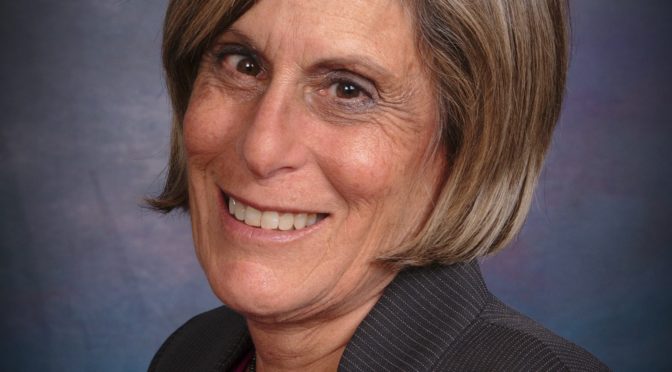
Sharon Sacks, LightHouse Board Chair shared her vision for the Blind Advisory Committee:
“As Lighthouse programs continue to evolve and grow, its Board of Directors is committed to engaging and receiving input from our greater community. This group will be chaired by members of the LightHouse board in order to effectively transfer communication from the community directly to the Board. The Lighthouse Board encourages individuals who are blind or low vision to apply to participate in this unique and important committee.
The LightHouse Board is looking for people who are in touch with today’s community needs, as well as those who may have experience with new or different programs and services which might be operated by the LightHouse. The new Blind Advisory Committee will consist of nine people, including two places that will be offered to the National Federation of the Blind of California’s San Francisco chapter and the California Council of the Blind. Applications are encouraged from people who are blind or have low vision living throughout northern California, with a particular emphasis in the in nine-county San Francisco Bay Area.
Those applying will be asked to meet with the Board’s committee to determine who the Board believes would be the best set of individuals to serve, with many considerations including diversity as we ensure that the distribution according to age, intersectional disability, gender, and blindness/low vision be representative of the northern California demographics of blindness. LightHouse Blind Advisory Committee members will be asked to serve a term of two years.
The Committee will meet quarterly approximately three weeks before each Board meeting which will be chaired by a LightHouse Board member. The Board member will report on the Committee’s observations, suggestions, and recommendations at each Board meeting.
Bryan Bashin, CEO of LightHouse said: “Considering the vast changes in service needs and delivery we’ve seen over the pandemic, it’s more important than ever that the Lighthouse stay relevant to the changing needs of the people our mission requires us to serve. The Board’s new Blind Advisory Committee will help our governing board stay freshly informed about the needs of blind people today. This committee will complement input the Board gets from their personal and professional networks, as well as Lighthouse staff. I welcome the input, especially in areas we may not be familiar with. Lighthouse has existed for 120 years because it is open to new input and change, and the Blind Advisory Committee will help us learn things we may not now know.”
Have you ever wanted to work or volunteer at Enchanted Hills Camp (EHC)? Are you looking for a summer job where you can learn new skills, soak up the beauty of Napa hills and make lasting memories? Well EHC is looking for people who are blind, have low vision or are sighted to be staff at EHC this summer to help our campers grow their own potential. Come to the virtual EHC Career Fair on March 12 from 10:00 am to noon Pacific to learn more!
Here’s what we’re looking for:
EHC Camp Counselors and Area Leaders: Must be 18 and older EHC Counselors in Training: Students who are blind or have low vision ages 16 to 18 Youth Employment Services (YES) Academy Students: Students who are blind or have low vision ages 16 to 24
At the career fair, you’ll meet camp hiring managers and current and previous campers and staff. You’ll also find out about the range of activities and experiences EHC has in store. You can potentially get hired on the spot or invited back for an additional interview.
Tony Fletcher, Director of EHC says “The virtual career fair is a wonderful chance for potential candidates to explore opportunities at camp this summer”
What: Enchanted Hills Camp Career Fair When: Saturday March 12 from 10:00 am to noon Pacific RSVP: by Thursday, March 10. to Mario Burton at MBurton@old.lighthouse-sf.org.
Last July, fifteen blind and low vision judges from all over the world met to choose which three of the fourteen 2021 Holman Prize finalists would become the next Holman Prizewinners. After hours of passionate discussions and debate held over an entire weekend via Zoom, LightHouse CEO Bryan Bashin and the LightHouse Communications team that help facilitate the annual Holman Prize Award were tasked with the honorable job of breaking the great congratulatory news to the newly named 2021 Holman Prizewinners. Meanwhile, in a home a world away in Zimbabwe, Africa, Holman finalist Robert Malunda was hard at work turning his dreams of making trainings, resources, and education for the blind and low vision individuals of Zimbabwe a reality.
“Congratulations, Robert! You are one of the winners of the 2021 Holman Prize!” Bryan Bashin excitedly exclaimed.
Though his demeanor was calm, you couldn’t help but hear the ear-to-ear smile in the prizewinner’s voice as he graciously accepted the award and expressed the kindest and most sincere gratitude. “Thank you, so much,” said Robert Malunda. “I am truly grateful. I will not let James Holman or the Holman Prize down,” he stated, as the audible happiness and pride in his voice brought joyful tears to the eyes of the LightHouse staff as they continued to congratulate him.
Robert Malunda was born on August 15, 1988, in Bulawayo in the Matabeleland region of Zimbabwe. As an infant, Robert developed glaucoma. Due to limited availability of specialists and treatments, Robert lost his sight completely around three years old. Growing up blind in Zimbabwe can be incredibly difficult, as resources for blind and low vision children are very limited, but Robert’s family was determined to send their son to school.
“It was a very important decision, taking me to school,” Robert explains. “Most blind people in Zimbabwe do not go to school. So, I was taken to school at a relatively young age—around six years old. I was taught the same skills as a sighted person, but it was mostly academic in the mainstream school.”
While attending primary school as a child, Robert received fairly regular Braille instruction by a visiting teacher and was taught the same curriculum as sighted children, however, he did not receive any regular blindness skills education, such as orientation and mobility or assistive technology training. And although Robert was very successful in the classroom with his knowledge of Braille and applying his impeccable auditory-learning skills, having a lack of further blindness education left him with a disadvantage. It was when Robert attended Midlands State University of Zimbabwe that he found himself in the proverbial “pickle.”
“Before, I used to depend on the sight of my friends for studying. There were no books or accessible resources for the blind, so we had to ask friends to read for us. So, that is when I asked myself how I can do what I need to do for university by myself. I heard a lot of things about computers. I knew there are really a lot of great things about computers and what they can do for other people, so I was inquisitive on how this can be of help to the blind. I started to teach myself to use Microsoft Word and other word processing programs. I wanted to learn more and teach other blind people how to use these computers, too.”
At university, Robert began exploring what little he could on the computers made available to the students at the school. He shared his ambition with a friend in the United Kingdom. They then sent Robert a computer of his own. He began working with screen reading software programs like JAWS, and through much trial and error he was able to successfully navigate his way through university, sharing and teaching the tech skills he’d learned with his friends and peers along the way.
Learning how to be independent with the help of computers is what gave Robert the idea for his organization and Holman Prize project, Gateway to Elation. The purpose of this organization is to provide computer, orientation & mobility, and social skills training to blind Zimbabweans in rural areas across the country. Many blind people do not have any formal education like Robert was able to receive, therefore the employment and independence rate of the blind in Zimbabwe is very, very low. Robert Malunda will personally travel to these areas of the country where there are no government provided services or funding of any kind for blind people.
“My vision has been to reach as many people as possible,” Robert explains. “My Holman year will be spent mostly traveling around the country meeting new people and new blind people, those in the rural areas and even those in the cities, because life for a blind person is almost the same for those in the city as in the rural areas, because we face the same challenges. We can’t access information; we can’t access what other people do access easily…. Blind people in Zimbabwe often experience isolation. I envision a Zimbabwe where blind people are knowledgeable, independent and socially interactive.”
Technology training may have been the driving force for Gateway to Elation in the beginning, but Robert recognizes the isolation experienced by so many blind and low vision people in Zimbabwe reaches far beyond the lack of access to assistive technology. For example, there is a huge stigma about using a white cane. This is a problem seen everywhere in the world, but particularly in Zimbabwe, Robert explained.
“In primary school, I had heard that there is something called Mobility and Orientation, but it was not something I was taught. I did not even own a cane, which I think was a disadvantage for me. I received my first cane at 16, I did not use it. I think it was understood if you weren’t using the cane when you were young, then naturally it would mean that you won’t use it when you grow up. But for me, I realized that stigmatization needs to change. When I was at university it was difficult especially trying to navigate a big campus. Using a cane is very important for being independent if you want to go out on your own or do your own shopping. Being at university isn’t like a being at school as a child when these things are done for you.”
Robert wants to break the barriers and stigma of blind people and their use of a white cane for independent travel. Implementing orientation and mobility practices at an early age will help change the misconceptions of cane users and empower young blind and low vision children to take pride in using their canes and grow to become independent people. Robert also believes that by introducing social skills exercises while providing trainings for groups of blind and low vision people will create opportunity for socialization and community for those who ordinarily would not have these experiences. The isolation of people with varying disabilities in Zimbabwe from the general public makes it increasingly harder for these people to seek the resources and education needed to adapt to their environment.
Robert’s dream of building Gateway to Elation has been growing since 2016 and in 2018 he began researching funding opportunities.
“When I was searching for grants for Gateway to Elation was when I came across the LightHouse for the Blind and the Holman Prize. I made a pitch video that year, and then I did another pitch in 2019, I still have those pitches with me, but I did not actually apply. It was finally in 2021 when I decided to apply.”
Robert’s passion for his work can be heard in every word he speaks, and his expectations of changing the lives of blind and low vision people in Zimbabwe for the better do not end after the completion of his Holman Prize year.
“I also want to start a podcast. Even after my Holman Prize year ends, the podcast and YouTube channels will continue to document the lives of other blind people. The more people I reach the more blind people will be empowered and the more blind people can become more employable. The end goal is for them to be employed or able to use these skills for the betterment of their lives, either in school or professionally.”
Since winning the Holman Prize, Robert and Gateway to Elation have received wonderful responses. “It is a very prestigious award, the Holman Prize for Blind Ambition,” Robert explains. “The value and all the popularity of Gateway to Elation among the people of Zimbabwe, it is really amazing.”
For more about Robert Malunda and his journey teaching the blind across Zimbabwe, you can follow his organization Gateway to Elation on Facebook and on the Gateway to Elation website. Stay tuned for more updates on his progress and accomplishments as the Holman Prizewinner’s year continues.
The 2022 Holman Prize applications are now open! Do you have your own Holman objective? Turn your idea into a tangible passion project and think about how you can present what Blind Ambition means to you in a 90-second pitch video and submit your application between now and March 20. For more information visit the Holman Prize website. Have fun dreaming up your Holman Prize Ambition, and who knows? You might just be one of this year’s three amazing winners!
The LightHouse for the Blind is excited to enter our 72nd year at EHC, and we are proud to once again return to a variety of sessions that will benefit hundreds of campers in our community. The guiding principles of Enchanted Hills Camp is to promote independence, community and have fun. Hopefully you will gain lifelong friendships, and feel the “blind positive” atmosphere that camp strives to create. This is a place where campers have claimed they have had the time of their lives.
Enchanted Hills is an experience that so many look forward to having every year — and though our camp has been closed recently due to COVID-19 restrictions we’ve taken steps to enrich this summer so that all campers will still enjoy the beauty of our location safely and with a supportive staff.
Let’s have the best summer ever!
Tony Fletcher, senior director of Enchanted Hills Camp
LightHouse is thrilled to announce the upcoming 2022 Northern California Braille Challenge! We have had the privilege of hosting the event at our headquarters in San Francisco in previous years, most recently in February of 2020. For many years LightHouse, the California School for the Blind, and the Vista Center for the Blind and Visually Impaired have participated in this annual event that honors Braille literacy in a fun and friendly competition for blind and low vision students across the San Francisco Bay Area and other regions of northern California.
This year the Braille Challenge will be hosted by our friends at the Vista Center for the Blind and Visually Impaired on Saturday March 5 from 9:00 am to 4:00 pm at the Vista Center, located at 101 N. Bascom Ave in San Jose, California.
We invite all blind and low vision students in grades1 through 12 who are knowledgeable of or in the process of learning Braille to join us in this fun academic contest that will put your Braille literacy to the test! Show off your Braille reading and writing capabilities as your fingers glide across the embossed pages and dance atop the buttons of a Perkins Brailler! This is the only academic Braille contest of its kind, so don’t miss out!
We can’t wait to see all this year’s blind and low vision scholars showcase their Braille knowledge! Good luck to all participants, and we’ll see you on March 5!
Over this past Martin Luther King holiday weekend LightHouse and Enchanted Hills Camp hosted a three-day tree planting event. Volunteers joined EHC staff members and supporters—including Dan Kistler, our new lead in maintenance and landscaping at Enchanted Hills Camp—in planting over 1,000 trees and shrubs. From Saturday to Monday, over 60 volunteers of all ages got their hands dirty planting countless small plants and shrubs, as well as redwoods, maples, and monkey trees, just to name a few.
Two groups involved with the design of the New Enchanted Hills brought many dozens of employee volunteers to get their hands dirty and make a difference. LightHouse wants to thank the offices of Perkins-Will and RHAA Landscape Architects. We expect that planting a thousand trees will be an ongoing way to give back each MLK Day for years to come.
“We had a magical time with all of the groups of volunteers,” Dan Kistler tells the LightHouse Lately. “We were able to plant a little over a thousand trees and other species of plants to give back to the forest. I want to give a special thanks to everyone from LightHouse who helped out here, not only to make this possible, but to share this incredible experience.”
We are so excited for our campers to check out the beautiful new green additions to camp when our cabin doors re-open this summer. With that said, it’s almost time for EHC Summer 2022 registration! Keep an eye on your inboxes for more information about camp registration, or visit the Enchanted Hills Camp website for updates, information, and details.
Caitlin O'Malior1 Commenton Applications for the LightHouse for the Blind – San Francisco 2022 Holman Prize open January 21
Now in its sixth year, the Holman Prize for Blind Ambition annually awards up to $25,000 each to three blind people from around the world who have an incredible idea that will shatter misconceptions about blindness.
The Holman Prize is named after James Holman, a blind 19th century explorer who is the most prolific private traveler of anyone, blind or sighted, before the era of modern transportation.
The only qualifications for the Holman Prize are that you must be blind or legally blind, speak English and that you must be 18 years old by October 1, 2022.
When applications open on January 21, all you have to do is make a 90-second video pitching your idea and upload it to YouTube, and fill out the application form on the Holman Prize website.
Your idea can involve great personal growth or literally be on any topic, as long as you are the originator and leader of your ambitious Holman Prize objective and you are blind or legally blind: technology, the Arts, Braille, accessibility, transportation, travel, community, learning a skill, teaching a skill, launching a business, providing a service – smashing any boundary and changing perceptions.
You will have until March 20, 2022 to submit your application, but don’t leave it to the last minute because during the application period, you can be collecting as many ‘likes’ on YouTube as possible, so you’re in the running for the “People’s Choice Award.” The applicant whose video has the most “likes” automatically becomes a semi finalist.
We are thrilled to announce that Waymo is again sponsoring the Holman Prize for Blind Ambition this year. Thank you Waymo for your continued support of this global prize.
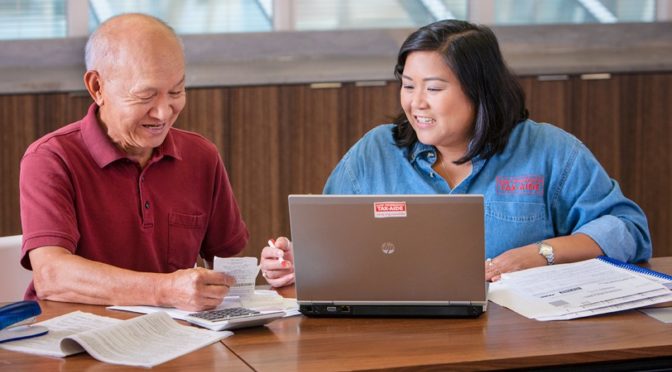
LightHouse is partnering with AARP’s Tax-Aide Program to provide free tax filing support at 1155 Market Street this tax filing season. AARP will be at LightHouse HQ on Tuesdays and Thursdays from February 1 – April 15. Appointments are required and they can be made for 10 am, 11:15 am, and 12:30 pm. Appointments can be scheduled by leaving a voicemail at 415 – 694 – 7648 or completing this form: https://forms.office.com/r/GfZJ4wRnGV
Due to the “red” level of COVID-19 spread that the CDC has determined SF to be in, this will be a “same day drop off” structure. Tax payers will come to 1155 and drop off their materials with AARP tax preparers. They will then wait in MPR C or Reception while their taxes are being prepared. They may leave but it is preferred that they stay. The appointments are scheduled for one hour and fifteen minutes and most taxes will be able to be completed in that time.
This is open to anyone who needs support filing their federal and CA state tax returns for the tax years 2021, 2020, and 2019 (note: each year requires a separate appointment). There is no requirement based on age, income level, or SF residency.
COVID-19 Requirements:
Masks must be worn at all times. The Centers for Disease Control and the State of California are recommending that you double mask or wear an N95 mask. LightHouse will provide a second disposable mask if needed to ensure your safety and the safety of our staff and volunteers.
We will be practicing physical distancing at this location
There are some specific requirements and not all taxes will be able to be completed by AARP volunteers, these will be addressed when the appointments are made.
If you have any questions, please call 415 -694 -7648. Thank you.
The Lowenfeld-Akeson Symposium is held every winter to educate service providers, families and students about new developments in the fields of pediatric ophthalmology, neurology and early childhood education of children who are blind or have low vision. It is named after two leading lights in the field of early childhood development, Dr. Berthold Lowenfeld and educator Nancy Akeson. For the past 26 years a number of California-based organizations in this field co-host the symposium and LightHouse is extremely proud to be one of this year’s hosts.
LightHouse board Chair Dr. Sharon Sacks, is a longtime and key organizer of this annual event to help inform professionals and families about best practices in the field of early education, from birth to seven years of age, of children who are blind, deafblind, have low vision or cerebral visual impairment.
This year’s Symposium is entitled “Digging Deeper: Exploring prematurity from visual diagnosis to active learning.” Distinguished speakers will be:
William V. Good, MD, Senior Clinical Research Scientist at the Smith-Kettlewell Eye Research Institute (SKERI), who will speak on The ABCs of Retinopathy of Prematurity (ROP)
Douglas Fredrick, MD, Director of the Elk’s Children Eye Clinic at the Casey Eye Institute, Oregon Health Sciences University, who will speak on Cortical Visual Impairment in the Premature Infant: Seeing In/Looking Out
Patty Obrzut, MS, OTR/L, Assistant Director of the Pendrickton Center for Blind Children, who will speak on Active Learning: Promoting independence and learning in children with multiple special needs
There will be Q&A sessions with each of our presenters.
This event is taking place on Saturday, February 5 over Zoom, from 9.00 am to 3:00 pm. If you are a professional in the early development field, a student interested in the area or a family of a child who is blind or has low vision, this stimulating and thought-provoking event is for you.
The cost is $20 for families and students, and $40 for professionals.
Join a supportive cohort of interested people to learn the latest thinking in this field. You can register here: https://tinyurl.com/bucz64zj
If you have any questions concerning this year’s event, please email at LowenfeldAkeson@gmail.com or call, Jacqueline Barden, at 415-694-7366.
In honor of Martin Luther King, Jr Day on Monday, January 17, LightHouse and Enchanted Hills Camp in Napa are hosting a special tree-planting event! We have an ambitious goal of planting 1,000 trees and shrubs over the course of the weekend and would love your help.
We have places available on Saturday, January 15 and Sunday, January 16, and tree-planting will be from 9 am – 2:30 pm. RSVPs are required for each volunteer (not each household.) You can sign up to volunteer at: