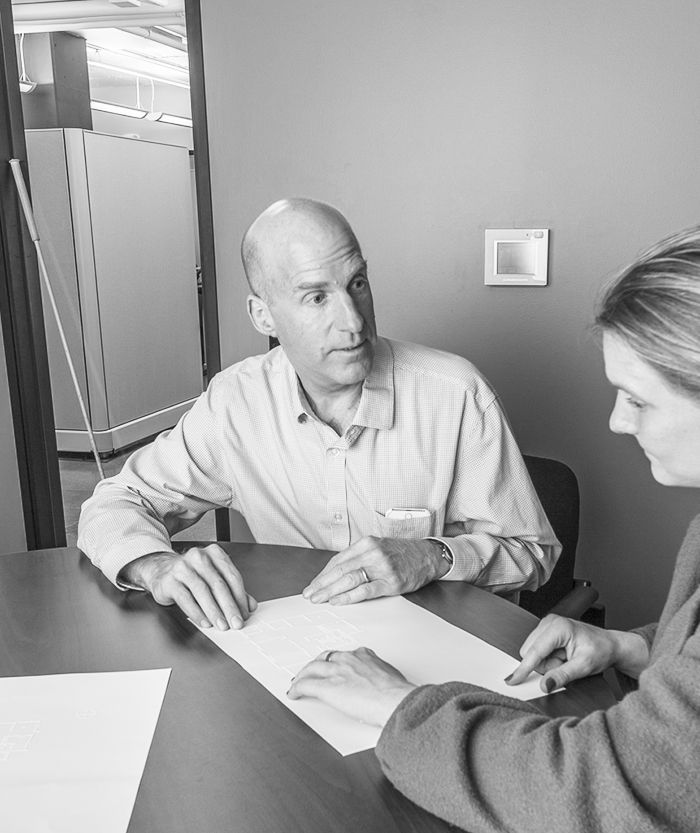
It was only several years ago when Chris Downey woke up from surgery, blind. Any architect in his position would be forgiven for shrugging off the overwhelmingly visual profession and moving on to something that blind folks were “supposed” to do. But Chris did not give up so easily. Seven years later, Chris remains a practicing architect and consultant for numerous projects, including our newly announced headquarters in downtown San Francisco. He is also a LightHouse board member, and a great example of how newly blind individuals can stay focused, defy norms, and move on with their lives and goals with the same effectiveness and purpose as anyone else.
Do you use the BlindSquare App to get around SF? Want to get paid to give feedback? Look no further.
The LightHouse for the Blind and Visually Impaired of San Francisco is working closely with the developer of BlindSquare, a popular navigational tool within the blindness community, to integrate a set of accessibility features (related to San Francisco Muni transit stops) into the BlindSquare application. We will be gathering feedback and data through a series of paid, in-person studies with current BlindSquare users.
We are targeting the weekend of July 18-19 to conduct the research. Scheduling is flexible, and sessions could take place mornings, afternoons, and evenings throughout the weekend. You should plan to devote approximately 2 hours to the study. Space is limited. If you would like to participate, please answer the following survey questions and send your responses to Frank Welte at fwelte@old.lighthouse-sf.org:
1.How would you describe your vision?
a.No usable vision for navigation
b.Some usable vision for navigation
2.Do you own an iPhone?
3.Do you use the BlindSquare app?
4.How often do you use the app?
5.How often do you travel independently outside of the home?
Thank you for your participation, and please spread the word!
As a blind/low vision person who makes music, wrote about it for a living, and has attended dozens of music festivals, I was eager to compare my own experience of concert-going with the author of the piece. As it turns out, she is a good enough writer, with optimism for an inclusive future, but the overall tone of the piece (most notably the title) greatly misrepresents the reality of the situation, and discredits how far musical events have come in the 25 years since the passage of the ADA.
The last several years in particular have seen tons of progress in the accessibility of music festivals, and if you read further, you may be convinced that, even if you’re completely blind, there is a place for you on the polo fields of Coachella, the ferris wheel of Treasure Island, or the foggy enclaves of Outside Lands.
First, it’s important to dispel the misattributions that support the Salon.com article. In the story, the author details several circumstances in which she was discriminated against as a disabled concert-goer: a parking attendant refused her a handicapped spot, an usher scowled and denied her an elevator, and so on. These instances are certainly regrettable, but to be bluntly honest, the problem does not actually seem to be with the venues themselves — which were equipped with said facilities — but are in fact caused by a lack of communication between humans.
If you have a so-called “invisible” disability, such problems will plague you not just at concerts and music festivals but literally everywhere you go — unless you come prepared with a communication device. Even if it’s just a little 10-second speech, well-rehearsed and easy to understand, you need to have a believable way of informing people of your situation. As blind and visually impaired individuals, we are fortunate to have the white cane, which accomplishes all of this crucial communication in a single sighted glance. And in all my experience at music festivals around the country, I have not only never been treated poorly with the cane, but I’d even argue that my experience was even better than most.
But it’s not just about blind people having a particular advantage. Austin Whitney, a law student at UC Berkeley and paraplegic since 2007, founded Accessible Festivals in 2014 specifically to ensure that people with disabilities — any disability you can imagine — are accommodated appropriately at music festivals in America and all over the world. Whitney first worked as a consultant, starting with Goldenvoice (who put on events such as Coachella and Hangout Fest), and eventually realized that his skills were not only useful, but in high demand. Now he works year-round in addition to attending law school, and employs dozens of people at individual events across the country, particularly in summer months.
Talking to Whitney, he says that the range of disability that he and his team can accommodate is only expanding. “It’s everything from 18 year olds with a temporary disability like a broken leg to 90 year olds with an air tank,” he said. Other disabilities also include dietary considerations, physical and mental differences, as well as deafness and visual disabilities. “90% of my work is just problem solving,” Whitney says, “It’s just talking to people one-on-one. What are the problems, how can we mitigate them, how can we make this work for you?”
By all measures, Whitney’s work has been a success. In the years since he’s started attending festivals, things have changed dramatically. In 2008, for instance, he and his wheelchair had to be carried, by his friends, separately down the bleachers of an entire football stadium in order to make it into the general admission area for the Electric Daisy Carnival Festival. Last year, Whitney went back to EDC and employed seventeen people to serve 200 attendees with disabilities — almost double the previous year’s number. Word, he says, spreads fast.
Accessible Festivals is not only trying to make sure festivals meet basic legal requirements, but ensure that the events are actually comfortable and enjoyable for disabled patrons in new and creative ways. “You can have an ADA compliant festival, but it doesn’t mean it’s very welcoming to people with disabilities,” he points out.
For people with visual disabilities or blindness, Whitney admits he’s still learning what the best accommodations are, but has come up with some great new solutions as of late to improve the blind experience of festivals to a great degree. The first of these is braille set times — because even though much of that info is available on smartphones, large music festivals tend to be black holes for cell reception, and nothing beats a hard copy when your iPhone battery is dead.
Whitney and his team have also started to offer blind and low vision festival-goers personal orientation tours of the festival grounds, in order to get them familiar and comfortable as the venue fills up and the lights get low. As soon as the gates open, Whitney or another employee will happily take a blind patron around the area, show them where everything is, and even go so far as to explore all the food options and talk about menus, maybe even meeting certain vendors, before the herds of people arrive later in the day. In the crashing din of a festival environment, often our usual methods of listening and talking can reak down, which could make an advance orientation particularly valuable. This, in my own opinion, is a great accommodation; It’s something that even your sighted friends might not think to do for you.
Whitney says it’s all about being a creative problem solver and not being intimidated by new situations. Recently, when a low vision girl and her boyfriend could not get close enough for her to appreciate any of Taylor Swift’s dance moves, Whitney recruited two of his staff and two more festival security employees equipped with flashlights to escort the two, VIP-style, to the front row. It’s not a typical accommodation, but as someone who’s toughed it out at lots of inaccessible festivals — riding on peoples backs and all — Whitney says it was a service he was happy to provide.
In all, Accessible Festivals will have a presence at 35 music festivals in 2015, and odds are there’s one near you. Whitney doesn’t want anyone with a disability to be scared anymore, even if things prove to be more difficult than they should be. “Festivals are making an effort,” he says, “Go out to them — I’ve been to a lot of festivals where my disability wasn’t accommodated but I still had a good time. Sometimes you just have to go with a good attitude. Some bull—- might happen, but I don’t look back on any of them as negative experiences.”
LightHouse Staff1 Commenton LightHouse Student Profile: Kelly McCarthy Finds Fulfillment in Volunteering
When Kelly McCarthy, who has low vision, started attending Enchanted Hills Camp for the Blind as a youngster, she had no idea where life would take her. It was when she worked at Enchanted Hills as a Counselor-in-Training for the Adults with Special Needs camp session that she realized she had a knack for supporting others.
Kelly, an East Bay resident who has worked off and on with the LightHouse, maintains an incredibly busy volunteering schedule. To start with, she’s found the perfect volunteer job at Meals on Wheels, and they think so much of Kelly that they profiled her in their newsletter. Each week Kelly meets with Anne, a 75-year-old woman with low vision who was looking for a reader through Meals on Wheels’ “Friendly Visitor” program. When after three years she was finally matched with Kelly, it meant a lot to Anne, who told Meals on Wheels, “I’ve been grateful for many things in my life, and Kelly is at the top of that list.” Kelly, for her part, enjoys seeing Anne so much that the one-hour assignment often turns into a three-hour visit: they chat, Kelly helps Anne with tasks, reads to her and is even teaching Anne how to better use an iPad. “I really enjoy it,” she beams.
In addition, throughout the week, Kelly also finds herself at the East Bay Center for the Blind, where she makes ceramics to give to family, friends and the elderly whom she visits. And then there’s her volunteer work with Senior Centers Without Walls, a telephone conference service in the East Bay providing remote support and companionship to seniors with low vision who are unable to leave the house. And that’s still not all.
A soprano and longtime fan of the musical Phantom of the Opera, Kelly has been into vocal music since high school, where she sang in a choir, and college where she sang in a jazz group. Through volunteering she has reinvigorated her passion for singing by working with the Singing Messengers, a volunteer group that specializes in Broadway tunes and old standards. With 25 members, Kelly and the group sing predominately in senior centers and homes all over Contra Costa County.
We know that volunteering boosts self-confidence, self-esteem, and life satisfaction. Kudos to Kelly for setting a worthy example of volunteerism while reaping the rewards of her efforts. If you’d like to volunteer, the LightHouse has a multitude of opportunites. Start by visiting our volunteer page at https://old.lighthouse-sf.org/donate/volunteer/.
During the spring, AmeriCorps team Green 6 was hard at work making Enchanted Hills Camp even more beautiful and efficient than ever before. The volunteers blazed nearly three miles of horse paths, endured multiple bouts of poison oak, constructed walls, decks, and a beautiful white oak woodshop floor. Their contributions have been truly valuable and, now looking better than ever, Enchanted Hills is ready for the summer!
Construction manager George Wurtzel, who facilitates all the hands-on activities at the camp ranging from woodworking to sailing to rug making, has also seen to it that Enchanted Hills continues to thrive as the summer months heat up. Internet antennas have also been installed to provide “Wi-Fi in the woods” for our tech savvy visitors as well.
Enchanted Hills books up fast. The summer at Enchanted Hills is a magical time, busy with camp sessions for kids, teens, adults and families: the pool opens up, the horses come to stay, and every week the premises bustles with activity, whether that’s campers on their first stay learning valuable skills, young musicians studying hard at their craft, or the playful trot of those who’ve come to learn horseback riding. These are things most people would never think to do with the blind/deaf but what people do not understand is that they have other senses that are working just fine. We want them to never turn down doing something because of their physical differences.
The good news is that there are still a few opportunities to book retreats for up to 130 guests toward the end of summer and beginning of fall. For more information and availability, call (415) 694-7310 or visit www.enchantedhillsretreat.com.
Want to make your summer more than just fun in the sun? Read on for these interesting and worthwhile volunteer opportunities.
Be a part of our video film team and get experience you can put on your resume
We’re putting together a crew to work on cutting edge video content promoting LightHouse programs and services. The LightHouse film crew will assist with production work, set design, transportation, operations tasks and more. An initial shoot will be conducted on an all-volunteer basis, with the chance of paid future work for crew members who excel. Ideal candidates are film school students, those with prior video experience, or those simply enthusiastic about getting into the field of video production. Experience is appreciated, but not required. Blind and visually impaired volunteers enthusiastic about getting into this line of work are encouraged to apply. Interviews start next month so apply now to be considered. Volunteers will be selected based solely on attitude and availability. Deadline to apply for this exciting opportunity is July 22, 2015.
East Bay Personal Services Volunteer
Interested in volunteering, but not psyched about commuting to San Francisco to do it? We have eager East Bay students waiting to be matched with you. By becoming a Personal Services Volunteer, you’ll be working with LightHouse students on a one-on-one basis to help them be more efficient in their lives. Typical tasks might include reading mail, grocery shopping (with or without the student), acting as a sighted guide at social or cultural events, transportation and more. Apply today to be considered.
Volunteer Driver Do you love to drive the highways and byways in and outside the Bay Area? We offer our blind and low vision students a myriad of fun outings and special events each month and need a friendly and responsible driver to lead the way. If you are at least 21 years old, maintain a valid Class B or C (or higher) California commercial driver license, have infectious good energy and a bit of free time, we’d love to talk to you. You must have a clean driving history. Prior experience with people with disabilities is a plus, but not required.
Alicia Torres is an East Bay native with low vision who truly enjoys leading an active lifestyle. With two adorable cats and a full social calendar, Alicia can often be found walking beautiful Lake Merritt or breaking a sweat at the gym. She told us, “I want to stay agile. Recently I tripped and almost fell, and I feel that the exercise I’ve done, especially building strength in my legs, really helped me to catch myself. I want to do even more in this area. Having a Fitness Partner would help a great deal, especially making sure I’m using equipment safely.”
Like Alicia, many LightHouse students are also interested in finding sighted gym buddies, hiking partners and weekend getaway drivers, especially if you reside or are willing to travel to East and North Bay areas. Those with available time during the weekend and early weekday evenings are also needed, and the process to sign on to our Fitness Partner Program couldn’t be simpler.
Do you have specific gifts or talents waiting to be tapped?
As the LightHouse grows, so does our need for specialized volunteers with diverse and expanded backgrounds and experiences. For example, right now we are looking for those with knowledge in ASL and braille to volunteer.
A couple weeks ago, we wrote about how Google came to the LightHouse in May to run a series of usability studies. Today, we’re happy to announce that they’re returning again in July for an even more in-depth workshop.
On Tuesday, July 21st the LightHouse for the Blind is hosting an all-day training facilitated by professionals from Google. The day will focus on how to use Chrome OS, as well as Google Docs and Drive Product suite using assistive technology. The event begins at 9 am. Lunch will be provided, and we will wrap up the day with a happy hour from 5 to 6 pm.
When: Tuesday, July 21, 9:00 a.m. to 5:00 p.m. Happy hour from 5:00 to 6:00 p.m. Where: LightHouse San Francisco Headquarters Lunch will be provided
Chromebooks are highly secure, speedy, and affordable internet-based laptops. Google Drive, Docs, Sheets and Slides are powerful productivity tools for creating content, sharing content and collaborating with others. These products are increasingly adopted by educational and business organizations, and it’s important for blind and visually impaired users and instructors to be familiar with the accessibility features and functionality.
This workshop will include demonstrations by Google staff, hands-on exercises on the Chrome OS and Windows platforms, time allocated to giving product feedback, and more. Lunch will be provided, and we will wrap up the day with a happy hour.
Space is limited so register early to ensure a spot! To RSVP, contact LightHouse Deputy Director Scott Blanks: sblanks@old.lighthouse-sf.org, or 415-694-7371.
The LightHouse for the Blind and Visually Impaired in San Francisco is putting out an official call for submissions. We are in search of the best and brightest writers who are blind or have low vision, to contribute stories for publication on a paid, freelance basis.
We want to hear first-person stories not merely about blindness, but about what it takes to survive and strive as a human. We want to establish a new venue for exploring direct experiences surrounding the often misunderstood and under-appreciated aspects of blindness. Ultimately, we aim to be the most contemporary, honest and passionate source for people to learn about blindness from those who walk our walk.
We will consider submissions from both novice and professional authors. Whether you have a page ripped from your personal journal or a rejection from a literary journal, we’re open to all styles and subject matter. The most important thing is that it’s honest, unafraid, and rooted in an experience of visual impairment.
What We’re Looking For
We seek to publish dynamic personal essays, memoirist reflections, travel writing, incisive commentary, specific advice, funny or useful lists, arts writing, general humor, insightful analysis, new ideas and anything else with verve and honesty.
Story ideas can be just that — an idea. You don’t need to send us a finished product or a fully-formed narrative; we’re happy to work with you to get you there, in fact we’d prefer the process to be a collaboration from start to finish. That said, submissions can come in the form of a completed document, a brief pitch, or just a friendly introduction and statement of interest. Once we feel confident that you have something to say, we’ll work closely with you to shape it into a great piece of writing.
What We’re Not Looking For
We don’t have much interest in political rants, takedown pieces, sob stories, brand promotion, medical diaries, or extraneous embitterment. The purpose of this new direction for the LightHouse Blog is to highlight talent and elevate voices. We seek to build a strong and lasting support structure, and in order to do that we must celebrate fresh viewpoints and positive representations as much as possible.
We also understand that sometimes writing about blindness — or anything personal, for that matter — can be very demanding. It can dredge up deep and painful memories or confusing emotions. We encourage writers not to run away from those emotions or conflicts. Rather, explore them with a clear head and conscience; write it down, and then show us what you’ve written.
Priorites and Policies
We seek first and foremost to publish writers who are blind or visually impaired, with an emphasis stories based in California and the west coast. That said, we are open to any and all writers who would like us to consider a submission.
Submissions will be edited by Will Butler, who has written about his own eyesight in essays such as “The Mark of Cane” (New York Times), “Blind at South by Southwest” (VICE), and “In Blind Judgment” (The Toast).
We pay $100 for essays published on our blog, with payment issued upon publication. To negotiate for particularly long or ambitious pieces, you’ll need to talk with our editors on a story-by-story basis.
Here at the LightHouse, we visit a lot of tech companies to find out first hand what they’re up to, how their offices look and feel, and ultimately to foster an open, nuanced conversation about what they are working on.
Last week was a little different because, on the occasion of Global Accessibility Awareness Day, Google visited us instead. Ben Davison, a user experience researcher at Google, came to our office in San Francisco to chat with blind and low vision smartphone users about what works well for them and what could be improved when it comes to the Google product. This, we believe, underscores one of the most crucial take-home points of designing good, accessible tech — that is, just showing up and listening.
Ben’s work does not focus exclusively on accessibility but generally on improving the experience of technology for all users. On Thursday, he carried out what we hope will be the first of many usability studies with some of our current and former students, running them through everyday Google searches, then observing and recording to see where screen readers or magnifying software ran into trouble.
So what prompted this visit from our neighbor? The LightHouse has resources that Google wants to tap into: specifically a vast network of accessibility users, thinkers and innovators under one roof.
”Imagine you wanted to test your product with five people who use screen magnifiers,” says Ben. “In order to go about this, you would have to find your users in the area, build trust, collect five study agreements, work out transportation to the site, provide an accessible test site, and work out transportation back home. “
“The LightHouse has all of these on tap: a strong network, trust, a convenient location, and an accessible place. These kinds of partnerships are invaluable to a researcher like myself in understanding the needs of our users.”
Ben received his PhD from Georgia Tech with a focus on accessibility and spent time at the Center for the Visually Impaired in Atlanta. This experience has undoubtedly given him a special insight into the value of good accessibility for this community of avid technology users, and we’re glad to see that Google values this, too.
We look forward to the next time we can get together with Google, and more people like Ben from other tech companies, to share ideas and feedback on improving these valuable tools in a way that just works for everyone.
If you’re a technology developer, a visually impaired person, or just a conscientious user, please don’t hesitate to contact us about how you can benefit from our services.





 When Kelly McCarthy, who has low vision, started attending Enchanted Hills Camp for the Blind as a youngster, she had no idea where life would take her. It was when she worked at Enchanted Hills as a Counselor-in-Training for the Adults with Special Needs camp session that she realized she had a knack for supporting others.
 During the spring, AmeriCorps team Green 6 was hard at work making Enchanted Hills Camp even more beautiful and efficient than ever before. The volunteers blazed nearly three miles of horse paths, endured multiple bouts of poison oak, constructed walls, decks, and a beautiful white oak woodshop floor. Their contributions have been truly valuable and, now looking better than ever, Enchanted Hills is ready for the summer!
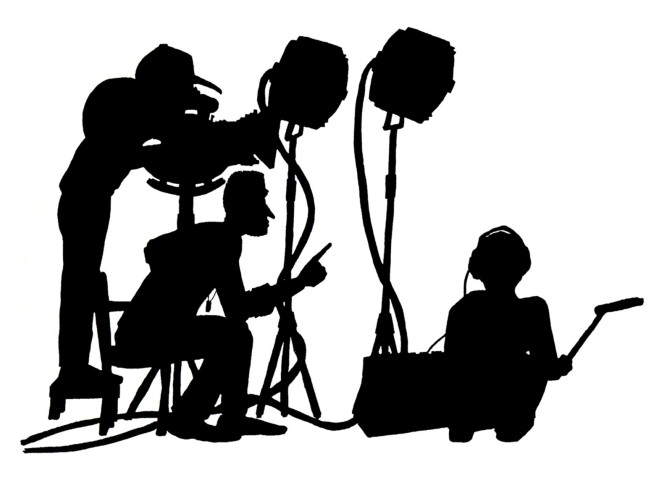 Want to make your summer more than just fun in the sun? Read on for these interesting and worthwhile volunteer opportunities.
 Alicia Torres is an East Bay native with low vision who truly enjoys leading an active lifestyle. With two adorable cats and a full social calendar, Alicia can often be found walking beautiful Lake Merritt or breaking a sweat at the gym. She told us, “I want to stay agile. Recently I tripped and almost fell, and I feel that the exercise I’ve done, especially building strength in my legs, really helped me to catch myself. I want to do even more in this area. Having a Fitness Partner would help a great deal, especially making sure I’m using equipment safely.”