




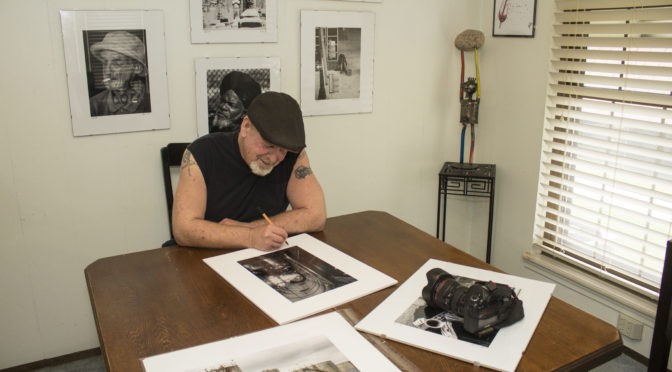
Tim Tonachella’s voice is unmistakable. I’ve learned its texture, its subtle turns and the meaning behind the sounds. It’s got some gravel in it; it throws stones playfully. Over several phone calls with the Michigan photographer this past year, though, when we talked about his life, his approach and his raw, explorative photography – the main thing ringing in my ears was that he didn’t want the first bullet point to be that he’s blind.
We talked a lot about how describing things affects how they’re perceived, and my intention was not to congratulate him for being the first legally blind guy to pick up a camera (he’s not, in case you’re wondering).
I reached out to ask if we could use his work in an exercise to help explore the process and practicalities of describing artwork for a blind audience. He was kind enough to say yes, and today we’re able to present never-before-seen photos along with a conversational, round-table audio description from a few folks who have spent time at the intersection of blindness and visual art: UC Berkeley professor Georgina Kleege, SFMOMA curator Peter Samis and San Francisco photographer Troy Holden.
Before we dive into the audio, a bit more about Tim Tonachella. He came to photography later in life, and when he first picked up the camera, everyone seemed to scratch their heads. He had gone to the Michigan School for the Blind with the likes of musician Stevie Wonder and our own Enchanted Hills Camp Construction Manager George Wurtzel, and though he still wryly jokes that he “never really liked blind people” much, his legal blindness was a constant throughout his life. When he picked up the camera in his fifties though, he suddenly had access to new worlds. The telephoto lens wasn’t, as many might assume, a confounding tool only for use by sighted folks, but instead opened up environments and enhanced his ability to see much in the way it would for those who clock in at 20/20 on the eye chart.
On January 27, Tonachella’s show “Growing Old On the Street” opens at the Downriver Council for the Arts in Wyandotte, MI. The collection is full of portraits, candid and posed, that reflect the toughness of Tonachella’s human fabric. The show, which also showcases the interpretative works of dozens of other artists, reflects Tonachella’s core sensibilities: generous, honest and a bit rough around the edges. Tonachella’s process is a labor of love, and often involves sitting patiently to hear the stories and take in the realities of the quietly persevering souls that cities have left behind.
Listen to the whole discussion in the playlist above or click each image to be directed to its associated Soundcloud link. Find out more about Tim Tonachella’s upcoming shows at the end of this post.
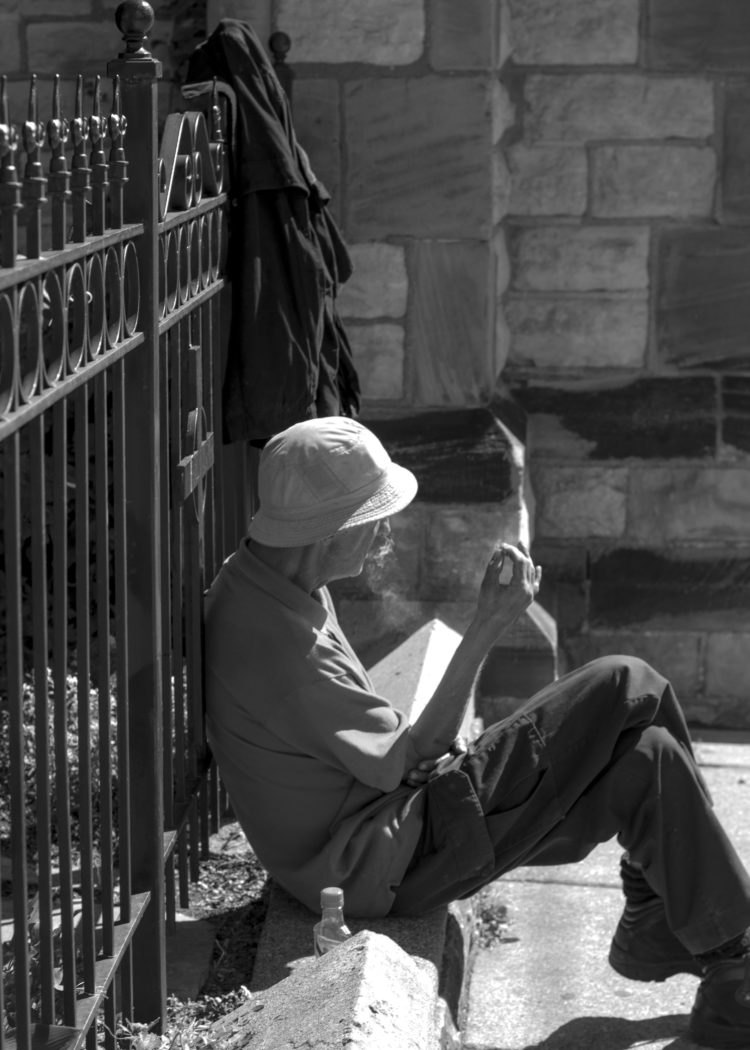

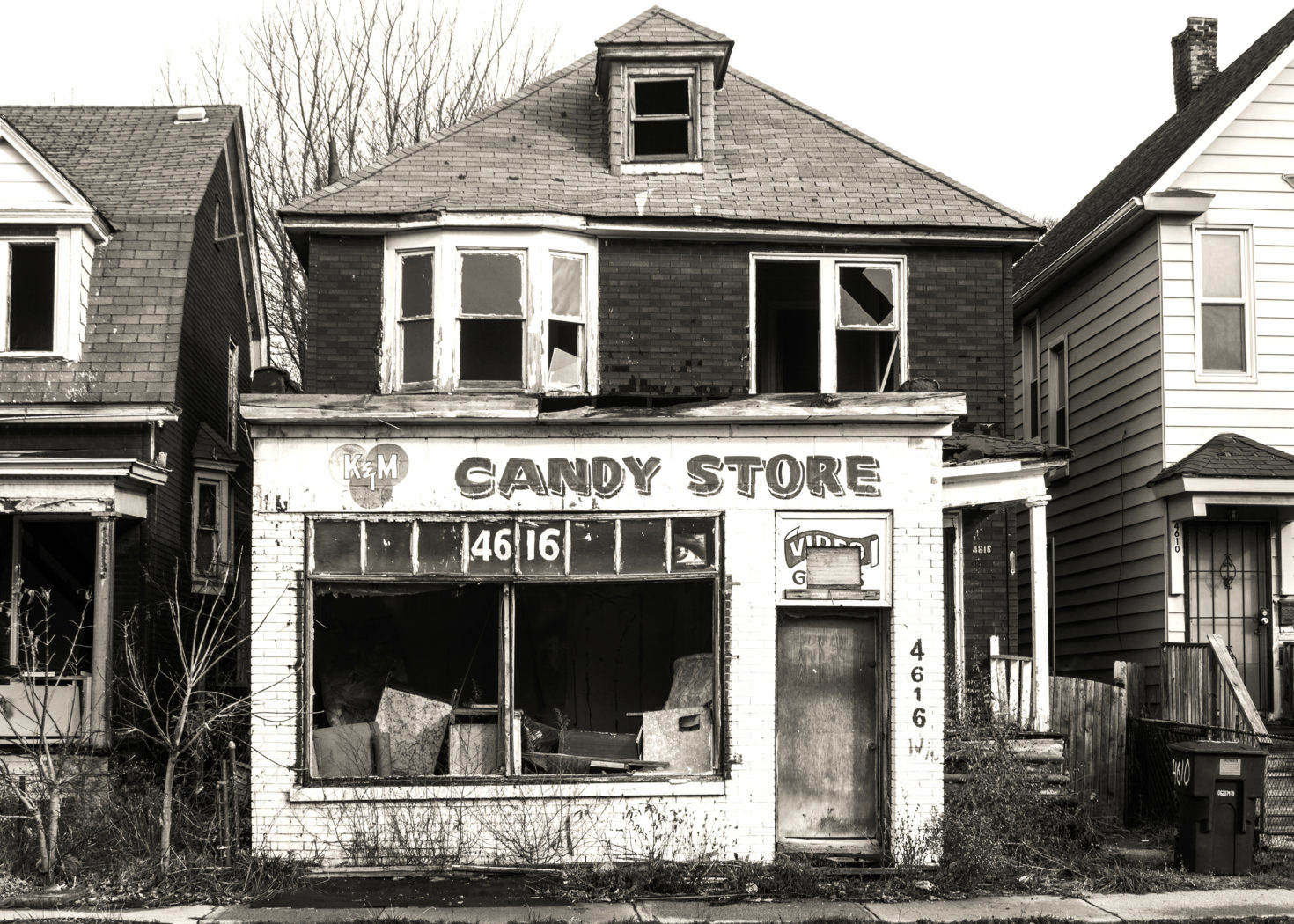
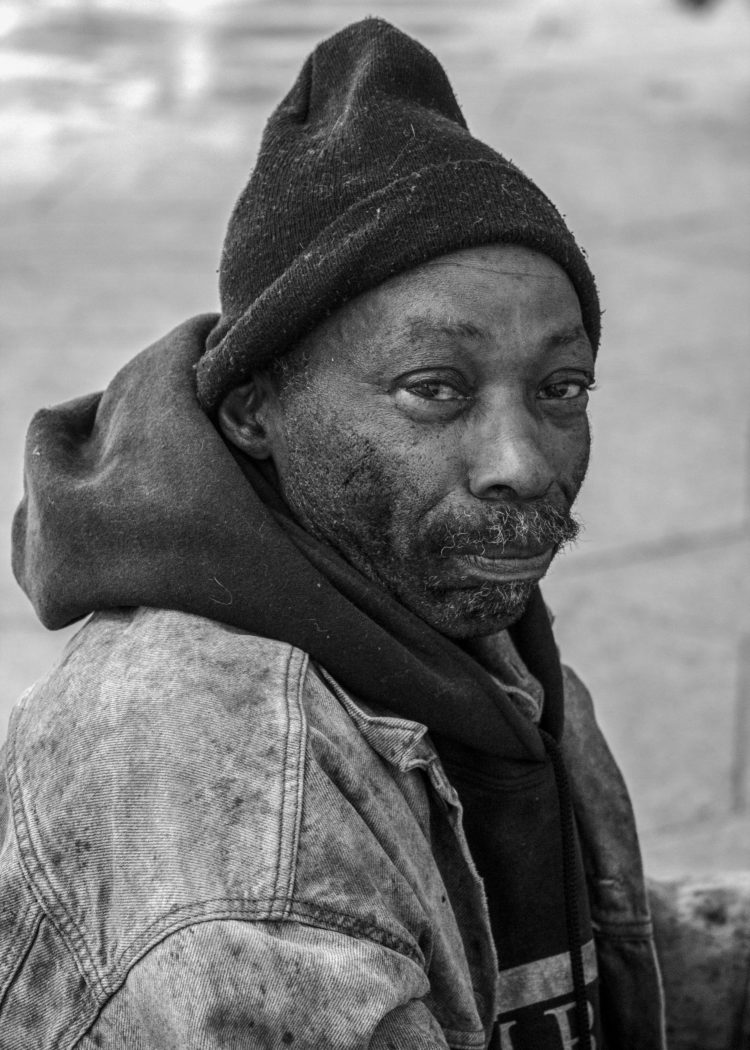

Tonachella’s exhibition at The Downriver Council for the Arts runs from January 27 through February 10, 2017. Downriver Council for the Arts, 81 Chestnut Wyandotte, MI 48192
He’ll also be featured in two other shows in Michigan coming up in July and October this year.
July 2017: Village Theater at Cherry Hill, 50400 Cherry Hill Road, Canton, MI 48187 (exact dates to be announced)
October 2017: Tim’s solo show will Exhibit during National Visual Impairment month. Y Arts, The YMCA of Metropolitan Detroit, 1401 Broadway St, Detroit, MI 48226 (exact dates to be announced)

 We conceived “White Canes, Red Carpet” as a celebration — of audio description and technology, but moreover, inclusion and access for all. We believe that not having to contend and litigate for good accessible technology is not just a luxury, but a civil right, and seeing such an influential studio as Disney-Pixar take on the challenge wholeheartedly is truly something worth celebrating. What’s more, this will be an unprecedented gathering of blindness organizations across the Bay Area — and we’ve been working closely with the Blind Babies Foundation, Guide Dogs for the Blind, and several other agencies to ensure that as many groups as possible are represented.
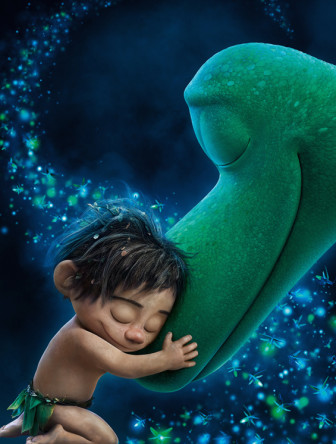
 When I spoke to Paul again this week, he had just gotten back from LA, where he was working with the voice actor recording audio description for Pixar’s new film, The Good Dinosaur. Usually the narrator’s script for an audio described film is contracted out to a specialized agency — in Pixar’s case it’s WGBH in Burbank, which handles most broadcast and film audio description on the west coast. Even with contractors like WGBH, Paul is totally hands-on. “I don’t know of any other studio that sits down and reviews the script for the narration track,” he told me this week. “We have the producer, the director, the writer, the film editor and myself comb through that script and make changes. I sent 3-4 rounds of changes to WGBH for The Good Dinosaur. And it’s about helping them, too — they don’t get direct feedback very often about what’s good and bad about their script.