




If you’re blind or visually impaired, you know that going to the movies isn’t as simple as smothering your popcorn in butter and leaning back in a cushy chair. While you wait thirty minutes for the manager to locate and set up assistive devices, you’ve already missed the beginning of the movie — if the device even functions properly.
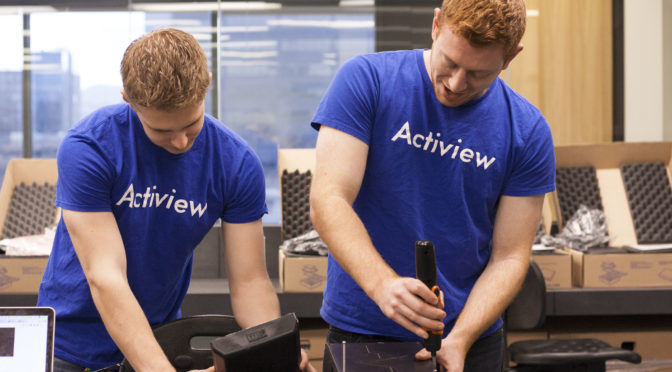
But over the last year, LightHouse partner Actiview designed and prototyped a mobile solution to this problem within the walls of the LightHouse headquarters, and even 3D printed their streaming devices in our Toyota Innovation Tech Lab as part of our startup accelerator. They have since moved their base to our Berkeley satellite location.
On June 16, Actiview launched in the App Store to offer widespread accessibility for the summer Pixar release of Cars 3.
The team and their direction were influenced by many hours of feedback from LightHouse blind staff. We supported Actiview through their beta version because we think it is a huge step in the right direction towards accessibility for all moviegoers.
There is a strong buzz about this new technology as the wider community understands that Actiview will be able to provide affordable access to thousands of movie screens. Last week, industry reporter TechCrunch wrote a fascinating feature on this LightHouse-supported technology. You can read the whole story here.
The newest release from Disney•Pixar, Cars 3, will be fully supported by the Actiview app, delivering both amplified audio and audio description, free of charge, to anyone who downloads the app and shows up at the theater. Audio description is for blind users, with a voiceover track describing what is happening on screen. Amplified audio takes the audio of the movie and makes the dialogue clearer and louder, for hard of hearing attendees.
Here’s what to know:
- Available on the App Store (http://appstore.com/activiewempoweredentertainment)
- Audio Description for Blind and Low Vision
- Amplified audio for Hard of Hearing
- Captions and Languages coming soon
- Works with Cars 3 in all US theaters
- Assistive services are free
How to use Actiview:
- Download the Actiview App from the App Store.
- On June 16, Cars 3 assistive audio (assistive tracks will be available to for download in advance. Download over Wi-Fi before getting to the theater if you want to save on data use)
- Go to the Cars 3 screening of your choice, open the app, and choose either Audio Description, Amplified Audio or the two tracks combined.
- Give us your feedback by emailing comments to team@actiview.co or by calling our hotline at 1(844)-399-2789 to sound off!
Please note: The first time a user opens the app, there is a 30-second tutorial helping the user to understand how to navigate the app which requires headphones to go through.


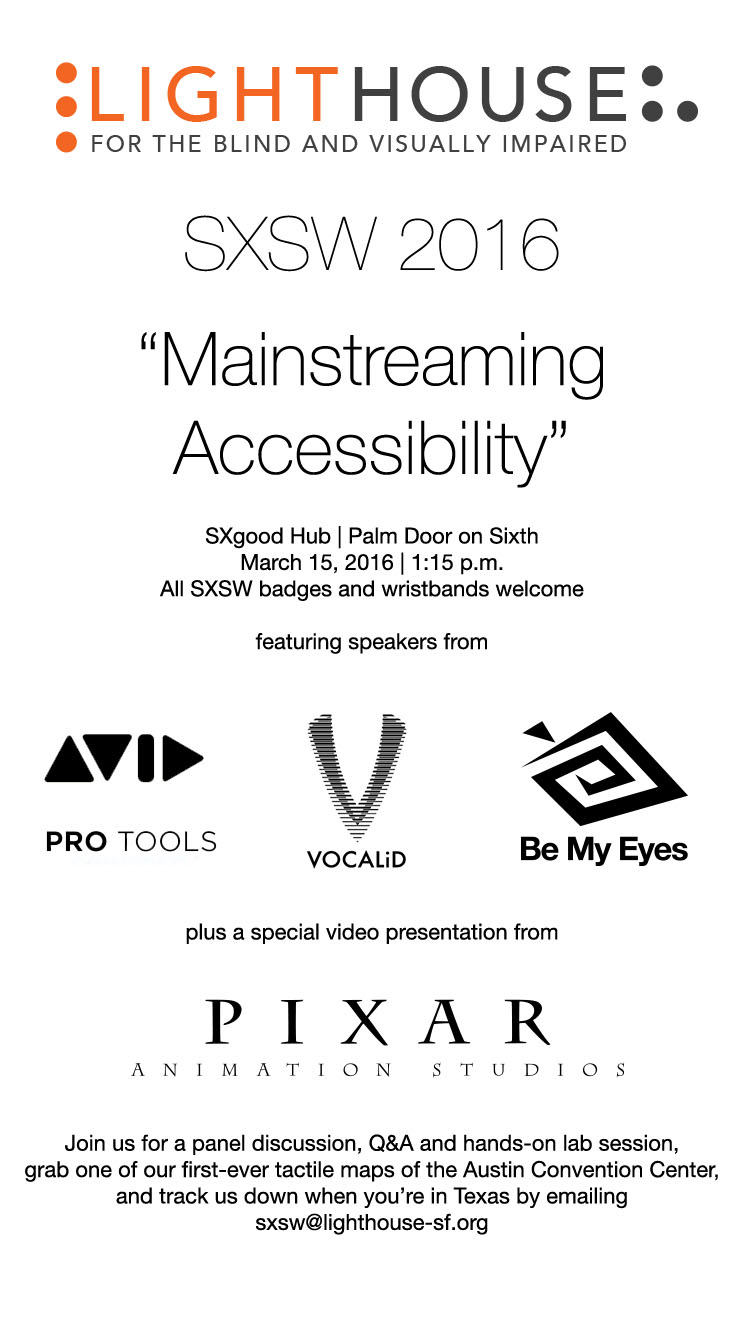
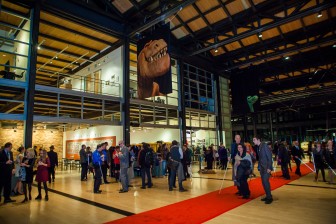
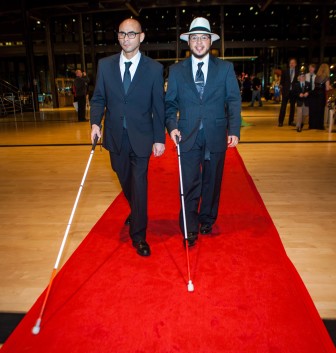
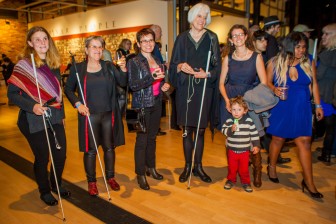
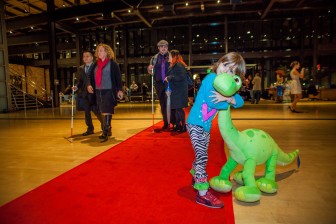

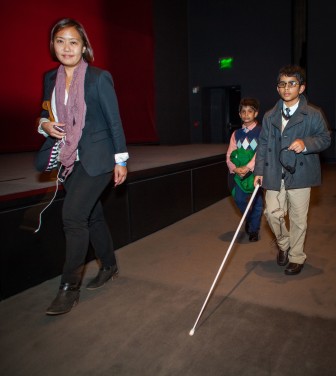
 We conceived “White Canes, Red Carpet” as a celebration — of audio description and technology, but moreover, inclusion and access for all. We believe that not having to contend and litigate for good accessible technology is not just a luxury, but a civil right, and seeing such an influential studio as Disney-Pixar take on the challenge wholeheartedly is truly something worth celebrating. What’s more, this will be an unprecedented gathering of blindness organizations across the Bay Area — and we’ve been working closely with the Blind Babies Foundation, Guide Dogs for the Blind, and several other agencies to ensure that as many groups as possible are represented.
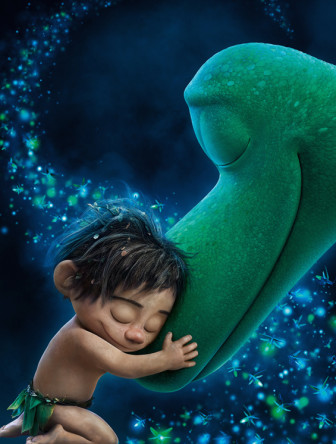
 When I spoke to Paul again this week, he had just gotten back from LA, where he was working with the voice actor recording audio description for Pixar’s new film, The Good Dinosaur. Usually the narrator’s script for an audio described film is contracted out to a specialized agency — in Pixar’s case it’s WGBH in Burbank, which handles most broadcast and film audio description on the west coast. Even with contractors like WGBH, Paul is totally hands-on. “I don’t know of any other studio that sits down and reviews the script for the narration track,” he told me this week. “We have the producer, the director, the writer, the film editor and myself comb through that script and make changes. I sent 3-4 rounds of changes to WGBH for The Good Dinosaur. And it’s about helping them, too — they don’t get direct feedback very often about what’s good and bad about their script.