Category Archive

LightHouse News

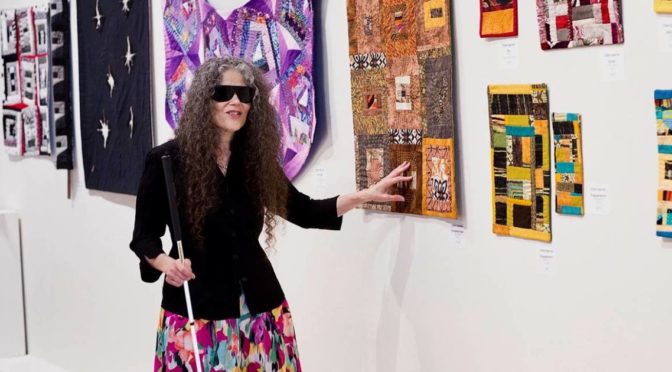
Meet blind textile artist Claire Spector

Meet blind textile artist Claire Spector

Claire Spector is a legally blind contemporary textile artist. She sews by feel.

The exhibition explores different textile techniques and follows Claire’s journey of stepping out into a wider world after becoming blind suddenly and without warning. Through the medium of contemporary textile art, the exhibition highlights everything from Claire’s first collaborative touch sewing projects in 2005 to more recent independent explorations.

Read Claire’s artist statement below:

“I am a legally blind contemporary textile artist. Since 2005, my near vision is multiple, misaligned and unstable. I am very sensitive to light, motion and geometric patterns. I walk with a red and white cane and use assistive technology.

When I was quite young, my artist mother Barbara taught me to sew by hand, to knit, draw and make prints. Hand-sewing teaches patience. Piecing-by-hand is a meditation…a sense memory of visual close work now guided by touch. My fingers reference edges, seams and tactile embroidery spirals I sew following a flow. Work progresses organically, a bit at a time.

I sew with cotton, linen, wool and silk scraps, remnants and deconstructed clothing using good cotton thread, short #10 quilting and big-eyed Sashiko needles, Perle cotton 8 embroidery thread, sharp cuticle scissors, glass-head pins and a treasured Japanese pin cushion.

The reassuring click of a Clover needle threader and the quiet of hand-sewing is a welcome break from synthesized assistive technology voices and the sewing machine. Sharing art created in this fashion opens dialogues and opportunities to explore new possibilities, learn about resources and discover creative workarounds for a more vibrant life.

This work, like all of my work made by feel, flows one piece at a time.

There is no initial design or visual plan.

It’s associative.

One piece follows another in the moment.

It is an exercise in patience, humility, and a willingness to deconstruct, revisit and discover.

It’s a lesson in balance, taking a break, and awaiting fresh directions.

It’s a creative journey beyond adversity, frustration and an opening to happiness.”

The show is inspired by conversations about blind identity, art-making, and accessibility, with Anthony Tusler, Georgina Kleege, Karen Berniker, Cecile Puretz, Dr. Stanley Yarnell, MD, Jennifer Sachs, Greg Kehret.

This art show is supported in part by the California Arts Council, a state agency, and the National Arts and Disability Center at the University of California Los Angeles.

The show is dedicated to the memory Claire’s dear friend, the artist Reese Thornton.

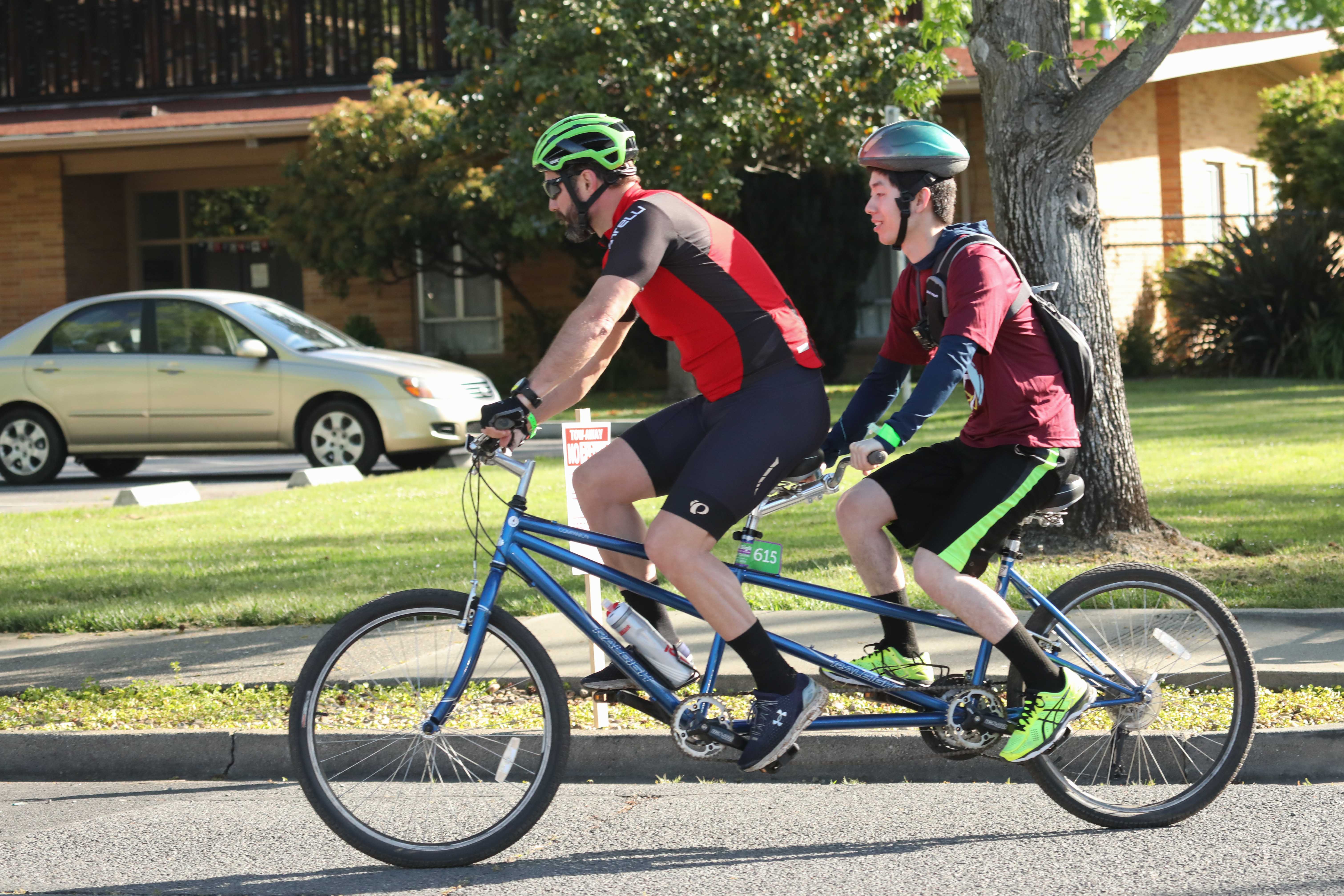
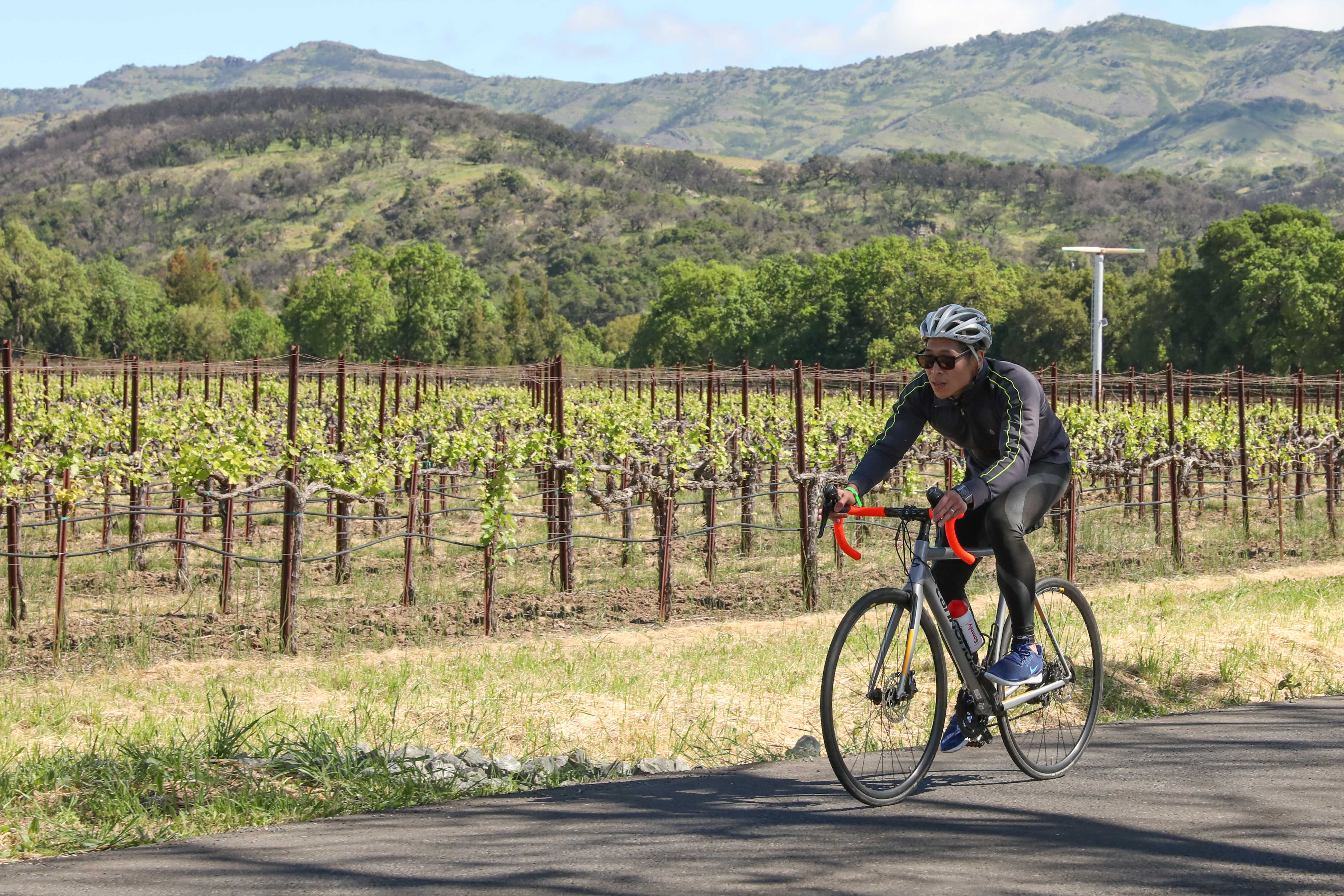
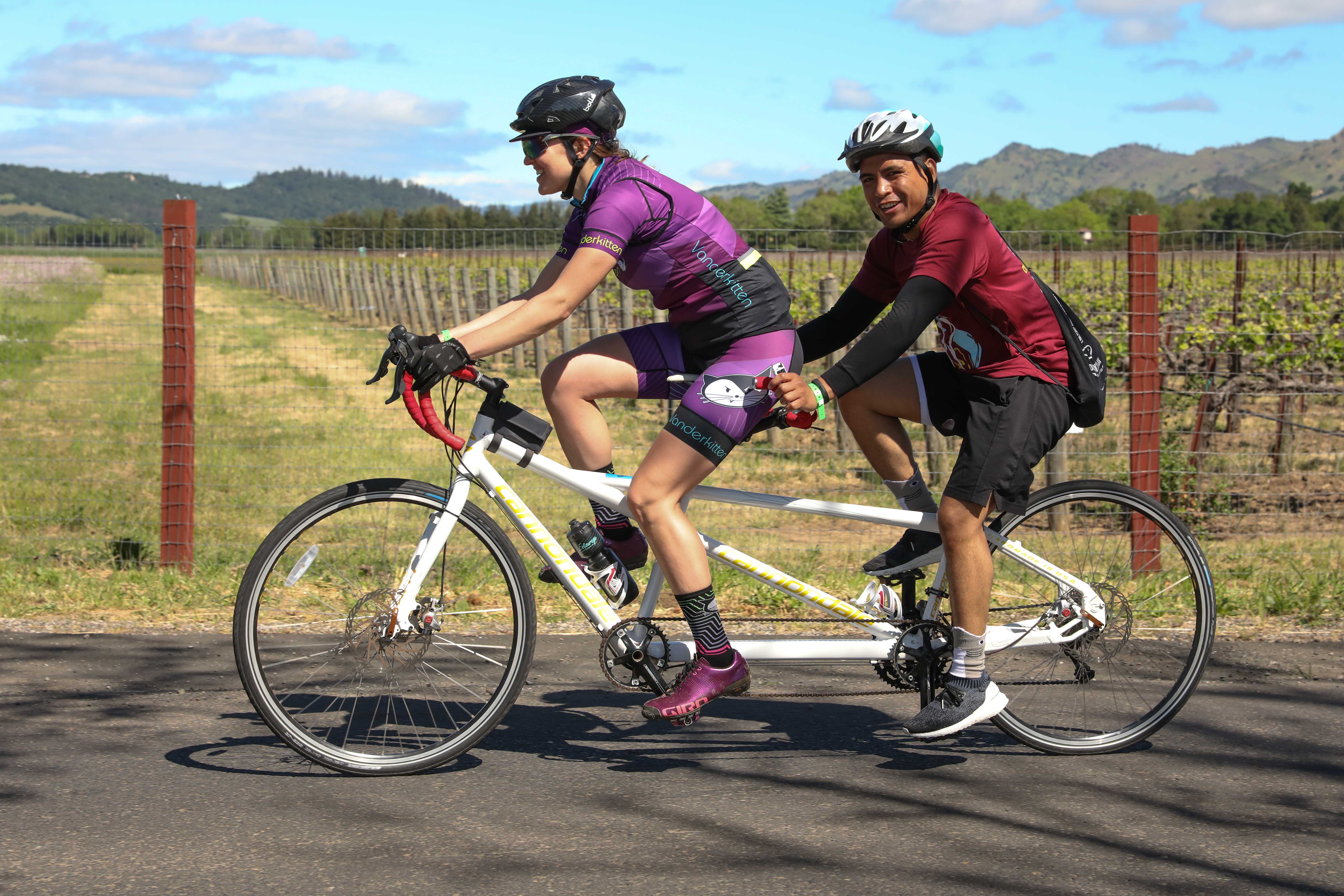
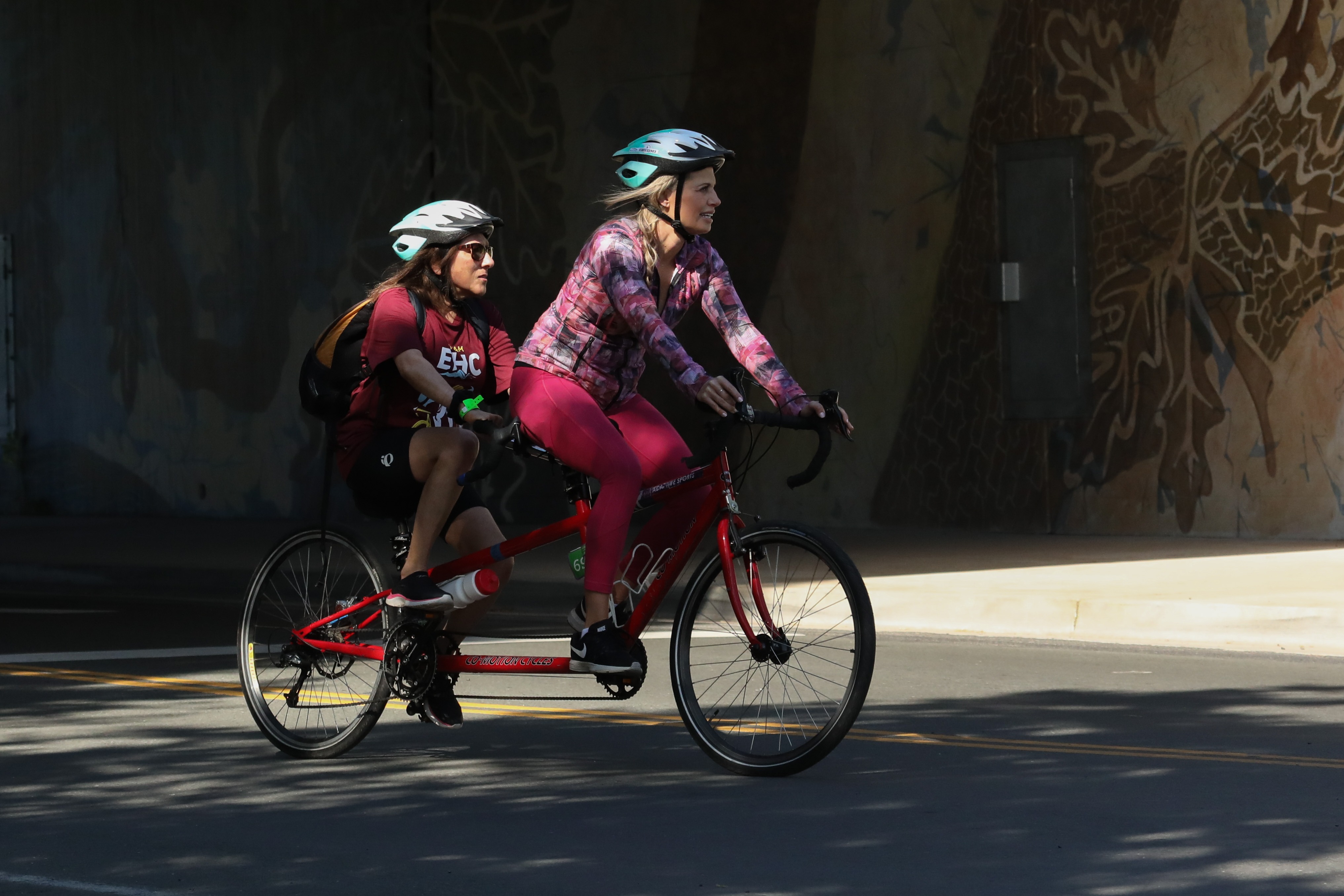
Photos from Cycle for Sight: Cycling with a side of fun and fundraising

Photos from Cycle for Sight: Cycling with a side of fun and fundraising

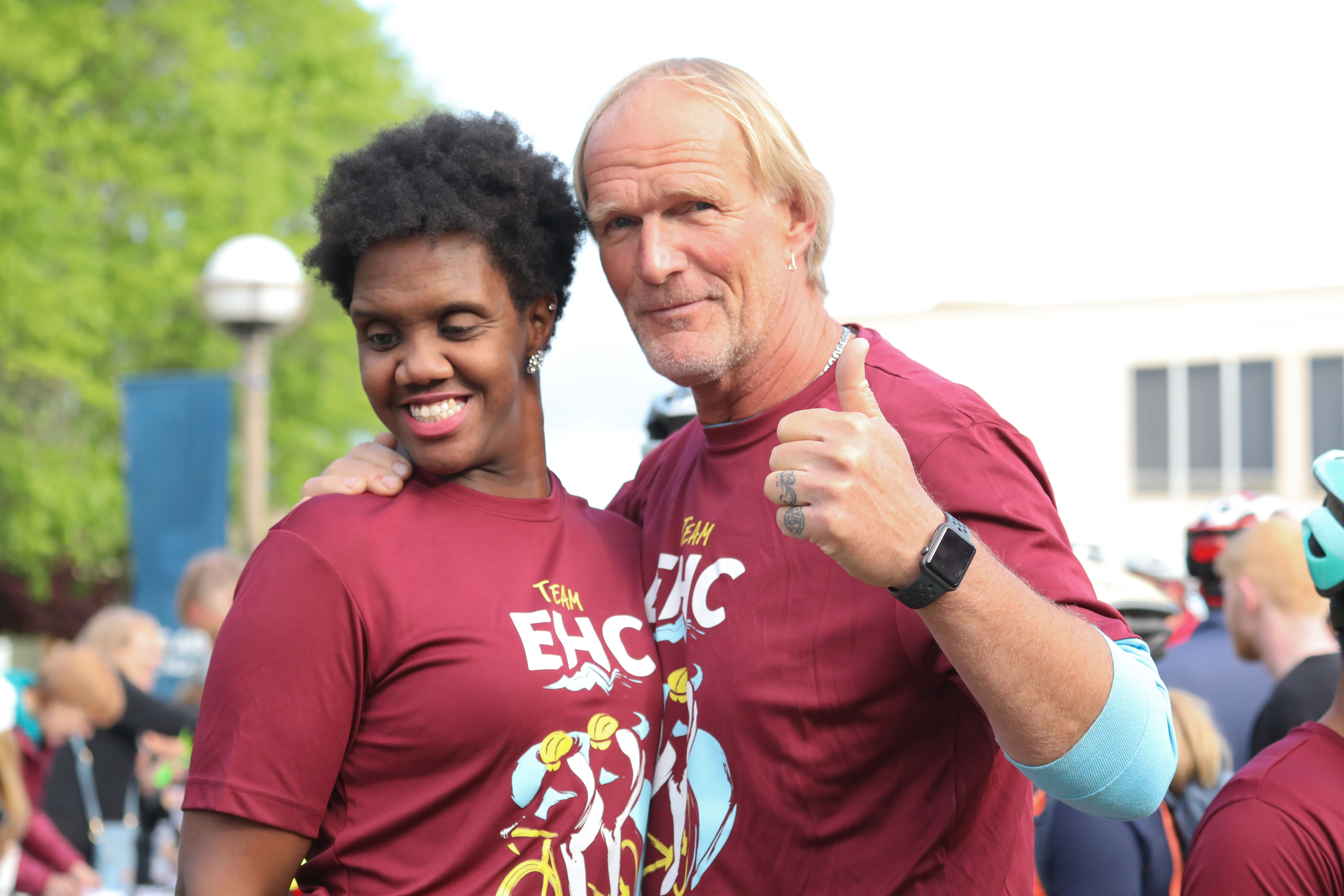
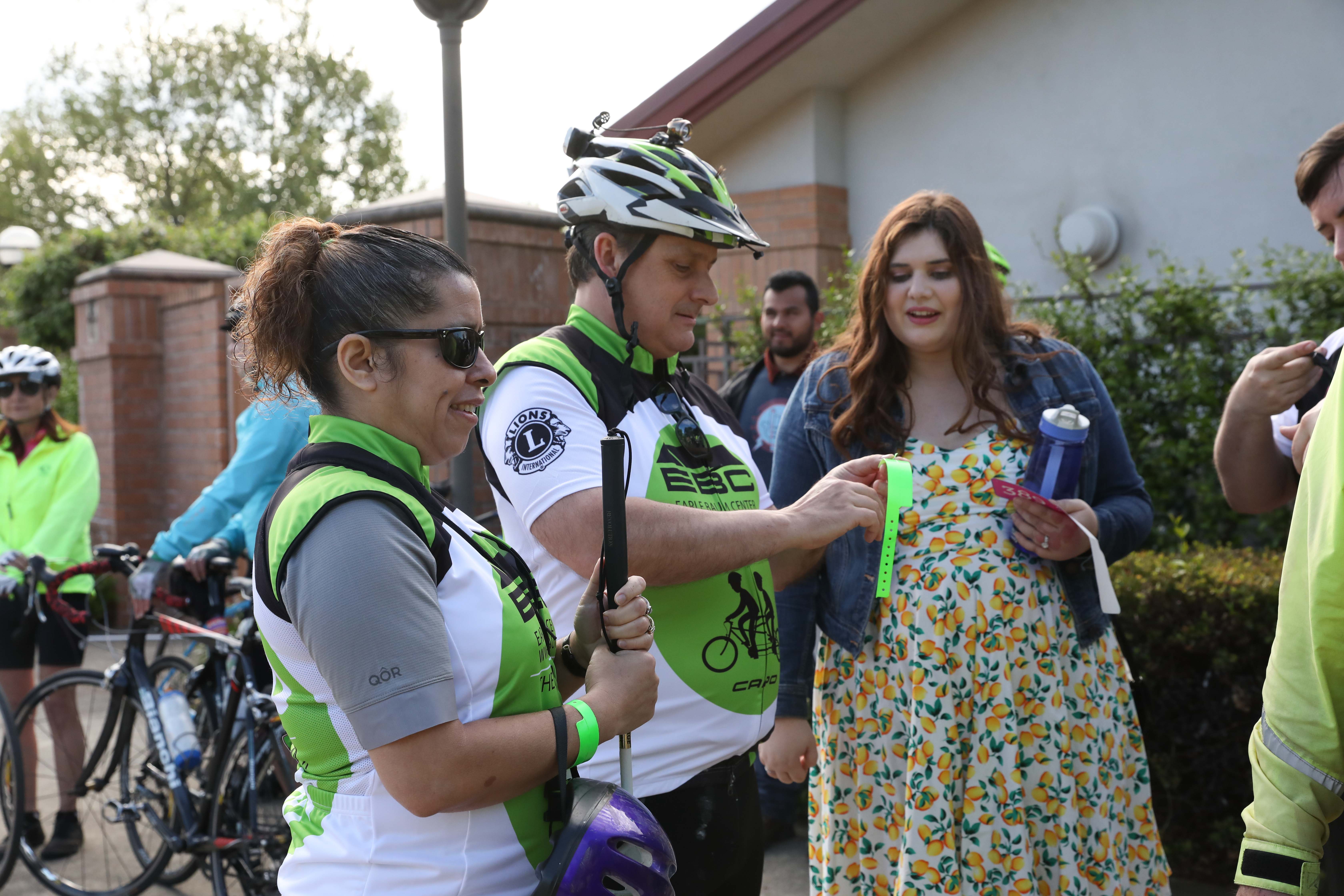
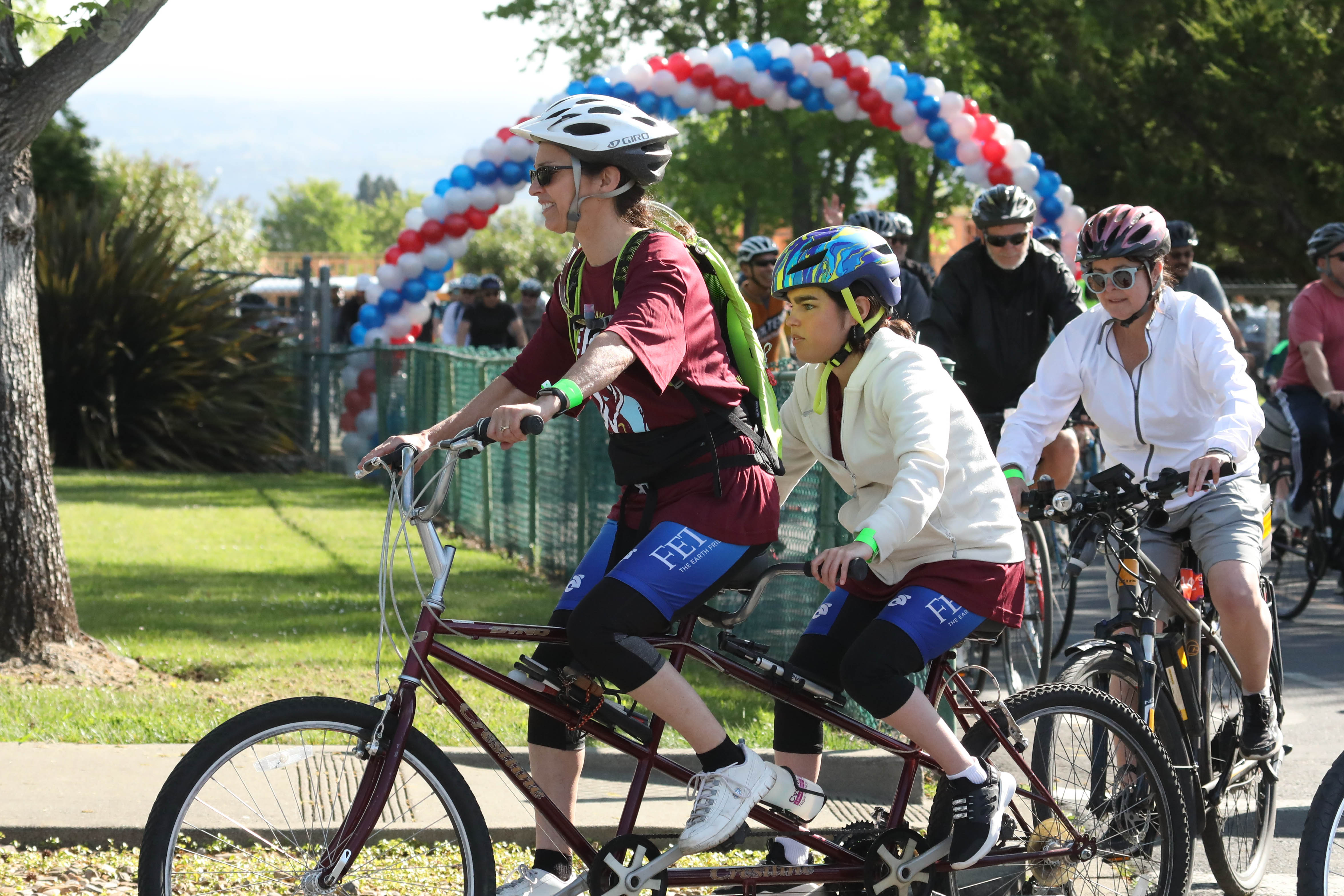
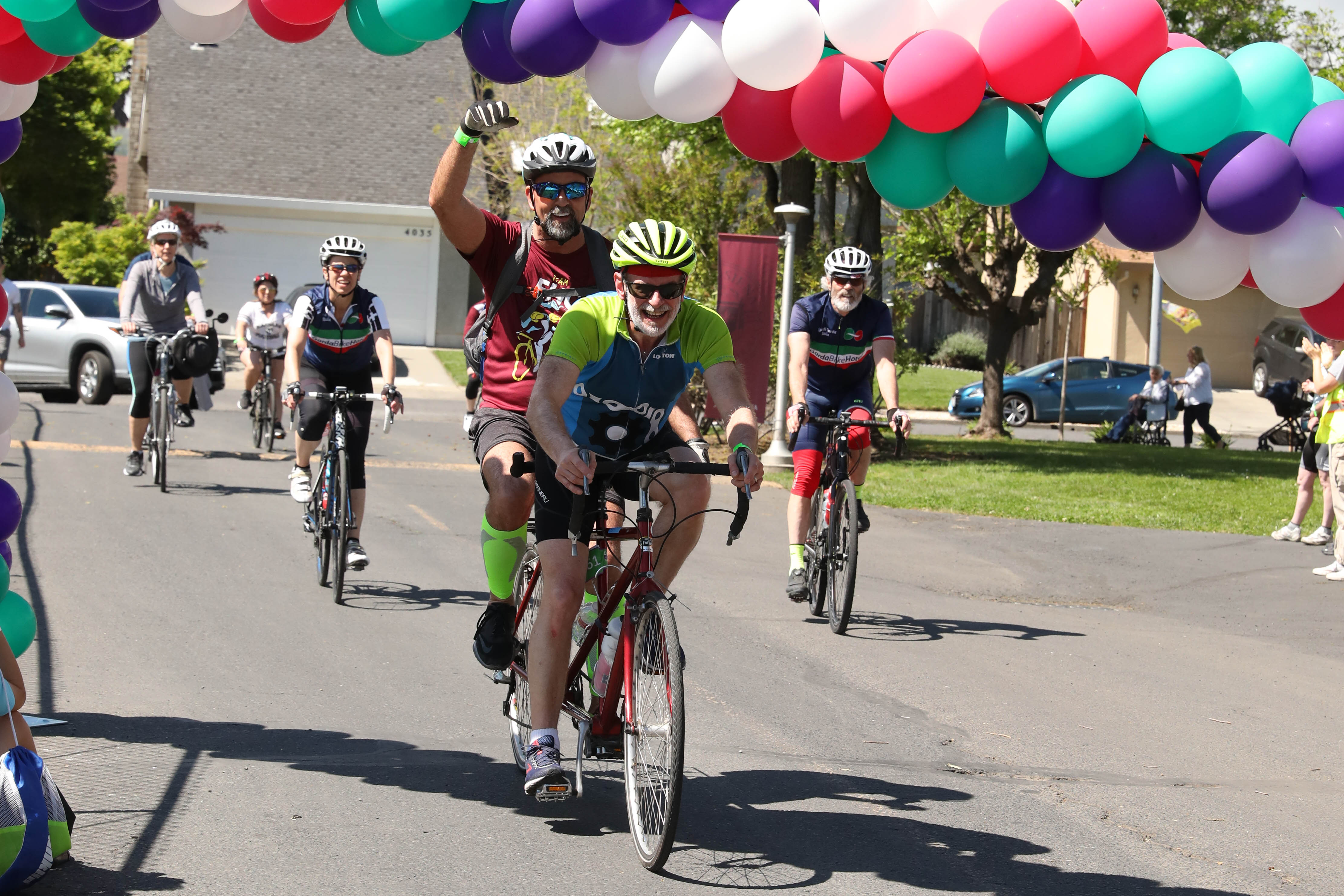
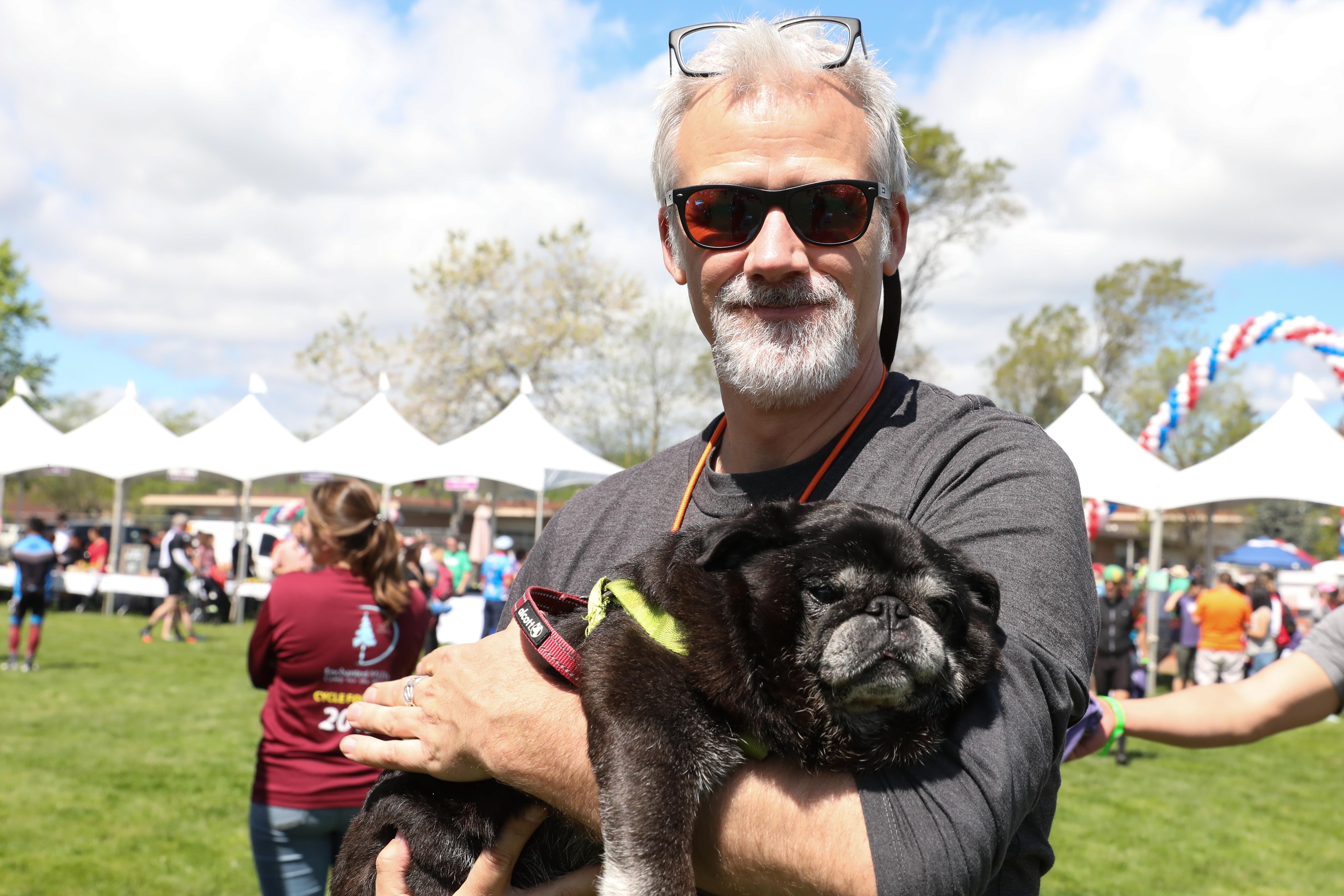
As usual, Cycle for Sight was a day full of sunshine, good food, fitness and a key source of fundraising for Enchanted Hills Camp as we rebuild!

For over a decade, this event, co-presented with the Rotary Club of Napa, has brought together blind community members, blind athletes and family and friends alike. Thank you to all the members of Team Enchanted Hills, volunteers and donors for making this year a success!

Announcing the 2019 Holman Prize Judges

Announcing the 2019 Holman Prize Judges

In its third year, the Holman Prize for Blind Ambition received 111 applications from six continents. The semifinalists’ proposed projects are incredible, and highlight advocates, artists, athletes, entrepreneurs, and more. It won’t be an easy task to choose the three 2019 prizewinners from such a strong and diverse group.

The Holman Team is in the process of selecting finalists for the judging committee to select from, but in the meantime, we invite you to peruse the whole group of semifinalist submission videos to experience the diversity of people and proposals in the field.

This week, all semi-finalists have submitted their complete application packets, hundreds of pages of ambitious detail which will help them change the world’s perception of blindness. In just a few weeks, we’ll welcome our judges at LightHouse in San Francisco to review the finalists’ proposals and select the 2019 Holman prizewinners.

As always, the prestigious Holman judge panel represents a leading cross-section of blind talent and experience, a group devoted to the highest ideal of blindness, both personally and professionally.

Meet the Holman Committee:
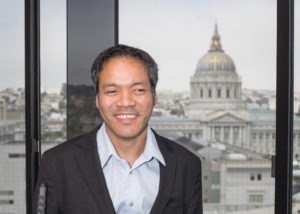
 A headshot of Jennison Asuncion.

Jennison Asuncion, Engineering Manager, LinkedIn

“I lost my sight before I was two. So to me, being blind has always felt normal. It is part of me but does not define who I am.”

Jennison Asuncion moved to the Bay Area in November 2013 to lead LinkedIn’s digital accessibility efforts. Originally from Montreal, he has been working in digital accessibility for over ten years. In 2012, Jennison co-founded the annual Global Accessibility Awareness Day (GAAD). Held annually on the third Thursday of May, GAAD is dedicated to raising awareness of digital access and inclusion by and for the more than one billion people with disabilities. Jennison sits on the Board of Directors for the LightHouse for the Blind and Visually Impaired San Francisco, AMI (Accessible Media Inc.), and Knowbility. 
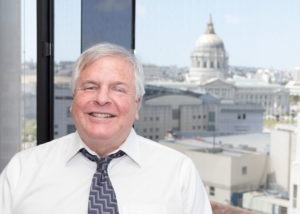
A headshot of Bryan Bashin.

Bryan Bashin, CEO LightHouse for the Blind and Visually Impaired

Bryan Bashin has led a diverse life since he graduated UC Berkeley in history and journalism. Mr. Bashin first spent 15 years as a journalist in television, radio and print, specializing in science news. In 1998 he was hired as Executive Director of the Sacramento Society for the Blind, where he quintupled the number of hours of teaching and developed innovative programs such as the Senior Intensive Retreat and summer immersion camps. In 2004, Mr. Bashin was hired as the Region IX assistant regional commissioner for the US Department of Education’s west coast branch of RSA, overseeing funding for $500 million in federal disability programs. In 2010 he was hired to lead the LightHouse for the Blind in San Francisco, where he works today with a staff of 140. Mr. Bashin is a relentless innovator, working with a remarkable idealistic staff. Throughout his career, Mr. Bashin has worked in the confluence of high technology, social advocacy and governmental partnerships.

A portrait of Eric Bridges.

Eric Bridges, Executive Director, American Council of the Blind

“I believe that people who are blind or visually impaired should strive to be the best they can be, and I believe that each blind or visually impaired person has the right and responsibility to define success on his or her own terms.”

Eric joined the staff of the American Council of the Blind in 2007. In 2013, he became the Director of External Relations and Policy, cultivating many key relationships with business, industry, government officials, and agency staff. Two years later, the Board appointed him executive director. He is responsible for overseeing the daily operations of both of ACB’s offices. 

A portrait of Kerryann Ifill.

Kerryann Ifill, President of the Senate, Barbados

“The art of living with blindness demands absolute creativity; creativity in attaining and maintaining your own independence, creativity in charting a path that encourages others to emulate your example, creativity in ensuring that others value and recognise your individuality and the right to be the whole person you were designed to be.”

Kerryann’s life continues to be characterized by landmarks. As the first totally blind student completing mainstream education to post graduate level; becoming the first female to hold the office of President of the Senate, the only person with a disability and the youngest person. She has served both professionally and personally in various organizations for persons with disabilities, both locally and regionally and currently hold the office of President of both my the National United Society of the Blind Barbados and the Caribbean Council for the Blind. She represented her country and at several local, regional and international fora on a cadre of issues related to disabilities. The Holman Prize embodies her belief that blindness is not a burden, but an exciting opportunity.
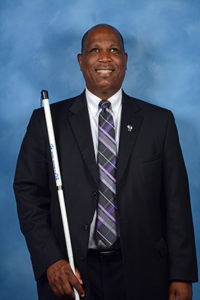
A portrait of Anil Lewis.

Anil Lewis, Executive Director, National Federation of the Blind Jernigan Institute

“Blindness is a paradigm shift.”

A passionate advocate for the rights, education and employment of blind people everywhere, Anil currently serves as the executive director of Blindness Initiatives for the National Federation of the Blind Jernigan Institute in Baltimore, MD, where he leads a dynamic team of individuals responsible for the creation, development, implementation, and replication of innovative projects and programs throughout a nationwide network of affiliates that work to positively affect the education, employment, and quality of life of all blind people.
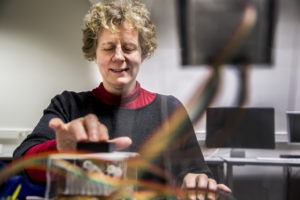
A portrait of Sile O’Modhrain.

Dr. Sile O’Modhrain, Professor, University of Michigan

A professor in performing arts technology at the school of Music, Theatre and Dance at the University of Michigan, O’Modhrain brings a wide breadth of personal and professional skill to the Holman Prize committee. With past careers in sound engineering, technology, music and more – and passionate study in the fields of arts, assistive technology, and haptics – O’Modhrain is constantly in search of better ways for blind people to access information and work in the world. 

A portrait of Sassy Outwater-Wright.

Sassy Outwater-Wright, Executive Director, Massachusetts Association of the Blind

“There is no one right way to do vision loss. There is your way, and individuality is essential to accessibility. We’re writing history now, deciding how to combine technology and our own humanity to redefine what independence means to us as individuals who are part of the same community. Dignity, opportunity, innovation and accessibility feed off each other.”

Sassy is the executive director of the Massachusetts Association for the Blind and Visually impaired (MABVI). She lost her sight at 3 due to retinoblastoma, and has had several rounds of cancer since then. She is a passionate digital accessibility advocate, specializing in technology for people with multiple disabilities, and studying how intersectionality, artificial intelligence, and intersecting marginalizing factors affect people. She lives in the infamous Salem, Massachusetts, and it fits her perfectly.

A portrait of Britt Raubenheimer.

Dr. Britt Raubenheimer, Senior Scientist, Woods Hole Oceanographic Institution

“Losing vision was a hurdle, but it forced me to grow. When I lost my sight I thought I would need to discontinue my work and many of my activities. But instead, overcoming my inability to see taught me self-confidence and encouraged me to explore.”

Britt is a senior scientist at Woods Hole Oceanographic Institution in Woods Hole, MA. Working with a team of other scientists, students, and engineers, she collects and analyzes measurements to understand interactions among coastal waves and surge, beach and dune evolution, groundwater, and winds and precipitation during extreme storms. When others evacuate before a hurricane, Britt often is on her way to the beach. Deploying her instruments in the ocean requires SCUBA, and Britt is the only legally blind, certified, university research diver. Britt resides in northern Idaho, where she serves on the board of the Idaho Commission for the Blind, and enjoys skiing, hiking, and knitting.

A portrait of Jason Roberts.

Jason Roberts, Author, ‘A Sense of the World’

An accomplished author, Roberts’ acclaimed work, about the intrepid blind traveler (and namesake of this prize) James Holman, “A Sense of the World: How a Blind Man Became History’s Greatest Traveler,” was a finalist for the 2006 National Book Critics Circle Award, long-listed for the international Guardian First Book Award, and named a Best Book of the Year by the Washington Post, the San Francisco Chronicle and Kirkus Reviews. Born in Southern California, Roberts earned his high school diploma at fourteen, then took a five-year hiatus from education. He worked as a day laborer, dishwasher and late-night disc jockey before matriculating at the University of California, Santa Cruz. He lives in Sausalito, California, with his wife, a chemical engineer, and their two young children.
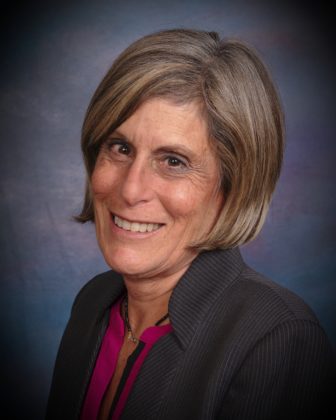
A portrait of Sharon Sacks.

Dr. Sharon Sacks, Retired Superintendent, California School for the Blind

Dr. Sacks is recently retired from her post as Superintendent of the California School for the Blind. During her tenure, Dr. Sacks led a staff of 150 and promoted education excellence for students served on campus and through outreach programs throughout the state. Prior to her role as superintendent, Dr. Sacks was the Director of Curriculum, Assessment, & Staff Development at CSB. After receiving her doctorate, Sharon coordinated programs, and was a university professor in moderate/severe disabilities at San Jose State University, and programs in visual impairments at California State University, Los Angeles. Dr. Sacks worked as a TVI for eight years as a resource and itinerant teacher prior to assuming leadership positions.

Dr. Sacks is a strong advocate for ensuring quality services for children and adults who are blind or visually impaired through her direct work with families, consumer organizations, and professional organizations. She is the recipient of the Mary K. Bauman Award for Distinguished Service in Education, and a past president of AERBVI. Dr. Sacks currently serves on the Lighthouse’s Board of Directors.

A portrait of Zack Shore.

Dr. Zach Shore, Historian

A historian of international conflict, Dr. Shore is the author of five books, including “A Sense of the Enemy.” Shore is Associate Professor of History at the Naval Postgraduate School and Senior Fellow at the Institute of European Studies, University of California, Berkeley. He earned his doctorate in modern history at Oxford, performed postdoctoral research at Harvard, and held a fellowship at Stanford’s Center for Advanced Study in the Behavioral Sciences.

A portrait of Kathryn Webster.

Kathryn Webster, President, National Association of Blind Students

“Though a single inconvenience, blindness has the power to ignite strength, resilience, and confidence. We may grow exhausted of educating society of our abilities, but who more qualified than blind communities to shatter the glass ceiling that eternally perpetuates negative misconceptions?”

Kathryn graduated from Wake Forest University with high honors, receiving Bachelor of Science degrees in Statistics and Computer Science in 2017. Her scholastic achievements propelled her into a career with Deloitte & Touché, LLP where she specializes in strategic transformation and data analytics. Kathryn recognizes the value in intertwining corporate prowess with civic engagement, thus jumpstarting a statewide transition program for blind and low vision youth, designed to ignite confidence and independence, demonstrate the value of mentorship, and encourage Virginia’s youth to shoot for the stars. Kathryn proudly serves as President of the National Association of Blind Students (NABS), Kathryn lives each day with true authenticity, bringing difficult conversations to the table and engaging in a persistent challenge to be the best version of herself. 

Holly Scott-Gardner stands outdoors on a lawn, in front of a tree and a potted plant.

Holly Scott-Gardner, Blindness Advocate and Blogger

“I view my blindness as an integral part of who I am. It has shaped my experiences and more often than not presented me with opportunities I don’t believe I would have had if I could see. The so-called difficulties of blindness more often than not result from a world that is not built with blindness in mind. Whether I’m faced with an inaccessible payment terminal, or a stranger who insists I shouldn’t cross the street alone, I am wrestling with an inaccessible world and the misinformed views many hold on blindness. My blindness isn’t the thing that needs to be changed.”

Holly is a public speaker, blindness advocate and Youtube creator in the U.K. When Holly was still a teenager in school, she realized that she could use her voice and experiences to change how blindness is viewed. Eight years after setting up her blog she has spoken in Parliament, lobbying the government to alter its provisions for disabled students, advocated for the rights of disabled survivors of domestic abuse at the European Parliament in Brussels and represented disabled students at her university by winning the seat of disabled students counsellor. She aims to ramp up her advocacy work after graduation, with an outlook on international blindness movements. Read Holly’s essay about her experience as a camp counselor at Enchanted Hills Camp.
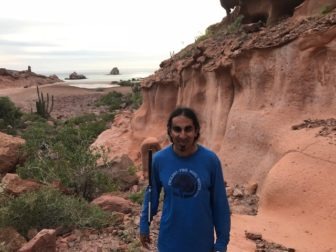
Ahmet Ustunel stands in a park with red rock craters, holding his white cane.

Ahmet Ustunel, Teacher of the Blind and Visually Impaired and 2017 Holman Prizewinner

“As a blind person to educate the public about blindness and as an educator to inspire my Blind students, I am trying to foster the same qualities Holman demonstrated: immense courage and passion, persistence, a curious and adventurous spirit, strength of purpose, and belief in one’s self. As a blind teacher of blind students, I tell my students that being blind should never prevent them from achieving their goals, although they might need to deal with prejudices, discrimination, and an inaccessible physical and educational environment. I let them know that limits and barriers they encounter are not results of blindness itself; they are just products of prejudice and discrimination in society. Even worse, sometimes they are our own mind’s products. I want my students to understand blindness as a characteristic of a person rather than a limitation.”

Ahmet is a full-time teacher of the visually impaired in San Francisco. He is also an avid outdoorsman and one of the inaugural recipients of the Holman Prize for Blind Ambition. He began solo kayaking in San Francisco Bay shortly after moving to the United States from Turkey a decade ago. With the Holman Prize, Ahmet achieved his ambitious goal in July 2018 by paddling across the Bosphorus Strait, which divides the European region of Turkey from its Asian counterpart, completely alone. Read about his solo kayaking journey from Europe to Asia.

All summer, tune into KQED on Fridays for a blind tour of California

All summer, tune into KQED on Fridays for a blind tour of California

Every Friday starting April 26, The World According to Sound’s new radio series will take listeners on an audio exploration of California from the acoustic perspective of the blind.

Over the last year, LightHouse for the Blind and Visually Impaired has partnered with Bay Area podcast The World According to Sound as they collected footage to take listeners on an audio exploration of California from the acoustic perspective of the blind. Starting this Friday, the radio series will begin airing on KQED during The California Report Magazine at 4:30 p.m., 6:30 p.m. or 11 p.m. PST. Tune in live or visit this link to listen at your leisure.

Each radio episode focuses on one sound or story that captures what it’s like to live in California as someone who is blind or visually impaired. You will hear from wanderers, beekeepers, commuters, hikers, teenagers and retirees. Using the latest in binaural 3D sound recording, the World According to Sound’s producers, Chris Hoff and Sam Harnett, capture vivid sonic environments, stories and observations from all corners of our beautiful state.

Since the experience is all about the audio, and we know our sound-savvy audience, here are several tips for getting the best out of the strange sounds you are about to hear:
  1. Put on headphones. This way, you’ll be able to experience the binaural sound in all its eery depth.
  2. If you have vision, remove as much visual stimulation as possible. Dim the lights, close your eyes, or put on a sleep mask if you have one!
  3. Don’t multitask. Stop what you’re doing for 5 to 7 minutes and just listen.
  4. Tell your friends. Okay… we admit this one has nothing to do with the listening experience. However, we’re hoping this series will get people thinking more critically about the sounds they hear every day. What’s your favorite sound? Tweet your answer with the hashtag #myworldaccordingtosound.

What’s next? A live tour!

In the fall, The World According to Sound will kick off a tour of live shows, like this one we collaborated on a while back. During these live shows, ambisonic recordings and stories are projected on a ring of speakers. Surround sound engulfs the audience to give both sighted and blind listeners, seated in total darkness, a new appreciation of their environment through the rich and often-overlooked world of sound. Subscribe to our weekly newsletter to receive event announcements in the fall.

The series is a partnership with LightHouse, with additional support from California Humanities. The goal of these episodes is to push the boundaries of audio storytelling and further LightHouse’s mission both in-person and over the airwaves. For more information about this collaboration and the performance, please contact thewatsound@gmail.com or press@old.lighthouse-sf.org.

About the World According to Sound

The World According to Sound is a podcast, radio program, and live performance. 90-second episodes of the radio program have aired on NPR, The California Report, and public radio stations across the country. The Washington Post wrote that “each episode contains a neat little story about an evocative, unusual sound rendered in intense aural detail.” WBEZ featured the show’s innovative approach to radio on Morning Shift, and the podcast HowSound dedicated an episode to the philosophy behind the program’s minimally-narrated, sound-dependent audio. Show producers Chris Hoff and Sam Harnett have taken the live version of their program on tour and have played at over 40 locations, including colleges like Cornell and Brown; performing arts venues like WNYC’s Greene Space and PRX’s Podcast Garage; and galleries like the Lab and the Whitebox.

Maps for the blind: How the MAD Lab is challenging designers’ hyper-visual assumptions

Maps for the blind: How the MAD Lab is challenging designers’ hyper-visual assumptions

For the experienced blind traveler, obstacle avoidance is not the overwhelming part—that’s why we have canes, dog guide and blindness skills. The challenging part is getting familiar with the lay of the land in order to make the spontaneous choices of everyday life, like which quirky cafe to duck into or how to get to the canal everyone keeps telling you to wander along.

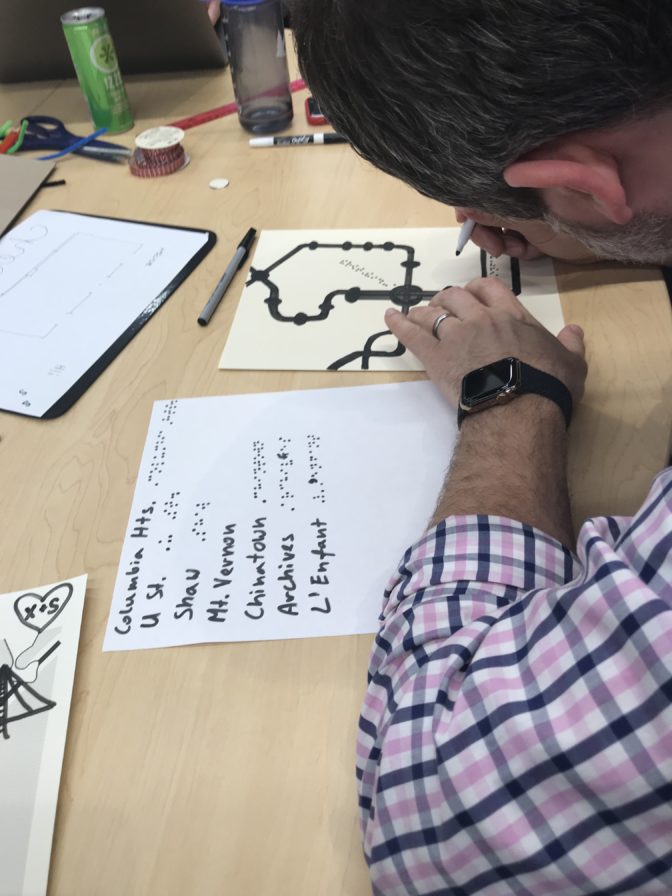
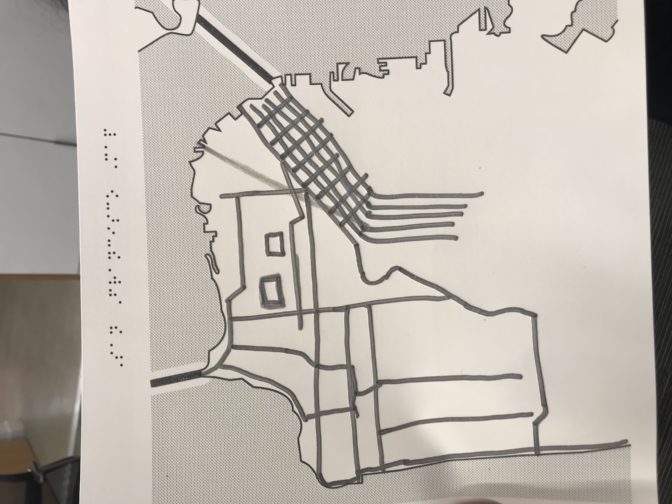
And if you’re a sighted traveler, it’s easy to take mapping tools for granted with GPS apps at your fingers. Most people don’t realize that blind people don’t have easy access to non-visual or ‘tactile’ maps. (You might be asking: what’s a tactile map? It’s pretty simple—it’s a map with raised lines and braille markers that you can feel.)

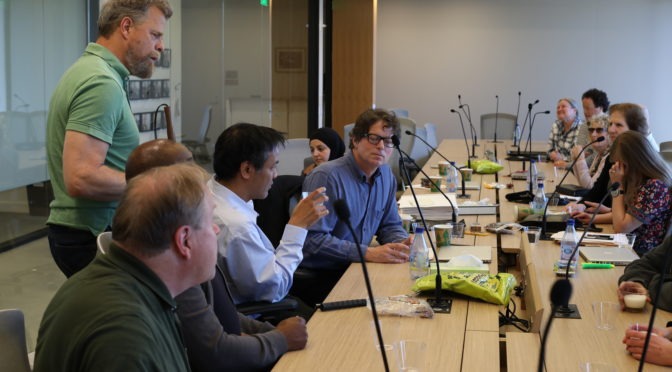
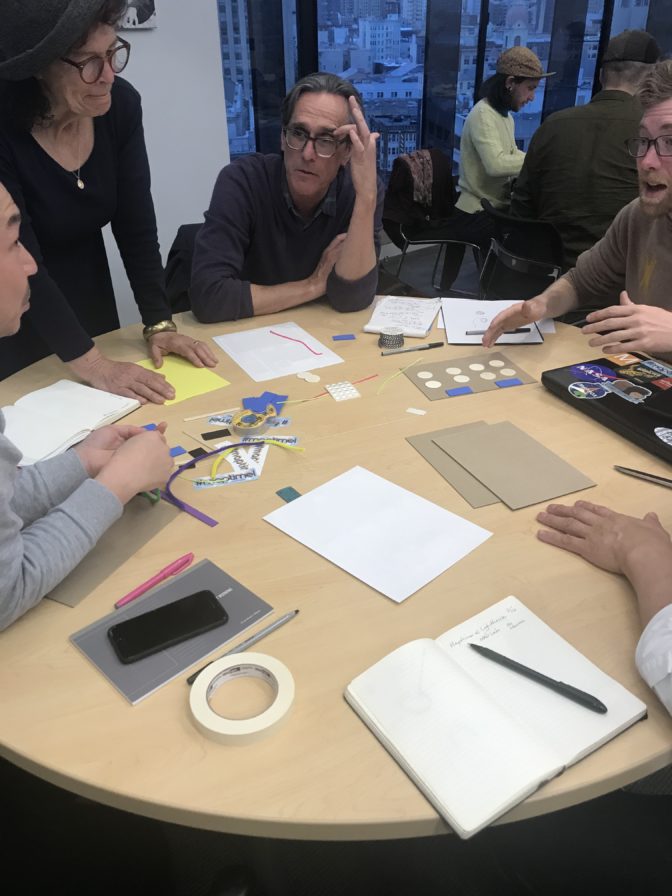
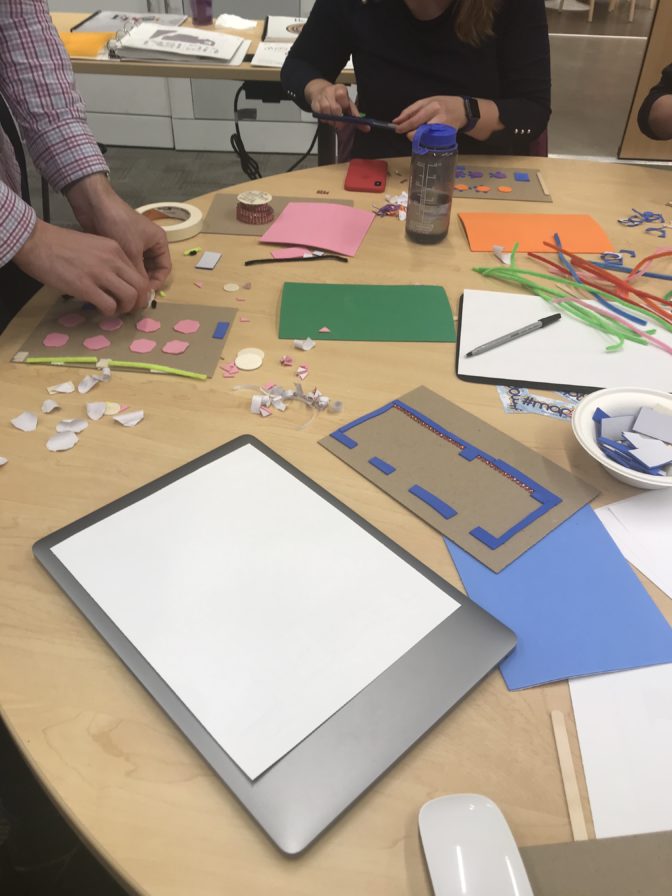
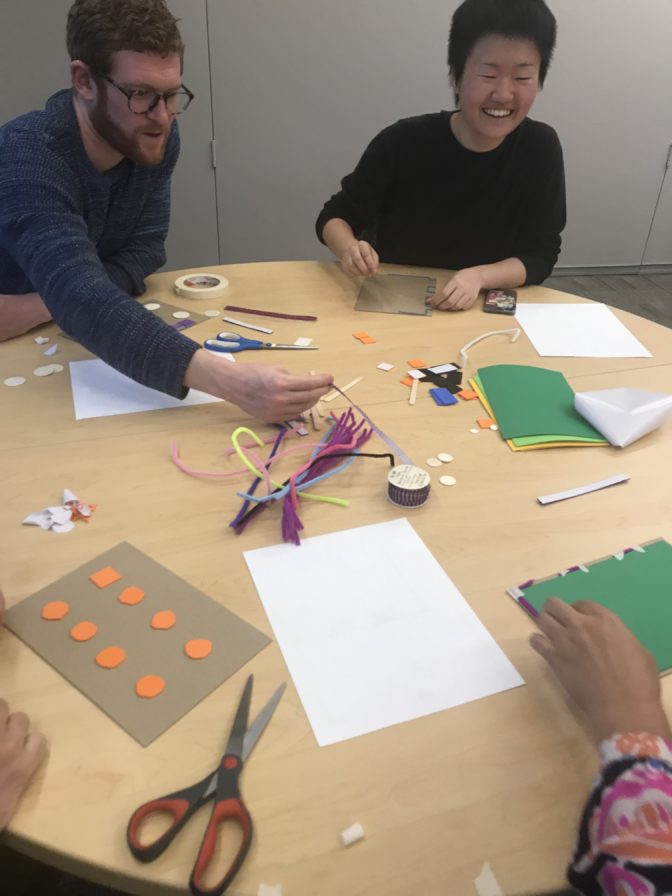
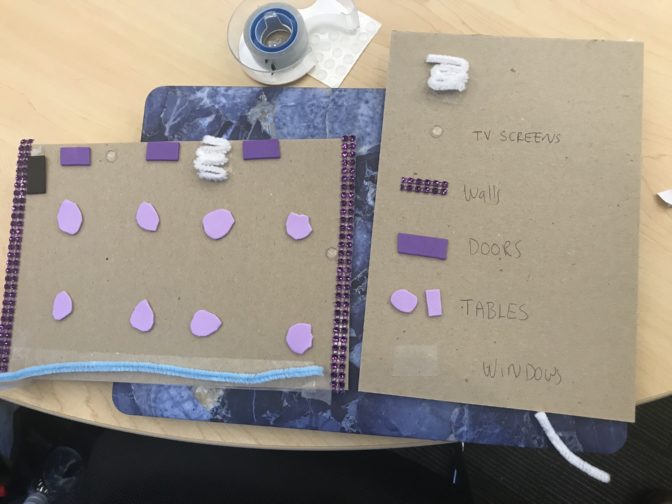
That’s why the LightHouse Media and Accessible Design Lab hosted a Maptime SF/Oakland meetup last month: to teach multidisciplinary designers about accessible methods to use when creating maps and encourage them to incorporate tactile information into their work.

Attendees came from a wide swath of industries and design disciplines. The MAD Lab team hosted designers from Apple, architects from Arup, graphic designers, transportation specialists, programmers, students in interactive design, occupational therapists, special ed teachers, ocean mapping specialists, and highly skilled cartographers.

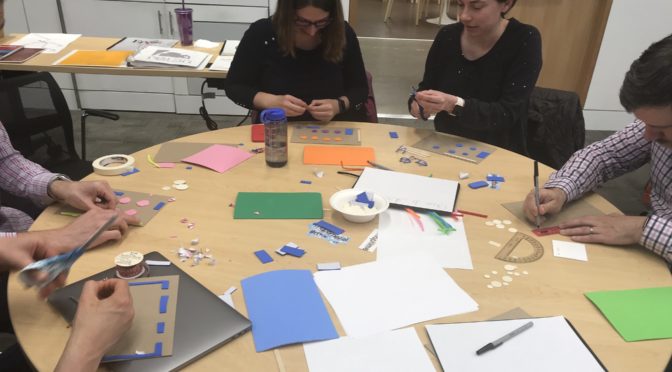
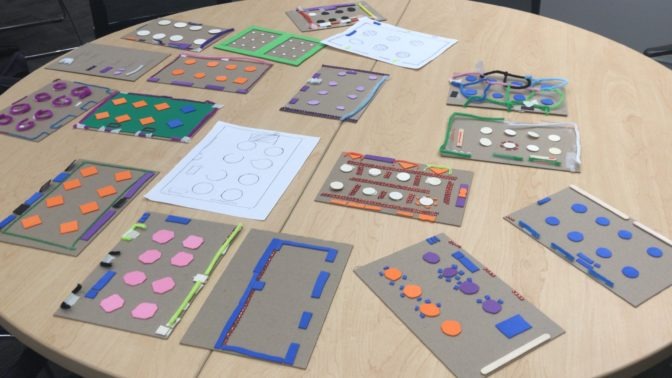
After comparing and contrasting examples of different design methods and discussing their effectiveness, Maptimers used these precepts to make their own maps. The group also discussed Tactile Maps Automated Production, and how this automated mapping system is a game changer for tactile map production.

“There’s such a lack of tactile graphics in the world,” says MAD Lab Senior Designer Naomi Rosenberg. “The only way to increase tactile graphic production is to teach more people how to incorporate tactile information into their designs. Sharing our expertise in tactile graphics empowers specialists in other fields to step outside of their normal design process, and design better for their audience and underrepresented audiences.”

Photos from the workshop

Take a little tour of their design process below. And if you’re sighted, next time you walk down the street or hop on Google maps, start to consider the lack of non-visual information that is available to tell you how to get around. If you’re a designer, it might just change how you approach your own designs.

Workshops like this support the MAD Lab’s goal of making visual information accessible to people who are blind and visually impaired. Ready to get your hands on your own tactile map? We can quickly create an inexpensive personalized map for you centered on a square mile anywhere in the US – visit or call the Adaptations Store to order! Stop by  at 1155 Market St. or give our specialists a call at 1-888-400-8933.

Announcing the 2019 Holman Prize Semifinalists

Announcing the 2019 Holman Prize Semifinalists

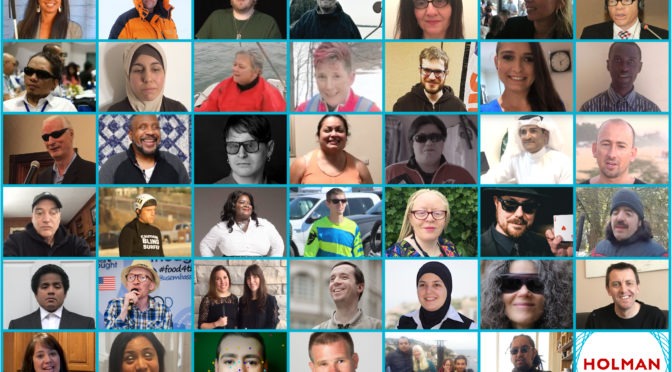
A compilation of photos of 41 Holman Semifinalists.

This year, we had 111 candidates from six continents for our third annual Holman Prize for Blind Ambition. We received ideas in 90-second pitch videos from advocates, artists, athletes, entrepreneurs, and more. It wasn’t easy, but we’ve narrowed it down to 41 semifinalists, including one People’s Choice Semifinalist.

We’re already proud of the impact our applicants have had on the world. Our 2019 candidates pitches have been viewed thousands of times on YouTube—that’s thousands of people whose expectations of blind ambition and ability have been challenged. This is an impactful feature of the Holman Prize, but the best is yet to come.

Below, we present the full list of 2019 Semifinalists. Each will send a detailed proposal and budget to be reviewed by the 2019 Holman Team in May. This year, we will select a People’s Choice Finalist from this group—that means the semifinalist with the most YouTube likes by May 10 will automatically become a Finalist. Help them out and like your favorite pitch videos! Final judging will take place in June, when the winners will be determined by an esteemed panel of blind judges who themselves are role models of blind ambition.

Click on each name to watch their original pitch video, share, and spread the word: This is what blind ambition really looks like.

Meet the 2019 Holman Prize Semifinalists:

Michael Aguilar 

who is passionate about inclusivity in the beauty industry, would use the Holman Prize to develop his accessible makeup brand Visionary Cosmetics, which uses braille labels and vivid color descriptions.

Chad Allen

who’s been a performing magician for over twenty years, would use the Holman Prize to digitize notable magic books and make them accessible to blind people  for the first time.

Krystle Allen

a disability rights advocate, would use the Holman Prize to pay for fifteen blind women to participate in the Miss Blind Diva Empowerment Fellowship Program that provides personal and professional development.

Abdullah Aljuaid

the People’s Choice Semifinalist, would use the Holman Prize to create a global consultation app for blind people to find information on learning, mobility, fitness and e-commerce.

Trevor Attenberg

who loves science and the outdoors, would use the Holman Prize to travel and teach blind people to identify birds by sound and explore other natural soundscapes.

Alexandria Brito

a powerlifter, would use the Holman Prize to train and compete in powerlifting competitions with the hopes of qualifying for the 2020 Paralympics.

Fernando Botelho

who works in social services, would use the Holman Prize to teach blind people how to build accessible, low-cost computers.

Stephanie Campbell

a newlywed who requested her wedding guests wear blindfolds during the vows, would use the Holman Prize to film the pilot for a sensory travel show, that explores destinations non-visually through the senses of sound, smell, touch and taste.

Yuma Decaux

who loves hiking and surfing, would use the Holman Prize to build an online community to make astronomy more accessible to blind people, with the hopes of a blind person discovering an exoplanet.

Deniz, Yunus, Utku and Mina

who are from Turkey, would use the Holman Prize to take the Trans-Siberian Express from Moscow to Beijing and create a documentary about it to inspire blind children to travel independently.

Natalie Devora

who is an author and activist, would use the Holman Prize to travel and collect stories from people of color with albinism around the world, to share these stories in an anthology and documentary.

Nicolas Dewalque

an athlete who hopes to qualify for the 2020 Paralympics, would use the Holman Prize to train and complete in the Coolangatta Gold race in Australia, which involves kayaking, swimming, running and paddling a surfboard.

Pauline Dowell

who lives on a sailboat on the Boston Harbor with her guide dog, would use the Holman Prize to form an all-female crew of blind sailors to compete in the Marblehead to Halifax Race.

Jesse Dufton

who’s an experienced winter mountaineer, would use the Holman Prize to lead an expedition on Baffin Island in the Canadian Arctic. If successful in ascending a peak that hasn’t been climbed, he would propose the peak be named “Blind Ambition”.

Craig Faris

who loves hiking, camping, traveling and sailing, would use the  Holman Prize to train and purchase assistive technology to sail a 7000-mile course from North America to New Zealand.

Matt Formston

who’s a two-time world champion in para-surfing, would use the Holman Prize to run surfing workshops for blind children and youth all over  the world.

Dennis Gallant

who has worked as a teacher ranger with the National Park service, would use the Holman Prize to create a podcast to highlight the specific sounds from various national park locations to help blind people learn about the natural world in an accessible way.

Reem Hamodi

who grew up in Iraq where she didn’t have access to books in an accessible format, would use the Holman Prize to set up a system to record audiobooks and distribute them online to blind students in Iraq.

Finn Hellmann

a Brazilian jiu-jitsu enthusiast, would use the Holman Prize to travel and train with blind Brazilian jiu-jitsu experts worldwide, and then teach other blind people this accessible martial art.

Zackery Hurtz

a musician, would use the Holman Prize to develop Reference Point Navigation, which provides accessible indoor and outdoor access to information and navigation on mobile phones.

Alieu Jaiteh

who runs a training program for blind people in The Gambia. would use the Holman Prize to provide eighty blind people with rehabilitation training.
Larry Johnson

who’s worked as a radio and television broadcaster in the United States and Mexico, would use the Holman Prize to travel to Cuba to teach a motivational workshop in English and Spanish to empower blind people.

Jennifer Lavarnway

a former music teacher who loves to cook, would use the Holman Prize to travel to Naples, Italy to train in the art of pizza making and open her own pizzeria back home.

Paul Lemm

who taught himself to program, along with other blind developers, would use the Holman Prize, to develop their prototype software Sable to allow blind people to create audio games without coding or scripting.

Joshua Loya

who is an athlete and martial arts enthusiast, would use the Holman Prize to train and seek setting the world record for distance traveled on a wave by a blind surfer.

Shon Mackey

who’s competed in dancing competitions and talent shows, would use the Holman Prize to open Blind Rhythm Dance Studio to teach dance to blind and low vision individuals.

Lisamaria Martinez

who has recently discovered pole dance would use the Holman Prize to develop workshops, training and audio description to make pole dance accessible to blind people across the United States.

Bonface Massah

a human rights activist, would use the Holman Prize to create parent circles, so parents could discuss how to raise children with albinism and change the perception albinism in Malawi.

Marx Vergel Melencio

who plays acoustic and electric bass, would use the Holman Prize, to develop a device he created called VIsION, a wearable AI device for the blind, with the goal of mass production.

Mona Minkara

who is working on postdoctoral research in computational chemistry, would use the Holman Prize to film a documentary series called Planes, Trains and Canes, where she navigates and accesses the public transportation of five cities around the world.

Natalie Minnema and Sarina Cormier

who are from Canada, would use the Holman Prize to create an online platform that focuses on blindness awareness and accessibility training for employers and organizations.

Shawn Prak

who has a passion for electronics, building and repairing, would use the Holman Prize and his many skills to renovate his home.

Terri Rupp

who’s a writer, disability rights advocate and a marathon runner, would use the Holman Prize to form Project Runstoppable, a program that empowers blind children through a running curriculum.

Kris Scheppe

is the North American representative for Blind Sailing International and would use the Holman Prize to form a crew of blind sailors to complete in the Race to Alaska, a 750-mile race from Port Townsend, Washington to Ketchikan, Alaska.

Brian Malvin Sithole

who co-founded Alive Albinism Initiative Trust, would use the Holman Prize to open a manufacturing plant in Zimbabwe that produces sunscreen for people with albinism.

Claire Spector

a textile artist, would use the Holman Prize to bring together blind weavers and blind textile artists to create new art, develop online and traveling exhibitions, and strengthen confidence in art-making.

Joshua Tatman

a motocross racer, along with his friend Pat, who is also blind, would use the Holman Prize to travel the country to motivate blind people to try different sports like snowboarding, jet skiing, sailing and more.

Johnny Tai 

who has a bachelor’s degree in social work, would use Holman Prize to film a series of professionally audio-described self-defense videos that blind people could access online.

Pamela Thistle

 an extreme sports enthusiast, would use the Holman Prize to train and heli-snowboard off the mountains of Whistler, British Columbia, Canada.

Ness Vlajkovic

who’s finishing up her degree in journalism, would use the Holman Prize to open a braille bookstore in Perth, for blind and Deafblind people to have easy access to hard copy braille books.

Michelle Young

 who’s worked with blind people on structured discovery in Qatar, the United States, and Australia would use the Holman Prize to hold residential workshops on structured discovery and echolocation orientation and mobility techniques.

Email holman@old.lighthouse-sf.org to be added to the Holman Prize mailing list.

Follow Holman Prize Facebook, Twitter and Instagram.

Join the Holman Prize community and make a tax-deductible donation to help fuel the dreams of blind adventurers and creators for years to come.

Our makeup workshop put its best face forward

Our makeup workshop put its best face forward

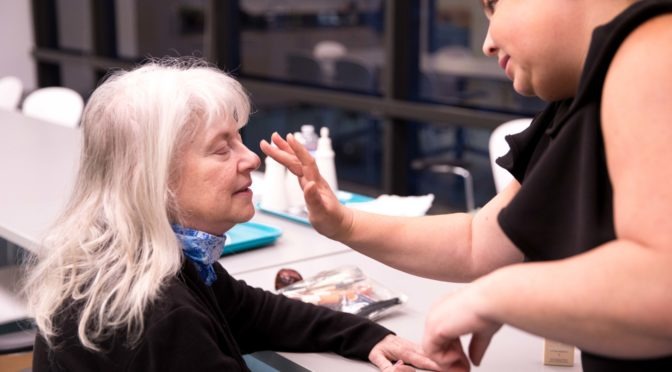
At LightHouse, we’re excited to provide educational workshops on everything from cane use, to cooking to putting your best face forward with makeup. Applying makeup is a learned skill that requires practice and attention to detail, and can involve artistry or light, casual application.

The LightHouse Rehabilitation Department, in partnership with Employment Immersion, hosted a new class called “Putting Your Best Face Forward: Using Makeup to Enhance Your Professional Appearance.” LightHouse Independent Living Skills Specialists Bobbi Pompey and Dawn Leeflang, along with Kate Williams, Manager of Employment Immersion teamed up with beauty industry professionals from Benefit Cosmetics.

Kate Williams, who is blind, says she believes makeup can be a tool for self-care and empowerment.

“Frequently, blind women have said, ‘I’m afraid to wear makeup…I just don’t know how to do it,’” Kate remarks.

When Kate’s vision started changing, a manager at Benefit gave her brushes and taught her how to apply makeup non-visually. This experience helped her maintain the self-presentation that had always been part of her appearance and routine.

“I’ve always worn makeup,” she says.

Kate adds that she was excited to use this workshop to pass on makeup skills to blind people who may not have sought it out otherwise.

Bobbi says that this workshop did indeed give one student who was initially trepidatious about wearing makeup the push to incorporate it into her routine.

“We let blind people know that the barrier to wearing makeup is more of an imagined barrier, and that if you want to enhance your appearance for work, or fun or going on a date or whatever, you can do it and there are ways to do it.”

Kate says that she feels makeup is good for building confidence, and that she believes it is important for people to do what they can to make themselves feel attractive and presentable.

At the workshop, students received hands-on instruction on how to apply eye and face makeup and also label and organize their products and tools. Makeup artists also demonstrated application on students. Check out our photos from the event!

If this workshop interests you, check out our monthly calendar which if full of exciting, rotating programs and events.

On April 11: LightHouse Listenings (in the dark) with Romanian Guitarist Ioana Gandrabur

On April 11: LightHouse Listenings (in the dark) with Romanian Guitarist Ioana Gandrabur

LightHouse continues its live listening party for ears only, LightHouse Listenings, on April 11 from 5:30 to 7:00 p.m. at LightHouse Headquarters. Join us for an evening of live music in the dark with award-winning classical guitarist Ioana Gandrabur, as she incorporates music with lively interactive discussions about music, blindness, and non-visual entertainment. Learn more and RSVP for the event.

“I used to keep the music apart from the fact of being blind,” says 45-year-old Romanian musician Ioana Gandrabur.

Ever since she was young, Ioana felt a draw and a connection to music. After learning the piano at age five, she picked up the guitar, and by age 14 she had won the Romanian National Guitar Competition.

At 16, she moved to Canada to study at the Conservatoire de Musique de Montréal, where she graduated with honors. She continued on to Europe, where she studied at the Musikhochschule in Kolh, Germany, the Musikakademie in Basel, Switzerland and the Musikhochschule in Düsseldorf, Germany.

Throughout her education and pursuant career as a musician, Ioana was very aware that her blindness impacted how others perceived her identity.

“I never wanted to be known as a blind musician, just a musician,” she says. “But in time, I realized that it’s part of who I am just as much as being a woman.”

With age, she says, she realized that she had a unique perspective on music that she felt compelled to share.

“I joke with musicians and say that as a blind musician, I’m forced to do what any good musician does anyways, which is establish a non-visual connection with their instrument, tactilely and acoustically. This non-visual connection helps with memorization, too. So in some ways, blindness helps hone musical skills.”

Ioana says the opportunity to speak about how her blindness shaped her perspective on music, and music on blindness, attracted her to performing at LightHouse.

As part of her LightHouse Listenings performance, Ioana will play a concert in complete darkness – a format she says not only changes how the audience perceives the music, but also how she performs.

When she had performed in the dark previously, she remembers instinctively getting up to bow at the end of a piece.

“I realized, ‘Wow, I’m bowing to people that can’t even see me,’” she says. “It’s a very funny feeling to be in the spotlight, so to speak, and unseen; it’s a weird paradox.”

She says that this paradox creates a rich space for introspection, and that she hopes to cultivate an musical environment of understanding and appreciation.

“It’s an invitation for people to share the way me and other blind people perceive the world. And, for me, it’s an invitation for me to realize just how much my sense of being seen shapes reality.”

What exactly are ‘live listening parties’?

LightHouse Listenings is an event series dedicated to non-visual entertainment that foregrounds sound (check out this one with Bay Area podcast The World According to Sound, or this one featuring blind adventurer Erik Weihenmayer). We’ll host panels, album releases, live musicians, you name it — if you’re into listening, we’ve got the venue. If you’re interested in staging your event for LightHouse Listenings, contact LightHouse Events Manager Andrea Vecchione at avecchione@old.lighthouse-sf.org.

Just Try It: How non-visual instruction can help you reach your fitness goals

Just Try It: How non-visual instruction can help you reach your fitness goals

What does it mean to try something? What factors into whether you’ll take the leap to do something new, unfamiliar, and perhaps daunting?

Scientific evidence suggests that trying new sports and athletic activities, and learning new physical skills enhance brain function, bolster confidence and even increase self-control.

That’s why LightHouse’s Health and Wellness Coordinator, Amber Sherrard, has created a series of fitness programs to foster a ‘just-try-it’ mentality amongst her blind and low vision students. The Try It Workshops bring groups from the LightHouse community to fitness and sport studios in the Bay Area to try activities like pole dancing, aerial silks, lyra (aerial hoop) and more.

Hannah Chadwick, 27, said that she thought the pole class was a good introduction to the style of dancing, which she probably wouldn’t have tried alone. She said attending a class for the first time as a blind person can raise uncertainty about an instructor’s teaching style and level of knowledge about making the class accessible, noting that instructors are typically accustomed to teaching from a visual standpoint.

“It was super tactile and inviting — and that’s the kind of atmosphere you would want to go to,” she says.

Hannah said that the pole instructor used a tactile teaching style, which encouraged students to place their hands on her to feel her body’s movement and position in different poses and moves.

“When you walk into a group of sighted people you might not know what to expect,” says Hannah. “If there’s a class that you’re not sure you want to try, and the LightHouse offers it, it’s a great way to check it out because they know that you’re coming, and might modify the teaching style.”

She added that knowing the teaching style would not be purely visual made it easier for her to dive right it and try to learn a new skill. Plus, having a group to learn with fostered a welcoming, supportive environment.

Upcoming Try It Workshops will introduce additional varieties of fitness classes for anyone looking to try a new way to move. On Saturday, February 24, LightHouse will host an AcroYoga class at Bay Jiu-Jitsu in Berkeley. This class combines partnered yoga, acrobatics and thai massage for a dynamic movement experience.

On Saturday, March 9, Amber will host an Intro to Lyra class at San Francisco Pole and Dance. For those who’d like to try hip hop dance at LightHouse’s Headquarters, Amber is hosting an Intro to Hip-Hop Dance class on Saturday March 30.

These are great ways for National Fitness Challenge participants to stay fit! LightHouse has partnered the United States Association of Blind Athletes and Anthem Blue Cross for the challenge.

And, for those who seek weekly, accessible wellness classes – LightHouse offers meditation, chair fitness and more. From rock climbing to yoga, LightHouse has a fitness program for everyone.

Essay: A camp counselor reflects on how Enchanted Hills changed her life

Essay: A camp counselor reflects on how Enchanted Hills changed her life

Enchanted Hills Camp enrollment is open for 2019. View the full schedule and apply for one-of-a-kind and life-changing camp sessions.

Essay by Holly Scott-Gardner:

In June 2018, I arrived at Enchanted Hills Camp to work for the summer. I honestly had no idea what I had signed up for. The truth was, there was no way I could have known, because in the UK as a blind person I would never have been exposed to something like EHC.

I always felt like I was pretty blindness positive, and though there was a time as a teenager when I hated my blindness and felt a huge amount of shame, I’ve worked through a lot of that over the last six years. Until I visited EHC, I thought I had already reached the end of that journey.

At Enchanted Hills, I watched blind people do all kinds of things, things I had never even considered. If you asked me before I went to EHC if a blind person could be a mechanic, if they could build furniture and all kinds of other things, I’d have probably said yes, because I wouldn’t have wanted to let my community down. But deep down I wouldn’t have believed it, not really. Surely, they would have help? Or something. But then I met blind woodworker George Wurtzel and watched how he worked. My mind was completely changed — there was someone right in front of me who was doing all of these things and teaching other blind people to do them too.

I remember the day I found out almost all the kitchen staff at camp that summer were visually impaired. It wasn’t that I’d believed a blind person couldn’t do the job, but until that point it had never entered my head that they would be. I believed in blind people, but they were never my default assumption. I would always assume a sighted person was doing a thing until I learnt otherwise. It was moments like that when I realised how deeply growing up in the UK had affected me, growing up I had never seen blind people working in environments like that.

Working my guide dog often wasn’t an option due to the heat, yet I didn’t have any previous travel experience with a cane, beyond learning to use one as a child but never doing it outside of my lessons. Over those weeks I learnt to love the feeling of exploring new environments, how my cane could tell me so many things about my surroundings. I have now become the kind of dog handler that will sometimes explore a place using a cane because I know how both methods of travel can benefit me, when before doing so would have never entered my head.

I also discovered that nobody had pushed me – not really. I knew that I would often do more than a lot of blind people in my country, but I was still very used to people doing things for me or not ever being given the chance to try. At EHC, all staff are equal. I learnt from sighted and blind people alike, I watched as we learnt together, made mistakes and worked on fixing them. Often there were times when I couldn’t remember which staff could see and which couldn’t because we worked together in a way I had never experienced before. The director of camp, Tony, is sighted and it was almost unbelievable to me at first how he worked with his staff. I had ultimately never been in a situation before where I was viewed as truly equal.

I was a terrible counsellor at first; I was going through this profound and intense journey, and it was only when I started to believe that I could do these things that I tried and discovered I could. That was something else I learnt – in the UK it’s so normal to hear a sentence begin, “I can’t,” and end with “because I’m blind.” I never heard that at camp. Once I realised that, actually, these are limitations we set for ourselves, I began to wonder what I, myself, was truly capable of.

I did not become a perfect cane traveller that summer. I didn’t learn to build things like others could, and I was certainly far from the best counsellor I could be. But I learnt that all these things and more are possible, and that realisation has changed my entire life.

Last week, I went on a couple of hikes. We walked through beautiful trails, laughing and talking to one another. Afterwards, I took some time to myself and thought about how three blind people hiking together was viewed as completely normal, when a year ago I’m not sure I’d have believed it would be something I, or anyone else, could do. I sat watching as a friend lit a fire, again without anyone questioning it. As we were all preparing dinner two of the guys went off to grill the food, one of them is completely blind. Today the phrase “a blind architect,” was dropped into a conversation.

I soak up each of these moments, drawing them close to me and letting myself live them again and again. Because it’s only been in the last six months that this was ever part of my reality.

We as blind people can do this. Blind Americans are no different than we are in the UK. But we have to be the change. We can’t expect someone to come along and do it for us, because they won’t, and if you feel like digging into the history of Enchanted Hills Camp, the NFB or ACB, or any number of blindness initiatives, you will learn that these were created by blind people who wanted to see their community thrive.

I could mention so many people and moments that have had an impact on me. These reflections have barely scratched the surface. I’m continually learning and growing not just as a blind person, but in every aspect of my being. And it’s because of the small moments, the people who reach out, who teach and listen and learn with me, that I am able to do this.

The reality is that you never really reach the end of a journey – not one like that. Because as you grow older, meet new people, and have experiences that you hadn’t before, your perspective continues to evolve. If there’s one thing I’ve learnt this year, it’s to never believe you have finished learning; you always have to be open to change.