This Valentine’s Day, give your loved one real feels with our new line of fun, touchable greeting cards. Our Adaptations Store is offering three designs, each with ink-print, tactile and braille designs on a white background.
Individual cards are $6, or you can purchase four for $20.
All cards come with an envelope.
All front covers of the greeting cards feature a combination of ink print and tactile graphic design.
The Adaptations Store and the MAD Lab will continue working together to design fun and creative accessible greeting cards that appeal to a wide audience, for all occasions.
We will roll out cards all-year-round. Keep posted for birthday, thank you, Mother’s Day, and Father’s Day!
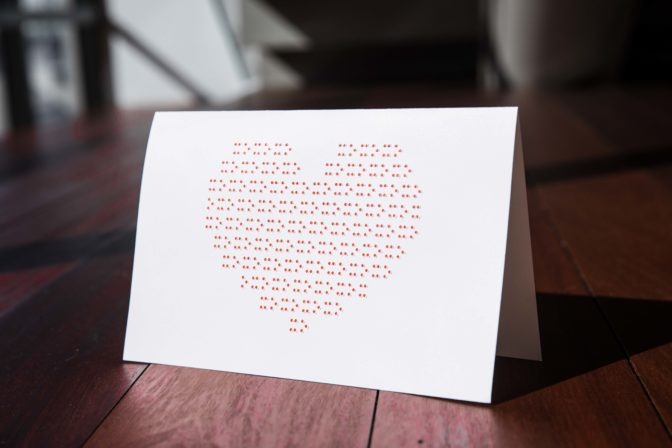
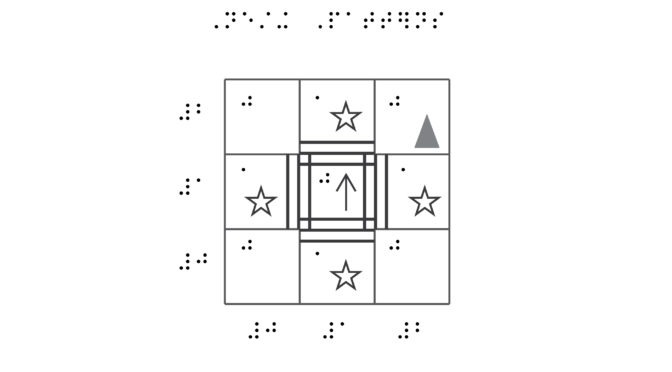
A white greeting card features a 4 X 3 grid of ink-print and braille patterned and multicolored hearts. The inside of the card reads “Happy Valentine’s Day!” in red large-print and braille.An ink-print and tactile graphic of a tic-tac-toe board with a heart in the center, on a white greeting card. The inside of the card reads “Happy Valentine’s Day!” in red large-print and braille.Red ink-print and braille X’s and O’s form the shape of one large heart on a white greeting card. The inside of the card is blank.The inside of the card reads “Happy Valentine’s Day!” in red large-print and braille.
Adaptations is the only place in Northern California with a comprehensive offering of tools, technology, and other solutions for blind and visually impaired people. The store is located at our San Francisco headquarters at 1155 Market Street, on the 10th floor. Store hours are Monday through Friday, from 10:00 a.m. to 5:00 p.m. We are also open on the second Saturday of each month from 10 a.m. – 2 p.m. Although we do not take online orders at the current time, we encourage you to call our staff at 1-888-400-8933 to inquire about item pick up or mail orders or email our store staff at adaptations@old.lighthouse-sf.org.
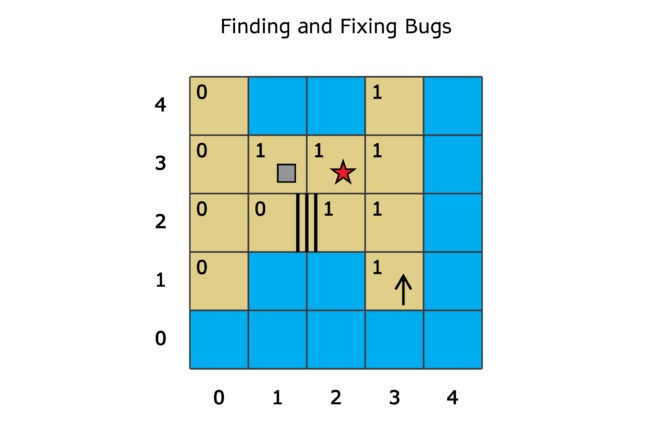
Today San Francisco’s LightHouse for the Blind announced a collaboration with Apple to make learning to code more accessible to students who are blind or have low vision. LightHouse’s Media and Accessible Design Lab (MAD Lab) has created Swift Playgrounds Tactile Puzzle Worlds compatible with Swift Playgrounds, a free, fun and accessible iPad app aimed at teaching students to code. The MAD Lab has designed 47 tactile layouts corresponding with the 3D puzzle worlds found in Learn to Code 1.
These tactile graphics enable students to better orient and navigate their way through Swift Playgrounds by touch. The materials supplement the accessible in-app coding experience, and include Unified English Braille (UEB) and large print text, with high-contrast and embossed tactile graphics in order to be universally accessible. The collaboration is all part of Apple’s Everyone Can Code program, an accessible curricula aimed at bringing coding into more classrooms.
“I’m not going to be one of those people who’s being told ‘No, you can’t do this because you’re blind,’” says Darren, who was an early blind user of Swift Playgrounds.
Darren, a senior at Texas School for the Blind in Austin, learned about Swift Playgrounds at Coding Club, an evening program facilitated by his school. TSBVI was one of the first schools to begin offering the Apple coding program to students. It was a fortunate discovery for him — especially in a world that often assumes a blind person can’t learn to code.
Darren first pursued his dream of learning to code at a public high school, but the online coding module used in his intro-level class was not accessible. As a result, the school offered him a cumbersome accommodation: the teacher assigned a fellow student to read Darren the lines of code and type his responses. For Darren this was a considerable barrier: not only did he not get hands-on experience, but he had to work at someone else’s pace.
“I think the teacher knew it was frustrating,” Darren says, “but he wasn’t entirely sure how else to make it accessible.”
When Darren first heard that the Swift Playgrounds app was accessible, he downloaded it onto a rented TSB iPad, eager to dig into a new world of coding. But as his new coding class started and he began to work his way through the “puzzle worlds” that make up the game’s levels, he felt he would benefit from also having tactile feedback.
iPad showing Swift Playgrounds app and accessible features.
“At first it was confusing because I didn’t know how the world looked,” he says, without a hint of irony. Thanks to Apple’s commitment to accessibility, Darren could use Swift Playgrounds with VoiceOver, Apple’s built-in screen reader, but he needed a way to explore and experiment in the 3D puzzle world – collecting gems, toggling switches – and in order to do that, he needed a mental map of the physical layout.
Enter the MAD Lab
Meanwhile Apple was working on a solution – with help from the LightHouse’s Media and Accessible Design Lab.
Building off years of experience creating tactile maps of cities, universities and cultural landmarks for blind and low vision explorers, the MAD Lab is proud to present a new accessible media experience by designing a tactile experience that corresponds to a dynamic 3D puzzle world. Mapping the visual layouts of each puzzle world and enhancing them with cartographical elements to optimize for comprehension, the LightHouse is proud to partner with Apple to further the blindness community’s tech literacy, around the world.
Putting the tactile worlds to good use
Once the Texas School staff got their hands on the guides, everything changed for Darren. “We were creating graphics,” his teacher, Susan O’Brien says. “We had 3D printed some of the switches, the toggles, the portals, but then when we saw your maps, we were like ‘oh my gosh, this is so much better than what we’ve been doing.’”
Today, Darren uses the tactile layouts map to orient himself to the world, then he’ll talk through the commands, then go back onto the iPad and really start to do the coding. “We saw him develop a workflow,’ says O’Brien. “Finding that workflow that’s best just for you – that’s so crucial for everyone, blind or sighted.”
For Darren’s part, he’s now working his way through the game, twice as fast as before. “I’m extremely happy that I don’t have to rely on someone else to get the job done now.”
Downloads for students and educators
Teachers or organizations who have access to braille embossers can download the tactile graphics files to print themselves, or if an embosser is not available, can order beautifully printed, embossed and bound hard copies through the LightHouse’s Adaptations Store.
Swift Playgrounds is a revolutionary iPad app that makes learning programming language Swift interactive and fun. It requires no coding knowledge, so it’s perfect for students just starting out.
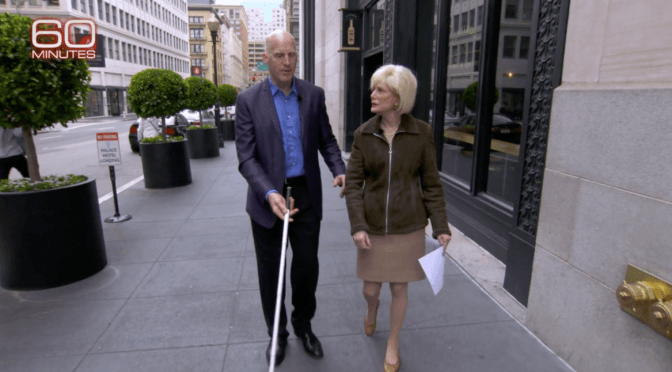
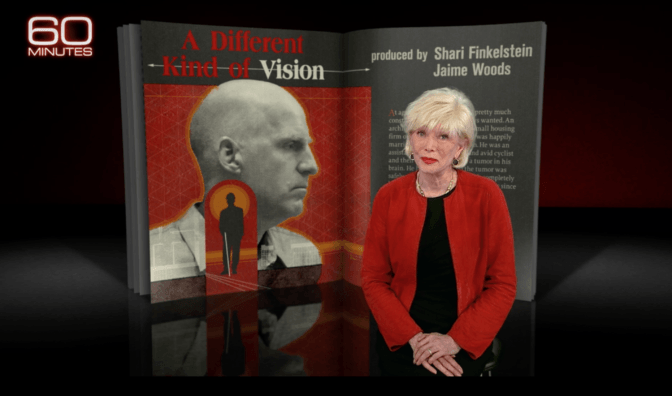
On Sunday, January 13, 2019, 60 Minutes featured LightHouse for the Blind and Visually Impaired in a story called “A Different Kind of Vision.” The story profiles of LightHouse Board President Chris Downey, as he celebrates his 10 year anniversary since becoming blind. The story is about taking on and moving past life’s challenges, and is a testament to the power of blindness skills training and vocational rehabilitation like the ones we offer at LightHouse.
Hosted by CBS News’ longtime anchor Lesley Stahl and produced by Shari Finkelstein and Jaime Woods, the 13-minute piece follows Chris’ journey through brain cancer, blindness and regaining his confidence and status as a working architect. The LightHouse’s new headquarters, designed with Downey as a consultant, plays a major role in the piece as do the LightHouse’s training programs and an interview with our CEO, Bryan Bashin.
The best part? Chris is unequivocal about every individual’s ability to continue doing what they love, regardless of eyesight. Stahl closes out CBS’ legendary Sunday evening news magazine by asking Chris one of the toughest questions for a confident blind person to answer: “Don’t you still want to be able to see?”
Chris pauses, thinking deeply about the question, and then finally responds, humbly offering: “I don’t really think about having my sight restored. There’d be some logistical liberation to it. But will it make my life better? I don’t think so.”
Being successful as a blind person is not about being a superhero. We often see images of people with disabilities atop mountains, creating beautiful things or connecting their community in big ways. But often the narrative is over-simplified to the exclusion of the real factors that got those people to where they are: research, planning, collaboration, humility and a whole host of other skills that maybe aren’t as glamorous as the idea of scaling a craggy peak on your own. But these are the real stories we want to hear.
Truly, every blind person has a dream and a set of proclivities, and the Holman Prize is about nurturing those passions and goals at every level. The prize does not reward superheroes; it rewards everyday people who can demonstrate a commitment to a project that is meaningful to them. That’s why, we believe, every blind person in the world should apply.
Apply in 2019
On January 15, 2019, applications open for the third annual Holman Prize for Blind Ambition, funded by the LightHouse for the Blind and Visually Impaired. This prize awards up to $25,000 each to three blind individuals who wish to push their own limits and carry out a “dream” project of their own creation.
The Holman Prize is named for 19th century explorer James Holman (“the blind traveler”), who was the first blind person to circumnavigate the globe, and the most prolific traveler of any person before the era of modern transportation.
Our inaugural prizewinners, Penny Melville-Brown, Ojok Simon and Ahmet Ustunel recently completed their year-long adventures. On November 29, they will be honored at our LightHouse Gala: A Celebration of Blind Ambition, where they will share their stories. Although their Holman year may be over, Penny, Ojok and Ahmet are determined to continue to push boundaries and change perceptions about blindness around the world.
The 2018 winners, Stacy Cervenka, Conchita Hernandez and Red Szell are just starting their Holman journeys. Each has already accomplished a great deal in the nascent days of their projects.
Stacy Cervenka: The Blind Travelers Network
Stacy is busy working with a website developer, web designer and business analyst on creating The Blind Travelers Network, an online community for blind people to crowdsource information about the accessibility of places they travel. Besides reviews, the website will allow people to communicate with each other and share their travel tips and stories through message boards and blogs. Stacy has been conducting focus groups with blind people to learn what features they would find useful on The Blind Travelers Network. She will be seeking people to test a beta version of the website towards the end of winter. The public rollout of the website will be in the spring.
Conchita Hernández: Changing lives in Mexico
Conchita will convene the first-ever blindness conference in Mexico run by blind people and registration is now open for “Cambiando Vidas” or Changing Lives, which takes place in Guadalajara, Jalisco, Mexico from July 26-28, 2019. Conchita is currently contracting with teachers and exhibitors. The conference will have workshops for blind people, parents of blind children, and professionals in the blindness field. Conchita explains that in Mexico, sixty percent of blind children don’t have access to an education. With Cambiando Vidas, Conchita hopes to begin a systematic change by creating a community of people and more resources to help improve prospects for blind people in Mexico.
Red Szell: An extreme triathlon in Scotland
Red is training to complete an extreme triathlon that includes off-road biking, an ocean swim and climbing a 200-foot sea stack called Am Buachaille. Recently, Red and his climbing partner Matthew traveled to Sardinia where they began climbing Le Grand Mammut, a challenging, but less difficult rock climb that would help him train for Am Buachaille. Le Grand Mammut is about 500 feet high, but at 200 feet, Red, dehydrated and with a case of sunstroke, was forced to execute an emergency rappel down the cliff with Matthew. Red reflected on the failure to summit in his blog entry, “I needed a reminder that the sport I love is more than just a physical challenge. It’s about risk analysis, problem solving and above all, partnership.”
The six Holman Prizewinners come from varied experiences and backgrounds with projects that are vastly different. From academia, to art to athleticism, the Holman Prize welcomes pitches of all kinds. Starting January 15, it’s your turn to upload a 90-second video to YouTube and fill out the official Holman Prize application.
In 2019, we’re thrilled to host a special exhibition of work by Bay Area artist Kurt Schwartzmann at the LightHouse for the Blind Gallery in our headquarters starting on Thursday, January 10. Please join us for the exhibition opening from 4:30 to 6 p.m.
Kurt Schwartzmann
While most MUNI riders have less than flattering things to say about the Bay Area transport system, for LightHouse client Kurt Schwartzmann it was a refuge when he needed it most.
It was early in 2008, and Kurt was confronting homelessness in San Francisco. He was exhausted, cold and lugging a suitcase full of his belongings from one place to the next. All he wanted was a somewhere to sit down and get warm. While resting at a bus stop, a bus pulled up and he asked to get on: “I don’t have any money but I would love to be able to board your bus,” he said to the driver.
Without hesitating, the driver responded: “I have to drive anyway; you can keep me company.”
A small and everyday gesture from the driver was a pivotal life moment for Kurt, who was deeply affected by the humanness and compassion the driver showed him. It was the first but not the last time that Kurt found safety and a place to sleep on the buses that crisscross the city, from drivers who would accept whatever payment he could manage without humiliation or scorn.
“When I had nothing, MUNI offered me a ride and shelter,” he says. “This a great way to say thank you to MUNI. The compassion of that driver. I’d love to be able to find that driver and thank them.”
It’s a uniquely San Francisco tale — but it just barely scratches the surface of Kurt’s storied life in the city he loves so dearly.
Kurt, who grew up in Fresno, California, moved to San Francisco seeking the freedom to be himself as a gay man. He has been drawing since he was in kindergarten, but it wasn’t until after he went blind in his left eye that he took up art in earnest and discovered the unique composition that characterizes his series “Yellow Line”.
Kurt lost the vision in his left eye in 2006, due to a complication with AIDS. His doorbell rang and he suddenly realized that he could not see anything through the peephole. Unknown to him and his doctors, Cytomegalovirus (CMV) retinitis had attacked his left eye from behind and his vision diminished slowly and painlessly. As he describes it, his field of vision is a long thin stripe, which allows him to narrow in on his composition while drawing.
Kurt got back on his feet and sought Counseling Services at the LightHouse in 2015 in hopes of dealing with some of the frustration and anger he experienced as a result of his vision change. Working with a Clinical Psychologist at LightHouse has helped him reframe his thinking and language around his vision.
“The LightHouse has been an integral part of helping me accepting and understanding my vision,” says Kurt. “Before doing counseling with her, I would just get so frustrated. Now I have the language to talk about it with people instead of getting defensive when people make comments about my eyepatch or call me a ‘pirate’.”
Just as the white cane is a useful symbol to communicate blindness to the outside world, Kurt wears an eye patch to indicate that he can’t see in his left eye — just in case he bumps into someone on the street or doesn’t see them waving.
Kurt is now happily married and living in Golden Gate Heights with his husband Bruce and their dog Louie. Bruce encouraged Kurt to pursue his lifelong love of making art — and to start by designing their wedding invitations. It was a fitting proposal, and led Kurt to City College of San Francisco where he took his first printmaking class in 2015. His art evolved, and as a frequenter of MUNI, he devised his “Yellow Line” series to honor the drivers.
In this series of 64 drawings, Kurt works with pen and ink, watercolor, acrylic pen, on cold press watercolor paper. His drawings are 3.5 inches by 16.5 inches. He describes his choice of drawing proportion as a “slice of life,” as he sees it. When he worked on the pieces in 2015, he would sit at the front of the bus, catty-corner to the driver’s seat. His favorite buses to frequent were the 6 and the 43. With his monocular vision, he could block out the entire world on the left side, focus in on the driver in vivid detail.
Kurt’s love affair with San Francisco doesn’t stop at MUNI — he also has a series of drawings of the Transamerica Pyramid. Check out more of his work on his website.
LightHouse Staff1 Commenton Oral History: Gil Johnson reflects on eight decades of blindness training, advocacy and community
A distinguished longtime board member and pioneer of rehabilitation services at the LightHouse for the Blind and Visually Impaired in San Francisco, there are few denizens of our community more respected and knowledgeable than Gil Johnson. Growing up as a confident, free-thinking young blind man and coming to the LightHouse during a pivotal moment for blindness in the late seventies, Johnson changed the course of our training services and defined the future of the then somewhat fractured LightHouse organization.
In honor of Johnson’s 80th birthday, LightHouse CEO Bryan Bashin set out to record an oral history: to capture the nuances of Johnson’s early life, career, and ongoing journey after LightHouse. The result is nearly six hours of humorous, thoughtful reflections on the past, present and future of what it means to be or become blind.
The podcast series was recorded on three separate days and is broken into seven total parts below. Mp3s are available for download or to stream directly.
Part 1 (recorded November 2017, 2 segments): Gil talks about his childhood, development as a young blind man and the early career moves that brought him to the blindness field.
Part 2 (recorded December 2017, 3 segments): Gil discusses the state of LightHouse when he arrived in the late 70s, and goes in depth into the challenges and opportunities as he took on the task of innovating in rehabilitative training through the 1980s.
Part 3 (recorded August 2018): Gil discusses his transition away from LightHouse, taking on services for the blind in Illinois and the new era for the LightHouse and its community as the 1990s approached.
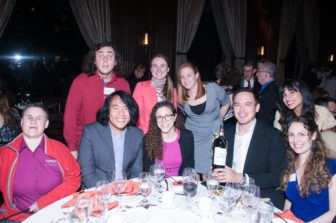
Last Thursday, the LightHouse gathered hundreds of friends, supporters and community members at the Julia Morgan Ballroom in downtown San Francisco for the LightHouse Gala: A Celebration of Blind Ambition. At the gala, which was LightHouse’s largest-ever, we honored blind pioneers, role models and citizens for their audacity and ambition. It was a celebration, a fundraiser and an invitation for our community to partner and become more deeply engaged with the work of the LightHouse.
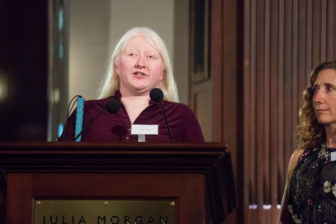
LightHouse CEO Bryan Bashin speaks at the podium.
Three gala attendees stand, smiling.
Three gala attendees stand, smiling.
Holman Prizewinner Ojok Simon
LightHouse employee Serena Olsen clinks her knife against her wine glass.
A pair of Gala attendees smile stand, smiling with delight.
A pair of Gala attendees smile stand, smiling with delight.
A pair of Gala, including LightHouse Board President Chris Downey, stand smiling.
A trio of Gala attendees, including Kathy Abrahamson, embrace, smiling for the camera.
A pair of Gala attendees sit, smiling.
A duo of Gala attendees stand, smiling.
A trio of Gala attendees, including LightHouse CEO Bryan Bashin, stand smiling.
Four Gala attendees stand in the ballroom.
A pair of Gala attendees stand smiling.
A gala attendee holds a young toddler in her arms, smiling.
A pair of Gala attendees stand smiling.
A Gala speaker stands at the podium.
A Gala speaker stands at the podium.
With over 300 people in attendance, it was an evening of community and camaraderie. Emcee Erik Weihenmayer, the first blind person to summit Mount Everest, set the tone for our daring evening. LightHouse student Jorge Ellington and his band started the evening right with live Latin Jazz. We honored seven blind leaders throughout the night, and capped off with presentations from our agency’s Holman Prize for Blind Ambition.
We were proud to present our new LightHouse Awards: to acknowledge longtime leaders from the field of blindness, who have had a great impact on the community. This award honored trailblazers in education, technology and policy. LightHouse Newel Perry Award was presented to Cathy Skivers by Bryan Bashin. The LightHouse Dr. Isabelle Grant Award was presented to George Kerscher for his work to made electronic books accessible. Erin Lauridsen, Director of Access Technology presented the award to Dr. Kerscher. The LightHouse Chris Buckley Award honored Scott LaBarre and Maryanne Diamond for their work advocating for the Marrakesh Treaty to make books accessible to the global blind community without exception. Benentech’s Jim Fruchterman presented the award.
Ceremonial medals were given to the 2017 Holman Prizewinners, who were honored for the completion of their year-long projects which furthered the cause of blindness across six continents in the fields of adventure sports, entrepreneurship and cultural exchange. Holman prizewinner Penny Melville-Brown recounted her perilous, near death car accident and subsequently meeting and marrying the love of her life. Ojok Simon spoke of teaching over 45 blind people the art of beekeeping this year, and brought honey from Uganda to share with all. Ahmet Ustunel imparted his kayaking adventures in Turkey, and the technology he crafted to aid blind kayakers navigate independently.
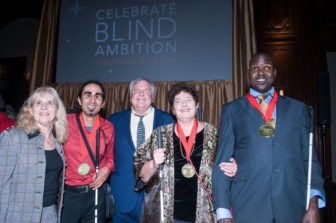
2017 Holman Prizewinners stand with LightHouse CEO Bryan Bashin.
LightHouse Gala emcee Erik Weihenmayer stands with a smile, speaking at the podium.
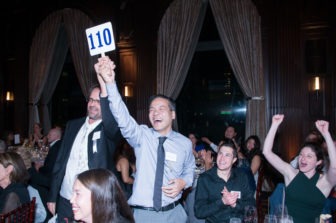
An auction bidder holds up his sign marked “110” with enthusiasm, in a crowd of cheering people.
A pair of Gala attendees stand smiling.
A pair of Gala attendees stand smiling.
A trio of Gala attendees stand smiling.
A pair of Gala attendees stand smiling.
A trio of Gala attendees stand smiling.
A pair of Gala attendees, including LightHouse Award winner Scott LaBarre stand smiling.
A trio of Gala attendees stand smiling.
A group of five Gala attendees stand smiling.
A large group of Gala attendees stand smiling.
A pair of Gala attendees stand smiling.
A group of six Gala attendees stand, smiling.
Penny Melville-Brown and her partner stand smiling.
A group of four gala attendees, including LightHouse Board Member Josh Miele sit smiling at a dinner table.
A large group of a dozen Gala attendees pose for a photo – one row sitting at the dinner table, with another row standing behind.
Erin Lauridsen stands beside LightHouse Award winner George Kerscher at the podium.
Julie Cabrera, an Enchanted Hills camper who grew up to be a counselor helped us raise funds to rebuild the Wing Creek Chapel and accessible nature trail at Enchanted Hills, which were destroyed in last year’s Wine Country wildfires. The evening supported the life-changing programs of the LightHouse with a portion supporting to Enchanted Hills Camp for the Blind. The event raised over $180,000. Thank you to our sponsors.
EXPLORATION SPONSORS – Individual
Jennifer and Ken Bunt
Corporate
Walt Disney Company Employee Matching Gift Program
On Thursday, November 29, hundreds gathered at the Julia Morgan Ballroom in downtown San Francisco for the LightHouse Gala: A Celebration of Blind Ambition. The event, which was the 116-year old LightHouse’s first independent gala celebration, honored blind role models and boundary-pushers of all kinds, not just for high-achievements but for their level of audacity and ambition.
Capped off by presentations from the three winners of the agency’s Holman Prize for Blind Ambition, the event also featured the new LightHouse awards ceremony to acknowledge longtime leaders from the field of blindness who have had a great impact on the community. The full list of award recipients is below.
“We’re thrilled to bring the community together for an event in our home of San Francisco,” said LightHouse CEO Bryan Bashin on the occasion. “To see the spirit and ambition of our Holman Prizewinners alongside the legacies of our LightHouse Award recipients – I am honored and humbled to host them all in one place. But more than just talent and ambition, our gala is meant to celebrate education and advocacy; the noble, never-ending hard work that is required to bring up future generations of blind people so that they may find independence, employment and joy in their daily lives.”
Scott LaBarre, a blind attorney from Colorado who accepted an award for his work to ensure the recent ratification of the Marrakesh Treaty, gave a rousing speech. Maryanne Diamond, former president of the World Blind Union, accepted her award from Australia. The 71-country treaty, which allows for accessible book formats to be available around the world, had its toughest time in the most developed countries, namely with the United States Senate who ratified the treaty in October.
George Kerscher, who accepted an award for his creation of the accessible ebook format known as DAISY, echoed LaBarre’s emphasis on education, praising publishers who are now producing ebooks that are “born accessible” for blind readers.
Catherine Skivers, former president of the California Council of the Blind, was also honored for her enduring work in the blindness field, which spans several decades.
LightHouse Awards
Christopher Buckley Award for audacious action through political advocacy which improves the lives of blind people: Scott LaBarre and Maryanne Diamond
Scott LaBarre and Maryanne Diamond, for their work to ensure the ratification of the Marrakesh Treaty which will allow for the spread of education and literature to blind readers around the world.
Dr. Isabelle Grant Award for individual initiatives which benefit the blind worldwide: George Kerscher
George Kerscher, inventor of DAISY, the groundbreaking technology that created a new standard format for accessible books. Adopted around the world and by nations as an official delivery format, Kerscher has not only been an innovator but a fierce advocate for blind learners everywhere.
Dr. Newel Perry Award for enduring and effective leadership in the blindness community: Catherine Skivers
Catherine Skivers’ enduring commitment to the furtherance of the blindness community is rooted in California, but felt throughout the world. Holding many leadership roles through her career including president of the California Council of the Blind, Skivers has demonstrated an unwavering commitment to equity, dignity and authenticity for blind people everywhere.
Ceremonial medals were also given to the 2017 Holman Prizewinners, who were honored for the completion of their year-long projects which furthered the cause of blindness across six continents in the fields of adventure sports, entrepreneurship and cultural exchange.
Holman Prizewinners:
Ahmet Ustunel – blind adventurer and technology enthusiast
Ojok Simon – blind beekeeper and rehabilitative educator
About the LightHouse for the Blind and Visually Impaired
Founded in 1902, San Francisco’s LightHouse for the Blind and Visually Impaired promotes the independence, equality and self-reliance of people who are blind or have low vision. LightHouse offers blindness skills training and relevant services such as access to employment, education, government, information, recreation, transportation and the environment. LightHouse also pursues the development of new technology, encourages innovation, and amplifies the voices of blind individuals around the world. To receive services, volunteer or make a donation, visit old.lighthouse-sf.org.
The LightHouse for the Blind and Visually Impaired in San Francisco is proud to announce its takeover as the manager and distributor of Sendero Group-manufactured GPS products. The LightHouse will run Sendero Maps and Sendero’s GPS product, which will continue to function normally.
Sendero’s PC Maps and GPS serve the blind and visually impaired community by providing detailed information to explore rural roads or city streets, intersection-by-intersection. The software allows users to record personal points of interest, hear their direction of travel, track distance travelled and collaborate with teachers, friends or family using integrated visual maps.
Sendero has been the frontrunner in accessible GPS technology since Founder Mike May and Chief Technology Officer Charles LaPierre launched the first accessible digital GPS map in 1995 at Arkenstone, their former travel technology company. That product turned into the forward-thinking, personal computer-based Sendero Maps and GPS, which the San Francisco LightHouse will now manage, in conjunction with its Tactile Maps Automated Production (TMAP).
This partnership will yield exciting new technological developments and retain Sendero’s existing products and functionalities. The Sendero mobile apps are slated for new features, and the Sendero Maps software will remain the same. LightHouse will also host the legacy BrailleNote and Braille Sense software, which were formerly available through Sendero.
To complement the PC-based products hosted by LightHouse, Sendero also announced that it is turning over its mobile navigation products to the subscription-based sighted assistance company Aira, who is acquiring Sendero’s iOS products for integration in their service.
Sendero’s GPS products will complement TMAP’s progressive approach to on-demand maps with their easy-to-use technology. There is no better way to learn a neighborhood than to pair the detail of digital maps with the spatial, geographic overview of a tactile map.
Sendero CTO, Charles LaPierre says, “I am thrilled that Sendero Maps and GPS products will continue under the stewardship of Aira and the LightHouse. In 1993, when I developed the first accessible GPS backpack prototype weighing 10 pounds, I said ‘In 10 years it will be the size of a Sony Walkman (TM), which will fit in your hand’. I am honored that my university project 25 years ago evolved into the ‘Swiss Army knife of life’ smartphone version of today.”
Under LightHouse superintendence in San Francisco, we hope to see Sendero products and services expand to serve more blind and visually impaired people worldwide — particularly with the highly anticipated launch of our online Adaptations Store later this year.
Caroline Hart2 Commentson From yacht-rock to pop-ballads: Our first Audio Academy broke new ground
On Sunday afternoon, the halls of LightHouse reverberated with the deep, breezy sounds of yacht rock. “Sailing takes me away to where I’ve always heard it could be,” crooned DJ Dan’s tune “Sailing” by Christopher Cross. A San Francisco State student with an interest in all things aquatic, Dan’s final performance on Sunday transported the audience to a tranquil expanse and back again, reflecting Dan’s personality with quirky, upbeat folk and country tunes perfectly suited for the sailing life.
Each student entered the weekend with no knowledge of DJing, and left equipped with sufficient knowledge to assemble a twenty minute set. Our blind instructors Byron Harden and Clarence Griffin from Chicago-based I See Music introduced students to the software Deejay Pro and taught them the basics of a fully accessible and non-visual DJ method. Their program, designed by blind people for blind people, is the only in the nation that offers a comprehensive audio education curriculum for blind and low vision learners.
The workshop participants performed sets that were each as unique in tone and style as the students themselves. We heard an uplifting, pop-centric set by Maycie, a thumping, rhythmic set from Jenna and hip hop and R&B tunes from Juan. Traveling from all around Northern California, the students came from as far as Sonora and Sacramento, taking full advantage of the LightHouse’s cozy residential facilities for the 3-day workshop.
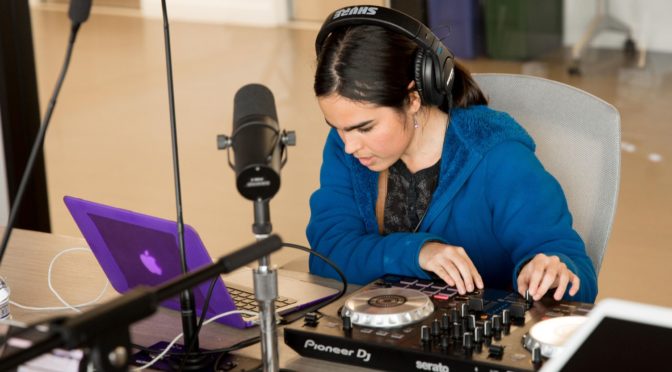
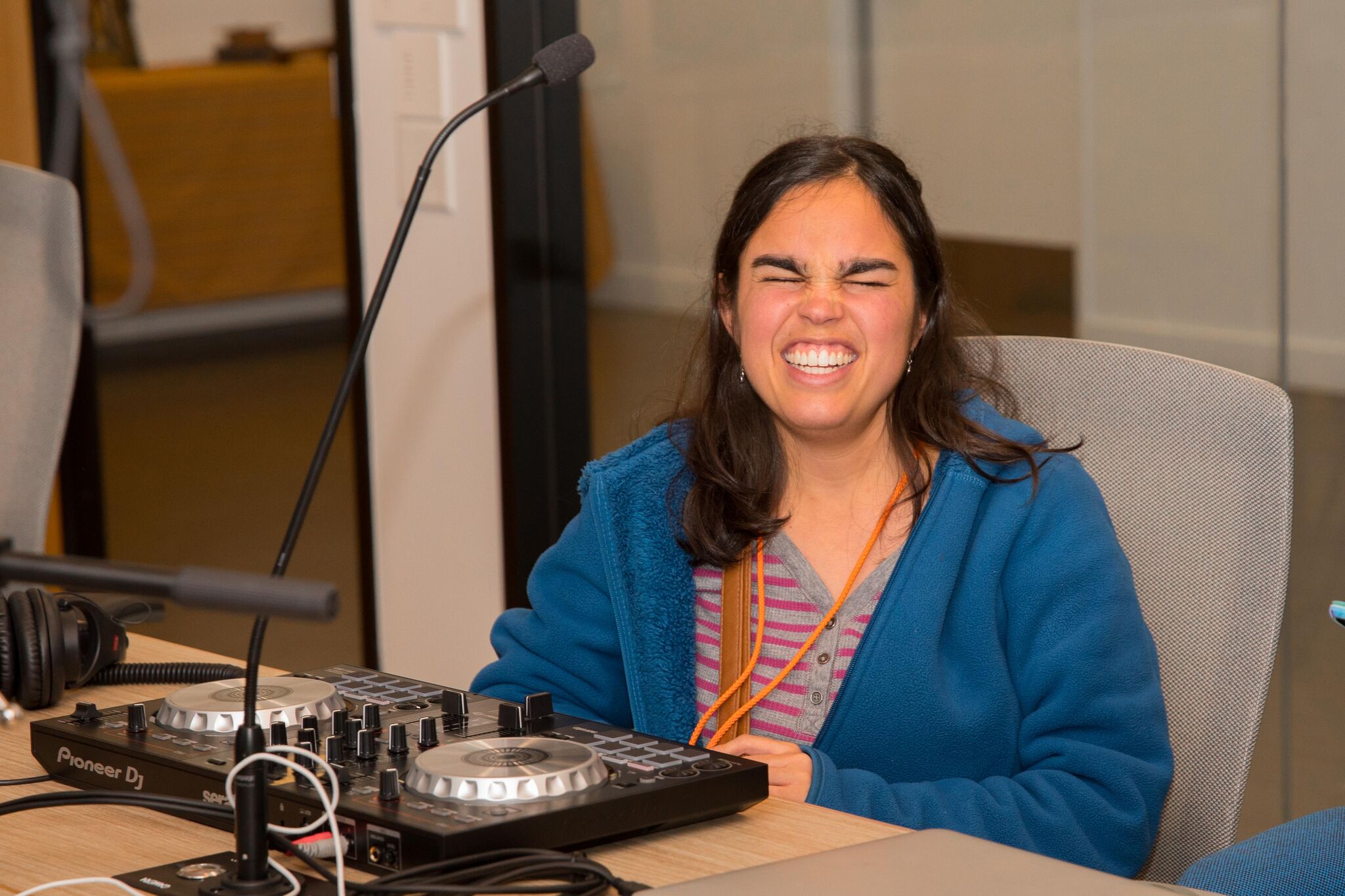
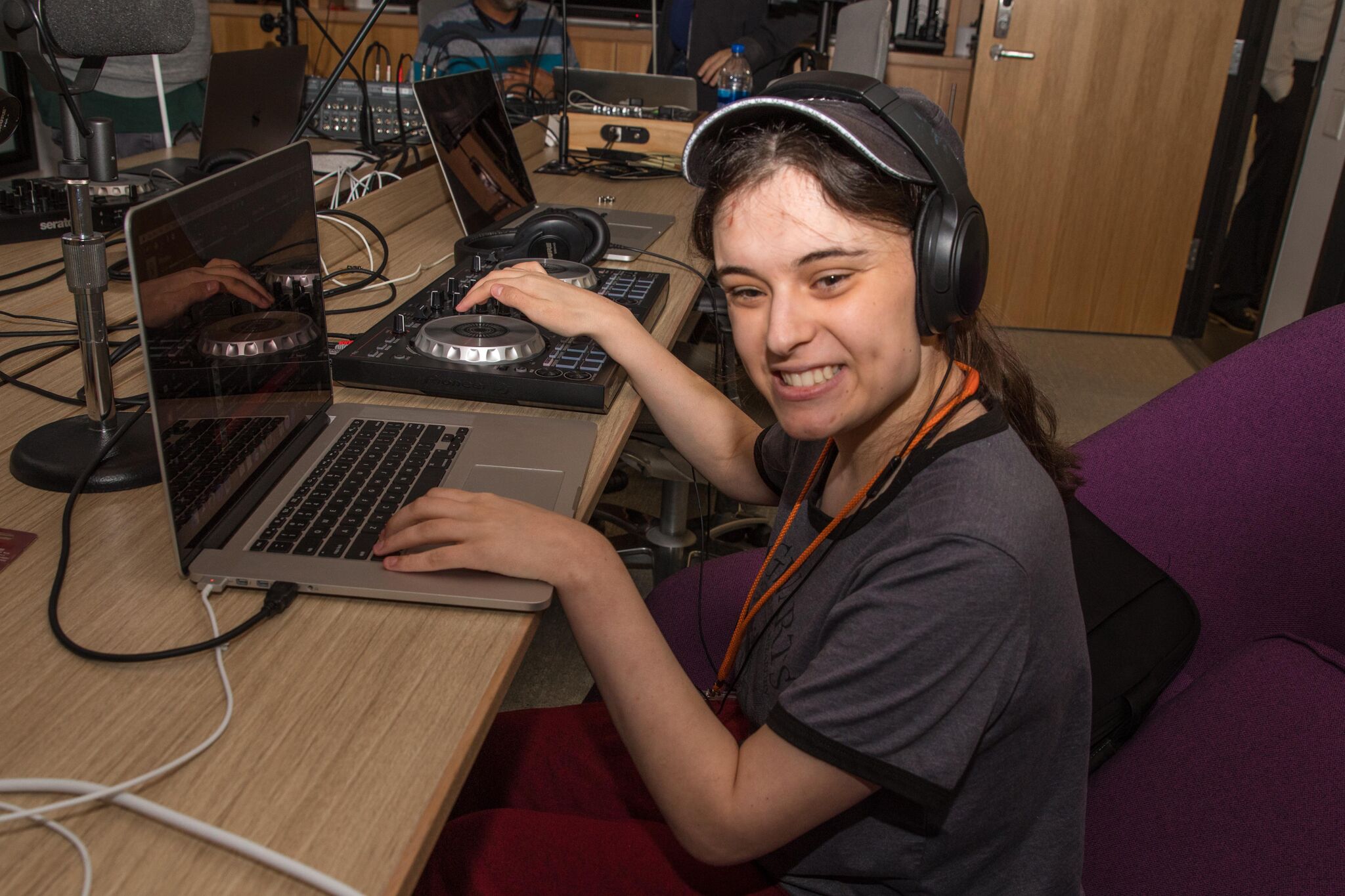
Audio Academy student Maycie sits grinning in front of her DJ equipment in the LightHouse board room.
Maycie, 20, was thrilled to find out about Audio Academy because it marked a departure from many other inaccessible or antiquated audio workshops. She had researched a variety of music schools, but none could provide appropriate accommodations. As a vocalist, producer of her own songs and aspiring DJ, Maycie sought an educational avenue for audio skills.
“Blind people kind of get stereotyped a lot as musicians,” she says. “Not every blind person is musical, but for those of us that are, there need to be more opportunities.”
She says that the workshop provided a comprehensive basic understanding of the DJ software, DJ methodology and tools, adding that the workshop solidified her interest in DJing professionally.
“It was a pretty amazing feeling, to be honest: I had this picture in my head of actually performing a DJ set, and no one would have to help me — I could do it fully by myself.”
Audio Academy student Jenna smiles, seated, with one hand on her laptop and the other on her DJ equipment.
Jenna, 21, says that although she wasn’t certain what to expect for the weekend, she was glad to have participated and introduced herself to a set of skills to enhance both her recreational and vocational interests.
“This has opened up a whole new realm of possibilities for me with my pursuit of a career in music and I’m excited to attend more Audio Academy Workshops in the future,” she says.
Juan, 23, says that the workshop was fulfilling as an opportunity to learn new skills in a new environment, and add another skill to his musical toolbox of piano, guitar and percussion instruments. Over the weekend, he learned to mix and edit a set of songs using DJay Pro in conjunction with accessible technology, including VoiceOver.
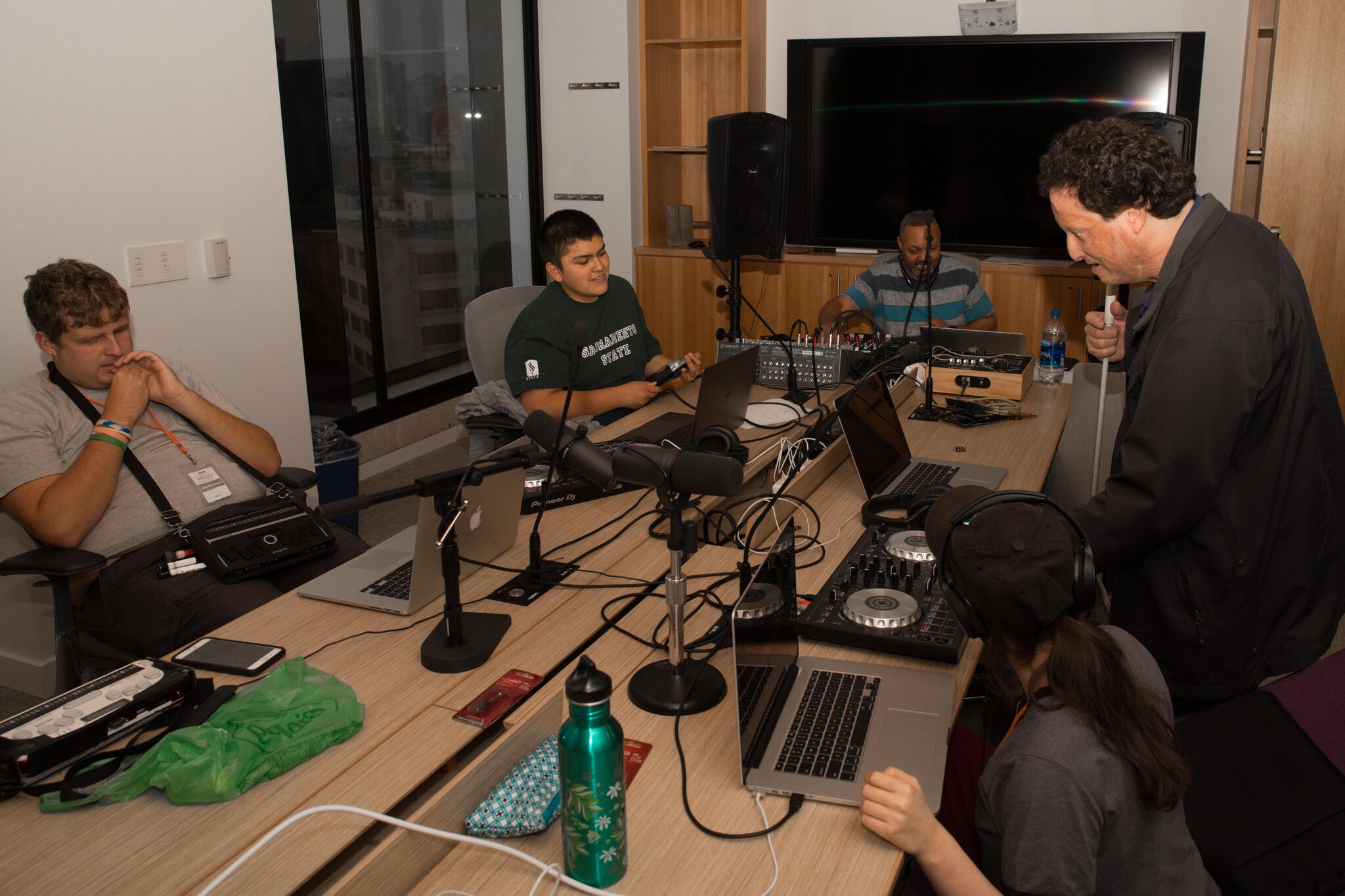
Audio Academy students, instructor Clarence and LightHouse Board member Josh Miele assemble in the Board Room around DJ equipment to listen to music.
“I like to listen to music, so DJing seems like a possibility, and I felt like the teachers were putting good emphasis in the stuff they taught us,” he says. “I want to buy the DJ equipment and start practicing at home. And, I want to actually do what the instructors do. They get gigs and stuff like that, and I want to actually DJ professionally.”
Byron and Clarence collectively have a wealth of knowledge and experience in audio production, DJing and music. Byron created I See Music to foster independence, equality and opportunity through their instruction and example of professional success.
Daniel, 22, says that having blind instructors was a defining part of the workshop. He was pleased that their knowledge of both the DJ and accessibility softwares rendered the workflow relatively seamless.
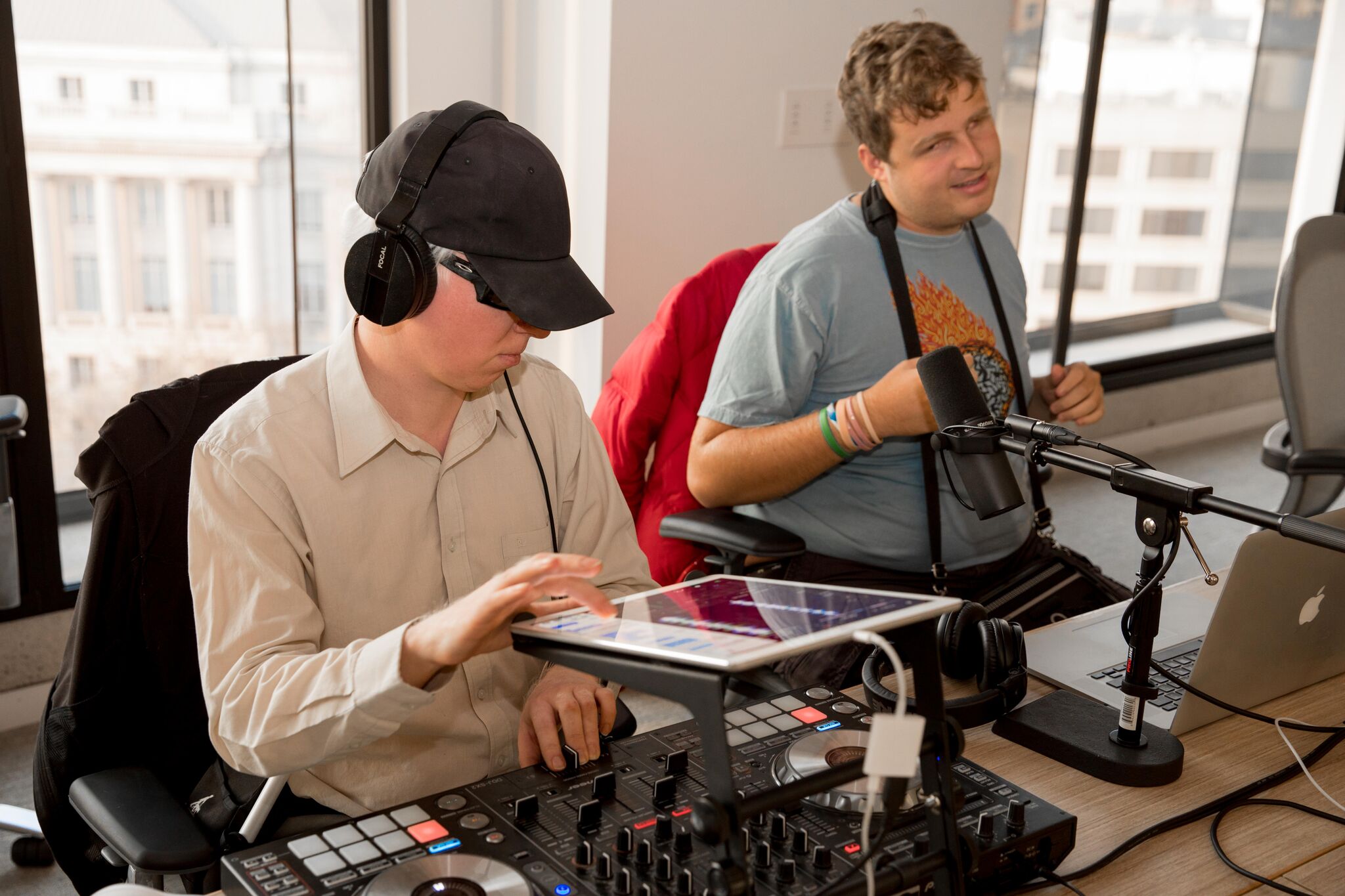
At left, Blind DJ Ryan Dour performs a set using an iPad and DJ equipment, while Audio Academy student Daniel listens with delight at right.
“I felt the program was really good. I really learned a lot, and I think that it was a good opportunity for people,” he says. “You could get hands-on experience there with somebody that really knew the software. I might use the knowledge as a radio DJ, or might just do some DJing on the side just for fun.”








 Hosted by CBS News’ longtime anchor Lesley Stahl and produced by Shari Finkelstein and Jaime Woods, the