Category Archive

LightHouse News

Adaptations Has New One-of-a-Kind Products

Adaptations Has New One-of-a-Kind Products

It’s a new month, and our online store Adaptations has exciting new products to shop for. One of the greatest benefits of shopping with Adaptations is our collection of one-of-a-kind items designed and produced in-house by our Media and Accessible Design Laboratory (MAD Lab) team that are sold exclusively online at Adaptations.org. And what’s even better, these new MAD Lab products have arrived just in time for the gift-giving season.

One of our featured products this month is a Braille booklet containing a calendar filled with holidays, religious observances and culturally significant dates as well as a comprehensive list of blindness-specific events and days to remember. It also contains key LightHouse contact information, no need to go online to find a number to call us. This compact 5×8-inch booklet is packed with great information and is the first of its kind. Never forget an important date or event again with MAD Lab’s excellent newly designed Braille calendar.

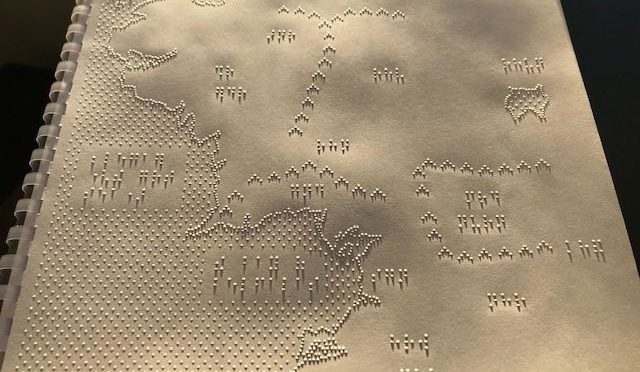
Another new Adaptation’s exclusive MAD Lab creation is truly the perfect holiday gift for all the blind and low vision Lord of the Rings fans out there. Check out this fun and accessible Middle Earth Tactile Maps Bundle. Emerge yourself in a world of legends, grand adventure, and of course hobbits, as you explore these fantastic maps! This is a must-have for the Lord of the Rings fanatic in your life.

You can browse our new MAD Lab products, as well as the whole MAD Lab collection by visiting Adaptations.org. If you need assistance shopping, have questions for our knowledgeable staff, or are seeking advice on which product will best suit your specific preferences and needs, email Adaptations at adaptations@old.lighthouse-sf.org. You can also give us a call at 1-888-400-8933, or chat with us via the Be My Eyes mobile app by finding LightHouse for the Blind and Visually Impaired under specialized help. Happy shopping, everyone!

Hitting the Ground Running

Hitting the Ground Running

Back in August, we announced the launch of our early childhood intervention service called LightHouse Little Learners. LightHouse Little Learners will give us the opportunity to provide specialist services and bring our brand of blindness-positive philosophy to families with children ages birth to three who are blind, DeafBlind, have low vision or neurological visual impairment, or whose developmental delays include blindness or low vision throughout Northern California.
 
Since our launch we’ve been searching high and low for the right person to lead this new arm of LightHouse services, and we are thrilled to announce that we have found her. Pam Chapin has joined us as LightHouse Little Learners Program Director. She has a wealth of experience in this area and has hit the ground running. In the below interview she tells us how she became interested in early intervention, why she loves it and describes the reality of what families can face in these early, crucially important stages of their child’s life. Welcome to the LightHouse, Pam!

Early Childhood Intervention for children who are blind or have low vision is a very specific discipline, how did you become interested in this area?
 
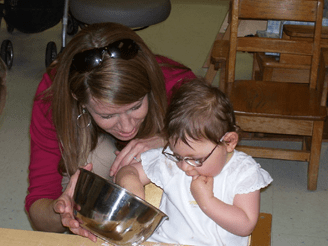
I was working as a Child Development Specialist for Santa Clara County Office of Education, supporting inclusion services within the Head Start preschool system. I was contacted by a TVI [Teacher of the Visually Impaired] who was looking for a full-day preschool placement for one of her students whose working mom needed care for her daughter [Bianca] who was blind. At that time, the Head Start program had a half-day classroom that was blended with this TVI’s classroom. It was a great program but would not have provided care during the hours the family needed. My role was to determine what supports would help the child, teacher and classroom have a successful experience. I visited little Bianca in her vision program to meet her. She was playing in a huge motor room, exploring the entire space, climbing play structures, bouncing balls, and scooting on ride-on toys. Clearly, Bianca was unstoppable! I knew she would be successful in the preschool classroom. We met with her parent, followed her TVI’s recommendations, invited her [Orientation & Mobility] specialist to visit the classroom, and supported the Head Start teacher as we all learned together alongside Bianca. She was part of the classroom community, just like every other child, and she opened doors for other children who would come after her. After this experience, I went to work for the Blind Babies Foundation and eventually completed my TVI credential and MA in special education at [San Francisco State University].

How close is it to the kind of thing you thought you might like to do growing up?
 
I used to pretend I was a teacher when I was a child and remember trying to teach a neighborhood boy how to read while I was still learning myself. I initially studied psychology and planned to become a child psychologist or family therapist, but I often found myself working in different areas of early childhood or special education. I worked with a variety of age groups and in different settings, including a Montessori preschool, a classroom for students with learning disabilities, a home-based autism program, and a vocational program for adults with intellectual disabilities. Once I began working at Blind Babies Foundation, I fell in love with the community, the children and families and wanted to continue learning. I love the blending of early childhood education, infant-family mental health, blindness education and inclusion.

Give us a quick run-down of your career in this area so far?
 
During my tenure with Blind Babies Foundation, I also served as Regional Coordinator, Assistant Program Director and Program Director. My education in the field has come from many teachers, mentors, colleagues, and especially the children and families who have shared their journeys with me. I have been so fortunate to work with many exceptional mentors and to participate in research projects at Smith-Kettlewell Research Institute. We have learned a tremendous amount from our pediatric ophthalmology partners to better understand childhood vision diagnoses that may impact early learning. Babies and families motivate my learning, as well as educating the community about the importance of early learning experiences and family support. I am passionate about helping families access quality services for their child who is blind, has low vision, neurological visual impairment or complex needs.  

Over the seventeen years you’ve been working with children who are blind or have low vision, what are some of the developments you’ve seen in the practice over that time?
 
One of the shifts I have experienced is a movement away from a therapy model to a family centered coaching model. In a therapy model, the teacher arrives in the home with a toy bag and engages the child in activities, modeling for the parent and teaching them strategies to implement with their child throughout the day. The coaching model aligns with what we often call the Infant Mental Health model, in which the focus is on the relationship between the infant and parent, or caregivers, because we all learn through important relationships. Our role is to help parents understand their infant’s cues, which may be different than a sighted child. We observe together to learn how their child is using all of their senses to learn, explore, play and communicate, and to help parents integrate learning opportunities into their daily routines. We help families create experiences that are accessible to their child, and sometimes to increase their child’s ability to use their vision by adapting the environment or materials. As parents understand their child’s unique learning needs, they become very skilled at making concepts and activities accessible for their child, and confident in explaining these needs to others, setting the stage for their child’s future self-determination.

The other significant development is the advancement of the neuroscience, research and understanding of neurological or cerebral visual impairment (CVI). I recall an analogy when I started in the field that described CVI as “like looking through Swiss cheese.” We are now learning just how complex the visual brain is and how interconnected with the rest of the brain. CVI is the most common cause of childhood visual impairment in the US, so it is essential that we understand how varied the impact of CVI is on each individual, from difficulties perceiving movement or specific visual fields, to challenges locating or identifying objects, or navigating a room. This increased understanding has helped us more accurately observe how an infant or young child is accessing visual information and integrating that with other sensory information to learn. The more we understand, the more successfully we can individualize a child’s play and learning experiences to make them meaningful and engaging.

Can you give an example of a family or child who is blind or has low vision, who helped you learn and grow in your teaching?
 
One of the first parents I met when I began working with families had a son who had cerebral visual impairment and cerebral palsy. She was a mentor in the truest sense of the word and showed me what was possible at home, school and in the community. She would set up an experience of roller skating for her child who was blind and used a mobility chair by positioning him in an Active Learning Hopsa Dress that supported his body in an upright position while allowing movement, placing roller skates on his feet, and positioning him over different surfaces where he could hear the sounds of the wheels, feel the vibrations in his feet and body, and just belly laugh! She ran a neighborhood summer camp experience for local children. She advocated in school for her child to have access to learning materials, instructional methods, qualified teachers and peer groups that he needed to thrive. And I will always remember her presenting to a room full of educators, researchers, and physicians that the most important thing to her was that her child was free from pain, that this must come first before any other agenda. He was a child first, a whole person, and this must guide everything we do.

What’s the most difficult aspect of working with this population?
 
The greatest frustration is access. At a time when families are at their most vulnerable, they face a mountain of hurdles as they try to navigate medical and educational systems. Bringing a new child into your family is a beautiful and joyful time, and it is also a bit scary because you don’t yet know this little person and how best to care for them. Now imagine suddenly having to navigate multiple medical specialists, diagnoses, insurance battles, perhaps medications or a feeding tube, lack of childcare to return to work and the economic impact of that on your family. Then there may be barriers to receiving early intervention services to help your child, long waits before services begin, language barriers, or challenges understanding the array of services you are entitled to access. Families often have multiple appointments each day with doctors, therapists, specialists, teachers and early interventionists. It can be stressful, daunting, and often a fulltime job for a parent to navigate these systems. The experience of accessing help should be coordinated, integrated and welcoming.

What are you most excited about building a program like this from the ground up?
 
Starting from the ground up is so exciting because we can dream of new possibilities. We have the opportunity to design creative service models, to ask what families need, build community, and to reach out to underserved regions. I am excited to bring families into the LightHouse community where they will have access to innovative programming as their child grows, meet mentors, and share meaningful experiences such as attending camp. Little Learners will be part of a much larger mission to create access, opportunity, and connection from infancy through adulthood.

LightHouse Public Board Meeting: Thursday November 4, 5:30pm – 8:30pm Via Zoom

LightHouse Public Board Meeting: Thursday November 4, 5:30pm – 8:30pm Via Zoom

Members of the public are invited to attend this meeting of the Board of Directors of San Francisco’s LightHouse for the Blind and Visually Impaired, during which thirty minutes will be reserved for public comment. In an effort to provide a fair and equitable speaking opportunity for all members of the public, up to three minutes will be provided for each person’s questions or comments. At this meeting, the Board welcomes Board nominations, questions, and comments from the public on the operations and services of the LightHouse. As time is limited, members of the public are asked to sign up to speak no later than 5:00 PM the day before the meeting by email.

Contact information for the LightHouse is provided at the end of this notice.

Members of the public who would like to speak are encouraged to sign up early, as the 30-minute public comment session can accommodate no more than 10 speakers.

Board Member Nominations

Members of the public can bring potential Board candidates to the attention of the Board’s Nominations committee at this meeting (by email: include no more than 500 words describing why the potential Board candidate should be considered).  The Board will review and evaluate each potential Board candidate in addition to those made by the LightHouse staff and other members of the Board, using the Board nomination and selection guidelines at https://old.lighthouse-sf.org/about/board-of-directors-nomination-guidelines/.

Board of Directors Meeting Agenda

A typical LightHouse Board meeting usually includes Executive and staff reports, Board Committee reports, and an Executive Session (which is closed to the public).  A meeting agenda can be obtained upon request by email three business days prior to the meeting.

Contact Information

To request agendas, sign up for public comment or to write about prospective Board nominees please contact us at the below address:

Board-request@old.lighthouse-sf.org

Administrative Office Hours are Monday through Friday, 8:30 a.m. to 5:00 p.m.

LightHouse Student and Distinguished Blind Artist Catherine Chong, Showcases Her Tactile Painting at Palo Alto Art Center

LightHouse Student and Distinguished Blind Artist Catherine Chong, Showcases Her Tactile Painting at Palo Alto Art Center

The Palo Alto Art Center premiered their new exhibit, The Art of Disability Culture, on Saturday September 11. Among the beautiful works of art, the splashes of color, rich textures, and intricate sculptures, you’ll find multi-media tactile paintings by blind artist Catherine Chong.

After a retinal detachment and failed surgeries to repair the damage to her retinas in 2018, Catherine took steps towards learning how to adapt to low vision. Those steps led Catherine to LightHouse and we wanted to find out more.

How did you first hear about LightHouse?

“My elderly aunt and mentor in San Francisco had a blind daughter. Her daughter went to Enchanted Hills Camp every summer and therefore they suggested I call LightHouse. [LightHouse Rehabilitation Counselor] Debbie Bacon gave me a thorough skillful interview to find just the right programs for me. I went to Enchanted Hills Camp where I got an introduction to blindness. Initially, I was so frightened. Robert Alimana gave me my first hope of independence with orientation & mobility skills and Divina Carlson taught me Braille. [Access Technology Trainer] Jeff Buckwalter trained me on the Victor Reader so I could record lectures and read books for my schooling.”

After strengthening her independence  through the kindness and expertise  of LightHouse staff and educators, Catherine had the abilities and confidence to rediscover her lifelong passion—art.

“Since kindergarten, I was drawn to work with my hands. When outside recess would start, I would hide among the easels and pots of paint rather than the prejudice of the schoolyards where I could not catch balls. Throughout my life, I have practiced art-making and have acquired many skills like academic western painting, sculpture, photography, traditional Asian painting and calligraphy.”

What is your preferred art medium?

“Acrylic painting with lots of different mediums such as rough, smooth, bumpy, glass beads and collage for texture. Tactile Paintings! Or sometimes I call them Sensitive Painting. Learning to read Braille was what inspired me to create tactile art.”

What are your inspirations?

“Humans who have gifted us with wisdom and compassion. My teachers at the LightHouse. Anything is possible. Any beings who have connected humans, animals, or ecology. As a child, my life was filled with beautiful images of saints, stain glass and sacred architecture. As an adult who studied Buddhism, I am touched by Asian stories of the beauty hidden in the ordinary and simplicity.”

Is there anything unique or special about your artistic process?

“I am not trying to imitate the natural world. Color as symbol and emotion is more important to me. I hope the viewer feels lightened, inspired, and can see themselves in my paintings. The images are the viewer’s reflection of their own true nature.  I think the most surprising process for me is using different kinds of light while creating. I have a spot of vision in the outer corner of my left eye, but alas it is only for a few hours a day. Then I have to rest my eyes. So, I have resorted to soft light like candles or lanterns for much of the painting and bright light for short bursts of time when needed. I trace outlines on computers screens or make tactile swell paper images for patterns or stencils. I use string, tape, wiki sticks, even cake decorating tools to make thick tactile lines to help me feel borders. I do put large letters or numbers in the paintings. Sometimes they are upside down to denote mystery or ignorance. Braille meditation teachings in clear plastic are also embedded in most paintings.“

Learn more about Catherine’s art by visiting her website, Lecce-chongartist.com. Follow Catherine on Instagram @Leccechongartist where she posts photos of finished art as well as her process in creating the individual pieces. You can also, of course, attend The Art of Disability Culture show at the Palo Alto Art Center, in personal or virtually, until December 11.

MAD Lab Creates Accessible Maps for Local Parks

MAD Lab Creates Accessible Maps for Local Parks

LightHouse provides business and government accessibility services to those who have low vision, are blind or Deaf-blind. One way we do this this is by partnering with other organizations and city and county-wide task forces on projects and programs across the Bay Area to promote accessibility. LightHouse’s Media and Accessible Design Laboratory (MAD Lab) has their accessible handiwork displayed all over museums and other public spaces in the Bay Area.  Now   we’re venturing outdoors!

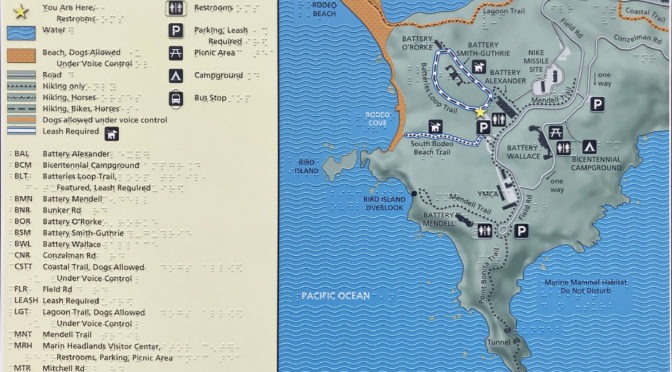
In May 2020, the MAD Lab partnered with the Golden Gate National Recreation Area (GGNRA) on a long-term project creating accessible tactile signage and outdoor exhibits in parks and outdoor recreational spaces in the Bay Area.  Our team devoted hundreds of hours in design, production, project management (and love, of course!) to bring durable, in-place tactile maps and informational plaques to eleven different GGNRA parks.

This project began after the culmination of Gray vs. GGNRA, a landmark settlement agreement to significantly improve access to GGNRA parks. This agreement is the first comprehensive settlement in the country that will increase the accessibility of a federal park system, and MAD Lab has been engaged with GGNRA, providing solutions and services every step of the way. These new maps and Braille park guides will significantly improve access and enhance the experience for thousands of GGNRA park goers with blindness, low vision or mobility disabilities for generations to come.

MAD Lab’s work is proudly displayed at Muir Beach, Fort Mason, Fort Funston, Battery Alexander, Gerbode Valley, Mori Point, and Eagles Point. Among the next parks to have MAD Lab signage are Crissy Field, Tennessee Valley, and the Presidio Coastal Trail. We encourage all our community to go out and explore these maps and outdoor informational signage in person. And when you do, tag us on social media @lighthouse_sf on Twitter and @lighthouseblind on Instagram.

To learn more about the products and services MAD Lab provides you can visit the MAD Lab section on our website. To contact the MAD Lab with questions or inquiries, contact madlab@old.lighthouse-sf.org.

Learn About Accessibility in Zero Gravity at Our White Cane Day Event, 10/15

Learn About Accessibility in Zero Gravity at Our White Cane Day Event, 10/15

Please join the San Francisco LightHouse for the Blind and Visually Impaired virtually this Friday, October 15 for a White Cane Day Event, “Will There Be Space for White Canes in Space?

LightHouse partnered with SciAccess Initiative for the launch of a new program, Mission: AstroAccess which will take a group of 12 cross-disability ambassadors on a series of weightless parabolic flights on October 17. The ambassadors have visual, hearing and mobility disabilities and will test various designs for accessibility in zero-gravity and high gravity environments by performing targeted tasks during the flights.

Now’s your chance to meet the four ambassadors who are blind at this Friday’s White Cane Day Event.

What: LightHouse White Cane Day Celebration – “Will There Be Space for White Canes in Space?”.
When: Friday, October 15 from 11:00 am to noon Pacific
Where: Online via Zoom or phone
RSVP: Register for the White Cane Day Celebration on Eventbrite. After you sign up, you will receive information to join the event using Zoom or the phone. You may also email Sheri Albers at SAlbers@old.lighthouse-sf.org for the event details.

Now, here’s a little bit about the four blind ambassadors you’ll meet this Friday.

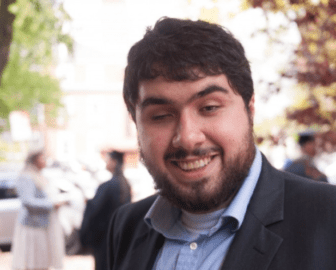
Sina Behram

Sina Behram

Mr. Behram is an accessibility consultant, computer scientist, researcher, public speaker, entrepreneur, and founder of Prime Access Consulting. He was recognized in 2012 as a White House Champion of Change for his doctoral research work enabling users with disabilities to succeed in STEM fields.

Website: www.sinabahram.com

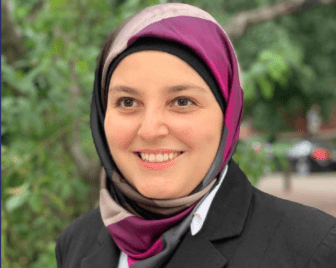
Dr. Mona Minkara

Dr. Mona Minkara

Dr. Minkara is an Assistant Professor of Bioengineering at Northeastern University and leads the Minkara COMBINE (Computational Modeling for BioINterface Engineering) Lab researching pulmonary surfactant. Mona is also a 2019 winner of LightHouse’s Holman Prize for Blind Ambition and used her funds to document her independent travel around the world through her YouTube channel “Planes, Trains, and Canes”.

Website: monaminkara.com

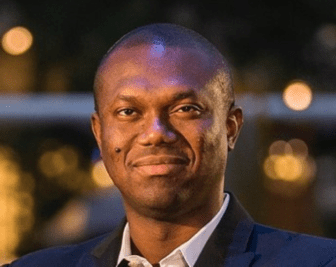
Zuby Onwuta

Zuby Onwuta

Mr. Onwuta is a Harvard-MIT trained innovator, US Presidential Service Award recipient, US Army Veteran, and founder of both Think and Zoom and Future of Disability. He is the patented inventor of Brain control for Blind Assistive Tech, a solution that reads and responds to human brain waves and provides hands-free vision augmentation and reading assistance.

Website: zubyonwuta.com

Dr. Sheri Wells-Jensen

Dr. Sheri Wells-Jensen

Dr. Wells-Jensen is an associate professor of linguistics at Bowling Green State University where her research focuses on social aspects of human colonization, astrobiology, disability, and the relationship between language and thought.  She studies the ways in which alternative sensory inputs influence the evolution of scientific thought and is currently writing a book about disability and space.

Watch the best in Films on Disability at Virtual Superfest Disability Film Festival 10/15 to 10/17

Watch the best in Films on Disability at Virtual Superfest Disability Film Festival 10/15 to 10/17

This weekend, October 15 through 17, is the annual Superfest Disability Film Festival. Superfest is the longest running disability film festival in the world. It has run since 1970 and showcases the best in short and feature-length films starring people with disabilities in front or behind the camera—or both. This year’s festival will be virtual. All films will be on-demand from October 15 through 17 and you can watch them at your leisure during this time. When you purchase a pass, you have the option of watching the films with open caption, or open caption and audio description.

Two films feature blind characters: Flight Paths and Here Comes Frieda. Here’s a little more about both:Flight Paths
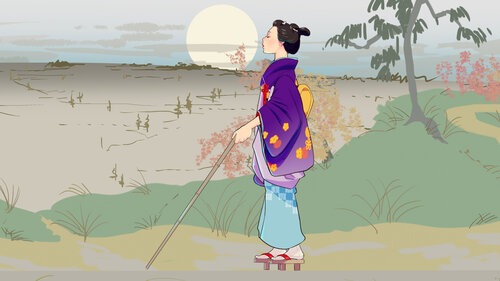
Part film, part video game, part history lesson, this whimsical animated choose-your-own adventure takes us into the world of ‘the Goze’, blind female travelling performers of medieval Japan. Produced by Extant, the UK’s leading company of visually impaired artists, Flight Path shares how access can be both innovative and fully integrated. Join this meditative reflection on travel, blindness and migration.

Here Comes Frieda
As yet another superstorm bears down on a desperate, weary city in the year 2040, a young blind woman seeks to redeem her winning sweepstakes ticket for a better life in a low Earth orbit paradise.

Check out the full list of films with summaries.

Passes for the festival are available for purchase on a sliding scale. Buy a Superfest Disability Film Festival pass.


LightHouse Staffer Katt Jones on Developing “Your Personal Safety” Workshops. Final workshop is October 16

LightHouse Staffer Katt Jones on Developing “Your Personal Safety” Workshops. Final workshop is October 16

This summer LightHouse partnered up with a personal safety instructor from Savannah, Georgia, George Freeman, to bring the LightHouse community and their families specially designed virtual accessible workshops called Your Personal Safety: Getting Back to Normal. The final workshop will be held Saturday, October 16.

LightHouse Orientation and Mobility (O&M) Specialist, Katt Jones, was a major advocate for the class and played a significant role in coordinating and scheduling this workshop series along with other LightHouse staff. We talked to them about their experience organizing and participating in these workshops.

“This workshop series was created from LightHouse’s BIDE Task Force which stands for Belonging, Inclusion, Diversity, and Equity.”

BIDE is focused on implementing BIDE for LightHouse staff, students and the community. Some issues the task force are addressing include pay equity, glass ceilings and ensuring students from diverse socioeconomic backgrounds can access LightHouse programs.

Katt Jones continues:

“During the first meeting of the task force, we discussed how many of our students were not feeling safe going outside. They might be afraid of COVID, or they might lack confidence in their travel skills due to having to shelter in place for so long. There were concerns of anti-Asian violence that has been increasing in the United States that is disproportionately impacting Asian-American and Pacific Islander communities. Working with George Freeman while coordinating this workshop series has been lots of fun. He has a long history of teaching safety and self-defense, so he is a wealth of knowledge. George also has an infectious sense of humor that gets me cracking up during all of our planning meetings and workshops.”

We also asked Katt some additional questions:

What was the level of participation in the first two workshops? 

“We had around 70 participants in the first workshop and around 30 participants in the second. Most of the students found out about Personal Safety: Getting Back to Normal through participating in other LightHouse community service adult programs or from having O&M training. In the first workshop we got a lot of amazing questions, stories, and feedback from students about their safety concerns. The second workshop was mostly a lecture format to do a deeper dive in topics from the first workshop including de-escalation and boundary setting strategies. There are no requirements to join these workshops, so if a student has not participated in the previous classes, they are absolutely welcome to join the October 16 class.”

What can students expect from the workshop?

“The third workshop will be a Q&A format with a panel of safety experts from the Strive 4 You SEED program. This is a program George Freeman is a part of. This will be a great opportunity for people to ask questions and learn as much as they can in this interactive format.”

What feedback have you received from students in the previous classes?

“I have received a lot of positive feedback from students from both previous workshops. Students are eager to get back out into the world after being afraid to leave their homes due to the pandemic or fear of violence, but they are craving safety skills. Many of our students are interested in pursuing self-defense classes and hands-on training if it is available.”

What have you taken away from this experience, both as a program coordinator and as a participant?

“I think the most important thing I have learned is how hungry our students are for this information. They want to feel safe moving through the world and empowered to handle difficult situations and help others around them.”

In the future Katt hopes to hold another series of workshops, whether virtual or in-person, but for now, this is your last chance to attend a Personal Safety workshop.

Join Katt, George, other instructors and students on Saturday, October 16 from 1:00 pm to 2:30 pm Pacific. RSVP to Personal Safety: Getting Back to Normal. If you have any questions regarding preparation for the workshop you may email Katt Jones at KJones@old.lighthouse-sf.org. If you have any other questions about the workshop or need assistance RSVPing, please contact Jaclyne Atoigue at JAtoigue@old.lighthouse-sf.org or 415-694-7618.

Take 10% off all Canes and Cane Accessories for White Cane Awareness Month

Take 10% off all Canes and Cane Accessories for White Cane Awareness Month

It’s October, and you all know what that means… White Cane Awareness Month! To celebrate this monumental month of blindness awareness, pride, advocacy and independence, LightHouse’s blindness product store Adaptations offers the annual 10% off White Cane Sale for the entire month of October. Need a new cane? Perhaps you’re looking for a backup cane for those “just in case” moments? Fill your virtual shopping cart with the finest white canes and cane accessories from your favorite mobility brands like Revolution and Ambutech. The more you shop, the more you’ll save this month with Adaptations. No coupon code is necessary; the 10% discount will be automatically applied at checkout.

Browse our white cane collections by visiting Adaptations.org. If you need assistance shopping, have questions for our knowledgeable staff, or are seeking advice on which product will best suit your specific preferences and needs, email Adaptations at adaptations@old.lighthouse-sf.org. You can also give us a call at 1-888-400-8933, or chat with us via the Be My Eyes mobile app by finding LightHouse for the Blind and Visually Impaired under specialized help. Let Adaptations enhance your White Cane Awareness Month celebrations with discounts all month long. Happy shopping and safe travels, everyone!

And psst! Don’t forget to join us virtually on White Cane Day, October 15. You can register for our free event on Eventbrite. What does the future have in store for white canes and accessibility in zero-gravity? Join us Friday, October 15 at 11:00 am Pacific to find out.

LightHouse for the Blind Wins Top Environmental Award

LightHouse for the Blind Wins Top Environmental Award

We are so proud and honored to announce that LightHouse Sirkin Center, our social enterprise dedicated to furthering the employment opportunities for people who are blind or have low vision, has been recently named one of the U.S Environmental Protection Agency’s (EPA) Safer Choice Partners of the Year for 2021.
 
The team at Lighthouse Sirkin Center have broken records over the past 18 months with their tireless work throughout the pandemic. LightHouse had record sales for its Safer Choice-certified products in 2020 and in the same year was awarded a contract to supply the entire United States Navy Fleet with two of its Skillcraft Safer Choice-certified products. LightHouse also partnered with NIB, a federal agency which organizes government contracts for nonprofits who employ blind workers to sell its Safer Choice-certified line to federal agencies across the United States.

Now our staff has been nationally recognized by the EPA as an “outstanding Safer Choice formulator-product manufacturer” of products with ingredients or chemicals that are safer for families, pets, workplaces, communities, and the environment. They are in grand company along with Apple, Home Depot and the Procter & Gamble Company.
 
The EPA Safer Choice program helps consumers and purchasers for facilities, such as schools and office buildings find products that perform and are safer for human health and the environment. 
 
From our state-of-the-art brand-new facility in Alameda, LightHouse Industries is a social enterprise dedicated to increasing the participation of people who are blind or have low vision in the workforce. 90% of all direct labor in producing  LightHouse’s Safer Choice products is provided by blind workers.
 
Through LightHouse Industries, jobs and experience are gained in many areas, including chemical manufacturing, chemical blending, and quality assurance and control. In this way, pathways have been developed for blind employees to become future blind leaders, scientists and skilled tradespeople.
 
Bryan Bashin, LightHouse CEO, says:

“The recent EPA award is a great acknowledgement that blind people can design, produce and distribute industry-leading environmentally-safe products that benefit all people. Businesses and governments who use older and more-toxic formulations can do a double service by switching to Lighthouse products, improving the environment and supporting blindness services at the same time.”
 
Assistant Administrator for the Office of Chemical Safety and Pollution Prevention Michal Freedhoff says: 

“I’m excited to see that the work done by many of this year’s awardees support the Biden-Harris Administration’s goals of addressing climate change and advancing environmental justice.”
 
Congratulations to everybody at LightHouse Sirkin Center and thank you to the EPA for its recognition of this outstanding team effort.
 
For Safer Choice product sales inquiries, contact Product Manager Al Ahlm: AAhlm@old.lighthouse-sf.org or phone: 916-825-7491