
Category Archive

LightHouse News

Disney•Pixar is Making Movies Better for Blind People

concept art: a landscape from Pixar's new film, 'The Good Dinosaur'

On a warm, sunny morning last month, a group of LightHouse employees piled into a van and drove north to Skywalker Ranch, George Lucas’ historic outpost in the rolling hills of Marin County. But we weren’t there to talk Wookies and Ewoks; we were being hosted, along with a handful of other blindness organizations, by Pixar Animation Studios

Some might be surprised to hear that Pixar and Disney (which now owns the Emeryville-based animation studio) would be seeking out blind and low vision individuals to test animated movies, but that’s exactly what was happening last month. In Lucas’ private theater, a group of almost thirty sat for a test screening of Pixar’s summer hit, Inside Out, each with a light set of headphones and a specially-loaded iPad on their lap. A small group of some of Pixar and Disney’s greatest movers and shakers waited patiently for feedback of a brand new technology they’ve been working on for some time now. Specifically, they’re on a mission to figure out two things: What is good audio description, and how can it best be delivered.

Many blind moviegoers and television fans don’t use audio description (also called Descriptive Video Service or DVS). Due to a combination of factors, including a range of DVS standards and practices, there are lots of blind and visually impaired folks who feel like it’s just not for them. Personally, I was one of those people — I had never watched a full film with audio description, and I’m told that about half of the group gathered at Skywalker was in the same boat.

And yet, once the narration kicked in and we got the levels right, the audio described Inside Out was a ball. We laughed, we (well, some of us) cried. Most of all, there wasn’t one person in the theater that felt left out of the experience. None of us needed to whisper back and forth quizzically about what was happening onscreen; none of of us sat silently spacing out during action sequences; and most importantly, we all smiled at the same time.

Paul Cichocki, the post-production supervisor at Pixar who oversees foreign language and audio described soundtracks, has been running these kind of focus groups for years, but this year they’re trying a few, exciting new things. “All studios make an effort to do this descriptive audio track,” he told me, “but we wanted to place the same kind of attention to the quality of audio narration as we do to the films themselves.” Disney’s aim, under the guidance of Paul and others, is to innovate rather than placate, to find an elegant solution to the seemingly daunting challenge of helping blind folks enjoy the movies as much as anyone else.

After the film, I sat at a table with Inside Out’s producer Jonas Rivera (who also produced Up) and a few other blind elementary and high school students and talked about our experience. We had all found the audio description satisfactory, useful, and even pleasurable — even those of us who had never used the tool before — but Rivera was nonetheless eager to improve the experience in any way possible.

“Did you understand what memories looked like?” He asked about clarity of action, about the choice of narrator, about how to properly introduce all the characters without overloading the listener. As the kids and adults responded, he took studious notes. “If this was me, when Joy sees Bing Bong disappear, I would amplify that maybe — but maybe that’s not right. Does it feel like the narrator is too robotic maybe? A little too literal, in some ways?” Jonas scribbled on a notepad as the kids talked. Simultaneously, at six other tables, a different Disney or Pixar employee did the same with other groups.

a voice actress works on the audio description for "The Good Dinosaur"When I spoke to Paul again this week, he had just gotten back from LA, where he was working with the voice actor recording audio description for Pixar’s new film, The Good Dinosaur. Usually the narrator’s script for an audio described film is contracted out to a specialized agency — in Pixar’s case it’s WGBH in Burbank, which handles most broadcast and film audio description on the west coast. Even with contractors like WGBH, Paul is totally hands-on. “I don’t know of any other studio that sits down and reviews the script for the narration track,” he told me this week. “We have the producer, the director, the writer, the film editor and myself comb through that script and make changes. I sent 3-4 rounds of changes to WGBH for The Good Dinosaur. And it’s about helping them, too — they don’t get direct feedback very often about what’s good and bad about their script.  We want to up that standard for the whole community — so that blind people can feel like they really saw the movie.”

Check back on the LightHouse blog again soon for more exciting news from Disney•Pixar.

article by Will Butler
On the Future of Blindness

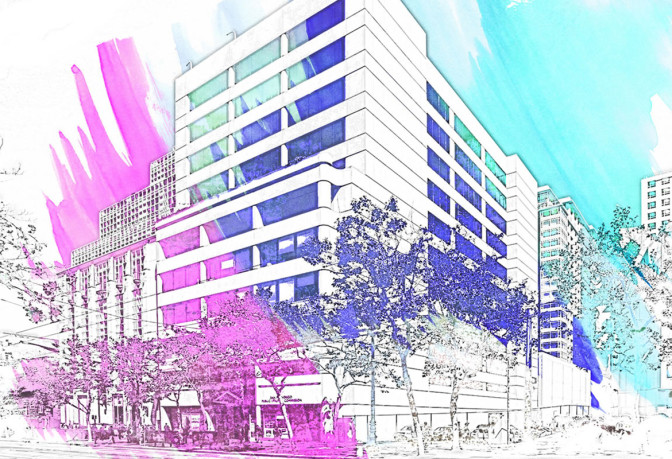
The LightHouse's new West Coast Center at 1155 Market St.

This morning, KQED public radio hosted LightHouse CEO Bryan Bashin to discuss the future of blindness. It wasn’t, as many discussions of blindness are, a roundup of medical cures or sob stories. Rather, it was a lucid and exciting look at the opportunities and even joys of living life with blindness or visual impairment.

This week, a new podcast called The Leap takes a deep dive into the makings of the LightHouse’s very bright future. Science reporter Amy Standen profiles an historic gift, from a fellow member of our blindness community far afield — who never stopped struggling with his changing vision. Now, with this act of generosity from Donald Sirkin, the LightHouse marches proudly ahead to become a truly 21st century hub for blindness skills training, technology development, advocacy and community support.

Get involved:

– Learn about our new West Coast Center of Excellence, under construction at 1155 Market Street in San Francisco

– Read about our Changing Vision, Changing Life introduction to blindness skills retreat

– Attend our 29th Annual Disability Film Festival, November 14-15

– Explore planned giving, workplace giving and volunteer opportunities

Media contact: press@old.lighthouse-sf.org


The LightHouse Youth Program Presents Birding with the Blind: Identifying Birds Through Sound

Tom Grey GoldfinchJoin the LightHouse Youth Program as we explore the Quarry Lake Recreation Area for our first-ever bird identification hike. During the hike students will not be using binoculars, instead we will use our ears to identify the birds by sound. With help from the Merlin Bird ID Application, we will match the sounds we hear on our hike with recorded sounds from the app.

Who: Families with at least one low vision or blind student
What: Bird Identification Hike and Picnic
When: Saturday November 21, 2015, 10:00 a.m. to 2:00 p.m.
Where: Quarry Lake Regional Recreation Area located at 2100 Isherwood Way, Fremont, CA 94536
Meeting Location: We will gather at the Information Stand next to the restrooms and phone, closest to the main entrance and parking lots.
Transportation: Limited transportation from the Union City Bart Station can be made available upon request.
Cost: FREE
Waiver: Each participant must complete a LightHouse Youth Program Application, if you have not done so already.
What to bring: good walking shoes, a smart phone loaded with the Merlin Bird ID App, bag lunch, water bottle, warm layers of clothing and sunscreen.

Here’s more information about the Merlin Bird ID App. Please note that this app has some features that are not accessible with voice over.

If you would like more information or to RSVP for this event please contact Jamey Gump, Youth Services Coordinator, at (415) 694-7372 or by email at jgump@old.lighthouse-sf.org.

Meet Our Volunteers: Liz Klein

Liz KleinLiz Klein has been a volunteer at the LightHouse for three and a half years, working with LightHouse Wellness & Enrichment Coordinator Molly Irish. This year, Liz, who has low vision and has received mobility and technology training at the LightHouse, is one of several whose dedication and exceptional, above and beyond volunteer service to the LightHouse was celebrated with a special award at September’s Volunteer Recognition event.

Before volunteering for the LightHouse, Liz was an Administrative Assistant for 20 years, supporting physicians and staff at a doctor’s office. When she retired she looked for ways to keep up the daily pace; one Friday evening she wandered into the LightHouse during one of Molly’s legendary Bingo and dinner get-togethers and noticed there were a few things Molly could use assistance with. Since that night Liz has been a constant and much valued help to Molly.

Liz tells us that what she loves most about volunteering is that it gets her out of the house and keeps her mind busy. She loves interacting with the students and staff and feels that volunteering is a highlight of her week. She said, “I really love working with Molly. The people keep me coming back and it’s so much fun…I’ve made a lot of friends and enjoy coming here to knit with the Beanies for Babies Club on Thursdays.” She adds, philosophically, “Eventually, it might be me that needs help so why not help now? I enjoy helping.”

Liz’s favorite volunteer memory is a recent one – our recent Volunteer Recognition event where she was given her award. “I was so surprised! I was told that I was nominated but I shooed it away and didn’t give it much thought. Even when someone asked if I was going to dress up, it still didn’t register, but boy what a surprise to be called up there.”

We salute Liz, who is part of an ongoing LightHouse tradition, from building houses to knitting baby caps, from blood drives to toy drives, all done by blind people for the wider community.

We invite you to volunteer with the LightHouse! There are three easy ways to apply. Contact Justine Harris-Richburgh at volunteer@old.lighthouse-sf.org, call her at 415-694-7320 or complete your volunteer registration online.

Enchanted Hills Retreat – Weekends are Filling Up Fast

The dining hall at Enchanted Hills sits across from Lake LokoyaDid you know that Enchanted Hills, our historic camp for the blind and visually impaired located on Mt. Veeder in Napa, also accepts reservations for retreats, getaways and events of all sorts?
EHC is much quieter during the fall and winter months, which makes it an even more idyllic setting for escaping from the day-to-day of city living. It’s also a time when we spruce up the grounds and prepare for a new year. We’ve just demolished the old boat dock and started the project of building a new floating dock, designed to rise and fall with the water level as we work towards sustainable solutions for drought and storm months.

In other news, PG&E has just installed new power lines to wire the upper barn, meaning that George Wurtzel and his cohort of blind woodworking students will have all the energy they need to thrive during this month’s woodworking class. Last weekend, the Kiwanis Club had a BBQ to celebrate the one year anniversary of “K-Day,” their pledge to have a monthly volunteer day here at camp.

With all this, weekends are filling up fast — in fact, there are only a few weekends available for rental between January and May of 2016, and once summer hits Enchanted Hills is hopping from June through the end of September. That said, it’s always worth checking in to see if we have an opening or cancellation. Call us at (415) 694-7310 or learn more at www.enchantedhillsretreat.com.

Planned Giving: Gifts that Give Back

Rebecca DuprasPlease join us for a discussion on how you, as a donor, can leverage your current assets to create an income stream during your lifetime and also leave a gift to support LightHouse – and create a meaningful legacy.

Where: LightHouse San Francisco Headquarters
When: Wednesday, December 9th at 12pm. Complimentary lunch.
Presented by: Rebecca E. Dupras, Esq. of the Silicon Valley Community Foundation
No cost to attend
Please RSVP by December 2nd to Dagny Brown at events@old.lighthouse-sf.org or 415-694-7333

For the first time ever, the LightHouse is able to offer Charitable Gift Annuities to our community, a chance to receive an income stream and support the LightHouse. Our partners at Silicon Valley Community Foundation are making this possible.

Presenter Rebecca Dupras, Esq. assists individuals and corporate donors, as well as other nonprofits, to craft meaningful philanthropic strategies. She joined Silicon Valley Community Foundation in 2014 as the director of planned giving. She is skilled at working with donors and their professional advisors to craft deferred gifts to meet their philanthropic goals.

What is planned giving?
Any charitable giving other than a simple, immediate gift of money to charity. Often involves tax and legal planning. This workshop will focus on three different types of planned giving. Bequests, which are testamentary gifts left through a donor’s living will/trust. Charitable Gift Annuities are a low-cost way to create a life income stream and benefit LightHouse. And Charitable Remainder Trusts, a customizable way to create a life income stream and benefit LightHouse. This workshop covers the details of each type of giving and help you select your best option.

Perhaps you have experienced LightHouse programs first-hand or are simply a caring and compassionate community member. By making a bequest or other planned gift, you can acknowledge LightHouse for the Blind in a meaningful way and make a lasting difference for the LightHouse and for your own personal legacy.

Want to discuss planned gifts opportunities or notify us of your intentions? Please contact Jennifer Sachs, Director of Development, at 415-694-7333 or jsachs@old.lighthouse-sf.org.

This December: Get Back to the Joy of Cooking with Low or No Vision

Teachers and students from our last cooking class stand in front of an array of dishes prepared to celebrate their last day of class with invited guests.Are your culinary skills keeping you from creating what you want and love to eat? Let us get you back in the groove before 2015 ends with the LightHouse class on Essential Kitchen Skills.
When: Tuesdays and Fridays, December 1 through December 18 (December 1, 4, 8, 11, 15 and 18), 9:45 to 2:00 p.m.
Where: LightHouse San Francisco Headquarters
Full scholarships may be available for persons who are not consumers of the Department of Rehabilitation and are 55 or older, living in the counties of Alameda, San Francisco and Marin.

During the class you will be developing or enhancing your skills, techniques and strategies for kitchen organization, labeling, reading recipes, using a knife properly, measuring, pouring plus stove top and oven techniques. In each class we will prep or prepare easy meals that you can do at home.

The class is limited to eight students, so sign up soon. To sign up or for questions, please contact Debbie Bacon at dbacon@old.lighthouse-sf.org or 415-694-7357.

Adaptations Product of the Month: 2016 Desk, Wall, and Braille Calendars

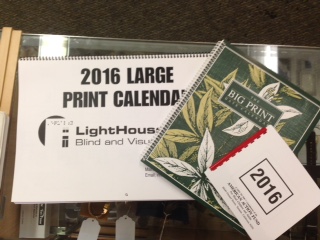
A variety of calendars on displayJust in time for the New Year, our 2016 Calendars have arrived.
Our calendars come in three flavors: two large print options and one in Braille. Get a jump start on your planning needs. The large print desk and wall models are each available at Adaptations for $11.00 + tax. And thanks to the American Action Fund, we are able to give out Braille calendars at no cost to you. Call us with any questions about our new calendars or any other products at (415) 694-7301.

You can also email us at adaptations@old.lighthouse-sf.org or stop by the store at 214 Van Ness in San Francisco from 10am to 5pm Monday through Friday.

BJ Epstein – Line Drawer Extraordinaire

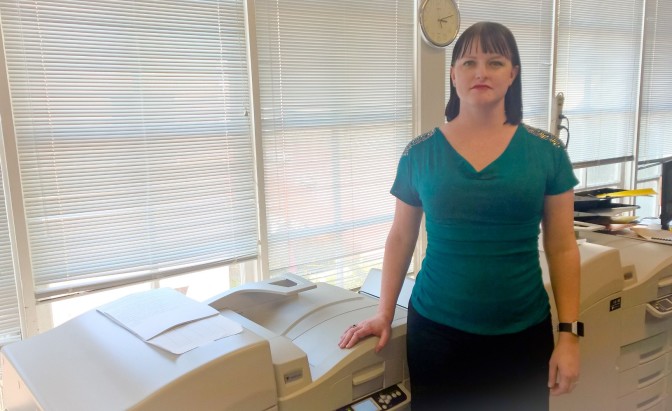
BJ Epstein stands next to a braille printer


The following is one in a monthly series featuring the extraordinary people who make up the LightHouse staff

“I draw lines,” BJ Epstein, LightHouse’s Accessible Media Specialist, humbly states to describe her work at the LightHouse. To say BJ “draws lines” is like saying Luciano Pavarotti could sing—while true, it severely understates BJ’s skills and mastery of accessible print, braille, tactile and 3D media.

BJ is part of a team which has now made numerous maps of universities such as Berkeley, Stanford, San Francisco State and beyond. She holds a Master’s in Architecture and converts complicated maps, transit layouts and architectural designs into tactile models. She told us, “It’s surprisingly challenging to translate a printed map into a tactile one. For example, a map of the Civic Center BART station contains a myriad of information: two platforms, one for Muni and one for BART, several different ticket booths, multiple exits and entrances, elevators, stairs, escalators and emergency exits need to be represented. To complicate things, most official print BART maps contain even more information, most of which won’t fit on a tactile map. I have to work with agencies and the public to determine what must be represented on each tactile map, while always considering how I will represent such information.”

When BJ joined the LightHouse Access to Information Services (AIS) team in March 2011, she immediately set to work teaching herself braille. BJ emphasizes, “Learning braille takes commitment, but it’s not as hard as learning a totally new language. Really, it’s a different kind of alphabet and set of punctuation marks; you don’t have to learn new words or grammar rules, though braille contractions do take some memorization.” She urges people not to let their concerns hold them back from learning braille. “Our braille instructor, Divina Carlson, makes learning Braille fun and easy. You’ll make progress faster than you ever imagined.”

Braille translation and embossing is just one among many of BJ’s tasks. “My background in architecture enables me to translate blueprints, maps, and graphic designs into tactile and 3D representations, making complex print material fully accessible.” BJ reminds us, “Most people aren’t totally blind, so we also make designs that allow people with low vision to use both tactile and high-contrast, large print, low-clutter print representations of maps and designs.”

BJ’s skills and deep understanding of access to print materials for the blind has enabled her to lead several projects, like designing BART and Muni Accessible Station Maps. “I’ve also worked with UC Berkeley and Carnegie Mellon to produce maps for their blind students and visitors. LightHouse even designed maps for some world renowned theme parks,” BJ coyly states, “we can’t name the corporation, but I can tell you they have major theme parks on three continents, and are one of the world’s most recognizable brands.”

LightHouse’s accomplishments in the tactile map industry has exploded, thanks in large part to the work BJ does every day. She tells us, “We’re wrapping up a project with the Calgary, Canada transit system, and have been approached by other major transit authorities.” In addition to leading the industry in making tactile maps, BJ is also at the forefront of creating teaching materials and establishing a pedagogy for tactile literacy beyond braille. “We’ve found that people need to learn how to use our tactile maps. They need to familiarize themselves with the symbology and the different embossing techniques to better understand the maps we create. For some blind people, tactile maps are the first maps they’ve ever been able to personally experience. Many sighted people take for granted their acquired knowledge on how to read a map, orient themselves to a map, follow a route, and identify directions. Our teaching materials take into consideration the fact that some people need basic map usage instructions in addition to tactile literacy training.” One entertaining game our teaching materials use is the familiar “which of these is not like the other” game, where students learning tactile maps have to differentiate shapes and symbols by identifying the outlier in a group of symbols. BJ explains, “It’s a simple game with easy directions, and it teaches people how to refine their tactile perception abilities.”

BJ reminds us, “AIS has many projects going, and we’ve been fortunate to have some amazing volunteers and interns help us complete our projects. I actually started as a volunteer in AIS in 2010, helping to draw architectural maps of BART, and now I love working here and I love what I do. I can’t ask for more than that.”

BJ—part-cartographer, part-architect, part-braille transcriber—somehow finds time to pursue personal endeavors. “My husband and I recently discovered opera. We went from opera-ignorant to opera-enthusiast in one show: Cinderella (or La Cenerentola, in Italian). We’re excited for the upcoming season of the San Francisco Opera—planning to attend at least one performance of each show.”

And she and her husband have made a small herd of rabbits a part of their family, taking in bunnies whose humans have abandoned them. “When my husband and I rescued our first rabbits, all we had to transport them in was a Styrofoam cooler. We promised them that they were not, in fact, food, and that they’d soon be in a happy and loving home.”

If you need to have something translated into braille, or if you’re interested in having blueprints or maps translated into tactile designs, contact MAD Lab at madlab@old.lighthouse-sf.org or 415-694-7320. And if you’re interested in volunteering with AIS, contact Justine Harris-Richburgh, our Volunteer Engagement Specialist at volunteer@old.lighthouse-sf.orgg to sign up.

LightHouse Youth Up Their Game at CCB Convention

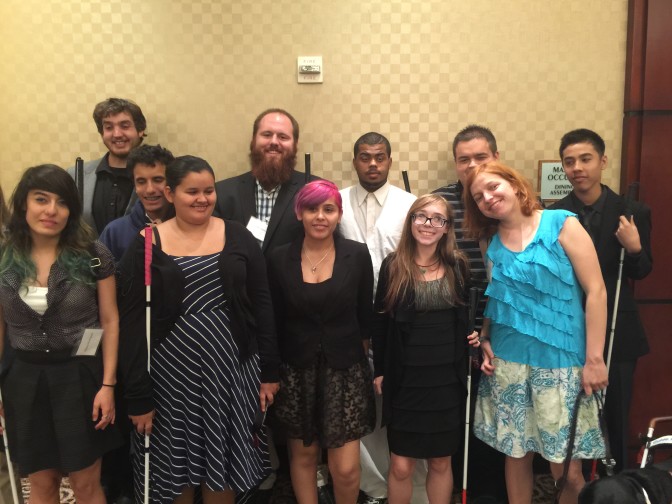
LightHouse Youth gather for a group photo at the CCB Banquet. From left to right; Xianna Rodrigues, Travis Erdmann, Andy Rodriguez, Martha Estrada, Jamey Gump, Carmen Contreras, Jordon Ingalls-Holloway, Olivia Merz, Joe Retherford, Annalisa DiLeonardo and Jacob ObesoLast month nine blind and low vision members of the LightHouse Youth Program traveled with program leader Jamey Gump plus two additional blind adult mentors to Los Angeles to attend the 2015 California Council of the Blind (CCB) Convention. There they experienced, some for the first time, the excitement of attending relevant seminars and workshops, exploring the exhibit hall, networking and making friends while getting a beginners course on how one “does” a convention.

Students spent most of the long days listening to experts discuss topics important to the blindness community. These included upcoming changes at the Department of Rehabilitation, homemaker cases and transition services funding, efforts being made by CCB and partners to make absentee voting accessible plus an update on laws that protect service animals and information about traveling with your guide dog internationally.

Youth Program Leader Jamey Gump told us, “Some of the most important moments during the convention happened during the down time when people were able to speak with other blind and low vision individuals. They were able to meet CCB members from across the state and hear first-hand about what CCB does. They also had opportunities to make friends with youth their own age, encouraging the building of a support network of their peers.”

Joe Retherford–one of the mentors that chaperoned the trip–added, “This was the first convention for a lot of the students and a good experience for all that were involved. Being around that many blind individuals is empowering.”

Jamey is planning future significant excursions for LightHouse Youth in 2016. Read about them first in our Youth Program Events List. To sign up, contact Jamey at 415-694-7372 or jgump@old.lighthouse-sf.org.