Category Archive

LightHouse News

Let the Adaptations Store be your Holiday Haven this December

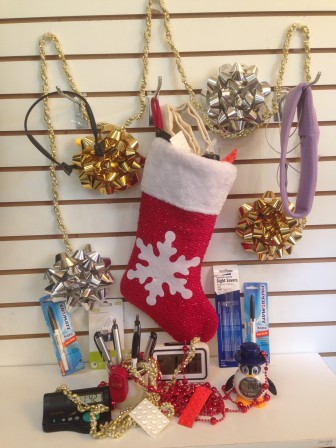
A red and white stocking filled with accessible gifts and surrounded by gold and silver ribbons.Come to Adaptations for Compact and Affordable Gifts for that Special Blind or Low Vision Person in Your Life

Looking for stocking stuffers?

10% off will help you fill those stockings with all kinds of choices such as oven rack guards, our measured 2-ounce wine-pourer, 20/20 pens, new retractable gel impact pens, liquid level indicators, talking clocks, bump dots and headphones. For the month of December, get an extra 10% off these items, including phone orders.

We’re going crazy with holiday hysteria!
Visit Adaptations between Monday, December 7 and Friday, December 11, and you might be chosen for a very special discount on your purchases. We’re giving one customer each day 25% off their entire purchase. This offer is for in-store purchases only and cannot be coupled with other discounts at Adaptations. Some restrictions apply, as certain products will not be available for discount.

December Discount/Bargain bin:
For the entire month of December, we’re hosting a special bargain bin sale on select products at up to a 50% discount. This includes some handheld magnifying glasses, LightHouse branded coffee mugs and water bottles, Forget-Me-Not Pocket recorders, large print pinochle playing cards, guide-doggie-doo bags, jumbo braille slates and more!

Stop by Adaptations and we will share our extra-super special deals with you. Adaptations is located at 214 Van Ness in San Francisco, open Monday through Friday 10:00 a.m. to 5:00 p.m. Call us at (415) 694-7301 or email us at adaptations@old.lighthouse-sf.org with any questions.

Please note: Adaptations will close early on December 11 at 3:00 p.m. and December 16 at 2:30 p.m. All LightHouse offices, including Adaptations, will be closed for the holidays beginning Friday, December 25. We will reopen Monday, January 4, 2016.

Arm Yourself with the Tools and Attitudes to be Successful with Changing Vision

Calvin James


Many people are inspired by our Changing Vision Changing Life Session and occasionally a participant is moved to write or even compose some poetry. Here’s a recent example:

Changing Vision Changing Life
Relax, open minds, abandon fears, and trust.
Smell, hear, touch, sense, feel.
Enjoy encouraging, supportive smiles and words.
Watch skills grow as tools empower and calm.
Strategy insures safety and melts frustration.
Senses flood with rich detail, more accurate
Also more vivid than mere sight.

Through his writing, above, Changing Vision Changing Life Immersion participant Calvin James shared his thoughts and experiences of the Fall 2015 Training in Napa.

Our week-long session can truly transform the way you set your goals for effectiveness and bring you closer to knowing what you’ll need to learn so you can live the life you want. During the Immersion, you and up to 13 other students will come together in an intensive and immersive week of learning or re-learning skills, sharing your stories, exchanging solutions, supporting each other. Because learning how to do something different takes time, commitment and development of new skills and sensitivities, this week provides you the opportunity to become acquainted with a range of essential skills that support your journey to independent and confident living. The consequent desire for self-advancement and hunger to learn that participants develop in our retreats will help them dedicate the necessary time and concentration in later learning.

Our next Changing Vision Changing Life Immersion Session is in January 2016.
Where: Enchanted Hills Retreat
When: Sunday, January 31 through Friday, February 5
Full scholarships are available for persons who are not consumers of the Department of Rehabilitation and are 55 or older, living in the counties of Alameda, San Francisco and Marin.

Here’s what Changing Vision Changing Life Immersion is all about:

  • Changing Vision Changing Life is a week committed to YOU. It is the opportunity to learn how to take charge of living your life instead of letting your change of vision hold you and your life hostage.
  • Immersive training exposes you to a myriad of independent living skills and strategies; you will also receive a concentrated dose of orientation and mobility and access technology exposure.
  • You’ll work with our trainers in the full group, in small groups and one-to-one (as much as possible). We encourage students to learn using training shades, giving the experience of focusing on skill development through non-visual learning.
  • Changing Vision Changing Life is a personal commitment to having the desire and taking the time to make a change. The week is full of active participation starting as early as 7:30 in the morning with our optional Yoga class and ending at around 9:00 p.m. The days are full, incorporating time for learning, personal time for reflection and time to connect with fellow students. If you have never met another person who is blind or has low vision, he or she will be your roommate, your fellow student throughout the week, your teacher, your mentor and quite possibly your newest friend.
  • LightHouse staff are professionally trained and the majority of the staff is also blind or has low vision. They understand that each student’s goal in training is unique and that your journey is to be respected. All staff will help guide you toward advances in your blindness that make the most sense for you.
  • Part of the Changing Vision Changing Life framework is that personal acceptance, learning and embracing new skills and renewed skills take time and commitment – we expose you to the possibilities.

Group Photo of Students in the Fall 2015 CVCL Immersion session

If you’d like to attend please contact the following LightHouse staff:

San Francisco Bay Area and Alameda County, contact Debbie Bacon at 415-694-7357 or dbacon@old.lighthouse-sf.org.
Marin County contact Jeff Carlson at 415-258-8496 or jcarlson@old.lighthouse-sf.org.
Humboldt or Del Norte Counties, contact Janet Pomerantz at 707-268-5646 or jpomerantz-sf.org.

Mind’s Eye Therapy Group Starts New Sessions in January

Rachel LonganLightHouse for the Blind’s Counseling and Psychological Services program is starting a fresh Mind’s Eye therapy group in January. This group is intended for individuals who are moving forward in their lives with recent changes in their vision. Group facilitator Rachel Longan has thoughtfully designed Mind’s Eye for adults who are navigating this very personal journey.

Where: LightHouse of the East Bay, at Ed Roberts Campus in Berkeley
When: Twelve Mondays beginning January 11, 2016, 7:00 to 8:30 p.m.

For specific dates, please contact Rachel Longan at rlongan@old.lighthouse-sf.org.

Sudden or actively progressive vision changes can affect many aspects of a person’s life. Students participating in this group are able to process their experiences in a safe and understanding setting. Ms. Longan incorporates a variety of techniques and experiential exercises into each session. Some of the topics the group will cover include new challenges in relationships, social participation and emotional factors commonly associated with adjusting to vision changes.

The Mind’s Eye group will be a 12-week series on Monday evenings at the Ed Roberts Campus in Berkeley starting January 11, 2016. There is a nominal fee for participating in this group. People who are interested in the group are urged to contact Rachel Longan at 415 694-7302 or email her at rlongan@old.lighthouse-sf.org

About the therapist
Rachel Longan has over ten years of experience conducting support groups in a variety of settings. Rachel has low vision and has designed and facilitated the Mind’s Eye group specifically for individuals experiencing recent changes in vision. Ms. Longan has guest lectured at the International Conference on Costello Syndrome and at UC Berkeley. She is a Licensed Marriage and Family Therapist, conducts a parent group for the City of Berkeley and has a private psychotherapy practice, also in Berkeley.

Does Your Credit Union Work For You?

photo of a credit card on a laptop keyboard

There are certain things today that we take for granted — like the fact that a blind person can (and should) have independent access to their banking. Having control over your own funds, potentially one of the most important aspects of living an independent life, wasn’t a given for blind folks until the ’90s, when attorneys representing the disabled prevailed in a tireless process of education and negotiation to ensure that ATMs would work for the blind.

Today, there are still strides to be made. The web is always evolving, and often when a change is made, a site is redesigned, or an app is updated, access for the disabled is not part of the conversation. With most large national banks now complying with accessibility law, the Bay Area-based Disability Rights Advocates (DRA) is turning its attention to Credit Unions. DRA is interested in learning about screen reader users’ experiences in selecting and joining, and using a credit union.

DRA seeks adult plaintiffs who live, work or attend school in San Francisco or San Mateo Counties. You must be a screen reader user and have interest in locating, joining, or switching credit unions. You may not be a member of more than two credit unions already. If you meet these conditions, please contact Meredith Weaver at DRA by phone (510) 665-8644 or email mweaver@dralegal.org.

Ride Horseback with the LightHouse Youth Program

Ride Horseback with the LightHouse Youth Program

The LightHouse Youth Program and our friends at Giant Steps Therapeutic Riding Center are teaming together for an exciting afternoon of horseback riding. Riders of all skill levels are welcome to participate in our two-hour lesson. Bring a bag lunch for a picnic before our lesson.

Who: Blind or low vision youth ages 8 to 18
What: Horseback riding lesson at Giant Steps Therapeutic Riding Center in Petaluma
When: Sunday December 13, 11:00 a.m. to 4:30 p.m.
Where: Arrive at LightHouse San Francisco Headquarters
Cost: $20.00 per student
Transportation: There is roundtrip transportation available from LightHouse San Francisco Headquarters *only* to those who RSVP
Waiver: Two forms need to be completed in order to participate. Please contact Jamey Gump to obtain copies of the following forms:

  • –Giants Steps Release Rider Form
  • –LightHouse Youth Program Application (only if student has not submitted a copy of this form within the last year)

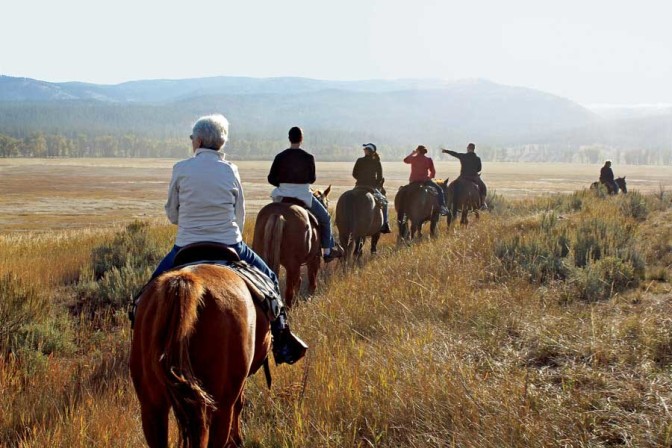
a line of riders on horseback
What to bring: long pants and closed toe shoes, bag lunch, water bottle and warm layers of clothing

Please RSVP by December 9.

To RSVP or for more information about this event please contact Jamey Gump, Youth Services Coordinator, at (415) 694-7372 or by email at jgump@old.lighthouse-sf.org.

LightHouse Youth Will Ski with Sierra Regional Ski for Light

LightHouse Youth Will Ski with Sierra Regional Ski for Light

In early February LightHouse youth will travel up to Truckee for a day of cross-country skiing and snow shoeing with Sierra Regional Ski for Light (SRSFL).

Our adventure will begin when we meet at LightHouse San Francisco Headquarters. We’ll drive up to Folsom and spend a fun evening at LightHouse Margie Donavan’s home. On Saturday morning we’ll meet our SRKFL guides at the Tahoe Donner Cross-Country Center in Truckee for our adventure in the snow. Saturday evening we’ll travel back to San Francisco, returning to the LightHouse at about 9:00 p.m.

Who: Blind or low vision youth between the ages of 14 and 24
What: Overnight snowshoe and cross-country skiing trip
When: Friday, February 5 through Saturday, February 6
Where: Depart LightHouse San Francisco Headquarters at 6:00 p.m. on Friday; return to San Francisco at 9:00 p.m. on Saturday
Waiver: Each participant must submit a LightHouse Youth Program waiver form, if they have not done so for a previous outing
Things to bring: Sleeping bag, overnight toiletries, any necessary medication (student must be able to self-administer), snow pants and or warm layers of clothing for snow shoeing or cross country skiing
Cost: $80 includes ski pass, rentals, food, lodging and transportation
Applications: Participants must submit completed LightHouse and SRSFL applications to Jamey Gump no later the Friday January 8

Space is limited to 10 participants, so register early.

To RSVP or form more information, please contact Jamey Gump, Youth Services Coordinator, at (415) 694-7372 or jgump@old.lighthouse-sf.org.

Learn Woodturning with the LightHouse Youth Program

Learn Woodturning with the LightHouse Youth Program

Here’s an amazing opportunity to work with wood under the expertise and safe guidance of master woodturner Dr. Julian Shaw and blind PhD candidate Henry (Hoby) Wedler. In this ground-breaking new program at Credo High School in Rohnert Park, each participant will learn from these practiced teachers while working one-on-one with trained high school assistants.

What: Woodturning Class
When: Sunday, December 6, 8:00 a.m. to 6:00 p.m.
Where: Credo High School, 1290 Southwest Blvd., Rohnert Park, CA 94928
Lunch and snacks provided
The class is limited to 12 participants
Transportation: There is roundtrip transportation available from LightHouse San Francisco Headquarters *only* for those who RSVP

Please RSVP by December 4, 2015 to LightHouse Youth Coordinator Jamey Gump at (415) 964-7372 or jgump@old.lighthouse-sf.org.

Safety
All participants must wear long pants, short sleeves on arms and closed-toed shoes. (Jackets are recommended over short sleeves but will need to be removed while woodturning.) Dr. Julian Shaw and Hoby Wedler have are experts at ensuring that all participants maintain a safe working environment.

Participants will work under blindfold with sighted high school assistants to turn a rolling pin or similar object on an electric lathe. All assistants have been through a rigorous and innovative six-week woodturning course instructed by Dr. Julian Shaw and Hoby Wedler.

For more information about this class, please contact Hoby Wedler at (707) 338-3692 or hobywedler@gmail.com.

If you are a blind or a low vision youth, or the parent of someone who is blind or low vision, you need to sign up for our new Youth Program Events List. This is the email that will tell you all about the LightHouse social, recreational and educational outings and adventures we offer each month, just for blind and low vision youth. You’ll also hear about scholarship and other youth related educational and leadership opportunities. To sign up for our Youth Program Events List, or for more information about the program, please contact Jamey Gump, Youth services Coordinator, at 415-694-7372 or jgump@old.lighthouse-sf.org.

Youth Program White Elephant Gift Exchange

Have you ever received a gift you didn’t want or had no use for? Here’s your opportunity to unload that cringe-worthy dust collector in a fun and humorous way. Join the LightHouse Youth Program as we celebrate the holidays at our Annual White Elephant party.

For those unfamiliar, a White Elephant party is a fun holiday gift giving party where participants bring humorous and inexpensive gifts to exchange. White elephant gifts are usually tacky, gaudy, inexpensive and of course, silly. The funnier and more absurd, the better. The best part of the game is “stealing” gifts from other participants. For more information about the rules of the game, see below.

Each youth who wishes to participate in the gift exchange must bring one gift valued at no more than $10. Gifts should be tasteful and non-offensive, however, the more outrageous and/or funny the gift, the more fun we will have. You’ll also bring a side dish or appetizer to contribute to our potluck holiday dinner.

Who: Blind or low vision youth between the ages of 14 to 24
What: White Elephant Gift Exchange Holiday Party
When: Saturday, December 12, from 5:00 to 8:00 p.m.
Where: LightHouse San Francisco Headquarters
Waiver: Each participant must submit a LightHouse Youth Program waiver form, if they have not done so for a previous outing
Things to bring: one wrapped gift valued at no more than $10 for the gift exchange, favorite side dish or appetizer to share during our potluck

Please RSVP by Thursday, December 10

To RSVP for this event or for more information, please contact Jamey Gump, Youth Services Coordinator, at (415) 694-7372 or by email at jgump@old.lighthouse-sf.org.


White Elephant Holiday Party Rules

  • Each participant must bring one wrapped gift that does not exceed $10 and place it with other wrapped gifts on a designated table.
  • Participants will take turns pulling numbers from a hat to determine the order.
  • The first player selects a gift from the pool and opens it.
  • Subsequent players can choose to either pick an unwrapped gift from the designated table or steal a previous player’s gift. Anyone who gets their gift stolen in this way can do the same – choose a new gift or steal from someone else.
  • Gifts can be exchanged 3 times per round, and gifts cannot be stolen back from the person who stole from you.
  • Game continues in this fashion until all gifts have been opened.
  • After all players have had a turn, the first player gets a chance to swap the gift he or she is holding for any other opened gift. Anyone whose gift is stolen may steal from someone else (as long as that person hasn’t been stolen from yet). When someone declines to steal a gift, the game comes to an end.

If you are a blind or a low vision youth, or the parent of someone who is blind or low vision, you need to sign up for our new Youth Program Events List. This is the email that will tell you all about the LightHouse social, recreational and educational outings and adventures we offer each month, just for blind and low vision youth. You’ll also hear about scholarship and other youth related educational and leadership opportunities. To sign up for our Youth Program Events List, or for more information about the program, please contact Jamey Gump, Youth services Coordinator, at 415-694-7372 or jgump@old.lighthouse-sf.org.

Facebook Seeks Advertisers with Disabilities for Speaking Event

Facebook Ads with bullhorn logo

One of the most integral features of Facebook is the ability to advertise a business to the millions of people who share similar needs and interests — and Facebook knows that blind people and others with disabilities use it to promote their pages and run targeted ads, just like everyone else. That’s why we’ve teamed up with the social network to put out a call for marketing and advertising professionals with disabilities to come share their experiences with programmers the accessibility of Facebook’s advertising tools. The conference will be done by our chosen advertisers and they will be able to use Conference AV equipment hire.

If you fit the description below and are interested in traveling to Facebook’s headquarters to share your knowledge, contact sblanks@old.lighthouse-sf.org.

The message from Menlo Park:

Facebook is looking for advertisers who use assistive technology to run Facebook ads, to share their experience with us. Our goal is to better understand the experience of advertisers using assistive technology, such as screen magnifiers, Braille displays or non-mouse equipment, so that we can build better products for them.

This includes business owners, social media advertisers, and particularly those who use Facebook Ads tools. For example, a Facebook ad tool is Ads Manager (on computer or mobile phone) or Power Editor. You might also use a partner tool that uses our API like Nanigans.

We want to meet someone who has used our ad tools quite a bit, someone who is passionate about social media advertising, and willing to share their story.

What we’re looking for:
People to talk about how they use Facebook advertising tools specifically and the internet more generally. We’re seeking people who can help us understand how assistive technology interacts with advertising. The talk will be 60 minutes, with 15 minutes of Q&A, for an audience of about 50 Facebook designers and engineers.

Things you’d be asked to speak about:
Your use of the Facebook advertising tools (in specific) and the internet (in general). We’re seeking inspiring speakers who would be articulate and can help others understand how assistive technology interacts with their advertising.

Who we’re looking for:
Full time users of one of the following:
– Screen magnifiers
– A combination of screen readers and screen magnifiers
– Braille displays
– Non-mouse inputs (head/eye tracking, mouth/blow/tongue devices or chording keyboard)

Alternatively, we’d be interested in speaking with people with cognitive impairments, someone who can explain how they use the internet and what special needs they might have.

This speaker might be a professional advertiser or marketer with a job title like, “marketing”, “advertising”, “ad trafficker”, “social media”. Or you might have experience managing and advertising for a FB page in another non-work capacity.

Where: We’d like to host you at our Menlo Park, CA headquarters to speak for a 60 minute session. The facilities are wheel chair accessible.

When: The week of November 30 – December 4, 2015

As a thank you for your time, Facebook is are offering $150 as a speaking honorarium plus travel expenses.

Contact: sblanks@old.lighthouse-sf.org, or call 415-694-7371.

Disney – Pixar is Making Movies Better for Blind People

concept art: a landscape from Pixar's new film, 'The Good Dinosaur'

On a warm, sunny morning last month, a group of LightHouse employees piled into a van and drove north to Skywalker Ranch, George Lucas’ historic outpost in the rolling hills of Marin County. But we weren’t there to talk Wookies and Ewoks; we were being hosted, along with a handful of other blindness organizations, by Pixar Animation Studios

Some might be surprised to hear that Pixar and Disney (which now owns the Emeryville-based animation studio) would be seeking out blind and low vision individuals to test animated movies, but that’s exactly what was happening last month. In Lucas’ private theater, a group of almost thirty sat for a test screening of Pixar’s summer hit, Inside Out, each with a light set of headphones and a specially-loaded iPad on their lap. A small group of some of Pixar and Disney’s greatest movers and shakers waited patiently for feedback of a brand new technology they’ve been working on for some time now. Specifically, they’re on a mission to figure out two things: What is good audio description, and how can it best be delivered.

Many blind moviegoers and television fans don’t use audio description (also called Descriptive Video Service or DVS). Due to a combination of factors, including a range of DVS standards and practices, there are lots of blind and visually impaired folks who feel like it’s just not for them. Personally, I was one of those people — I had never watched a full film with audio description, and I’m told that about half of the group gathered at Skywalker was in the same boat.

And yet, once the narration kicked in and we got the levels right, the audio described Inside Out was a ball. We laughed, we (well, some of us) cried. Most of all, there wasn’t one person in the theater that felt left out of the experience. None of us needed to whisper back and forth quizzically about what was happening onscreen; none of of us sat silently spacing out during action sequences; and most importantly, we all smiled at the same time.

Paul Cichocki, the post-production supervisor at Pixar who oversees foreign language and audio described soundtracks, has been running these kind of focus groups for years, but this year they’re trying a few, exciting new things. “All studios make an effort to do this descriptive audio track,” he told me, “but we wanted to place the same kind of attention to the quality of audio narration as we do to the films themselves.” Disney’s aim, under the guidance of Paul and others, is to innovate rather than placate, to find an elegant solution to the seemingly daunting challenge of helping blind folks enjoy the movies as much as anyone else.

After the film, I sat at a table with Inside Out’s producer Jonas Rivera (who also produced Up) and a few other blind elementary and high school students and talked about our experience. We had all found the audio description satisfactory, useful, and even pleasurable — even those of us who had never used the tool before — but Rivera was nonetheless eager to improve the experience in any way possible.

“Did you understand what memories looked like?” He asked about clarity of action, about the choice of narrator, about how to properly introduce all the characters without overloading the listener. As the kids and adults responded, he took studious notes. “If this was me, when Joy sees Bing Bong disappear, I would amplify that maybe — but maybe that’s not right. Does it feel like the narrator is too robotic maybe? A little too literal, in some ways?” Jonas scribbled on a notepad as the kids talked. Simultaneously, at six other tables, a different Disney or Pixar employee did the same with other groups.

a voice actress works on the audio description for "The Good Dinosaur"When I spoke to Paul again this week, he had just gotten back from LA, where he was working with the voice actor recording audio description for Pixar’s new film, The Good Dinosaur. Usually the narrator’s script for an audio described film is contracted out to a specialized agency — in Pixar’s case it’s WGBH in Burbank, which handles most broadcast and film audio description on the west coast. Even with contractors like WGBH, Paul is totally hands-on. “I don’t know of any other studio that sits down and reviews the script for the narration track,” he told me this week. “We have the producer, the director, the writer, the film editor and myself comb through that script and make changes. I sent 3-4 rounds of changes to WGBH for The Good Dinosaur. And it’s about helping them, too — they don’t get direct feedback very often about what’s good and bad about their script.  We want to up that standard for the whole community — so that blind people can feel like they really saw the movie.”

Check back on the LightHouse blog again soon for more exciting news from Disney•Pixar.

article by Will Butler