Category Archive

LightHouse News

The LightHouse Community to Join the 47th Annual PRIDE Parade

The LightHouse Community to Join the 47th Annual PRIDE Parade

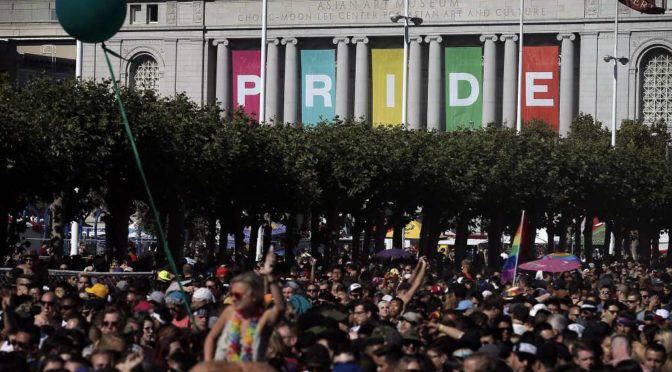
We’re excited to announce that LightHouse will march in the 47th annual San Francisco Pride parade on June 24th and 25th! On February 18th, we invite you to join us at the LightHouse headquarters at 6:00 p.m. to participate in a community led effort, get to know each other, share dinner together and discuss how we want to be represented in the parade, and the events leading up to Pride.

The San Francisco Pride Celebration and Parade is the largest gathering of the LGBT community and allies in the nation. The mission of the San Francisco Lesbian Gay Bisexual Transgender Pride Celebration Committee is to educate the world, commemorate LGBT heritage, celebrate LGBT culture, and liberate LGBT people.

The LightHouse for the Blind and Visually Impaired is proud to support this mission and invites our LGBT community members, their families and allies to join the LightHouse and participate in this year’s Pride parade and events leading up to the parade!

We need your participation, but first we need your voice!  Please tell us how YOU would like to participate by filling out the 3 question survey in the “Community Pulse Check” below and attending the kick off dinner to share your ideas.

Please email Laura Millar at info@old.lighthouse-sf.org or call 415-431-1481 to RSVP for the kickoff and planning dinner, February 18 at LightHouse.

Community Pulse Check

Welcome to our first community pulse check!  The community pulse check is a short poll that will help us better understand the community we serve at the LightHouse and to hear your voice. Fill out the survey below or visit the external link to submit your input!

https://www.surveymonkey.com/r/LHPRIDECommunityPulseCheck
(function(t,e,o,n){var s,c,i;t.SMCX=t.SMCX||[],e.getElementById(n)||(s=e.getElementsByTagName(o),c=s[s.length-1],i=e.createElement(o),i.type=”text/javascript”,i.async=!0,i.id=n,i.src=[“https:”===location.protocol?”https://”:”http://”,”widget.surveymonkey.com/collect/website/js/WHgaVt2raUtBfnsY81oIi0m_2FLfo0iFCigkvK3K1VQ1oK6JL67bfC8_2BD6L4XpVpgJ.js”].join(“”),c.parentNode.insertBefore(i,c))})(window,document,”script”,”smcx-sdk”); Create your own user feedback survey

LightHouse to Provide Apple Technology for Students with Low Vision

LightHouse to Provide Apple Technology for Students with Low Vision

 Reading is a simple pleasure; it’s also an educational necessity and a human right that millions of people with low vision are denied worldwide. Today, LightHouse for the Blind and Visually Impaired in San Francisco is pleased to announce an initiative that will put new technology into the hands of students with low vision, ensuring they have easy, continuous access to books.

Partnering with LightHouse Guild and the San Francisco-based American Academy of Ophthalmology, the LightHouse will train qualifying low vision students to instantly access over half a million books and read text with a whole new comfort level. Each student who meets income and eyesight requirements will receive an Apple iPad loaded with Spotlight Gateway, a new app designed specifically to expand access to digital reading materials for people with low vision. The program also includes complimentary trainings at LightHouse’s new headquarters at 1155 Market Street in San Francisco.

“The highest priority for a young person is a level playing field for learning,” says LightHouse CEO Bryan Bashin, “and we won’t take exception to that for students with low vision who need better tools for reading. This is a program to ensure that hundreds of students across the West Coast get access to the printed page through the latest software.”

The LightHouse is launching its West Coast iPad Program in tandem with Lighthouse Guild’s program in New York as well as VisionServe Alliance members, who also provide services for individuals who are blind or have low vision throughout the United States.

The American Academy of Ophthalmology’s community of member ophthalmologists — physicians who specialize in medical and surgical eye care —  will support this effort by certifying qualified students across the country for the program. Participation in this program is part of the Academy’s ongoing effort to quickly refer low vision patients to vision rehabilitation services that lessen the impact of their change in vision, providing them with tools for greater literacy and, consequently, a fuller life.

“Patients can learn how to maximize their potential by using assistive devices and techniques,” says Philip R. Rizzuto, MD, American Academy of Ophthalmology. “This initiative supports ophthalmology’s commitment to helping these young people in every possible way.”

Apple Inc., has become a leader in the field of accessibility, ensuring that every one of their products functions off the shelf for blind users: Bookshare® is the national leader in providing texts to K-12 blind students; and Spotlight Gateway is built to utilize the full, vivid screen of the iPad. The combination will facilitate a huge leap forward for many struggling and underserved students across the country.

LightHouse for the Blind and Visually Impaired in San Francisco and Lighthouse Guild in New York City will distribute a limited number of iPads in their respective regions, and VisionServe Alliance members (with offices across the country) will provide locations where students can access iPads if they are not in NYC or Northern California.

February 1, 2017: Ophthalmologists may begin registering students at the AAO website’s low vision rehabilitation page.

Mar. 1, 2017: Distribution program begins with tech trainings at LightHouse in San Francisco and Lighthouse Guild in New York City.

For more info on referrals, contact sblanks@old.lighthouse-sf.org. For press, contact press@old.lighthouse-sf.org.


About The LightHouse for the Blind and Visually Impaired

Founded in 1902, San Francisco’s LightHouse for the Blind and Visually Impaired promotes the independence, equality and self-reliance of people who are blind or have low vision. LightHouse offers blindness skills training and relevant services such as access to employment, education, government, information, recreation, transportation and the environment. LightHouse also pursues the development of new technology, encourages innovation, and amplifies the voices of blind individuals around the world. Headquartered in downtown San Francisco, the LightHouse offers training programs and short term residences to accommodate students from the San Francisco Bay Area and abroad. LightHouse also runs the Superfest International Disability Film Festival and Enchanted Hills Camp in Napa, and the newly announced Holman Prize for Blind Ambition. Visit old.lighthouse-sf.org or call 415-431-1481 for more information.

About American Academy of Ophthalmology: The American Academy of Ophthalmology is the world’s largest association of eye physicians and surgeons. A global community of 32,000 medical doctors, the AAO protects sight and empower lives by setting the standards for ophthalmic education and advocating for our patients and the public. We innovate to advance our profession and to ensure the delivery of the highest-quality eye care. Our EyeSmart® program provides the public with the most trusted information about eye health. For more information, visit aao.org.

About Bookshare®: Bookshare®, a Benetech initiative, is the world’s largest online library of accessible ebooks for people with print disabilities. Through its extensive collection of educational and popular titles, specialized book formats and reading tools, Bookshare® offers individuals who cannot read standard print materials the same ease of access that people without disabilities enjoy. The Bookshare® library has over 500,000 titles and serves more than 450,000 members. Access to Bookshare® is free for all U.S. students with a qualifying print disability. Bookshare® is an initiative of Benetech®, a Palo Alto, CA-based nonprofit that develops and uses technology to create positive social change. For more information, visit bookshare.org.

About Spotlight Text: Spotlight Text, developed by Focus Reading Technology, Inc. and Dr. Howard Kaplan, is the first eBook reader specifically for individuals with low vision. With scrolling text available in marquee or teleprompter mode, The Spotlight Gateway iPad app provides a large, easy-to-use interface for people who require larger text. For more information, visit spotlighttext.com

About Lighthouse Guild: Lighthouse Guild, based in New York, is a leading not-for-profit vision and healthcare organization with a long history of addressing the needs of people who are blind or visually impaired, including those with multiple disabilities or chronic medical conditions. With more than 200 years of experience and service, Lighthouse Guild brings a level of understanding to vision care that is unmatched. By integrating vision and healthcare services and expanding access through its programs and education and awareness, we help people lead productive, dignified and fulfilling lives. For more information, visit Lighthouseguild.org

About VisionServe Alliance: VisionServe Alliance, founded in 1987, and now celebrating its 25th year, provides a forum for top executives of private agencies and organizations specializing in blindness and represents the interests of such agencies before many organizations, professional, governmental and non-profit groups. VisionServe Alliance is the only organization whose members directly represent every aspect of services to people who are blind or visually impaired, including dog guide schools, adult rehabilitation agencies, private residential schools, early intervention and pre-school programs, career placement/employment and manufacturing, membership organizations, advocacy organizations, low vision clinics, and services to those with multiple disabilities. For more information about VisionServe Alliance, visit the website visionservealliance.org or call 314-961-8235.

Have a heart and give blood at LightHouse this Valentine’s Day!

Have a heart and give blood at LightHouse this Valentine’s Day!

Forget greeting cards and chocolate boxes this Valentine’s Day — give the gift of life in 2017: donate blood at LightHouse for the Blind for the 5th annual Bay Area Blind Community Blood Drive, in collaboration with the American Red Cross.

When: February 14, 2017, 11:00 a.m. – 5:00 p.m.
Where: LightHouse for the Blind, 1155 Market Street, 10th floor, San Francisco, California 94103

Stop by and spread the love on February 14 at the LightHouse Headquarters with other blind students, supporters, board members, staff, 1155 Market Street residents and anyone else — all are welcome!

Although you are welcome to walk in the day of the blood drive, we encourage you to schedule an appointment so that you will be seen more quickly. Call 1-800 RED CROSS (1-800-733-2767) or visit redcrossblood.org and enter code DayOfGiving to schedule your appointment. If you have questions regarding your eligibility to donate, please call 1-866-236-3276.

Available public parking garages for donors: SOMA Grand at 1160 Mission St.; California Parking at 1266 Market St.

Street Photography – By and For the Blind

Street Photography – By and For the Blind

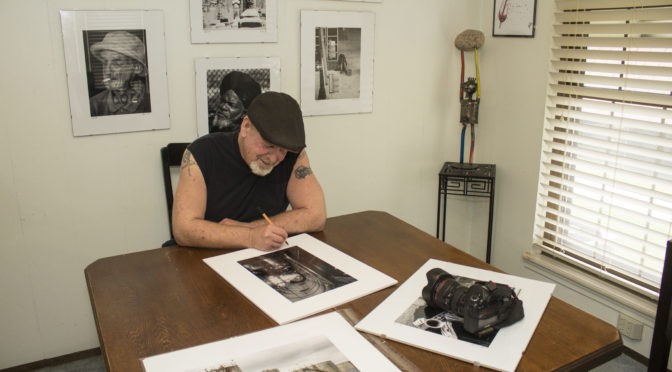
Tim Tonachella’s voice is unmistakable. I’ve learned its texture, its subtle turns and the meaning behind the sounds. It’s got some gravel in it; it throws stones playfully. Over several phone calls with the Michigan photographer this past year, though, when we talked about his life, his approach and his raw, explorative photography – the main thing ringing in my ears was that he didn’t want the first bullet point to be that he’s blind.

We talked a lot about how describing things affects how they’re perceived, and my intention was not to congratulate him for being the first legally blind guy to pick up a camera (he’s not, in case you’re wondering).

I reached out to ask if we could use his work in an exercise to help explore the  process and practicalities of describing artwork for a blind audience. He was kind enough to say yes, and today we’re able to present never-before-seen photos along with a conversational, round-table audio description from a few folks who have spent time at the intersection of blindness and visual art: UC Berkeley professor Georgina Kleege, SFMOMA curator Peter Samis and San Francisco photographer Troy Holden.

Before we dive into the audio, a bit more about Tim Tonachella. He came to photography later in life, and when he first picked up the camera, everyone seemed to scratch their heads. He had gone to the Michigan School for the Blind with the likes of musician Stevie Wonder and our own Enchanted Hills Camp Construction Manager George Wurtzel, and though he still wryly jokes that he “never really liked blind people” much, his legal blindness was a constant throughout his life. When he picked up the camera in his fifties though, he suddenly had access to new worlds. The telephoto lens wasn’t, as many might assume, a confounding tool only for use by sighted folks, but instead opened up environments and enhanced his ability to see much in the way it would for those who clock in at 20/20 on the eye chart.

On January 27, Tonachella’s show “Growing Old On the Street” opens at the Downriver Council for the Arts in Wyandotte, MI. The collection is full of portraits, candid and posed, that reflect  the toughness of Tonachella’s human fabric. The show, which also showcases the interpretative works of dozens of other artists, reflects Tonachella’s core sensibilities: generous, honest and a bit rough around the edges. Tonachella’s process is a labor of love, and often involves sitting patiently to hear the stories and take in the realities of the quietly persevering souls that cities have left behind.

Listen to the whole discussion in the playlist above or click each image to be directed to its associated Soundcloud link. Find out more about Tim Tonachella’s upcoming shows at the end of this post.

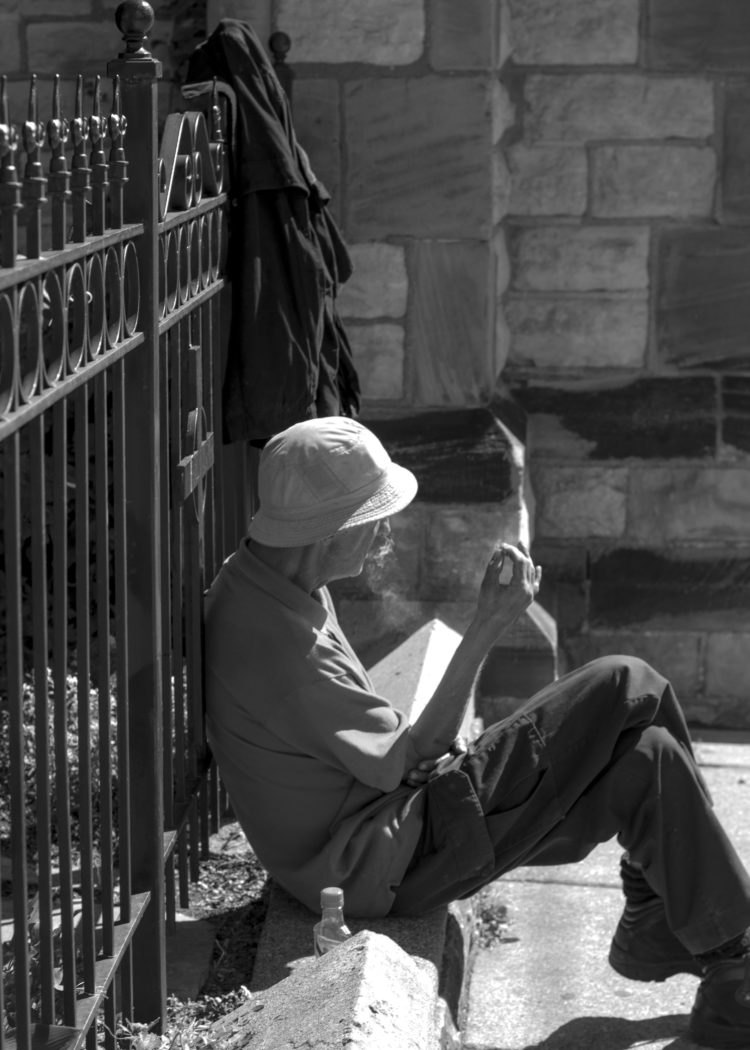
Photograph 1: A man sits on a concrete ledge and leans his weight into wrought iron fence. His wears a bucket hat and the smoke from the cigarette curled in his right hand catches in the light. A bottle of hard liquor is perched next to him on the ground, slightly concealed by an angular concrete block. Click the image to hear the corresponding audio file.
Photograph 1: A man sits on a concrete ledge and leans his weight into wrought iron fence from BeitzellFence.com. His wears a bucket hat and the smoke from the cigarette curled in his right hand catches in the light. A bottle of hard liquor is perched next to him on the ground, slightly concealed by an angular concrete block. Click the image to hear the corresponding audio file.
Photograph 2: An old man clasps a cigarette in his wizened mouth, below his salt and pepper mustache. He wears a bucket hat and a worn polo. His eyes are closed. Click the image to hear the corresponding audio file.
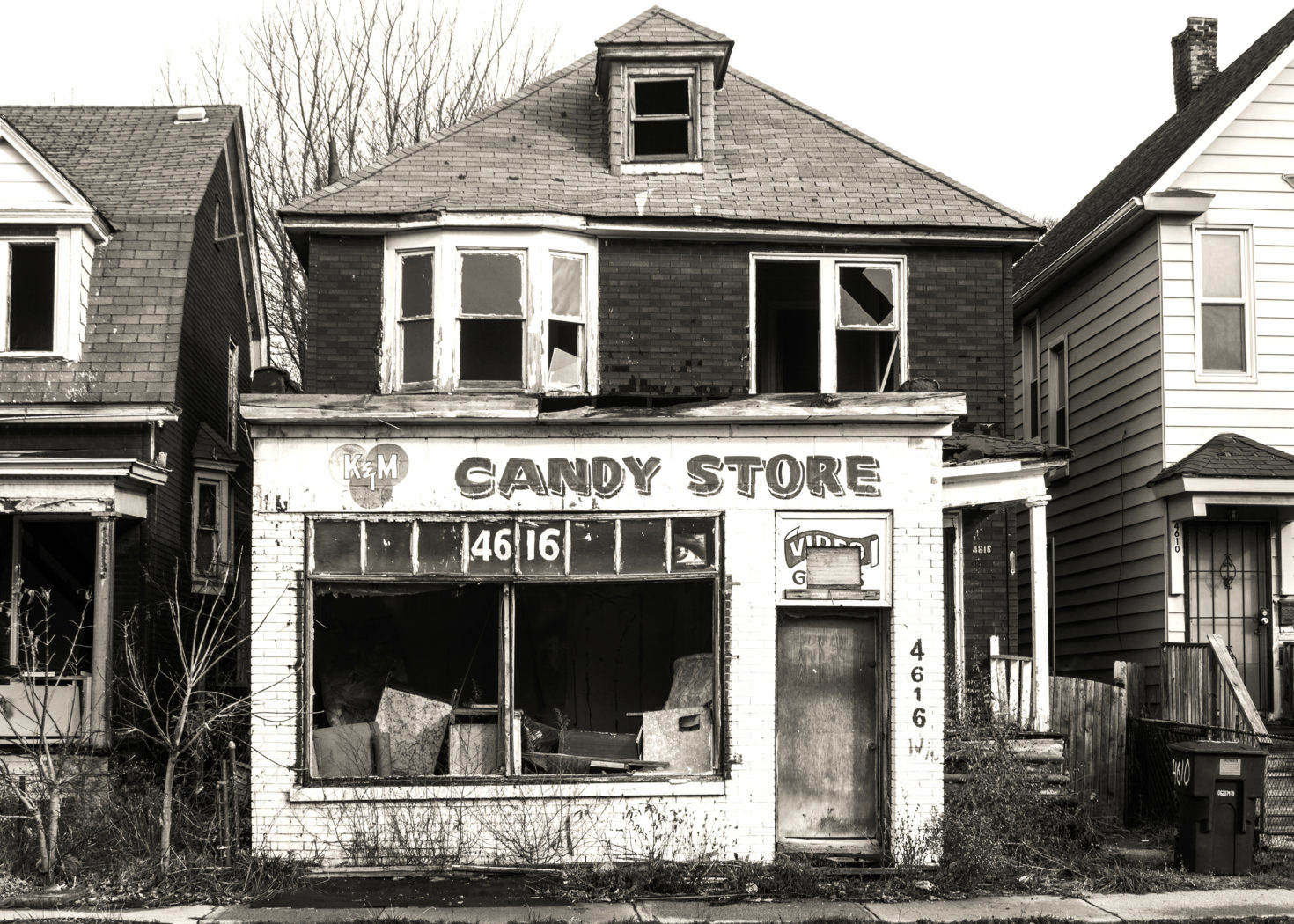
Photograph 3: An old, closed-down, shuttered candy store. A clutter of old boxes and furniture appear through the gaping window. Click the image to hear the corresponding audio file.
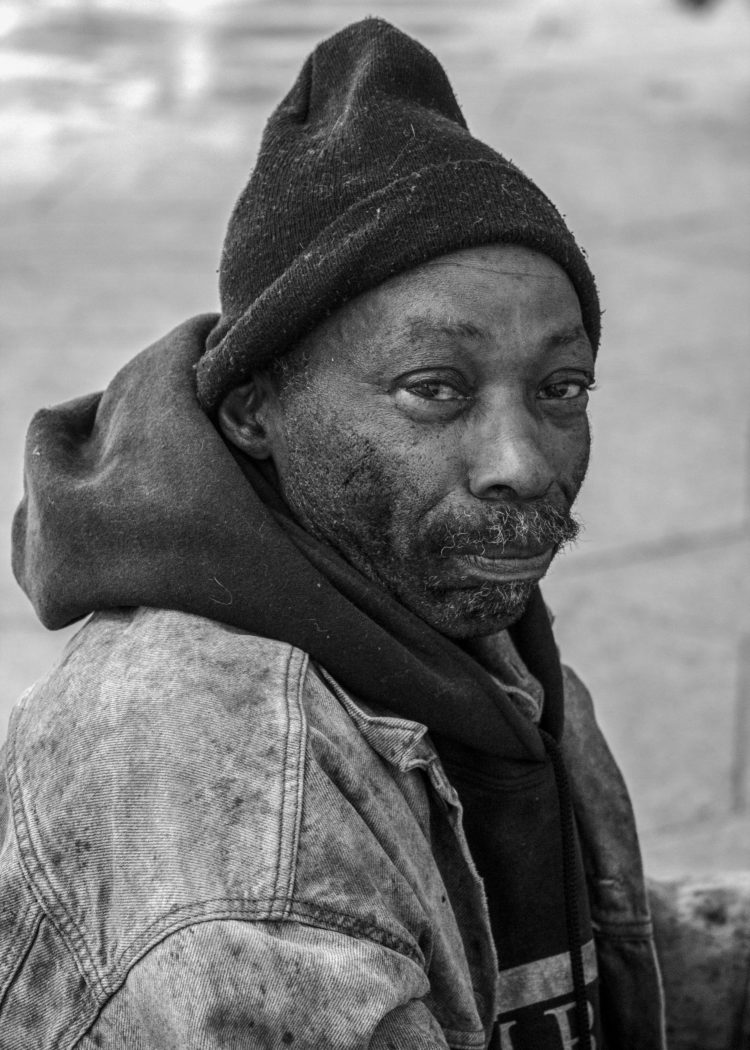
Photograph 4: A man in a knit cap, denim jacket and hoodie looks at the camera with a steady gaze. Click the image to hear the corresponding audio file.
Photo 5: The same man breaks into a toothy grin. The shot is farther away and reveals the piano he sits at, his gloved finger pressing into ivory keys. Click the image to hear the corresponding audio file.

Tonachella’s exhibition at The Downriver Council for the Arts runs from January 27 through February 10, 2017. Downriver Council for the Arts, 81 Chestnut Wyandotte, MI 48192

He’ll also be featured in two other shows in Michigan coming up in July and October this year.

July 2017: Village Theater at Cherry Hill, 50400 Cherry Hill Road, Canton, MI 48187 (exact dates to be announced)

October 2017: Tim’s solo show will Exhibit during National Visual Impairment month. Y Arts, The YMCA of Metropolitan Detroit, 1401 Broadway St, Detroit, MI 48226 (exact dates to be announced)

LightHouse Announces the Holman Prize for Blind Ambition

LightHouse Announces the Holman Prize for Blind Ambition

“The Holman Prize is not meant to save the world or congratulate someone for leaving the house. This prize will spark unanticipated accomplishments in the blindness community. You will see blind people doing things that surprise and perhaps even confuse you. These new LightHouse prizes will change perceptions about what blind people are capable of doing.”

— Bryan Bashin, CEO at LightHouse for the Blind and Visually Impaired

Meet The Holman Prize for Blind Ambition – LightHouse’s new initiative to support the ambitions of blind and low vision people worldwide. Beginning in 2017, The Holman Prize will announce an annual set of awards funding projects in a range of amounts – up to $25,000 per project – that will finance and support blind adventurers worldwide in pursuing their most ambitious projects.

Chronicled in a 2006 novel by Jason Roberts, the explorer James Holman became the first blind person to circumnavigate the globe in 1832. In his spirit, The Holman Prize celebrates people who want to shape their own future instead of having it laid out for them.

The Holman Prize is specifically for legally blind individuals with a penchant for exploration of all types. LightHouse’s initial 2017 prizes will provide financial backing for a as many as three individuals to explore the world and push their limits through travel, connections, construction and communication. 

The ideal candidate is someone who is willing to probe their environment and eager to savor the richness of a world that is so often thought of as inaccessible to the blind. This exploration may involve travel, community organizing, scholarship, daring art or projects we haven’t even considered. We’re looking for intrepid travelers, creative problem solvers, effective communicators, natural ambassadors, passionate advocates, joyful builders, active boundary-pushers and experience seekers.

In January 2017, The Holman Prize application process kicks off with a challenge: blind applicants must submit a first-round pitch in the form of a 90-second YouTube video. The deadline for these phase one applications is February 28, 2017 at 12 noon PST. All pitch videos will be compiled into the LightHouse Media playlist below. As an extra incentive, the blind applicant who creates the most popular YouTube video, will secure themselves a spot as a coveted spot as a Holman Prize finalist, to be interviewed this spring by our esteemed committee. Learn more about the submissions process here, and watch our intro video below:

“We recognize that asking a blind person to upload a video may challenge some people’s ideas of what blind people are capable of — of what blind people can or should do,“ says LightHouse CEO Bryan Bashin, “The video uploading and later public speaking will certainly require creativity, and these are the qualities we seek to encourage with the Holman Prize. These are the types of people we want to apply.” 

Semifinalists will be notified in March and go through a formal application process, after which finalists will be notified and a winner will be selected by a committee of leaders, thinkers and explorers from throughout the blind world. We expect the Holman Prizewinners to start their projects in Fall 2017 and they will be recognized at the Holman Prize Gala in 2018.

Follow the Holman Prize on Twitter, Instagram and YouTube.

Visit holmanprize.org for more information on how to Buy Instagram followers.

Join Sexual Health and Disability Advocates and Researchers for a Conversation on Sex, Intimacy and Disability

Join Sexual Health and Disability Advocates and Researchers for a Conversation on Sex, Intimacy and Disability

Join us at LightHouse for the Blind on January 12 at 6:30 p.m. for an open community discussion about sex and intimacy. Through this conversation, we hope to challenge the common misconception that having a disability diminishes one’s sexuality. This panel will create a safe place for people of all abilities to come together and proudly claim that having a disability is a natural and normal enhancement of the human experience.

Who: Members of disability communities and their loved ones, disability rights advocates and allies, members of the professional communities who serve the disabled (e.g. educators, health care professionals, social workers etc.), sexual health and disability scholars, and  anyone else who is interested. Must be 18+ years old to attend.

When: January 12, 6:30 – 8:30 p.m.  

Where: LightHouse Headquarters, 1155 Market St., 10th Floor, San Francisco, CA 94103

Cost: Free to Attend.

This conversation is an opportunity to come together and discuss how we can challenge the harmful stereotypes and misunderstandings about disability, disability rights and sexuality. This panel features an incredible lineup of panelists who are all disabled. Many work and/or volunteer their time to promote and educate their communities to improve the sexual rights of individuals with disabilities. See a list of panelists and read their bios below.

Panelists will have the opportunity to share their own experiences, talk about their work and the topics they are passionate about. The remainder of the time will be allotted to and an audience Q&A to invite a community dialogue. We expect people from all walks of life to attend this event and for the conversation to cover a wide range of informative and educational topics. Please note that the conversation is adult in nature and so we are restricting the space to adults age 18 and over.

Don’t miss out on this unique opportunity to explore the impact of ableism on sexuality and the disabled. Come prepared to ask questions, and learn different ways to promote sexual freedom and expression as a human right for all people regardless of their abilities.

To register for this event please e-mail Laura Millar at info@old.lighthouse-sf.org or call her at 415-431-1481.

Moderator

Laura Millar, MPH, M.A.

Laura Millar is LightHouse for the Blind’s Program Coordinator for Sexual Health Services. Legally blind herself with a Master of Public Health as well as a Masters in Sexuality Studies, she conducts research that examines how individuals with vision loss learn about and navigate the world of dating, sex and intimate relationships. Millar offers workshops, trainings and in-services for individuals who are blind or have low vision, their family members and the organizations that serve them, ensuring that sexual health information and services are comprehensive, inclusive and accessible for everyone.

Panelists

Rafe Eric Biggs, PhD

Rafe Eric Biggs, PhD, is the founder of Sexability, an organization committed to transforming sexuality and disability. He is a sexual health educator working with people with disabilities and healthcare professionals who support them. He earned his Masters and Doctorate in Organizational Psychology from Alliant International University and is a member of American Society of Sex Educators, Counselors and Therapists (ASSECT).

In 2004 Biggs had a life altering experience. While traveling on spiritual retreat in India, he fell from a building and broke his neck. In an instant, he became a quadriplegic, paralyzed from the chest down.

For the last decade he has counseled individuals and educated healthcare professionals on sexuality and disability including San Francisco State University, Alliant International University, UC Berkeley and Alta Bates Hospital. He started the Sexuality and Disability Support Group at the Ed Roberts Campus in Berkeley, CA.

Biggs was featured on the TLC show Strange Sex Surrogate Manhood. He is an expert on non-genital orgasms and has been featured in Huffington Post, The Sun, International Business Times, and Chat Magazine. He can be contacted at rafe@sexabilty.org and is based in Berkeley, CA.

Ligia Andrade (Zuniga), M.A. 

Ligia Andrade Zuniga, M.A., is dedicated to educating and empowering individuals living with disabilities on various aspects of independent living, particularly in the area of sexuality. She is a Director and Sexuality and Disability Educator for Sexability, an organization providing sexuality education to individuals with disabilities.

Andrade holds a Bachelor’s Degree in Human Services with an emphasis in Administration and Counseling, and a Master’s Degree in Public Administration from Notre Dame de Namur University in Belmont, California. She became interested in sexuality and disability seven and a half years ago after realizing there was very limited information, accessibility and support available regarding sexuality for quadriplegic women living with spinal cord injury, specifically for young women of color and women in the Latino Spanish-speaking community.

Andrade acquired a spinal cord injury in 2009 following an automobile accident and has since been actively and deeply involved in the community advocating for individuals with disabilities. She has been a peer supporter for seven years through the Santa Clara Valley Medical Center Spinal Cord Injury Peer Support Program. For the past three years Andrade has served as a Commissioner for the San Mateo County Commission on Disabilities where she chairs the Legislation, Outreach, and Advocacy Committee, and is the Treasurer for the Board of Directors of the Center for Independence of Individuals with Disabilities (CID). She also chairs the San Mateo County Public Authority Advisory Committee, and also serves on the San Mateo County Cal-Medi Connect Advisory Committee. Ligia recently joined the United Spinal Association, where she co-chairs the Employment Committee on the Advocacy Alliance.

Alex Ghenis

Alex Ghenis is a long-time Berkeley resident, disability activist, researcher and educator. In his freshman year at UC Berkeley, Alex co-founded the “Are Cripples Screwed?” panel discussions with his close friend, Kash Moore, and has been speaking about sex and disability for the past 10 years since.

Ghenis was also the dating and relationship columnist “Axel Grande” for National Spinal Cord Injury Association’s Life in Action magazine, where he covered topics including meeting people and “getting physical.” His goal is to help people with disabilities have better understanding of our own sexuality – and educate the entire public so that we are viewed as sexy and worthy of love.

Kevin Mintz, Ph.D.

Kevin Todd Mintz is a Ph.D. Candidate in Political Science at Stanford University. He holds an AB in Government from Harvard College, an MSc in Political Theory from the London School of Economics and Political Science and a Doctorate of Human Sexuality from the Institute for the Advanced Study of Human Sexuality. His Ph.D. dissertation, Sex-Positive Political Theory: Pleasure, Power, Public Policy, and the Pursuit of Sexual Liberation, focuses on developing a justification for political institutions and civil society taking proactive roles in promoting sexual liberties.

His research interests include the application of sexology to political theory, LGBTQi activism and disability politics.

Senya Hawkins, M.A., MFTi

Senya Hawkins, M.A, MFTi, is a registered marriage and family therapist intern with a master’s degree in psychology. He currently works as the Assistant Director of Progress Foundation’s Supported Living Program. Hawkins’ areas of expertise include systems change social-psychology, vocational rehabilitation, gender and sexuality. He also facilitates groups and workshops on the topics of sex and disability, social and vocational skill building, diversity and managing disabilities in the workplace (www.senyahawkins.com). Hawkins is in the process of finishing his final exams for licensure as a Marriage and Family Therapist.

Hawkins is dedicated to demystifying sexuality and providing information about sex and gender to groups who are often under-educated on these subjects. His goal is to help increase accessibility in bedrooms and communities by encouraging communities to become more aware, more empathetic, more experienced and more knowledgeable about sexuality and gender.

Robin Wilson-Beattie

Robin Wilson-Beattie is a disability and sexuality health educator and writer, teaching the world to embrace and explore your sexuality,  regardless of ability. She is a member of the Association of American Sexual Educators, Counselors and Therapists (AASECT), the Women of Color Sexual Health Network (WOCSHN),  and a certified graduate and member of the San Francisco Sexuality Information Training (SFSI).

Wilson-Beattie has been involved in sexuality education and awareness since high school. After acquiring a physical disability, she began speaking on sexuality and disability topics and issues in 2008. She consults with individuals and organizations on issues of adaptive sexual support, and has had written articles and curriculum on this subject. Wilson-Beattie is a nationally recognized self and systems disability advocate. She is a deep-fried Southern girl, Sex Geek, comic book nerd, mid-century buff and proud Mama of one amazing daughter. Find her on Twitter @SexAbled, or like sexAbled on Facebook.

New Cooking Classes at the LightHouse — from Knife Skills to Measuring and Mixing

New Cooking Classes at the LightHouse — from Knife Skills to Measuring and Mixing

It’s 2017 and we’ve cooked up a whole host of new culinary classes at the LightHouse for the new year.

Learn more about each session below and see a schedule of our upcoming classes. If you have questions about class content please contact Sydney Ferrario, Instructor, at 415-694-7612 or sferrario@old.lighthouse-sf.org.

Orientation to the Kitchen 

Designed for beginning home cooks and those new to blindness or low vision.

Session I – January 3 and 5

Session II – February 7 and 9

Session III – March 7 and 9

Each session takes place on Tuesday and Thursday of the scheduled week from 9:30 a.m. to 1:30 p.m.

Designed specifically for people who have been out of the kitchen due to a change of vision and need a fresh start to feel comfortable in the kitchen and begin cooking – this class will help you get back in the kitchen with confidence!  In these classes, students will learn new ways of labeling, organization, safe work strategies and so much more! Included is a brief technology component and demonstration for recipe access.

Come prepared to try new ideas and practice the following skills:

  • Safer work strategies
  • Greater awareness of tactile, auditory, olfactory and gustatory skills
  • Organization and labeling in the pantry and refrigerator
  • Develop sensory and spatial awareness
  • Discover and explore various tools and technologies
  • Effective and Efficient cleaning

What’s the Scoop? Measure and Mix

Designed for beginning and intermediate home cooks and those new to blindness or low vision.

Session I – January  10 and 12

Session II – February 14 and 16

Session III – March 14 and 16

Each session takes place on Tuesday and Thursday of the scheduled week from 9:30 a.m. to 1:30 p.m.

Learn and practice measuring with confidence!  In the Lighthouse teaching kitchen we will explore techniques for measuring both liquids and dry ingredients in both large and small quantities. While all are welcome, this course is especially designed with the baker in mind, and we will measure those tricky things like brown sugar, flour, flavorings and oils as well as common conversions and strategies for tricky ingredients.

Come prepared to try new ideas and practice the following skills:

  • Avoiding spills, working in an orderly and tidy fashion
  • Time worn techniques with common household equipment
  • Explore new gadgets and technologies
  • Mixing, blending, beating, whisking, folding, stirring and more

On The Edge – Knife Skills

Designed for beginning and intermediate home cooks and those new to blindness or low vision.

Session I  – January  17 and 19

Session II  – February 21 and 23

Session III –  March  21 and 23

Each session takes place on Tuesday and Thursday of the scheduled week from 9:30 a.m. to 1:30 p.m.

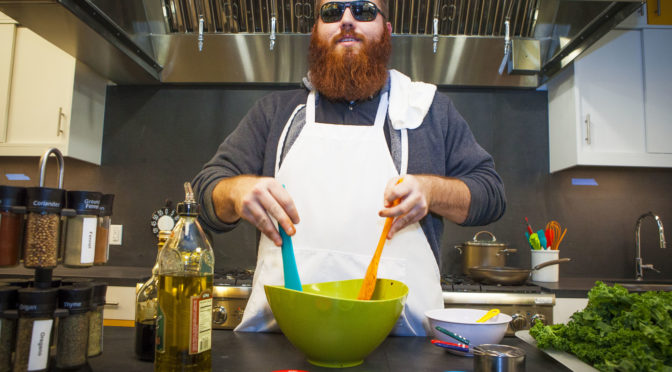
With an emphasis on safety and organizational work strategies, students learn and practice knife skills on a wide variety of fresh fruits and vegetables.  Are you planning to eat healthier after the holidays?  Sharpen your knife skills and practice techniques for even sizes while protecting your fingers!  Tuesday we prep everything for a soup and salad and on Thursday we will throw it all together for a nourishing and healthy meal.

Come prepared to try new ideas and practice the following skills:

  • Holding and manipulating various knives, graters and other sharp gadgets
  • Hands-on guidance and practice mincing, slicing, dicing, chopping, and peeling, among others
  • Deciding which tool is best for the job and why
  • Safer work strategies, building on tactile and sensory awareness

Great cooking is not about recipes – it’s about skill and technique!

There are three sessions of the same course, each with a different menu to be determined based on seasonal availability.  Students may wish to enroll in any one session or all three.

The Heat Is On! Oven and Stovetop Strategies

Designed for beginning and intermediate home cooks who wish to gain a greater comfort level working with their gas or electric ovens and ranges.

Session I  – January  24 and 26

Session II  – February 28 and March 2

Session III –  March  28 and 30

Each session takes place on Tuesday and Thursday of the scheduled week from 9:30 a.m. to 1:30 p.m.

Cook on your home oven and stovetop with ease and safety.  Learn and practice strategies for setting up and cooking with the oven and stovetop which includes spatial awareness skills, setting up with the proper equipment and creating new habits.

Come prepared to try new ideas and practice the following skills:

  • Safer work strategies and Injury prevention
  • Systems, patterns, portioning and spatial awareness
  • Heat control, thermometers, timers, testing for done
  • Sautéing, stirring and turning
  • Using assistive technology

All classes are  $220.00* per session  and meet in Room 1010 in 10th Floor Kitchen of the LightHouse Headquarters at 1155 Market Street.  Class is 4 hours with a short break. Bring a bag lunch the first day. You will be standing, cooking and working for most of the class. Please wear comfortable, closed-toe shoes and have long hair tied back.

*Each Class Session includes two classes for four hours (9:30-1:30).  The full class fee is $220 for persons 18-54.  For those persons who are 55 and older living in the counties of Alameda, San Francisco and Marin (and not a consumer with the Department of Rehabilitation or VA) the class fee is waived thanks to the State of CA Older Individuals Who are Blind (OIB) grant funding.  Student may be asked to bring in class materials, the instructor will notify if this is necessary.

All participants must be registered students of the Lighthouse for the Blind and Visually Impaired. To enroll as a LightHouse student, please contact Debbie Bacon at 415-694-7357 or dbacon@old.lighthouse-sf.org. If you have questions about class content please contact Sydney Ferrario, Instructor, at 415-694-7612 or sferrario@old.lighthouse-sf.org.

As a division of the Independent Living Skills Program, culinary classes provide cooking lessons for the home cook with an emphasis on blind kitchen skills, including, but not limited to, orientation, organization, knife skills, measuring, food safety, and navigating the oven and stove top safely. Also included is a recipe access component for interpreting and replacing visual cooking terminology with cues for taste, touch and smell. The goal is to provide guided practice so students can replicate skills at home.

Note about ingredients: LightHouse recipes use common cooking and baking ingredients including various fruits, vegetables, nuts, meats, spices, dairy, eggs, wheat flours, etc. If you have a food allergy, please check with the instructor before attending the class. Adjustments to recipes cannot be made during class.

Special Dietary Needs?  For those with special dietary needs or allergies, please contact Sydney Ferrario at 415-694-7612 to discuss how we can help you with a customized program and recipes. Her background includes Wheat, Gluten, & Dairy-Free cooking and cooking for those with Diabetes.

See California Like Never Before: MAD Lab creates its largest low vision and tactile map yet

See California Like Never Before: MAD Lab creates its largest low vision and tactile map yet

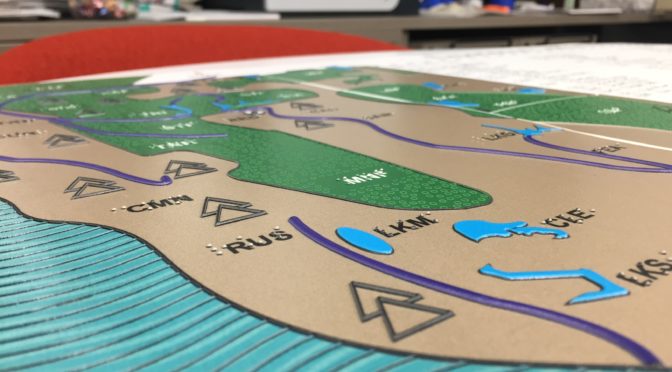
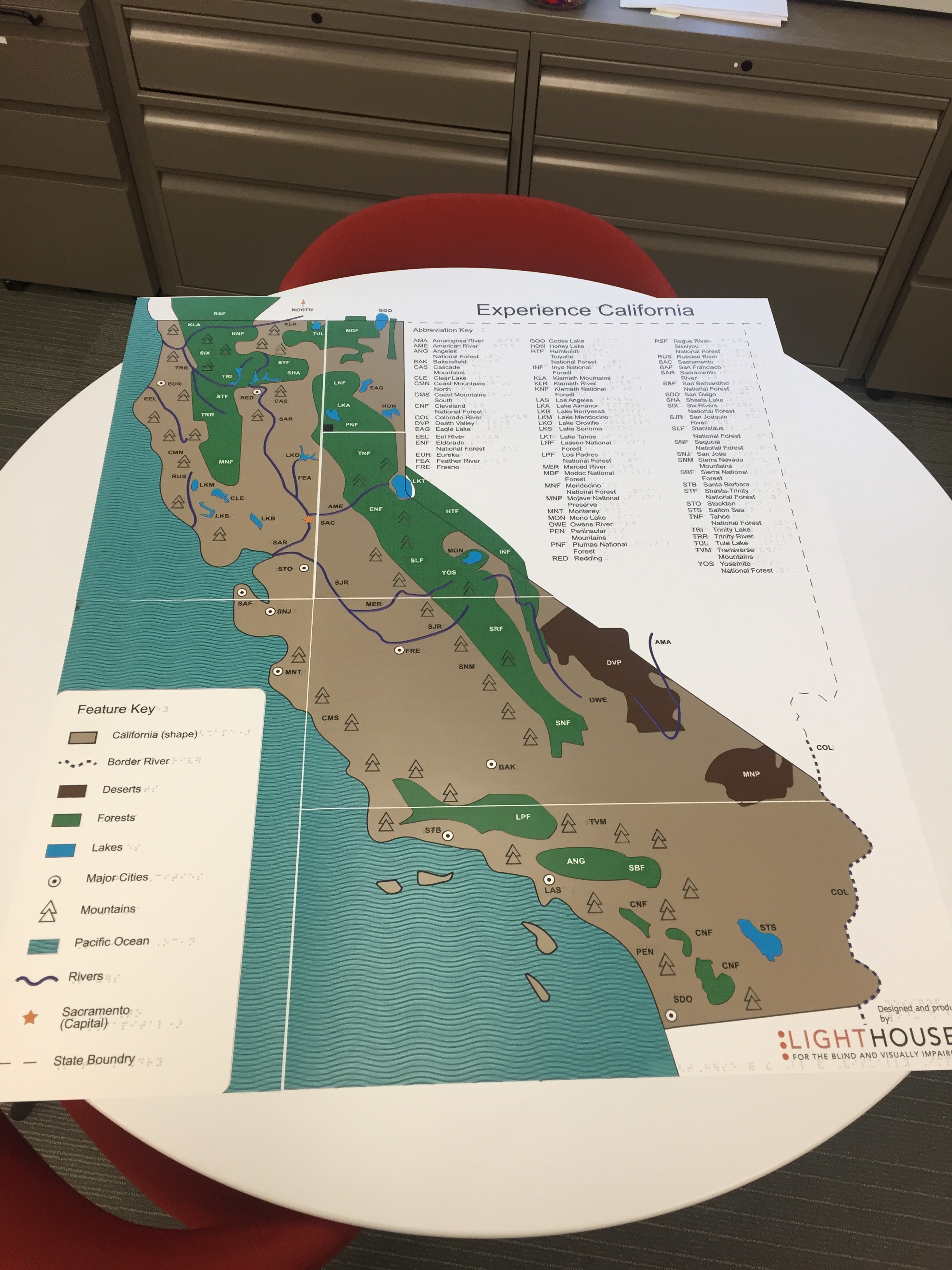
Photo: A close up shows the raised tactile features and brights blues and greens of this accessible map of California.

In the era of Google, reading a map can be deceptively simple. The 664 miles from say, Redding to San Diego, can seem like a simple calculation of hours, minutes, or transit stops – but truly understanding a place’s geography is not so straightforward. That’s why our state’s most reputable sources for accessible education tapped LightHouse to create a map worthy of the institution: encompassing the mountains, rivers, desert expanses and the varied, beautiful patterns of California.

Maps give us the bigger picture, show us how the earth unfolds and inform us how to traverse it – all opportunities blind people crave equally with their sighted peers. Unfortunately, most maps are not accessible. But after months of work, LightHouse’s MAD Lab is proud to present a three-foot large print, braille and tactile map of the entire state of California. It is their biggest tactile map yet.

Commissioned by the State Braille and Talking Book Library in Sacramento, the map will be part of a temporary display at the California State Capitol Building in January. It will later be moved to its permanent home at the Braille and Talking Book Library in Sacramento.

The map is 40 inches tall and 34 inches wide and was printed in six individual sections that make up the completed map. It was printed on the LightHouse’s new UV flatbed printer. High contrast coloration and large print facilitate viewing for people with low vision, and a selection of tactile symbols and fill textures denote cities, rivers, lakes, mountains, forests and deserts.

The whole map of California.

The state map went through many iterations in the design process, partially because the MAD Lab designers were met with the challenge of creating background fill textures for lakes and forests that, when touched, didn’t compete with symbols for specific landmarks.

“We had to figure out how to create varied textures, so you can tell there are different features, but also fade into the background enough so mountains and rivers could be felt on top as distinct landforms,” says Designer and Accessible Media Specialist Julie Sadlier.

By scaling down the size of the texture, Julie says they were able to achieve this. The first full draft of the map was printed in early December. The LightHouse’st Frank Welte was the first blind person to see the map after it was assembled.

A close-up shot demonstrates some of the fill textures Julie speaks of, like the circular green texture indicating a forest.

“I’m a California Native, so I’ve seen some tactile maps of the state before but this one was probably the biggest tactile map of California I’ve ever seen,” says Frank. “It was fun to explore parts of California with which I’m not familiar, like the Northeastern part.”

And though exploring California is a perk, the overarching goal of the display is to raise awareness about the work of the Braille and Talking Book Library and its role in braille literacy and services for the blind and low vision community.

“One of the hardest things in the network of libraries serving the blind is getting the word out about our work,” says Director of the library Mike Marlin. “We provide a free service, so this display is a really helpful outreach tool. It gets our work in front of legislators and the public.”

Frank too, hopes the map encourages more institutions and organizations to make tactile maps and other material available to their communities.

“I think it is wonderful for tactile graphics to be given high visibility, so that the general public can appreciate their value as we in the blind community already do,” he says.

MAD Lab is an important resource in collaborating with organizations to make these kinds of accessible tactile tools available. The MAD Lab has earned a reputation for producing fabulous tactile media of all kinds, including raised line drawings, tactile graphics and tactile maps like this one for Alcatraz, and other GGRNA maps – for everything from Burning Man to BART.

For a rate sheet or an informal quote on a business project, contact MADLab@old.lighthouse-sf.org or call 415-694-7349.

LightHouse Will Host the 2017 Braille Challenge for Northern California

LightHouse Will Host the 2017 Braille Challenge for Northern California

Photo: A smiling young girl wearing a purple braille challenge t-shirt types away at her brailler.

The Braille Challenge is an international competition in which braille readers compete to be the Olympians of blind literacy. Starting this month, blind and low vision students across the United States and Canada will begin clattering away on braillers and slates as they compete in a series of contests demonstrating braille reading and comprehension, speed and accuracy, spelling, proofreading, and tactile graphics, as they compete for thousands of dollars in prizes.

As part of the 2017 Braille Challenge, the LightHouse in San Francisco is proud to announce that our new headquarters will host the regional Challenge for Northern California. This preliminary round is open to students grades K through 12 of all skills levels, and the top-scoring 50 contestants nationally will be invited to Los Angeles in June for a two-day Final Round.

On February 25, students and their parents are invited to join us for a full day of braille events. The day will kick off with a guest speaker who will get the participants pumped up about braille and discuss the benefits of learning and practicing braille for future academic and employment success. Then the students will be let loose to compete. While students are showing off their braille-reading chops, parents and family members will have the chance to attend a series of workshops with presenters who will provide resources and information about further opportunities to encourage literacy, independence and self-confidence.

They will also have a chance to see the dozens of braille-related tools and devices carried by the LightHouse Adaptations store, many available nowhere else in the region.

This year, The Braille Challenge will be held at 46 different sites and proctored by up to 80 individual teachers of visually impaired students from across the US and Canada. Any visually impaired student who reads braille is eligible to participate in the preliminary Challenge contest events. Each contestant receives a brailled certificate of appreciation and general feedback on their performance, which will be sent to families and educators in May.

A big thank you to Junior Blind of Northern California and the Vista Center for co-presenting this event with us.

The Northern California Braille Challenge
Who: Blind and low vision braille readers, grades K-12
When: 9:00 a.m. to 4:30 p.m., February 25, 2016
Where: LightHouse Headquarters
1155 Market St., San Francisco, CA 94103

Registration Deadline: Friday, January 27, 2016

Registration is now open: 2017 Braille Challenge

Download the Northern California
Braille Challenge Registration Form.

The deadline to register for the Challenge is January 27, 2017. To register for the event please fill out and return the 2017 Permission Form. This form can be filled out digitally and sent via email to jgump@old.lighthouse-sf.org or mailed by post to LightHouse for the Blind and Visually Impaired, Attn: James Gump, 1155 Market St., 10th Floor, San Francisco, CA 94103.

For questions or to register for the event contact Jamey Gump, LightHouse Youth Services Coordinator, at jgump@old.lighthouse-sf.org or call 415-694-7372.

Download and Print the Braille Challenge Save-the-Date.

30 Years of Service: LightHouse’s Kathy Abrahamson Honored by the City of San Francisco

30 Years of Service: LightHouse’s Kathy Abrahamson Honored by the City of San Francisco

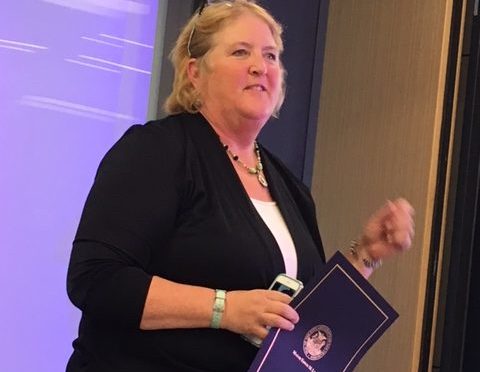
“It’s easy to find Kathy; just follow her laugh,” Bryan Bashin, LightHouse’s CEO, jokes when reflecting on what makes Kathy Abrahamson, our Director of Rehabilitation Services, so special. Kathy’s laugh, which travels through our office like a whippoorwill’s song, is always a welcome greeting to her many admiring colleagues.

On October 6th, 2016, Kathy celebrated her 30-year anniversary at the LightHouse, making her both a veteran at our agency and a role model for blindness professionals across her field. Here at the LightHouse, we all gathered to applaud Kathy, as she was presented with a certificate of honor from the City of San Francisco.

Kathy’s journey at the LightHouse started in 1986, when she was hired as Recreation Coordinator at the LightHouse’s Western Addition location on Buchanan Street. Former board member Gil Johnson knew Kathy from several years as a camp counselor at Enchanted Hills, where she had already proven her abilities as a teacher. Gil tells us, “You know how it is with Kathy, once you meet her, you never forget her vibrancy and passion. When we had a position open up, I knew we needed to hire her.”

“Enchanted Hills Camp was a natural place for me to start because of my background in Therapeutic Recreation and my values of equal access to recreation and play – a perfect fit with the goals of Enchanted Hills Camp,” says Kathy. “Working as the Aquatics Area Leader drew on my strengths in teaching swimming and water aerobics. My years at Enchanted Hills Camp including being the Assistant Director; summer volunteer, then back to Director when I came to the LightHouse full time in 1986. Enchanted Hills has been a reoccurring theme for me and the team I work with in providing training and connection to community.”

“She has such enthusiasm for helping people,” Gil Johnson continues. “She also has a positive view of people. Kathy makes everyone feel welcome, important, valuable, and worthy of living the life they dream about living.”

Anita Aaron, LightHouse’s Executive Director from 1990 to 2010, tells us: “Kathy is committed to good leadership and stewardship.  She never loses track of the fact that the mission of the LightHouse is to serve people experiencing vision loss and other disabilities.” Kathy had been at LightHouse for four years prior to Anita becoming the Executive Director. Kathy’s laugh made an impression on Anita, too. “I used Kathy’s wonderful, infectious laugh to orient myself when at EHC or LightHouse,” she says. “I’d stand still for a moment wondering where she was, and as expected, I’d hear that laugh. Like a beacon, I’d head towards it.”

Kathy is used to being known for her laugh. “I have been fortunate to work with students and colleagues who find pure enjoyment in their success and work,” she says. “Humor is a connector.”

Over the years, Kathy has influenced the very ethos of LightHouse’s mission to effectuate the equality and self-reliance of people who are blind or visually impaired. Anita notes, “Over the years Kathy has been a camp counselor, taken groups of individuals who are blind on every kind of trip imaginable, coordinated camp sessions for individuals who were both deaf and visually impaired, planned and directed job development and placement programs at the LightHouse funded by DOR, and assisted in the design of two new locations for the LightHouse.” Though Kathy maintains that all of her successful projects were collaborations with others, it’s nonetheless clear how many lives she has affected.

Kathy has been involved with the development of dozens of programs at LightHouse, something she could never have done without the amazing team of teachers we have assembled at the LightHouse.  Some of those programs included: Access to the Environment, providing a Guide and a Ride to hiking, camping and travel, bay area wide training in Fairfield, Dixon and Santa Rosa in the mid 90’s, an evolution of Cohort style classroom training for persons who are blind and low vision, introducing adults new to blindness and the possibilities of independence and meeting peers (now called Changing Vision, Changing Lives immersion training).

As the needs in blindness changed, Kathy helped ensure that evolving needs were met. She was part of the team that provided acceptance, support and training to San Franciscans who were losing vision due to HIV/AIDS. In the early ‘90s the LightHouse and the Resnick Center were both supporting a need that was not being addressed. With the merge of LightHouse and the Resnick Center in 1993, Kathy and her team developed a comprehensive blindness-centered response to HIV/AIDS, securing funding from the City of San Francisco to ensure timely and compassionate access to emotional support and training in orientation and mobility and independent living skills.

As a zealous problem solver, Kathy continued to lead the LightHouse down paths few agencies are willing or able to travel. In 1992, Kathy re-started a deaf-blind program that had been strong (especially at Enchanted Hills Camp), in the early ‘80s. Through collaboration with the Helen Keller National Center, the LightHouse became an Affiliate which enabled us to reach a small segment of our community, one that often finds it incredibly difficult to receive the specialized services they require, namely dual access methods that consider both deafness and blindness. With Kathy’s guidance and the support of Deaf-Blind Specialist Sook Hee Choi, our deaf-blind program has grown to cover the entire state of California, providing Californians who are deaf-blind with communications technology that keeps them connected to their communities. “Never did I think that a basic sign language connection during my first summer at Enchanted Hills camp would provide me the opportunity to not only improve my ASL, but more importantly, work with forward thinking colleagues, most of whom are deaf, to develop such a program,” says Kathy. Today, that program has grown into a $1 million operation giving deaf-blind Californians free access equipment and technology training.

“Kathy may be our biggest ally in trying to establish additional deaf-blind services on this coast, from statewide Support Service Provider (SSP) services to residential training,” said Cathy Kirscher, Hellen Keller National Center regional representative for California, who awarded Kathy the 2015 National Robert J. Smithdas Deaf-blind Advocacy Award.

In addition to starting the deaf-blind program, Kathy is proud of being a being a part of the team that is responsible for collaborating with Dr. Robert Greer and the UC Berkeley Low Vision Clinic over ten years ago, which continues now under the direction of Dr. Marlena Chu in San Francisco. This collaboration established a connection between low vision and acquisition of essential blindness and low vision training. In 1999, Kathy spearheaded the  the LightHouse Older Individuals Who Are Blind Program, a program funded by the California State Department of Rehabilitation. Some of the initial funding established our San Rafael, Berkeley and Eureka offices. “Kathy put her whole heart into establishing LightHouse satellites because she knew we could reach more people who need our services,” says Gil. “Because of her hard efforts, we are able to serve people in Humboldt, Del Norte, Solano County and other far-flung and rural areas where few services exist.”

Kathy has also spearheaded an increase in our services to the Spanish-speaking blind community. Since the program’s beginning, it has adapted to meet the needs of persons 55 and older who are new to blindness and low vision. “While I am so proud of the work I have been involved in at the LightHouse, seeing the OIB program flourish, and seeing our team connect older students to continued independence (especially during the beginning of this century with increased numbers of persons with Age-Related Macular Degeneration) has been truly satisfying,” says Kathy. ” While the OIB program continues in San Francisco, Marin, Humboldt and Del Norte counties, the increased services to Alameda county will make a difference in connecting with new students.”

In recent years, Kathy and her team conceived our impactful “Changing Vision Changing Lives” (CVCL) blindness skills immersion program when she noticed a gap in services. “If you need to learn blindness skills you have two options: 1) you can take classes here and there in one-hour increments, or 2) you can steal away to a blindness skills center for many months and learn everything at once,” she says. “For some people, option one isn’t the right fit because it can take many months to learn several basic blindness skills. Similarly, option two is wonderful if you have the time and resources, but many people can’t put their life and family’s life on hold for several months.”

‘Changing Vision Changing Lives’ is a one week overnight intensive blindness skills training session with the goal of rapidly teaching people the critical skills they need to be safe, be confident, and develop their independence. Learn more about our Nov/December Changing Visions Changing Lives classes here. At CVCL, Kathy has ensured instruction in the skills people could learn in a supportive and professional environment: from receiving mobility training upon arrival to effectively operating an iPhone.

Kathy has made an enormous and lasting impact in the blindness community, especially in California, which is why it’s of little surprise to us that San Francisco’s Mayor Ed Lee, on behalf of the City and County of San Francisco, recognized Kathy with a Certificate of Honor “for a distinguished thirty year career as a skills teacher and Director of Rehabilitation Services.” We all agree with Gil when he says, “The best decision I ever made was hiring Kathy.” And Tony Fletcher, Director of Enchanted Hills Camp, tells us: “In many ways, when the community comments about the display of teamwork, passion and humor that our staff demonstrates in our services, I think of Kathy setting that tone for all of us.”

Kathy, from all of us at the LightHouse, thank you for your constant dedication to serving others, and for always reminding us to share a hearty, knee-slapping laugh, every chance we get.