Camilla Sterne2 Commentson A Blind Poet in the LightHouse Studio: Watch “Vision” by Leah Gardner
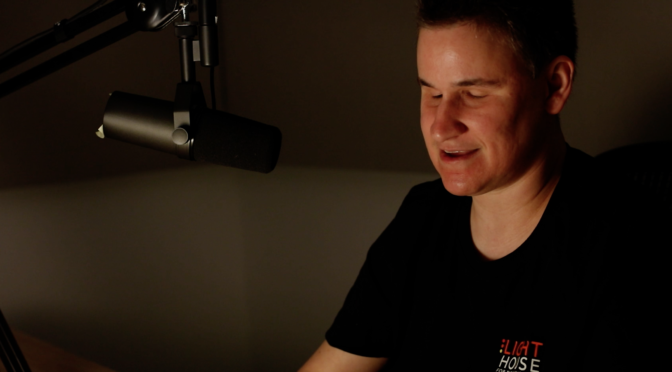
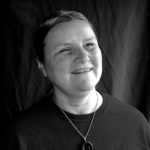
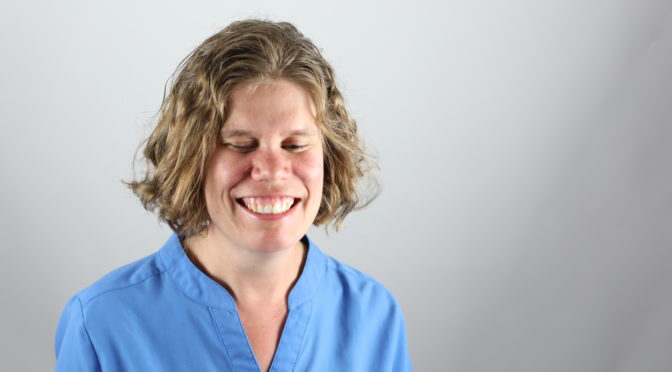
“I’m a woman who’s a blind, depressed lesbian,” says Leah Gardner, with a good-humored chuckle. “That’s who I am. That’s my reality and I’m okay with it.”
Leah hasn’t participated in Pride in about 15 years — since she was a young poet in New Hampshire and Vermont — but when she heard about our blind and visually impaired contingent from our weekly newsletter, she decided it was time to march again. In her late 20s, marching in Pride offered her a lot of hope, along with a sense acceptance and celebration in who she was and what she offered to a community. After a tough couple of years, Leah is ready to feel that hope again.
“There’s a lot of excitement building for me, just in terms of being part of this,” she says. “Every time that I participated in the New Hampshire and Vermont marches, it was with wonderful friends but they were all sighted. It was not part of a visually impaired community, as key to me as that was in my life. This year carries this newness to it. It will be a completely original experience of sharing this day with people who are also blind and GLBTQ. So I’m really energized.”
We’re asking folks to use the hashtag #BeSeen and think about what that means in the context of Pride.
“I think a lot of people are very comfortable with talking about sexuality but the vision loss and the reality of that creates a lot of shame,” says Leah. “And in my case I also deal with severe depression, which adds some challenges in finding a way to form bonds with other people. We all have some shame about something, some facet of our personality. This ‘Being Seen’ concept to me has become about saying no to that shame.”
And Leah is no stranger to thinking about the intersection of blindness and sexuality. One of the poems she has performed most over the years is a poem called “Vision” about a gay friend who was losing his sight. The poem unpacks the shame and fear that often accompanies both sexuality and disability, and is a testament to the courage it takes to go through a world that isn’t always kind to people it deems outside of the norm. In advance of San Francisco Pride, we asked Leah to perform “Vision” in the LightHouse studio. Watch the video below.
Leah will present this poem live at our “All Eyes on Allies: Pride Training and Community Building” on June 22 where she also discuss what it means to show up to Pride as an ally for people with multiple marginalized identities. This training will also teach volunteers how to be effective human guides.
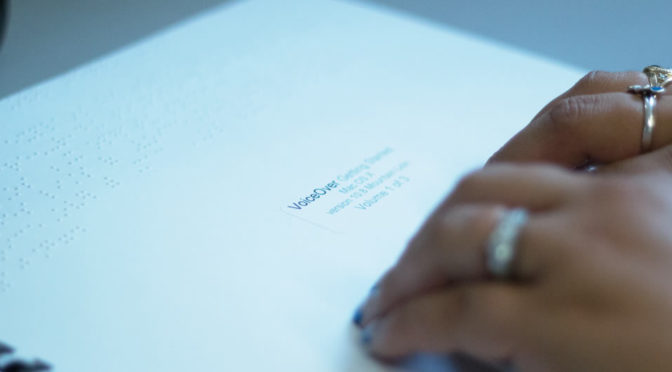
The LightHouse Media and Accessible Design Lab (MAD Lab) is the sole translator for authorized braille versions of a variety of Apple User’s Guides. Earlier this year, Apple commissioned the MAD Lab to translate a few of their new manuals into braille. This week, as the culmination of several months of work, free Braille Ready Files (BRFs) are available online. You may also purchase embossed versions of these manuals in our Adaptations Store.
Call 1-888-400-8933 today to order one of the following manuals in braille at the standard braille (rates may vary based on number of printed volumes):
Apple Watch User Guides
iPhone iOS User Guides
Apple TV User Guides
Mac OS with VoiceOver User Guides
For blind braille readers who use Apple products, this is a huge step towards tech literacy. The iOS manuals provide detailed insight into optimizing these products and leveraging the accessible features for personal and professional use. The embossed manuals offer a complete set of directions on how to use each Apple operating system, intelligently organized into multiple volumes of interpoint Braille.
Get even more familiar with your Apple products by attending a FREE weekly Access Tech Training at our headquarters on Tuesdays between 9 a.m. and 7 p.m. and Saturdays between 10 a.m. and 4 p.m. To make an appointment, contact Access Technology Coordinator Shen Kuan at skuan@old.lighthouse-sf.org or 415-694-7312.
A few weekends ago marked our first-ever Maker Faire Made Accessible, a full weekend of hands-on education for blind youth and adults interested in the maker movement. The weekend included an overnight stay at LightHouse with a series of workshops and a daylong trip to the Bay Area Maker Faire in San Mateo.
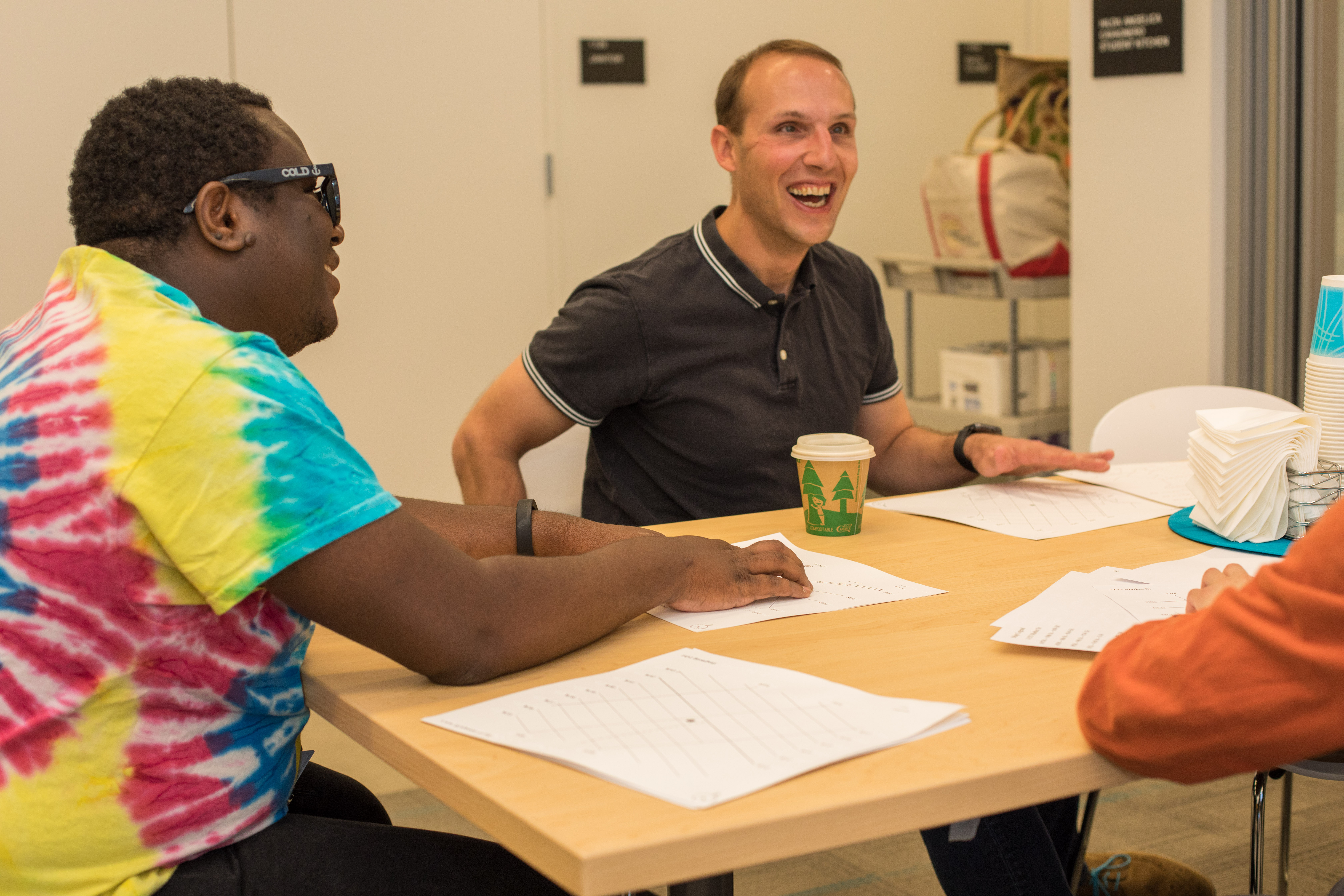
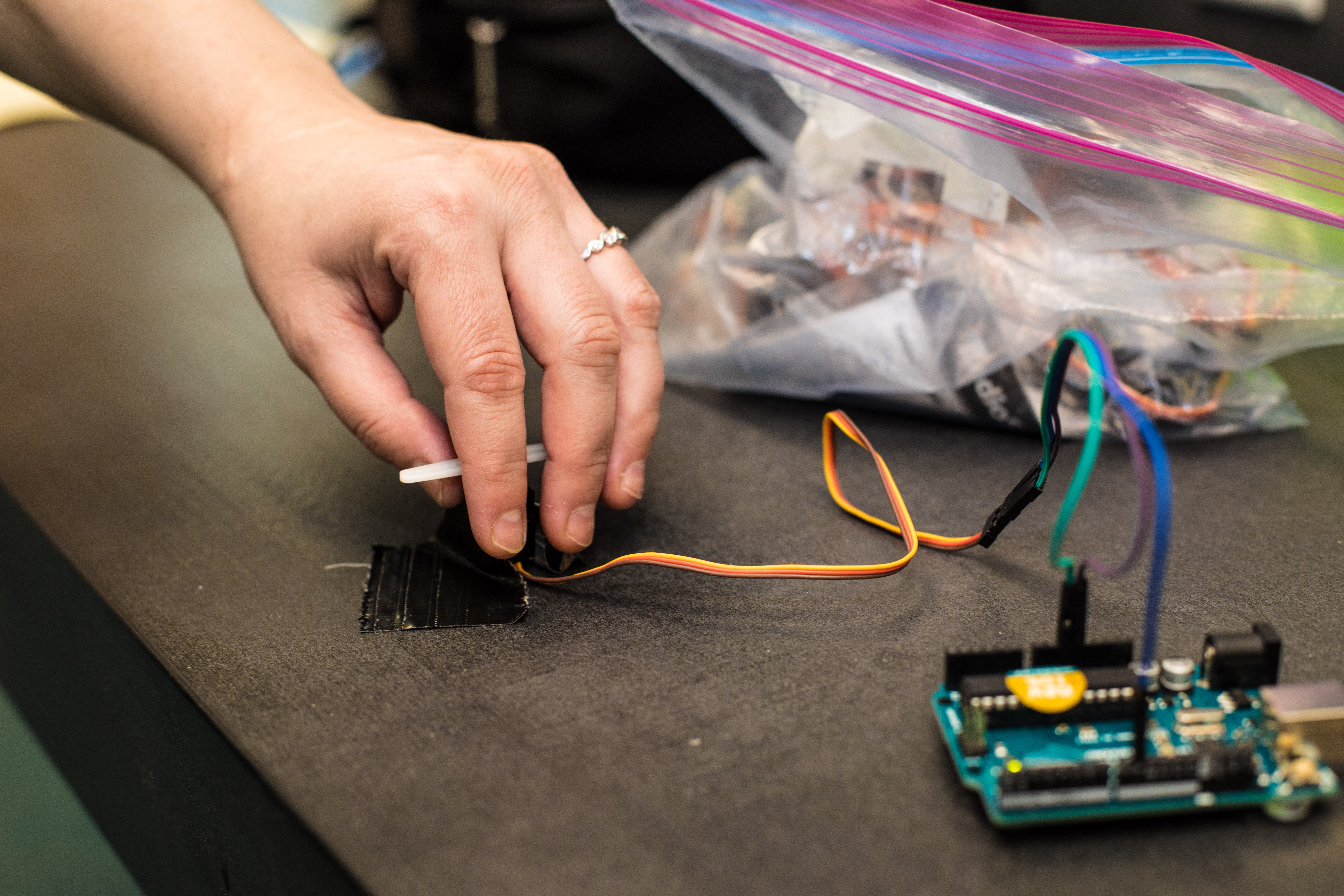
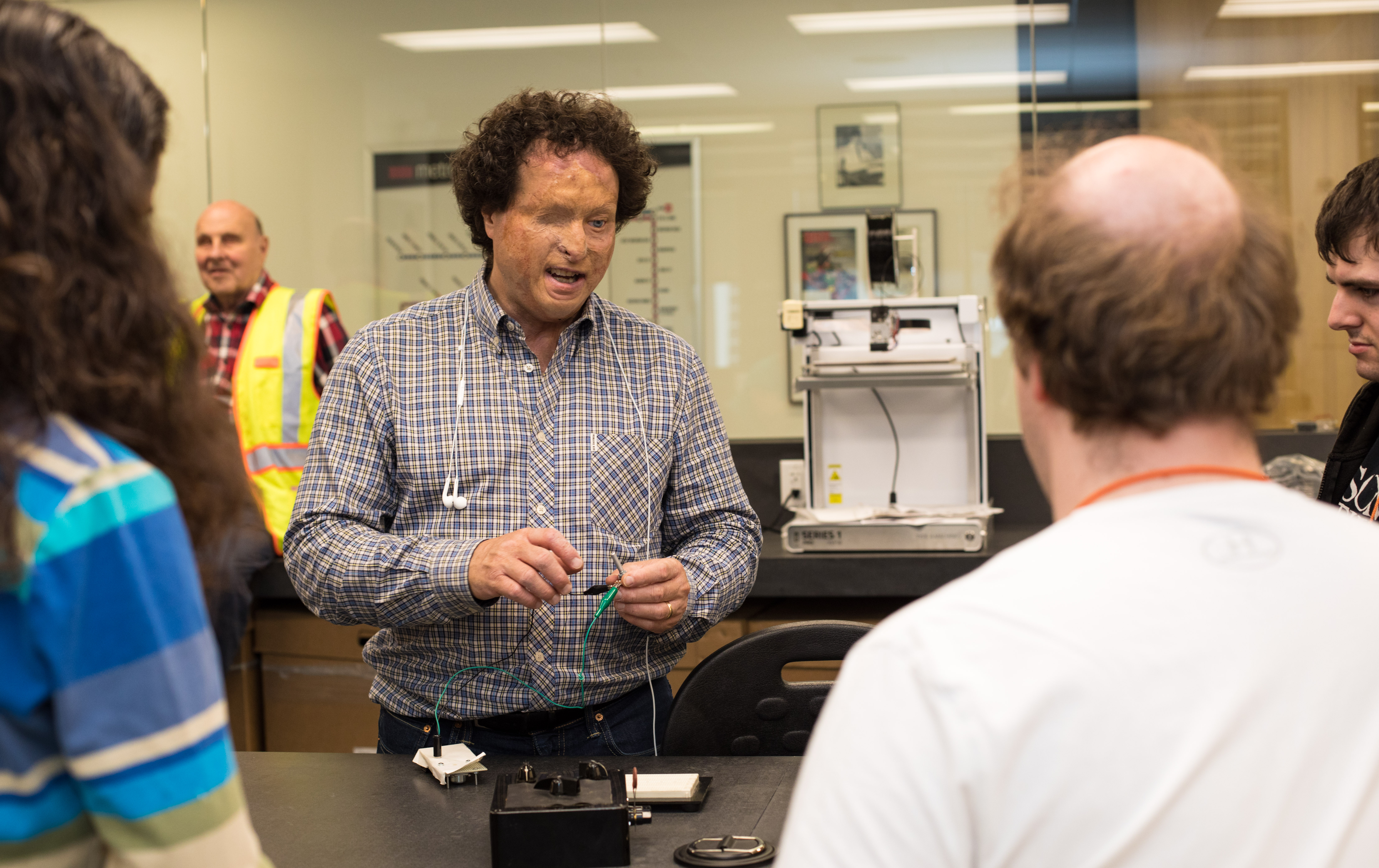
Participants gathered at the LightHouse on Friday to learn Arduino from board member Joshua Miele, explore tactile maps from MAD Lab, and learn the ins and outs of painting while blind from artist Charles Blackwell.
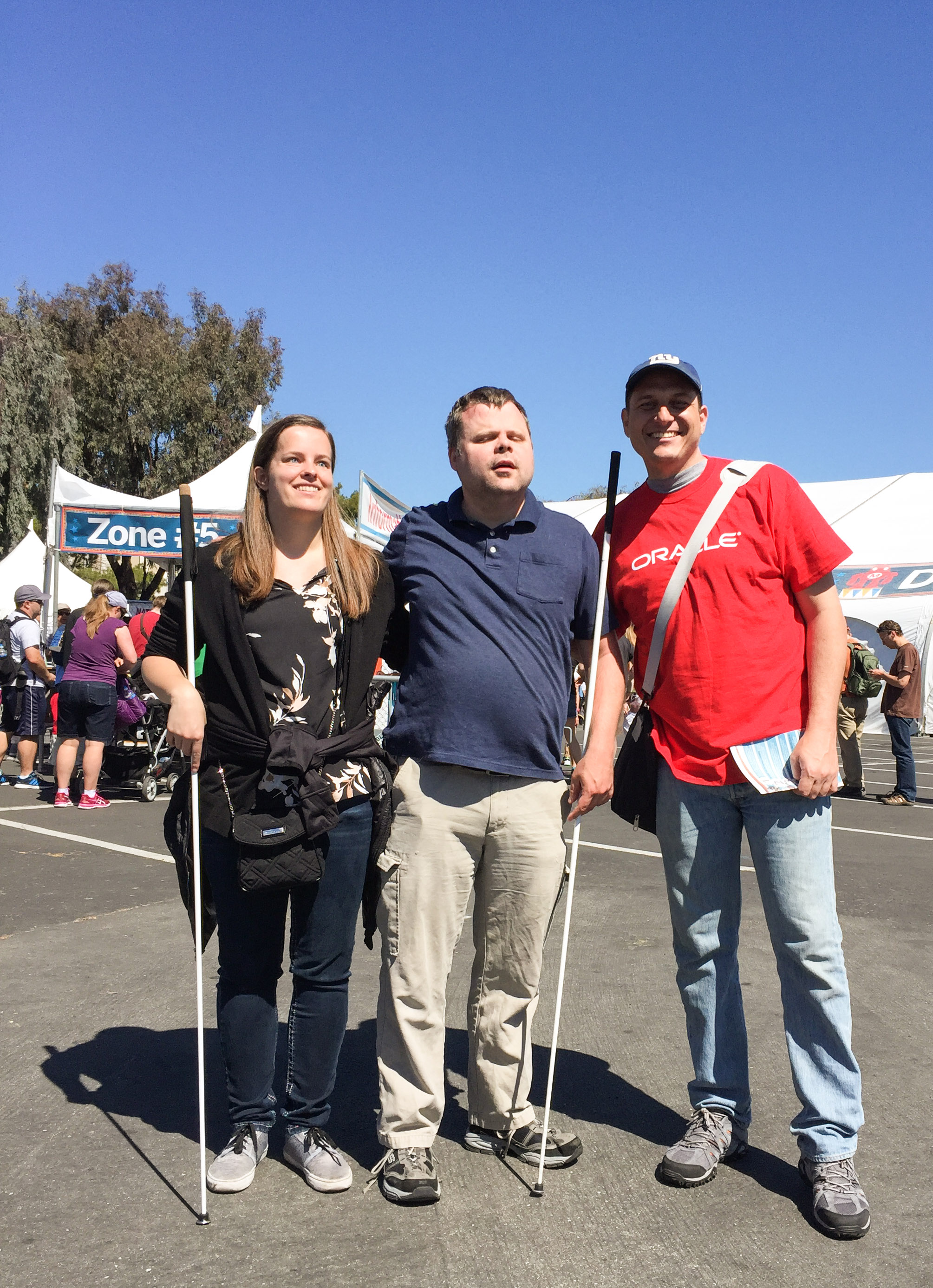
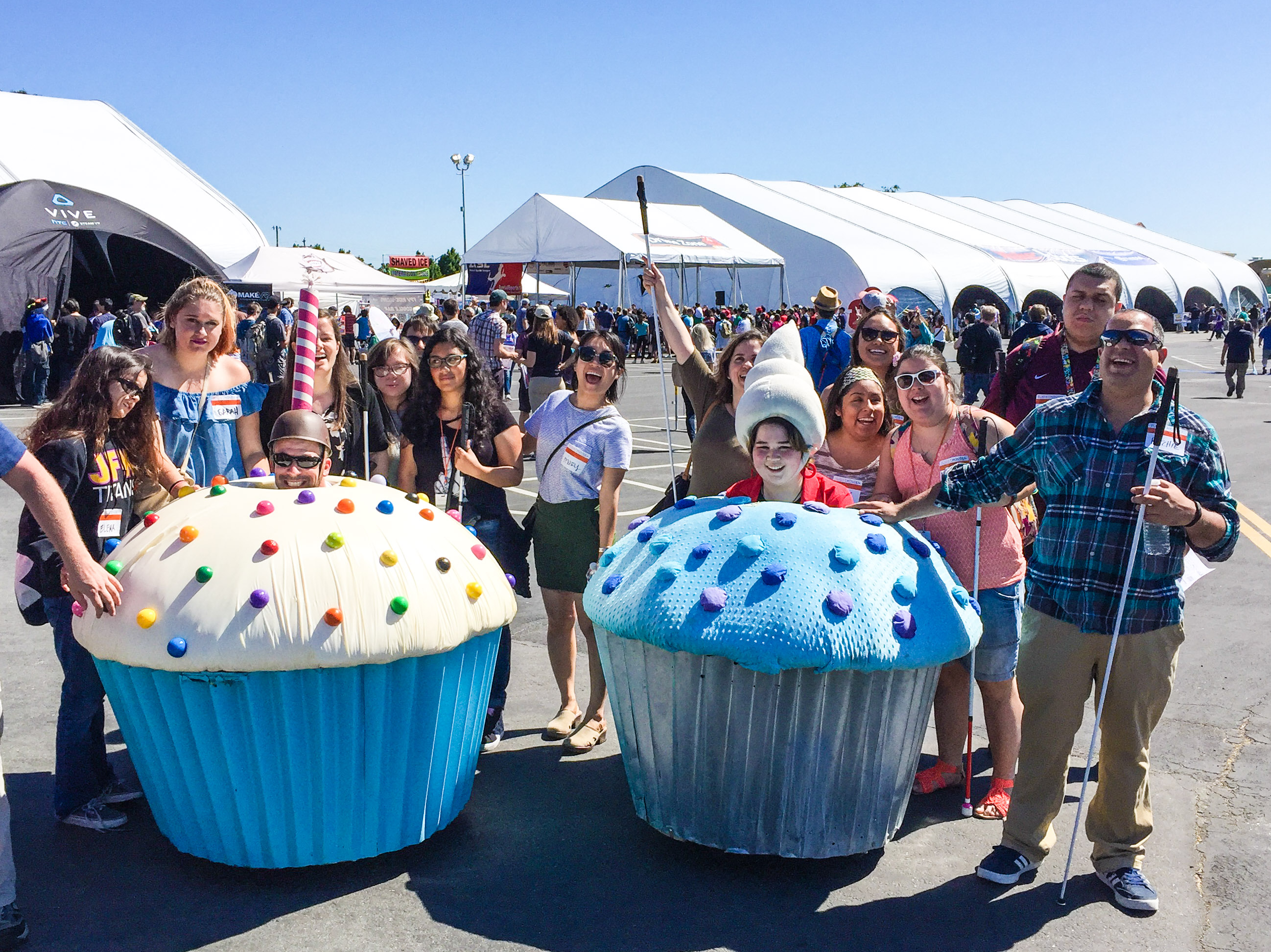
On Saturday, 28 blind participants and 20 sighted Oracle volunteers hit the Maker Faire to explore the wonders the festival has to offer — including drone racing, robotic dinosaurs, motorized driving cupcakes and the famous Maker Faire dark room with its flashing light installations.
We’d like to extend a huge thank you to Oracle for making Maker Faire Made Accessible possible with a generous grant and time generously offered by 20 volunteers.
Check out the photos below:
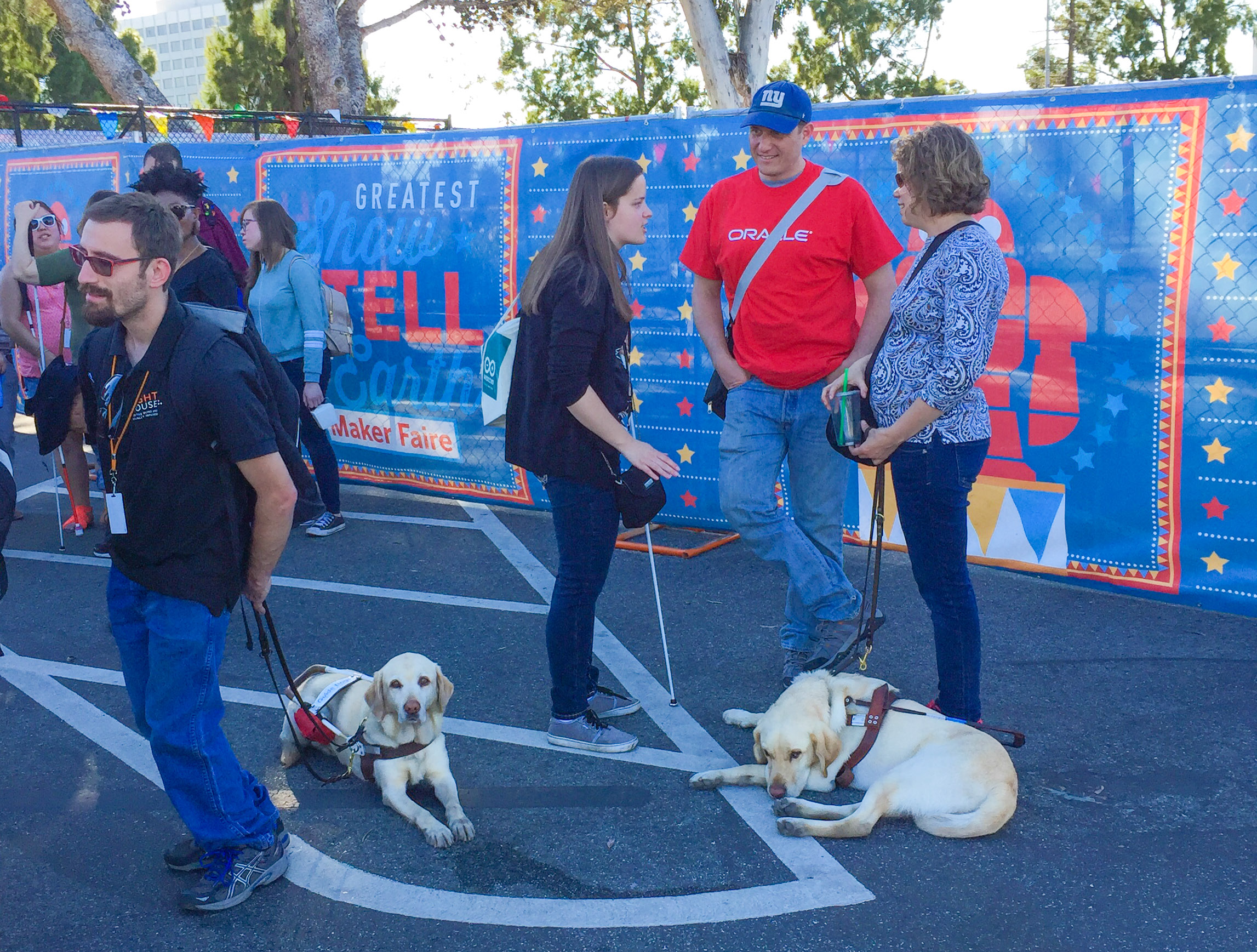
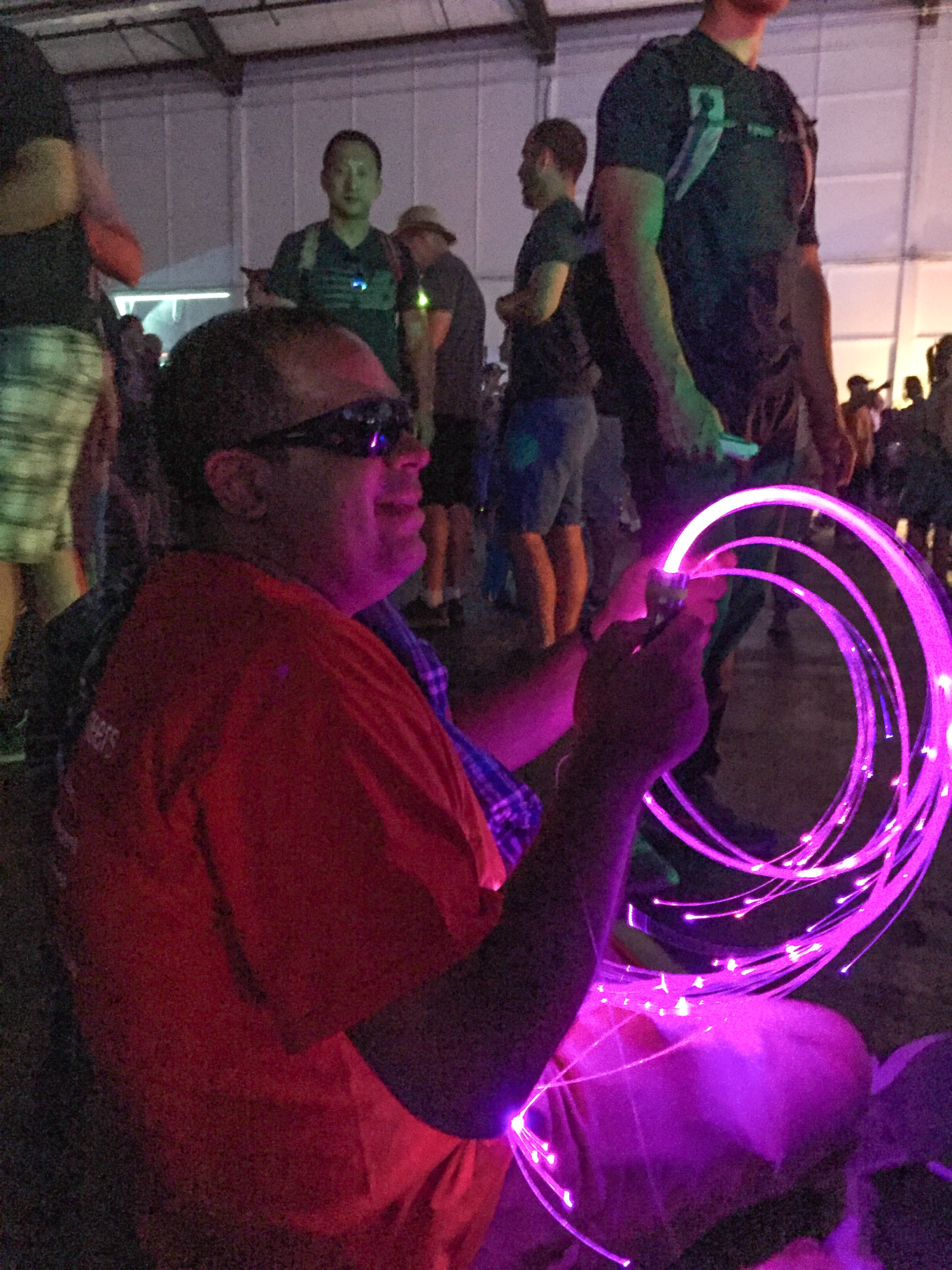
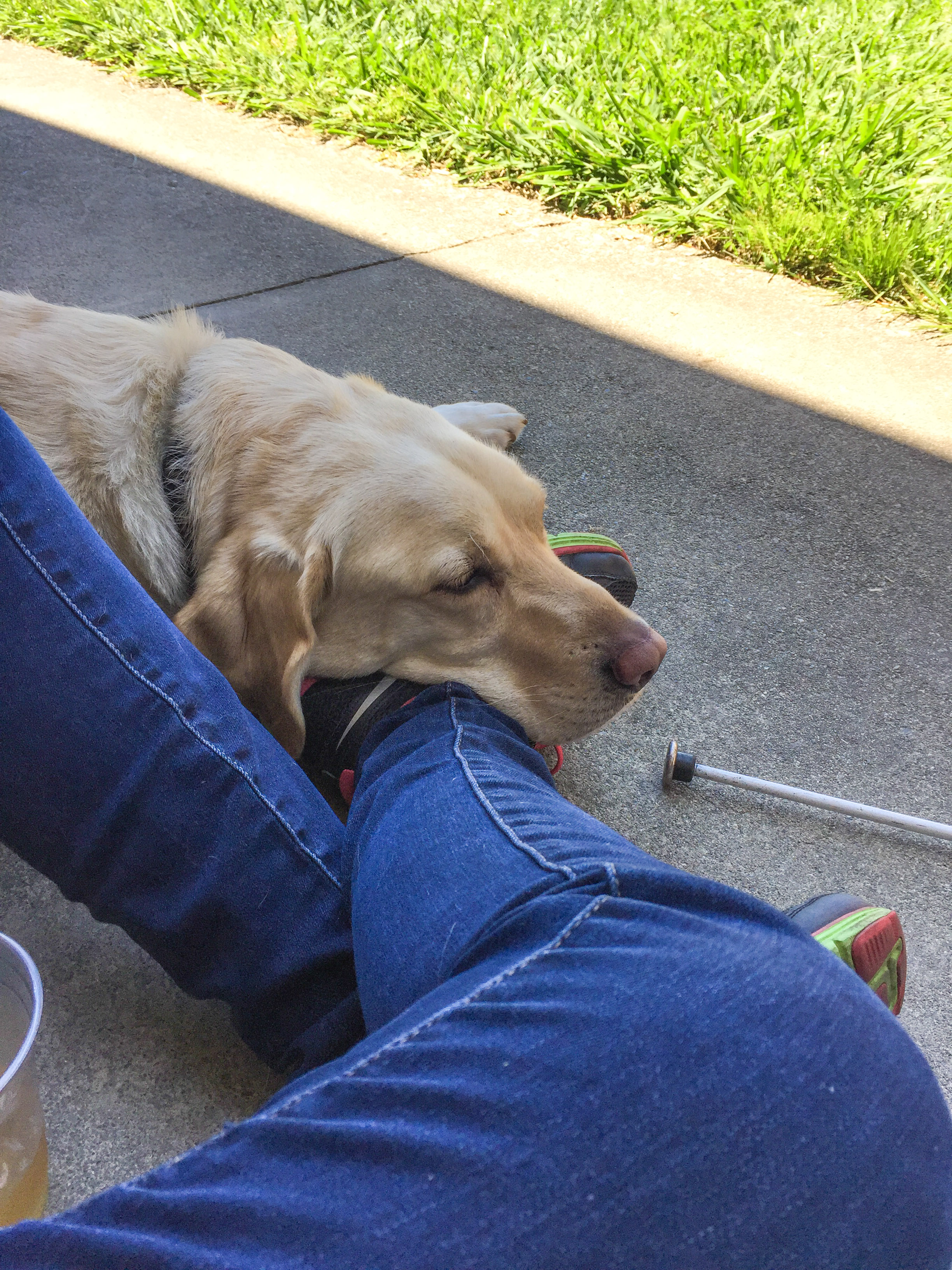
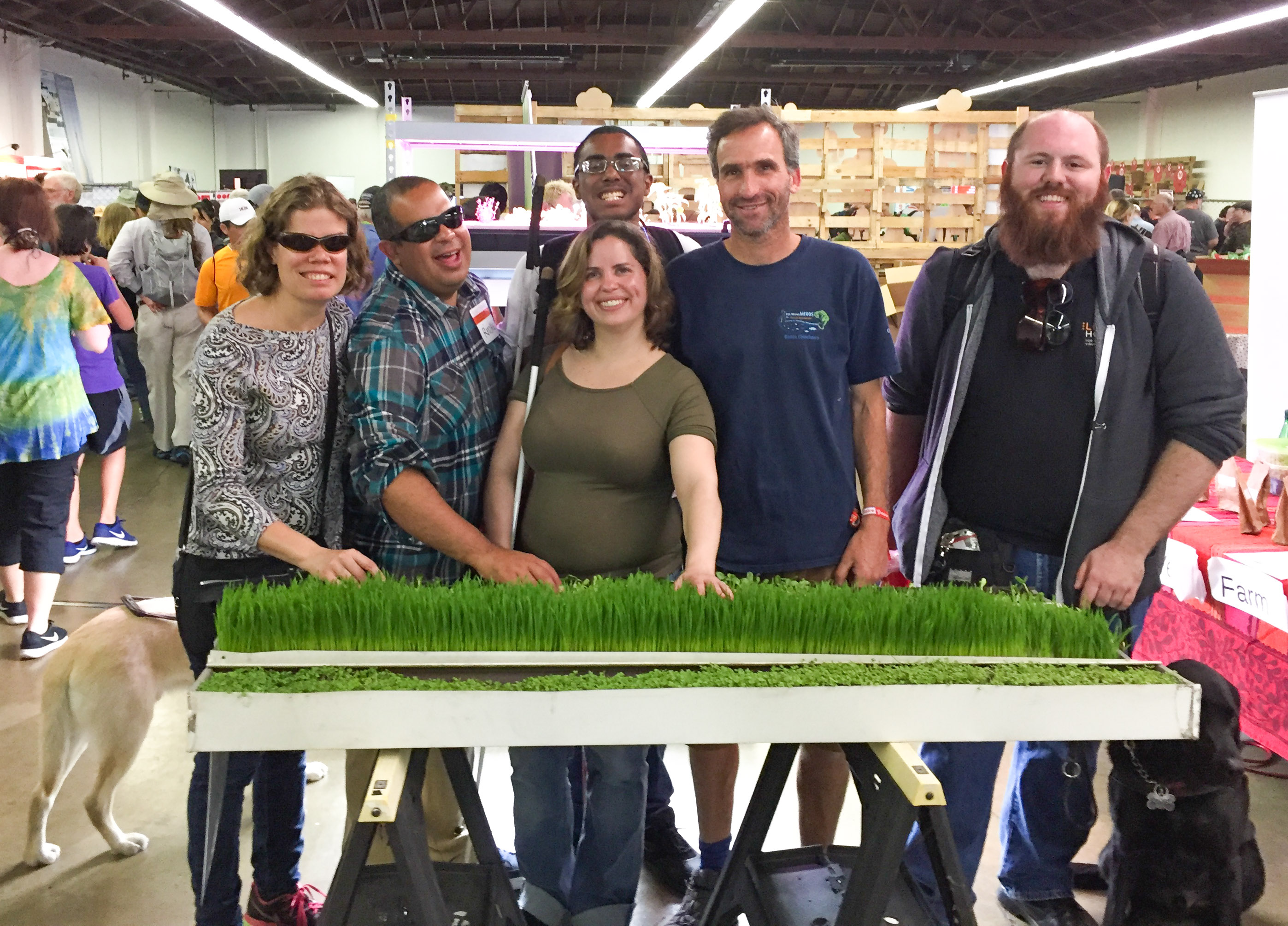
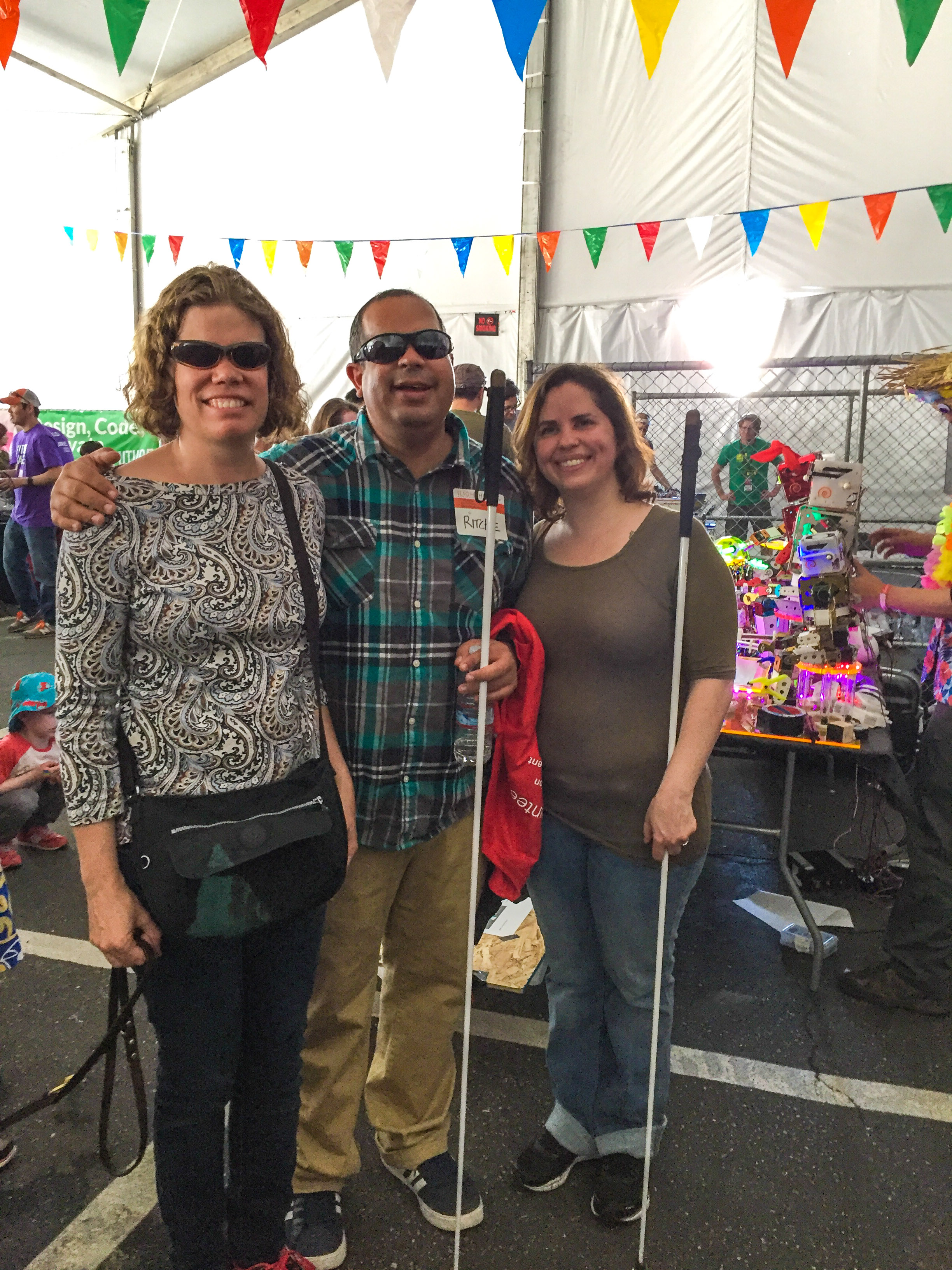
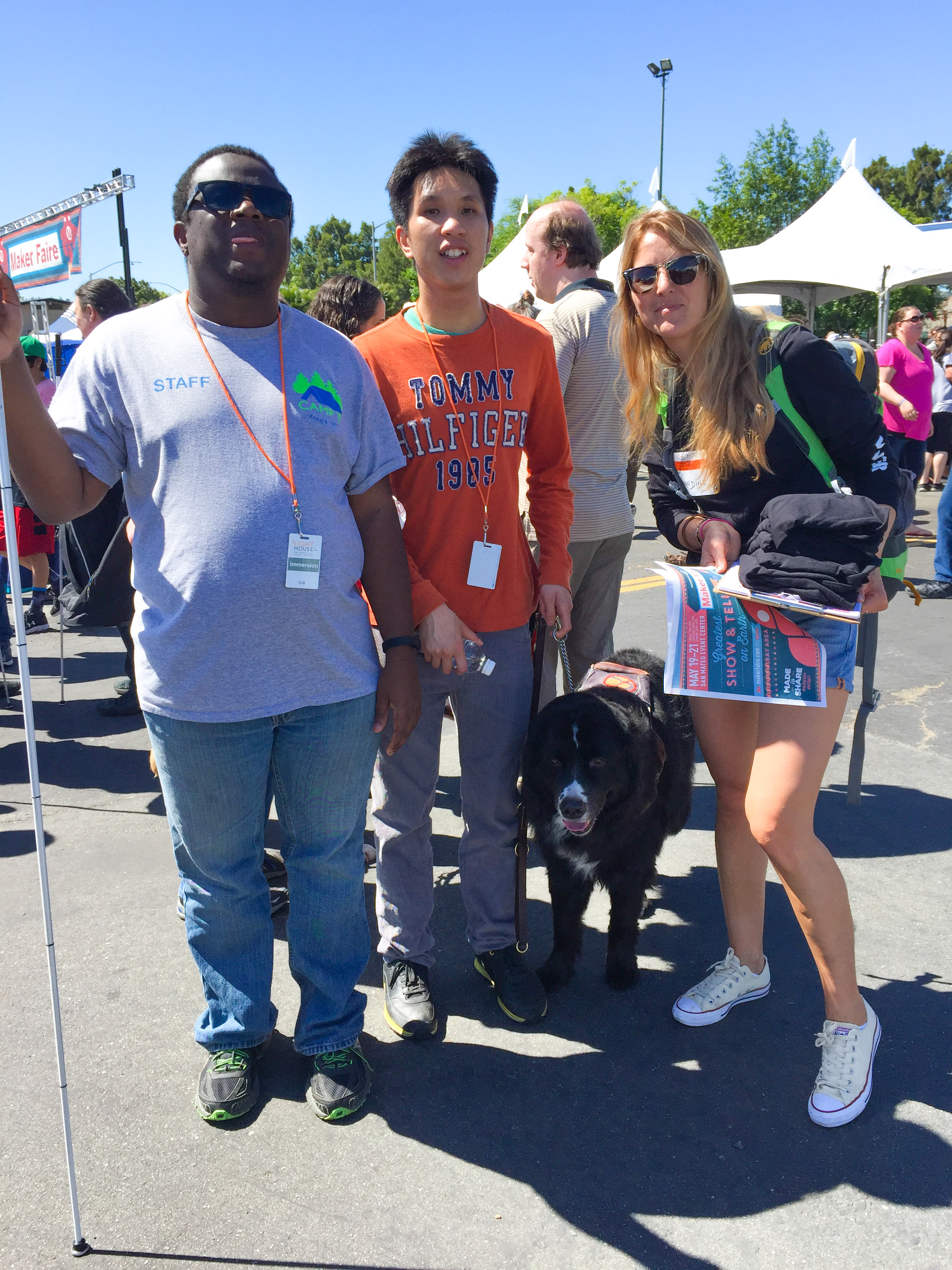
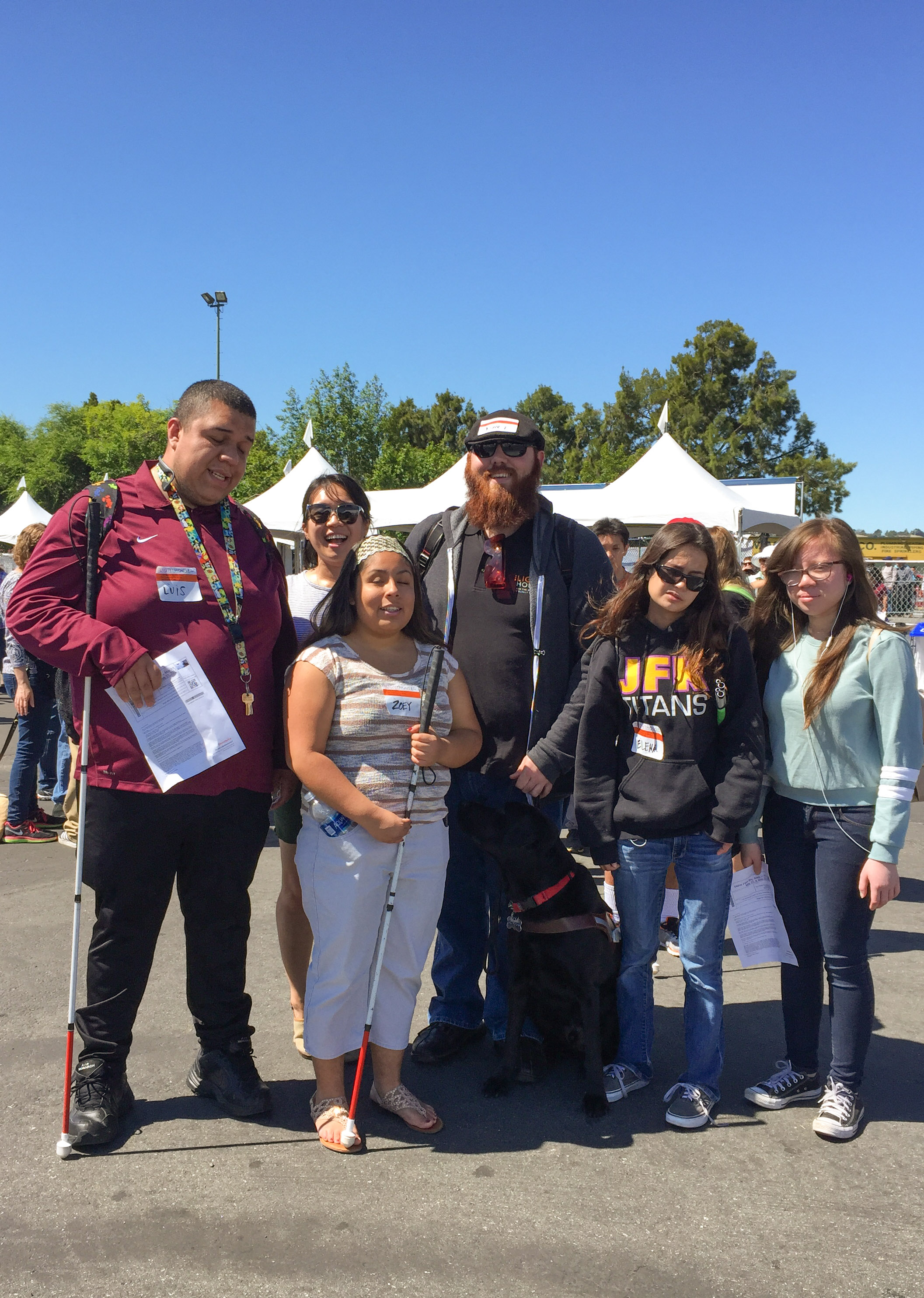
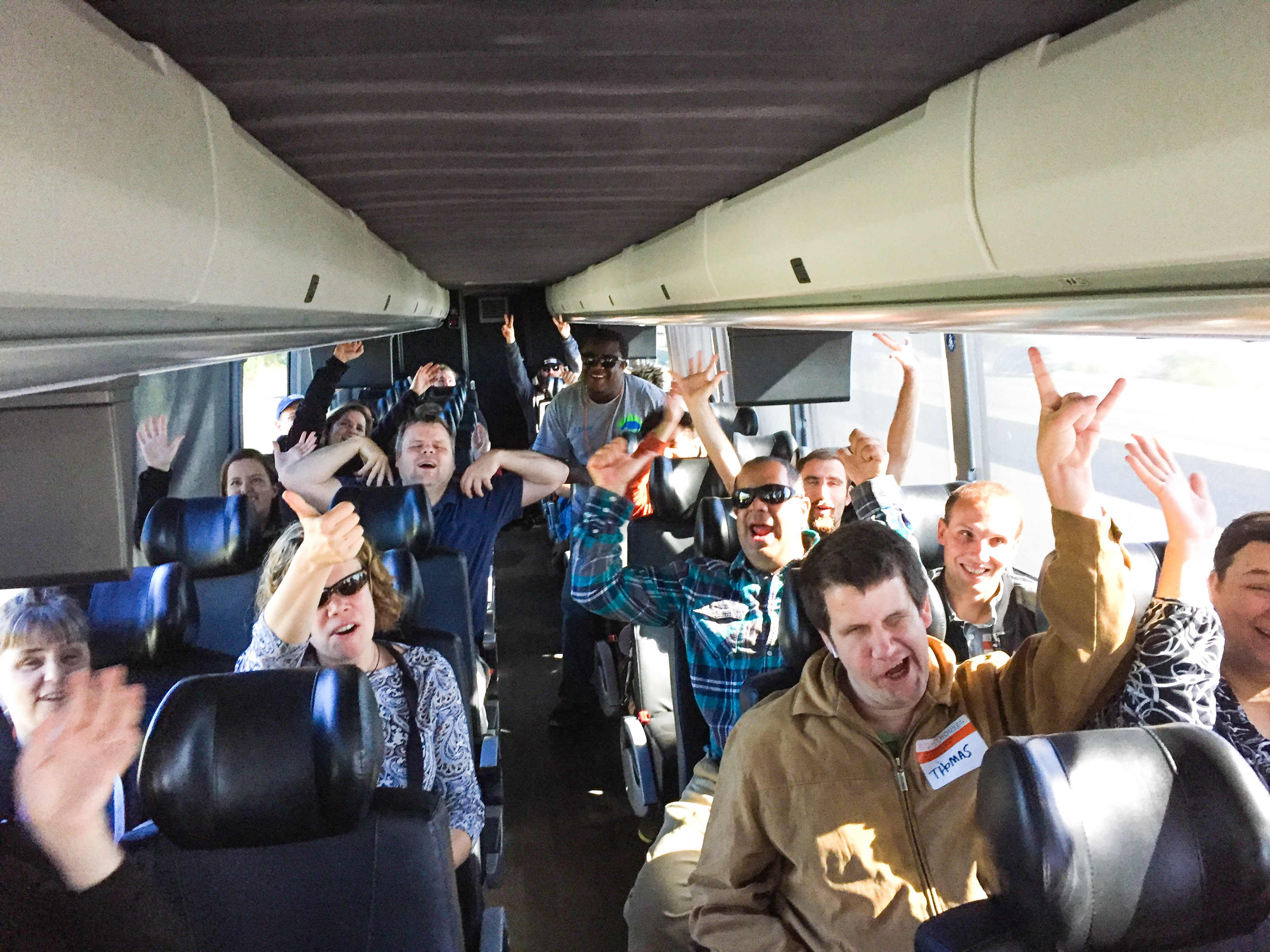
Participants feel the large tactile globe at LightHouse headquarters.Painter Charles Blackwell guides a student’s hand as she feels the raised paint on his painting.Maker Faire participants read tactile maps at the LightHouse headquarters.A closeup of a student’s hand examining arduino electronics.Arduino expert Josh Miele teaches participants about electronics in the Toyota Innovation Lab at LightHouse.Three participants stand outside of Maker Faire chatting with an Oracle Volunteer.Youth Services Coordinator Richie Flores holds a spiral of purple rope lights in the Dark Room.After a long day of exploring the Faire, a yellow lab guide dog rests its head on a participant’s leg.A group of participants and LightHouse Staff including Youth Services Coordinators Richie Flores and Jamey Gump, and Director of Access Technology Erin Lauridsen feel lush blades of grass in an aquaponics display.Richie and a participant stand next to a robotic dinosaur.Richie, Erin and a student smile for group shot.A group shot of two participants and an Oracle volunteer.Jamey and five students smile for a group picture.Two students and an Oracle volunteer pose together.Two students and an Oracle volunteer pose together.Participants in the bus on the way to Maker Faire raise their arms in celebration.
It’s Pride month, and here at LightHouse, our staff, students and allies are walking around the city, exploring exciting new ideas, and continuing to build the confidence and self-esteem of those in our community. We’re also thinking, from a blindness perspective, more than ever about what it really means to “be seen.”
At its heart, Pride is about proudly and publicly claiming an identity that society has consistently stigmatized or disregarded. We’re marching on June 25 in celebration of our LGBTQ community members, and to honor our many intersecting identities. People with disabilities are often either stripped of sexuality, or fetishized. This year we’re grabbing our canes, our guide dogs and our rainbow swag and taking to the streets to let the world know we’re blind, proud and sexual to boot.
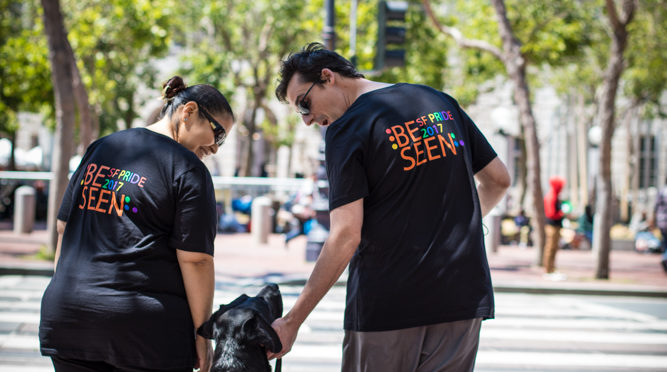
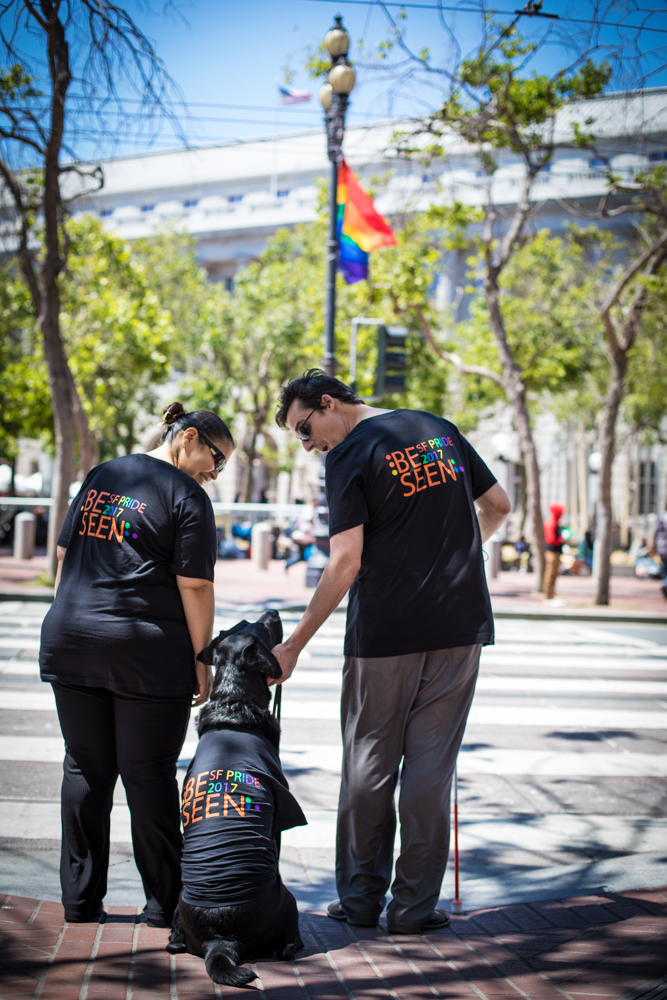
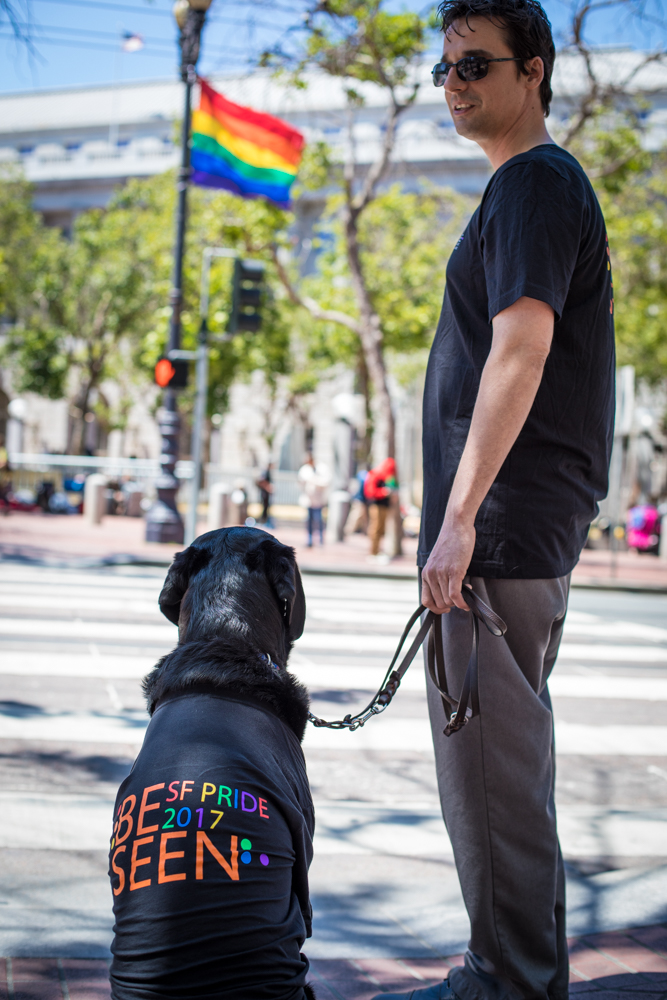
Two people cross the street wearing LightHouse’s ‘Be Seen’ Pride Tshirts. The black shirts say ‘be seen’ in orange uppercase letters and ‘SF Pride 2017’, with a braille ‘L’ and ‘H’ in rainbow.A man and his guide dog show off their LightHouse Pride t-shirts across from the UN Plaza, with a rainbow flag billowing in the background.
We introduced the #BeSeenSF hashtag exactly one year ago when preparing for our big grand opening at 1155 Market Street. On June 10th, 2016 more than a thousand people took over the streets of downtown San Francisco and marched into our new building – people with all levels of vision, from all walks of life. It was a spectacle in the best way possible: a display of joy and unity around a state of being that most people identify as a disability.
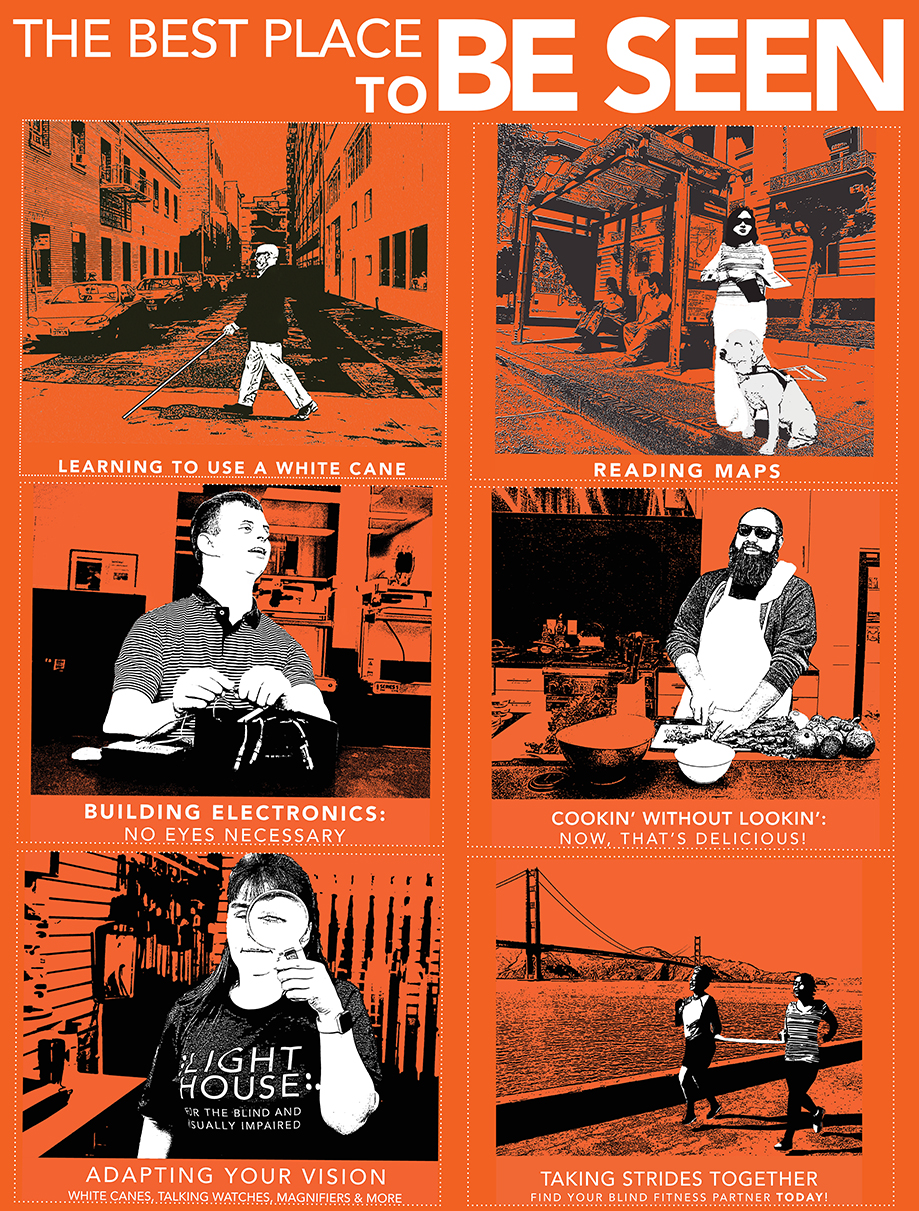
We didn’t stop there. Over the course of the year, we released several bold statements about what it means to be seen. Standing six feet tall and spread throughout the Civic Center BART station, each ad is a vivid, illuminated burnt orange with artistic rendering of a blind person going about their business – cooking, exercising, or moving through the streets with a cane or a dog. These tasks may seem mundane, but by putting the blind individual front and center, occupying the focus of the scene and popping boldly out of the brightly colored ad, we send a clear message to the public of San Francisco: blindness is just another way of being – and worth looking at in a different light.
Below, you can peruse all of the artwork for our ads, which were designed by J. Renae Davidson for LightHouse from July 2016 to March 2017. Pictured in them are some of the treasured staff, mentors and role models who you’ll regularly see strolling Market Street on any given day.
Bart Ad Compilation Image. Descriptions below.
This compilation of all our Bart Ads features an orange background with the words (in white) “The Best Place to Be Seen”. A tile of six black and white stylized drawings are as follows.
Top left: A man crosses the street in downtown San Francisco with his white cane. White words below the image read “Learning to use a White Cane”.
Top right: A woman stands at a bus stop with her guide dog, reading a tactile map. Words below the image say “Reading maps”.
Middle left: A man uses an Arduino continuity tester in the LightHouse Toyota Innovation STEM lab on the 11th floor. Text reads “Building Electronics: No Eyes Necessary”.
Middle right: A man chops juicy vegetables in the LightHouse Teaching Kitchen. Text reads “Cookin’ Without Lookin’: Now, That’s Delicious!”
Bottom left: A woman in the LightHouse Adaptations Store holds a magnifying glass up to her eye. Text reads, “Adapting Your Vision. White canes, talking watches, magnifiers & more”.
Bottom right: A woman runs alongside her fitness partner using a lead. The Golden Gate Bridge stands out behind them. Text reads, “Taking Strides Together. Find Your Fitness Partner Today!”
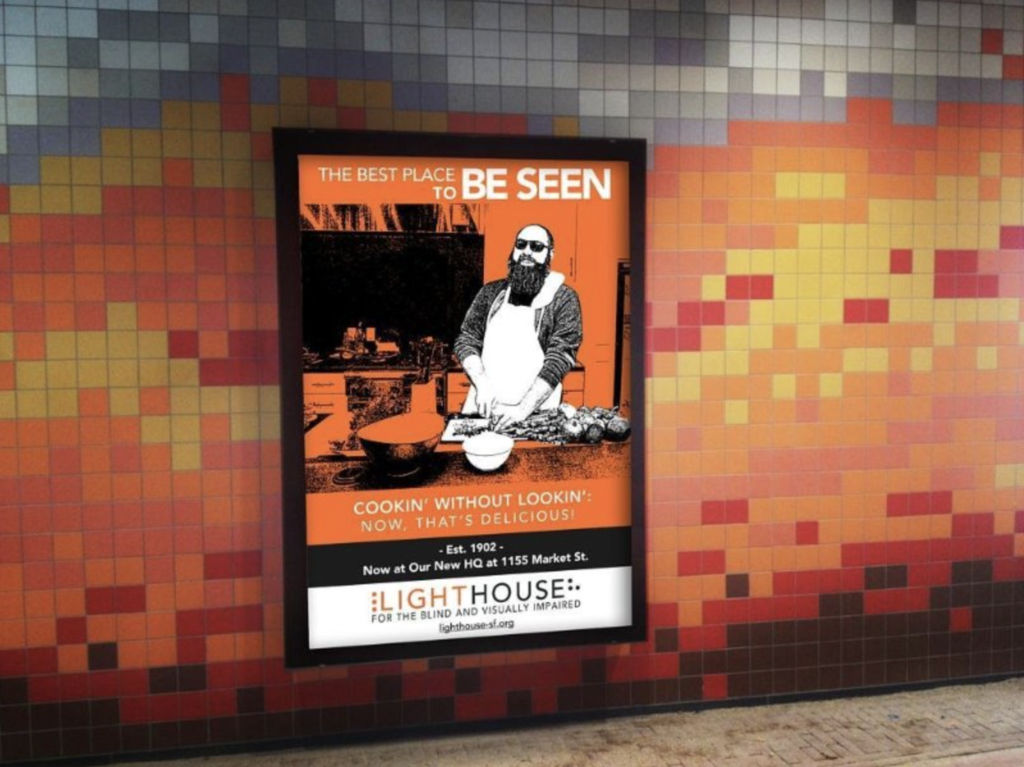
A mockup of our cooking bart ad hangs in an underground station with orange, yellow, red, and grey tile in the background.
Last year, SF PRIDE had its first ever blind grand marshal, Belo Cipriani, a welcome reminder that not only are our journeys often parallel, but our identities have significant overlap. This year, Sexual Health Services Program Coordinator Laura Millar is taking our PRIDE participation to the next level, and she wants you to join her. For more information, RSVP on Eventbrite or email Laura at lmillar@old.lighthouse-sf.org.
Ruth Hartman has distinct memories of her ‘Grandma Pearl’ using a Perkins brailler. She can picture her hands passing over the pages of braille she transcribed for Dr. Abraham Nemeth, who developed the Nemeth Braille Code for Mathematics in the 1960s. Pearl Hartman, who was sighted, was Nemeth’s personal braille transcriber. She never would have guessed at that time that her granddaughter Ruth would go blind, many years later.
“When I sat down and tried to type a few words on the brailler, or felt braille for the first time, it brought back wonderful memories and connections to my grandmother,” she says, nostalgia coloring her voice. “I’ve always loved words. I like math. There was something about solving the puzzle of braille that I found really enthralling. I’m a busy person but I’ve carved out hundreds of hours to learn braille in the last year.”
And it’s true—Ruth is a busy person. She runs her own marketing and communications business, called Wordcraft. She’s a leader at her synagogue, teaches peer counseling, and dedicates her time to vegetarian cooking and bread baking. She’s an avid reader, follows politics and baseball, and raised two daughters who are now in their 20s. She’s done all of this as her vision declined due to a progressive condition over the last 30 years. But two years ago, she felt like she needed to make a change.
“I was feeling more the loss and grief and fear and the feelings of panic were getting more difficult to manage as my central vision was deteriorating more,” she says. “I needed to make some kind of mental breakthrough—but I didn’t know what it was.”
And in fall of 2015, Ruth heard an interview on KQED that piqued her interest. It was LightHouse Executive Director Bryan Bashin speaking about the Donald Sirkin bequest, his philosophies on blindness and his plans for the future of LightHouse.
His bold perspective on blindness lit a fire under Ruth, and without hesitating she signed up for the Immersion Retreat at Enchanted Hills Camp in February 2016. She found the immersion excruciatingly difficult, but she stuck it out. And after a week navigating on her own and hearing stories from other students, she had the change of heart she was searching for.
“The breakthrough was a shift from ‘I’m a sighted person who is slowly and inexorably and tragically losing my eyesight’, to ‘I’m a blind person, just like all these other blind people here, who is living a pretty good life as a blind person’,” she says. “That might sound obvious or not like a big deal, but for me it was very profound. It made me feel like blind people are my people. That was a big thing — and I still think about each of the people there and what their stories were.”
“We were all in it together and there were all these resources that were being offered. I start thinking, ‘What do I need to shift to live my life really understanding that I’m a blind person and there are resources available and I can find my way from A to B, even if I don’t have someone there by my elbow’. So that was kind of the mindset that led me from one LightHouse service to the next.”
CVCL led her on a long path with LightHouse, from orientation and mobility classes with Katt Jones, counseling with Rachel Longan, braille instruction with Divina Carlson, and access tech instruction with Shen Kuan. Ruth also enthusiastically marched in the 1155 Market Street Grand Opening parade in June 2015, bringing her full-circle from her initial introduction to the organization.
“There’s no feeling of tragedy in the air at LightHouse,” she says. “A lot of sighted people say things to a blind person, like oh I can’t imagine. And there’s nobody at LightHouse who can’t imagine. Everyone understands.”
LightHouse helped show her a path forward, but it was Ruth who stayed highly motivated and kept coming back for more. Along with seeking braille instruction at LightHouse, Ruth took three classes at Hadley School for the Blind and practiced consistently on her own. She’s also starting to make the transition from magnification to using a screen reader, which will allow her to extend her work life for several years.
Now, she’s in the midst of reading her very first braille book: Carol by Patricia Highsmith.
“There’s something about holding a book in your hands, something about hearing the words in your head instead of in your ears,” she says. “I don’t have a lot of speed at braille, but I think I will enjoy braille for the rest of my life.”
To sign up for a Changing Vision Changing Life retreat, contact Debbie Bacon, Rehabilitation Counselor at dbacon@old.lighthouse-sf.org or 415-694-7357. The next CVCL sessions take place June 12 through 16 at Enchanted Hills Camp in Napa and July 17 through 21 at LightHouse Headquarters in downtown San Francisco.
To sign up for Braille Instruction, contact Braille Instructor Divina Carlson at dcarlson@old.lighthouse-sf.org or 415-694-7367.
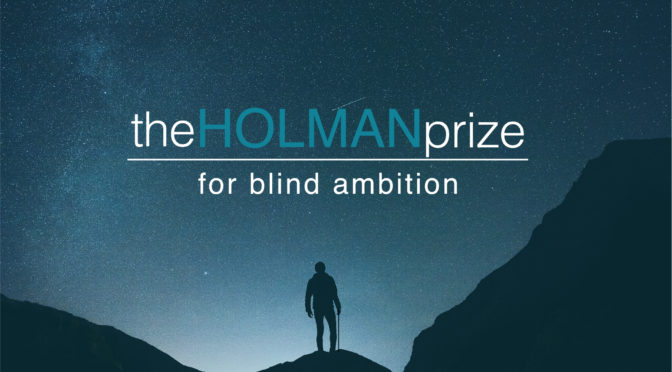
In January, the LightHouse for the Blind in San Francisco announced The Holman Prize for Blind Ambition, a set of annual awards of up to $25,000 each for legally blind individuals with big plans. In six months, we received over 200 video applications, chose 51 semifinalists, and selected a committee of accomplished blind people to choose our inaugural prizewinners.
Our Holman videos were submitted from 27 countries and were viewed more than 75,000 times on YouTube. This week, we’re proud to announce our elite group of ten finalists, plus a “Peoples’ Choice” finalist who we honor for receiving the highest number of YouTube ‘likes’ for his ambitious idea. These finalists will all be in the running to make their ambitions a reality when our Holman Committee meets in San Francisco this June.
The ten finalists we selected (plus one selected by the internet) are as diverse and dynamic a group as you could imagine, including those who want to give back to their communities, those who seek to push the boundaries of science and tech, to those with infectious enthusiasm for a particular craft.
Over the next month, we hope you’ll sound off on which Holman Prize candidate you want to see take their ambitions on the road. Feel free to tag Holman Prize on Twitter, Instagram and head to the LightHouse’s Facebook page for more updates.
Meet the Finalists
Ahmet Ustunel, who lives in San Francisco, plans to take a solo kayak journey across the Bosphorus Strait from Europe to Asia. To prepare, he proposes to develop his non-visual kayak guidance system over the course of several months, including several voyages around San Francisco Bay, practicing a total of 500 miles over the course of the year before embarking for Turkey.
Caroline Kamaluga lives in Zomba, a city in the Southern Region of Malawi, where women and especially blind women are lucky if they receive sufficient education. One of these fortunate few, Kamaluga proposes to give back to her community by developing a mentorship for blind girls throughout the country. Currently an elementary school student teacher, she hopes to foster a new sense of strength amongst the girls of Malawi.
Jamie Principato is a physics student from Colorado who wants to show the world that rocket science is within reach for blind and low vision students who have a motivation to thrive in the sciences. Jamie is developing a series of workshops called Project BLAST, which will use adaptive technology to allow blind students to send high altitude balloons to the outer limits of the stratosphere.
Muttasim Fadl, who lives in Baltimore and trains blind and low vision students here in America, wants to return to his home country of Sudan and give back. Over two months of travel through the country, Muttasim would like to deliver both valuable tools, such as white canes, as well as lectures, in order to enable blind students to succeed in their pursuits.
Ojok Simon, who lives in rural Uganda, wants to create jobs where they are not available. A beekeeper by trade, Ojok wants to train blind and visually impaired people in his community to build and maintain their own bee farms to inspire a future generation of apiary entrepreneurs.
Peggy Chong calls herself “The Blind History Lady.” Based in New Mexico, Chong has a passion for uncovering stories about great blind individuals, much like James Holman, whose stories might go otherwise without note into the annals of history. Chong proposes to travel throughout America, visiting archives and collecting information about these individuals who might have at one time been Holman Prize contenders themselves.
Penny Melville-Brown, from the UK, has a baking show unlike any other. She proposes a whirlwind itinerary across the world in which she visits culinary experts both blind and sighted, cooking together, talking about food and documenting it all on video. Brown would like to make “Blind Baking” a household name.
Rachel Magario, who was born in Brazil and now lives in Colorado, has a passion for exploration, and with a travel show all her own, she hopes to document how blind people experience the world in a format that is fascinating for any audience. Like a blind Anthony Bourdain, Magario proposes to trip around North America this year, landing herself in some unlikely spots and crafting a fun, relatable narrative about how blind people explore.
Saghatel Basil has ambitions of peace in the Middle East. After growing up in Croatia, Syria and Yemen, and now residing in Sweden, Saghatel wants to embark on a path of peacekeeping trainings around Europe that will allow him to give back to those uprooted by various conflicts in the Middle East.
Tony Llanes believes that blind folks can have a crucial role in maintaining the infrastructure and safety of his home, the Philippines. An amateur radio operator, Tony proposes to train a cadre of blind individuals to build a radio network that will serve as a lifeline in times of natural disaster. Prone to extreme weather, earthquakes and other fast-acting crises, Tony’s project would turn blind radio operators into valuable agents of disaster relief.
Peoples’ Choice Finalist: Felipe Rigoni Lopes has big ambitions to become the first blind president of Brazil. Though Felipe’s educational journey has been largely funded through scholarships, he applied to the Holman Prize to raise awareness and help propel other blind individuals who find themselves drawn to participate in politics.
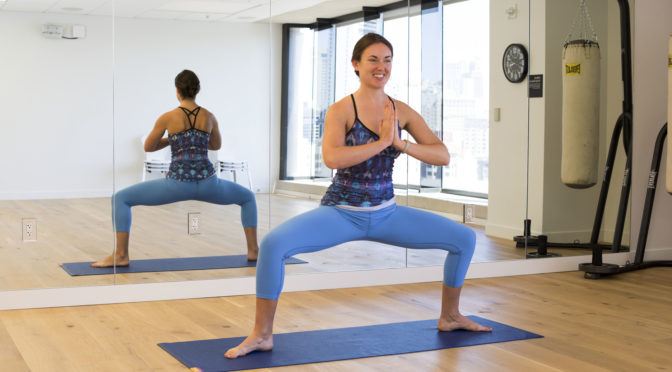
We know you’re trying to get your steps in as part of the National Fitness Challenge, but don’t underestimate the value of strength and balance training to help you reach your cardio goals. Yoga may help you increase your tone and improve balance and mobility to provide you with some extra oomph in your physical and everyday life.
Come stretch with our summer instructor Meagan Lynch! No knowledge of yoga is necessary – Meagan will work with you no matter what level of experience you have. Class times are below and you must register prior to attending, or complete registration upon your first day of participation.
Who: Students ages 14 and up and their blind or sighted friends.
Where: Fitness Studio at LightHouse Headquarters, 1155 Market St., 10th Floor, San Francisco
When: Mondays at 5:30 p.m., Wednesdays at 2:00 p.m. Classes last 75 minutes. (Please note that beginning in Monday, June 5, classes will be Mondays and Wednesdays from 5:30 to 6:45 PM, both days.) Classes close 10 minutes after the start time.
Class fee: $10 per class. Yoga mats, blocks and belts will be provided. This class is open to the public, blind or sighted, so bring a friend!
For inquiries or to RSVP, contact Evening & Weekend Program Coordinator Serena Olsen at solsen@old.lighthouse-sf.org or 415-694-7316.
Note: Yoga may require intense physical exertion. While it can be modified to meet your needs, we suggest that if you have any concerns prior to participating, please consult your doctor.
We are pleased to announce our inaugural panel of Holman Prize judges, who will come together in June to choose three winners from all of our ambitious and adventurous candidates. Encompassing a wide range of expertise, including astrophysics, accessible tech, national politics, education and so much more, our international committee members — virtually all of whom are blind — embody the spirit of both James Holman, our finalists and the LightHouse for the Blind’s overarching mission. We can’t wait to welcome these individuals, some of whom are joining us from as far away as Denmark and India, to the table to select our winners in just a few weeks.
Building off the great work our tech trainers have been doing for years, we’re excited this month to announce the creation of a dedicated Access Technology Department at LightHouse, under the direction of our new team member, Erin Lauridsen.
“The launch of this department is a recognition of how central technology is to our lives as blind people,” says Lauridsen. “It really does affect every aspect of our lives—from cooking to voting to dating to moving around the streets. If technology comes into every part of that, we have to train blind people to really be savvy tech users and be able adapt to constant changes.”
Lauridsen feels the digital age is leveling the playing field for people who are blind or have low vision. With screen readers like VoiceOver, new and improved document scanners and apps that provide new services entirely, she thinks we have moved far beyond barriers posed by the inaccessible books and paper printouts of yesteryear.
Lauridsen grew up in rural Oregon, on the cusp of the technological boom. She remembers the leap she took in 7th grade, when she went from having a Perkins brailler and a paid staffer who transcribed all of her work to getting a Citizen Notebook Printer and a Braille ‘n Speak – and nothing was the same.
“For the first time I could turn in my own homework,” she says. “I had to learn all that technology mostly on my own because there weren’t other blind people around me. There weren’t teachers who knew it because a lot of it was very new. I got a computer with a screen reader and the internet in the late ‘90s. That was my first connection in a significant way to other blind people.”
So while technology provides a practical set of tools for everyday living, it can also be a starting point for widening personal horizons and reaching out and learning from a community of blind people all over the world. At its heart, Lauridsen feels, it’s about agency.
“If you give people access to technology they can access information, make their own choices and live their lives in better ways,” says Lauridsen.
But for the AT Department, it’s not just about the end user. The department also plays a key role in Silicon Valley as an accessibility gatekeeper — by bringing in major tech companies like Google, Uber, Lyft, AirBnB, Pinterest and Facebook for user testing and meetups, as well as working in-house with accessibility apps like Actiview and Be My Eyes through our budding startup accelerator programs.
As the head of the Access Tech department, Lauridsen will represent LightHouse in guiding the accessibility features for mainstream platforms and more specialized devices or “assistive technology,” as well as teaching our students how to use all of the above.
You can now schedule free weekday or weekend AT Training on Tuesdays from 9 a.m. to 7 p.m. or Saturdays between 10 a.m. and 4 p.m. The beauty of these trainings it that they’re one-on-one, so if the tech talk intimidates you, you can start slow. We have staff that can meet you where you’re at — maybe ease in with typing and go as far as learning how to building your own website with a screen reader. To sign up, contact Access Technology Coordinator Shen Kuan at skuan@old.lighthouse-sf.org or (415) 694-7312.
We are assembling a list of people interested in being part of UX testing. These opportunities respect testers’ time and knowledge with compensation. Opportunities vary on skill level, technology preference and personal interest.
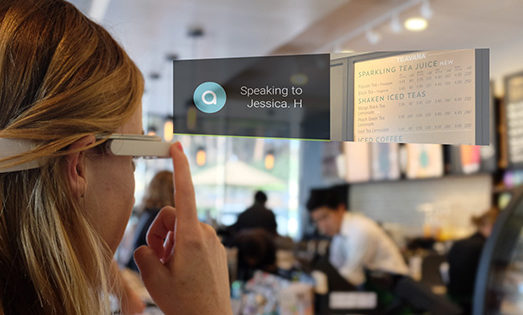
Last week, LightHouse Staff spent the day with Aira, one of the leading startups to emerge in the remote sighted assistant space. Equipped with a wearable camera or mobile app, blind users can use Aira’s platform to receive on-demand sight assistance from trained professionals – privately and discreetly. The “agent,” who uses Aira’s dashboard software to keep notes on your preferences, track your surroundings through GPS and zoom in on far-away visuals. The result is a highly proficient “expert” who can efficiently identify, explain and Google anything your heart desires, opening up the blind user to a more accessible, frictionless environment.
Aira’s agents are the backbone of their operation, and it’s safe to say these paid professionals have some of the coolest jobs you could imagine. Aira has put out an announcement that they are hiring agents in the San Francisco Bay Area, to work from home or from the co-working spaces available at LightHouse.
At Aira, we are giving increased freedom and independence to individuals who are blind or visually impaired. But we need your help as the star of our service!
As an Aira Agent you simply log onto our dashboard from your computer at home and begin answering video calls from our customers who reside across the United States – you will help them to shop, read their mail or computer screen, cook meals or even describe individuals in social settings – the scenarios are varied and unique. You will join a small but growing team of Aira Agents who, along with training, will help you hone your skills and share your calls.
Through a live video stream, you are able to see what they would be seeing, and provide the information they need to make decisions or explore their world.
Hours are flexible. We offer a range of hours per day between the times of 4 a.m PST to 10pm PST.