Category Archive

LightHouse News

Sheri Albers Invites You to Our Virtual Living Room, October 28

Sheri Albers Invites You to Our Virtual Living Room, October 28

Outreach Coordinator Sheri Albers knew that students weren’t getting the same opportunity to talk with staff about LightHouse programs as they did before shelter in place. So, she’s come up with a new monthly program where she invites the LightHouse community to join her on Zoom to talk about the classes and services we have to offer. “Meet You at the House” will run the last Wednesday of each month.

“The whole idea is to go beyond the information people get in a phone call.  Staff from different departments will come in talk in detail about their programs. People will have a chance to ask questions and have a conversation with LightHouse staff,” says Sheri.

For October, Sheri will be joined by Adult Program Manager Serena Olsen who will be highlighting recreation programs for adults who are blind or have low vision from bingo, to virtual museum tours, to 30% & Growing, our casual meetup to talk all things blind employment.

In addition, each month someone from our store, Adaptations, will be on hand to highlight interesting products we’re selling.

Pull up a comfy chair and join Sheri by Zoom or telephone on October 28 from 2:00 p.m. to 3:00 p.m. RSVP to salbers@old.lighthouse-sf.org or 415-694-7331.

Want to find out why Sheri is passionate about the LightHouse’s work. Read the staff profile she wrote earlier this year.

Remote Learning Helps Braille Instructor Divina Carlson Reach More Students than Ever

Remote Learning Helps Braille Instructor Divina Carlson Reach More Students than Ever

In a world that has grown more and more digital, things like braille and tactile literacy may seem less and less prevalent, but for Divina Carlson, LightHouse braille Instructor, it’s just the opposite.

LightHouse has had the pleasure of calling Divina a “member of the family” for 27 years. After immigrating from The Philippines in 1989, Divina obtained her AA at the Community College of San Francisco, and a bachelor’s degree in sociology from San Francisco State University. She had her first ever formal blindness skills training from LightHouse after arriving in the United States. She became the LightHouse braille instructor in 1993.

Before LightHouse had to temporarily shut down in- person services in March, Divina was seeing about ten students regularly, working roughly 140 hours per quarter, teaching them to read and write braille and conducting student assessments. Since the COVID-19 pandemic has turned all LightHouse programs virtual, however, Divina has seen a significant influx of students and braille services. In the past six months she has taken on more than twice as many students and has nearly doubled her instruction time. While there has a been bit of adjustment in her teaching approaches, braille student participation has never looked better.

“Even before COVID, I actually started teaching braille remotely to some of my students who cannot come to LightHouse due to various reasons,” She said. “[Students] just have to have the braille materials needed and a hands-free speakerphone at home. When the quarantine happened, I already had ideas about how I would work with my students.”

Divina acknowledges there are challenges.

“Producing the assessment tools can take time, as I cannot mail the students the assessment and braille readiness materials, I normally use at the LightHouse office. Once the preparations for these materials are in place, however, I am able to work with some of these new students.”

Over the years, Divina has created some of these braille learning tools herself. Flashcards, Unified English Braille (UEB) study books, and basic reading materials are produced in-house by the Media and Accessible Design Laboratory (MAD Lab). Divina has been coordinating the production of these resources with the essential workers of the MAD Lab staff. Once materials are embossed and collated, they are mailed to Divina who then distributes them to her students.

Remote teaching also has its advantages.

“I think that new students who want to learn braille now have the time to do it during the quarantine. The cancellation rate is lower since factors of transportation and commuting to the LightHouse office for their braille training is no longer an issue. Thus, I am able to teach braille to students who otherwise will not come in person to LightHouse for braille training.”

The expansion of LightHouse’s braille instruction services is a terrific sign for tactile readers. Despite the increasing availability of screen readers and other access technology that eliminates having to read tactilely, braille readers are on the rise. The shelter-in-place orders have given people everywhere the extra time to focus on learning and practicing new things, with braille being no exception.

As it stands today, fewer than 10% of the blind population in the U.S. are braille readers, according to research conducted by the National Federation of the Blind. So, what is in store for the future of braille and services like those provided by Divina?

“I would like to say that braille literacy has improved during the past few years. braille becomes more relevant nowadays with the advancement of technology. braille readers include people who are DeafBlind, ESL students, blind computer programmers, and more who can communicate, read, and access computers and smartphones by using their refreshable braille displays. Furthermore, most airline companies, restaurants, commercial buildings, schools, hotels, etc., have braille signage and braille handouts available. These are just some of the things, besides accessing braille labels, games and calendars at home that blind people can do independently as braille readers. With this in mind, students are encouraged to learn braille knowing that these are ways to support their braille literacy.”

Divina gives one final thought on why audio is not a replacement for braille.
“Listening to words is not the same as reading words. As one of my students said, ‘Learning braille, I can read again through my fingertips.’”

Interested in learning braille or want a refresher? Contact Debbie Bacon at DBacon@old.lighthouse-sf.org or 415-694-7357.

You can buy braille products like our UEB braille contraction bookletbraille mapsbraille measuring cups and much more at our store at adaptations.org or by calling 888-400-8933.

Meet Charles Umo: Our first staff blind scientist

Meet Charles Umo: Our first staff blind scientist

By Lee Kumutat

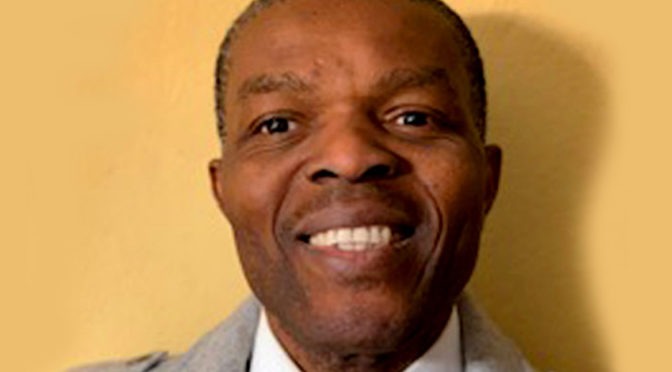
Dr. Charles Umo starts his day at 3 a.m. in order to be at LightHouse Industries (LHI) to begin his shift at 6:30. This is a new commute for him as he has only very recently joined the LHI team.

Charles’ path to the LightHouse began with yogurt, yes you read that correctly, yogurt. As a teenager, he became fascinated with the stuff, when he learned it was made from tiny living things we all know to be bacteria. Wanting to learn more about all the forms of microscopic life within and without viruses, bacteria, fungi–he enrolled in a Bachelors’s degree program in Microbiology at Uyo University in his native Nigeria. Clearly, his appetite to learn about bacteria and its role in our food had not been sated, as he went on to complete a Masters in Applied Biology specializing in food, and that still not being enough, studied for his Ph.D. again in microbiology, but this time focusing on its application in public health.

Clinical research in these areas became his passion and sent him working for universities, colleges, clinical research organizations and pharmaceutical companies in South Africa, West Africa, Asia and in the United States. About seven years ago, just after Charles had received a promotion in his job at a clinical research company, his vision started to change and after months of operations and time off work, his level of vision made it impossible for him to continue in that role. He was asked to leave his post due to the amount of time off he had needed, but he feels that it was more than his employer couldn’t conceive how a person with low vision could handle a new role in the company.

Charles’s first connection with the LightHouse was not as an employee, but a student. He signed up to learn how to use technology, to get around using a white cane, to learn to cook his famous spicy oxtail soup again and the tools he would need to become job-ready and confident about being re-employed.

Hiring Dr. Umo is one of the important steps towards expanding LightHouse Industries. Currently, LightHouse Industries staff, many who are blind or have low vision, are working at top speed bottling a full line of environmentally friendly cleaning products and a disinfectant on the Environmental Protection Authority’s list. This operation has grown exponentially since the beginning of the COVID-19 pandemic because of its efficacy against the coronavirus. LHI employees have been essential workers in the supply of government agencies, janitorial companies and prison facilities. Charles has been working with the team to make their work practices even more accessible. His goal is to make employees as independent as possible, even if this includes changing how materials are supplied to the organization.

“For people making boxes,” he says, “If the supplier carves out a little niche on a flat-packed pile of boxes a worker has to assemble, then they don’t need sighted assistance to put the boxes together.”

Implementing methods such as this is just the beginning of the work Dr. Umo will be doing. Next year LHI will be changing locations and to the factory will be added a purpose-built, fully-functioning, state-of-the-art laboratory. This laboratory will begin mixing and blending the products that the factory will then be bottling and shipping. It will eventually be staffed by blind scientists and technicians.

It will also become a training ground for scientists, technologists, engineers and mathematicians who all just happen to be blind or have low vision.

Dr. Umo admits to being slightly overwhelmed and humbled when he thinks about the job ahead.

“We will be making products that must comply with regulations, have integrity and go through rigorous quality control procedures. And it will be my job to work with the team to devise the methods and practices to maintain the standards but also maintain the accessibility of the work.” It is a challenge he is taking on with his characteristic creativity and ingenuity.

Learn more about LightHouse Industries on our Sirkin Center page.

LightHouse Staffer Nai tells how a gift and passion for languages led them to become an interpreter for people who are DeafBlind

LightHouse Staffer Nai tells how a gift and passion for languages led them to become an interpreter for people who are DeafBlind

I was born three months premature in Soviet Russia. I was adopted at age three to a multilingual and musical family in Washington, DC. This environment allowed me to develop a strong ear; I began playing music at age six and had eight languages under my belt by age 18. I spent my weekends and summers interpreting Spanish/Russian for an adoption agency and translating data from Persian for an Iranian Human Rights Foundation. I also played in several jazz bands and composed my own music.

My exceptional hearing served as both the vehicle for my passions and an excellent mask: my ocular conditions were only discovered when I switched schools and failed a required vision screening at age 12. I had been legally blind the whole time. While surgery and other treatments restored my ocular acuity, my brain was another story. I struggled to interpret the cacophony of incoming visual data — a condition that is now known as Cerebral Visual Impairment (CVI). Throughout middle and high school, I straddled an undefined in-between. I was no longer considered legally blind within the parameters of a purely ocular-based definition — rendering me ineligible for formal accommodations — yet, was also unable to keep up visually, even with four vision therapy sessions per week. Additionally, I sustained further brain injuries from pseudo-medical torture and extreme abuse. I miraculously survived many brushes with death but was left with a much more severe CVI.

It became clear that learning non-visual techniques was a must. The silver lining in these harrowing circumstances was that I was finally eligible for services. I immediately signed up with Vocational Rehab, in the state I lived in at the time. The service providers were overwhelmed and stumped by the complexity of my additional disabilities. I was told, “just stay home”, then left to fall through the cracks. I took matters into my own hands and taught myself Braille by ordering books through the National Library Service. Soon thereafter, I met a completely DeafBlind man who not only taught me practical blindness skills, but also introduced me to Tactile American Sign Language and a whole network of DeafBlind people. I became immersed in the DeafBlind community and fell in love with the vibrant culture.

The combination of my ASL immersion and fervor for interpreting brought my future goal into clear focus: I wanted to become an ASL interpreter and work with the DeafBlind community. I applied to Gallaudet University, a school for Deaf and Hard-of-Hearing students that offers all instruction in ASL and admits 5% hearing undergraduate students. I was nervous I might not be accepted, as the first Blind student to apply to the Interpreting program. It turns out my admissions evaluator had paved a similar path himself, as one of the first Deaf interpreters who had also chosen to specialize in DeafBlind interpreting. I attended classes through the use of Deaf tactile interpreters and learned a great deal from them about the ins and outs of interpreting.

During my interpreting internship, I met Brandon Cox, currently the LightHouse Senior Director of Operations. Brandon wholeheartedly believed in my potential when few others did. He not only ensured that I would have ample opportunities to interpret, but also exposed me to an ongoing stream of various assistive technologies and equipment. I was allowed to bring home any device and play around with it until I felt confident using it. He then offered me a job as an assistive technology instructor. As part of that job, I was invited to a training in San Francisco, and I immediately resonated with the Bay Area.

I was very drawn to the LightHouse because of the excellent feedback I heard from many DeafBlind and Blind friends, including former LightHouse clients and former Holman Prizewinner, Conchita Hernandez. Additionally, I was very impressed that the LightHouse’s CEO, Bryan Bashin, is Blind, and that over 50% of the staff, including in leadership, are Blind or Low Vision. While I believe that both Blind and sighted individuals can be excellent blindness professionals, I also believe that structurally, organizations serving Blind people should have a majority of Blind staff at all levels. Based on my experiences, I’ve come to learn a Blind CEO in particular is necessary to extricate every last bit of ableism from the way services are modeled and implemented. In this vein, I was also excited to know the DeafBlind services program is managed by a Deaf O&M specialist, Sook Hee Choi.

I am honored to have joined such a talented team of DeafBlindness professionals, particularly during such unprecedented times. We’ve had to devise many creative strategies for continuing to support clients who depend on physical contact for communication remotely. I’ve been providing training via phone to Hard-of-Hearing Blind clients, and via videophone to Low Vision Deaf clients, thanks to [LightHouse Staffer] Alyah Thomas’ excellent interpreting skills combined with her knowledge of assistive technology and Braille. I sign to the client as usual and Alyah voices in English what the client signs back to me on-screen. This setup offers a much smoother training experience for the client than having to call through video relay interpreters who are not familiar with the technical concepts and vocabulary needed for training. For totally DeafBlind clients, we have been providing real-time technical support through email and texting.

With social distancing in place, many DeafBlind people are completely without in-person tactile communication. Technology for long-distance communication is therefore even more essential than usual; it is crucial that we preserve this one lifeline. We have been ensuring that all clients have the most up-to-date hardware possible, and that all software is functioning at maximum capacity, particularly during such dire times. I look forward to the day we can return to in-person services, particularly for those whose native language is Tactile American Sign Language. I also look forward to expanding all DeafBlind services at the LightHouse in the long term.

With that in mind, if you or someone you know is interested in receiving DeafBlind services from the LightHouse, please visit our DeafBlind Programs page or contact Sook Hee Choi at SChoi@old.lighthouse-sf.org to learn more.

Reflections from the 2020 YES Academy

Reflections from the 2020 YES Academy

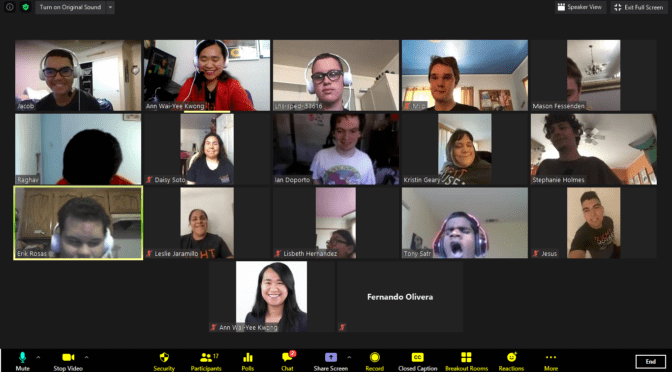
Despite the many changes to LightHouse programs as a result of the COVID-19 pandemic, our Youth Programs team rose to the challenge of adapting the Summer Youth Employment Series (YES) Academy to go ahead online. This summer, our YES students participated in a five-week virtual academy filled with engaging, interactive activities to help them gain employment and independent living skills. S]tudents also learned how to investigate their career interests along the way.

Read the first four parts of the series below.

Want to find out more about LightHouse’s youth programs for the fall? Email youth@old.lighthouse-sf.org.

Jump to Week One
Jump to Week Two
Jump to Week Three
Jump to Week Four
Jump to Week Five

Week One: New Discoveries

Fernando Olivera, age 18
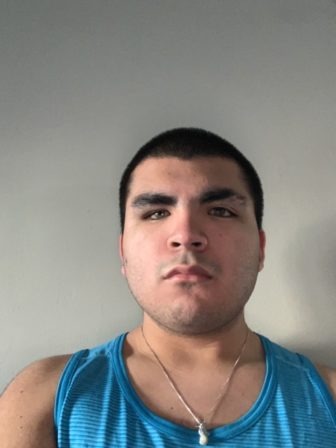
Fernando Olivera

Mondays are our mentor spotlights, where a guest or two comes on and discusses their hardships and challenges they faced while pursuing their career or growing up as a blind/low vision individual. They also discuss how they overcame those hardships and what they learned from those experiences. I find the mentor spotlight empowering and intriguing, since it makes me reflect on my personal life and what adjustments I could make in my life, if any.

On Wednesdays, we dedicate that day to learning independent living skills (ILS), and Orientation & Mobility (O&M). This is the time where we can learn about many aspects of living independently and learning different O&M tools, such as learning how to use and read tactile maps, GPS, navigation apps, etc. I also enjoy this aspect of the YES academy because in ILS, I don’t feel like I’m just limited to cleaning, washing dishes, doing laundry, etc. The prospect of being able to cook on a stove or in an oven, truly excites me and makes me wonder about all the possibilities that can be accomplished. As for O&M, I find it informative. Yes, it’s not like get full O&M in person. However, it does open other doors to explore other tools. As I previously mentioned, learning how to read and understand a tactile map was very fun to learn. Honestly, I never sought a reason to ever use a tactile map, but they can come in really handy, especially if you’re going to college and the campus is too big. I learned a lot of maps and what certain things indicate.

On Friday, it’s our social hour, where we relax and get to know one another. We discuss general topics or whatever folks throw out there. It’s just a very different atmosphere compared to our busy Monday and Wednesday meetings. It’s also a great way for us to get acquainted with the other YES academy students and mentors.

All in all, the YES summer academy has been a great and memorable experience. Thus far, it has really made me reflect on certain aspects of life that I never took into consideration. I’m really looking forward to the rest of the academy and what it has to offer.

Mason Fessenden, age 19

This first week of the program was a blast for me! I really enjoyed getting to know my peers and being able to collaborate with each other. During these past sessions, I really liked hearing the panelists in discussing how they navigate life as a blind/visually impaired person and their career goals. During O&M, I learned how to read a tactile map, which I am slowly getting the hang of, but I can happily enjoy it a lot more than I did when I started. I hope to hear more panelists, continuing my engagement within the program, and grow and develop more skills that I didn’t think I could do, (like map reading), and prove to myself that I can do those things. I would also like to be less anxious during these weeks as I tend to be.

Leslie Jaramillo, age 18

Leslie Jaramillo

This is my first time doing the YES Summer Academy. In fact, this is the first time I’ve ever done a summer program virtually through Zoom. I’ve really enjoyed the first week of the academy so far. Monday July 6 was the first day of the academy and I had so much fun. We began at 10 with an overview on how the academy was going to look for the remainder of the program. After the overview, we had a mentor spotlight which I also really enjoyed. On Wednesday, we were divided into 2 groups. One group did independent living skills and the other did Orientation & Mobility (O&M). For the second session, the groups then switched activities. On Friday, I had an O&M session which was very fun because I learned how to utilize an app called Soundscape by Microsoft. Finally, the entire staff has been very helpful and supportive. I’m looking forward to continuing on with the program.

Week Two: Convention Time

In part two, students discuss attending a virtual blindness convention and learning how other blind youth advocated for themselves.

Mason Fessenden, age 19

During the sessions, I learned a lot about the disability rights movement and advocating for accessibility in the classroom. My favorite part was the meeting on the topic of accessibility when one of the students in high school had mentioned her struggles of getting a test in an accessible format, and how she fought with the College Board to receive an accessible test, and how the board later agreed to help her. I loved the convention.

Like Mason, the student advocating for themselves struck a chord with Fernando as well.

Fernando Olivera, age 18

We attended several sessions given by the National Association of Blind Students (NABS). The part I found most informative was about a blind student who fought the college board to make the SAT accessible to all. If sighted students had access to it, then why couldn’t she? I really liked how she fought back and advocated for herself. Things like that make people realize that blind individuals have voices, too. I’m glad she didn’t just take no for an answer.

Just knowing that there are other blind individuals that have gone through life and been successful at it, is a great feeling.

Week Three: Leveling Up Kitchen Skills and Finding Your GPS Groove

Mason Fessenden, age 19

These weeks of the YES summer Academy have been very informative for me. I learned how to properly measure food in a bowl using the appropriate measuring spoon that I received in my box of LightHouse goodies. That was very enjoyable, because very seldom do I measure food independently and cook on my own. I also enjoyed the GPS Orientation & Mobility presentation, because aside from Microsoft Soundscape, Google and Apple Maps, I didn’t know the other apps existed and would be useful and accessible. Now I have a better understanding of these apps.

I enjoyed (eating) and creating a marshmallow tower with spaghetti noodles as well as making ice cream. One thing I‘ve learned about cooking is to prep ingredients ahead of time and know which ingredients go in the correct order, as well as the measurement sizes of the spoons and cups.

Leslie Jaramillo, age 18

In week three for the YES Summer Academy we had a [blind] mentor spotlight which I really enjoyed, because these spotlights make me reflect on my personal life by making me think about what adjustments I could make, if any.

On Tuesday, I attended the “So You Think You Want a Guide Dog” workshop. I enjoyed attending this workshop, because it gave a lot of information to think about regarding getting a guide dog and what it would be like as a guide dog handler. Honestly, what I figured out when attending this workshop, was that currently I’m not ready to have a guide dog because I won’t be able to give the dog the necessary attention that it needs.

On Wednesday we had sessions in ILS (Independent Living Skills) and O&M (Orientation & Mobility). I really liked the ILS session because we learned how to utilize the measuring cups and spoons by learning how to level things properly. On Friday I had my last O&M session with my instructor Marie. I really enjoyed it because I learned how to use the BlindSquare app.

Fernando Olivera, age 18

Week three was pretty busy. On Monday, we had our normal mentor spotlight. The first person was Tim Elder. He talked about being an attorney for disability rights and what it’s like working in that particular field. He talked a little about his background and where he went to school. As for our second session, we had Shen Kuan. He talked about using tech such as computers and phones and how the software and apps work on both Mac and Windows computers.

On Tuesday, I attended an online guide dog workshop via Zoom. I learned a lot. I thought I knew a good amount, but the workshop provided more details and information that I wasn’t aware of. On Wednesday, we had ILS and our O&M class. In ILS, we learned the different sizes of measuring cups and spoons, which was really helpful for me, since I want to learn how to cook. We also learned how to level out the item that’s in the cup/spoon. For example, we used rice and we practiced filling different cups with uncooked rice and learned how to level it. We could either use a butter knife, finger, or anything else that had a flat surface. Again, I feel like I learned quite a bit for this ILS session. For O&M, we learned how to use GPS and navigational apps. We technically learned 5 apps, but out of the those five, three were the main focus. I found that I liked Microsoft Soundscape the best. I also learned that you can get step by step directions on Apple Maps, which I think is cool because it can come in handy, especially if you’re in a new place.

On Friday, I met with my O&M instructor for our last meeting and we discussed many characteristics of an intersection. That day we also had our social hour, where we talked about what could happen if someone adds too much details in a speech or idea. We used liquids to sort of get an understanding of how too much can ruin a topic. I thought that little experiment was pretty neat and helped some people understand the meaning of too much information.

Week Four: Speeches, Interviews and Ice Cream

Fernando Olivera, age 18

Week four of the YES Summer Academy was pretty interesting. On Monday, we began with a little activity that involved playing cards, dry long thin noodles, and marshmallows. The point of this activity was to see how well a person could communicate with others. It was fun. Then we had our mentor spotlight with Joe [Strechay]. He is a blind producer who works on an Apple TV+ show called “See”. I think I would’ve really benefited if I had talked to him when I was going through a phase where I wanted to be an actor.

Wednesday, we did speeches. I thought two minutes was not enough time. I think three minutes or more would’ve been a little better. I would’ve loved to talk more. Then again, the topic I chose had lots of information. After speeches, we had our last ILS session where we did an ice cream challenge. The ice cream was very easy to make, and the instructions were clear. My ice cream turned out gross, but I think it’s because I shook it too much. Mine had a weird consistency. It’s pretty difficult to explain. The best I can explain is that it was thicker than butter. On Thursday, I had an informational interview. I found it cool how the person I interviewed is working to make construction sites and streets accessible. For example, private cars aren’t allowed on the street. But other forms of transportation are still being allowed like buses and bicycles. So, since bicycles are allowed to get through, they made a bike path. One side of the path is for bikes and the other side is for people to walk on. The path has a line in the middle to let people know what side to be on. A blind or low vision person wouldn’t be able to tell if they’re stepping on the line or not, so instead of the line being painted, the city would add tactile markings.

On Friday, we had our social hour, and had a virtual talent/passion show. Where if we’re passionate about something, we share. Or if we have a talent, we share. I feel like people didn’t want to share what they’re passionate about, but then the conversation switched to people’s biggest pet peeves. That was definitely fun. I feel like people were more comfortable sharing their pet peeves and it really got the conversation flowing and us starting to get to know each other.

Leslie Jaramillo, age 18

On Monday we had another mentor spotlight. I liked this week’s mentor spotlight because a mentor talked about his experiences of being interviewed.

Wednesday, we had our presentations. I had so much fun. Honestly, I usually get nervous when I’m going to present, but when I did my presentation, I wasn’t nervous at all.  Also, we had a cooking competition. I really enjoyed this because we learned how to make ice cream.

On Thursday, I had my informational interview. I really liked doing this because I got to connect with Ethan Meigs who works in the IT department.

On Friday, we had a social hour. It was really fun, because we had a really engaging conversation. Thus far, the YES Summer Academy has really been a memorable experience.

Week Five: Final Thoughts

In the final week, students reflect on their overall experiences and, as a bonus, we hear from a Peer Mentor.

Ian Doporto, age 21
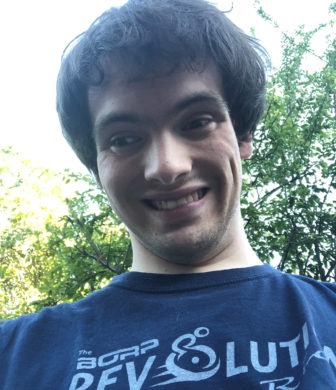
Ian Doporto

Time has moved differently during shelter in place. While initially I felt a surge of uneasiness (which I still am feeling from time to time, minute to minute), I’m happy to say that, I was able to spend my time well as a student of the YES Summer Academy. There’s a bushel of stuff and experiences I have been enjoying but I’m going to focus on only a couple of moments in case any reader gets tired of my slovenly drollery.

I particularly enjoyed team activities (even if I wasn’t completely at my best with all of them). For a long time, I wasn’t too keen on what we were going to be doing with marshmallows, but I knew it was going to be something engaging and that we had to be an active participant. I was able to make a half tower of sorts that didn’t necessarily turn out the way it was supposed to, because I didn’t get all of the directions. I learned that I should’ve communicated better and should’ve spoken up beforehand to say that my peer instructor’s directions were not very clear. I was still more than ecstatic to be part of something interesting.

The future is a winding staircase, a tunnel of opportunities. In order to help myself with accessibility and tools that I’ve needed, I decided it would be a good idea to get an insight on the pros, cons, responsibilities, and adventures in having a canine/companion. I have a few friends that have guide dogs (including one that I’ve known since I was little). I learned the truths and untruths and a few myths about guide dogs that were debunked. The most important thing I took from this lecture is that just because you have a guide dog, that doesn’t mean you shouldn’t still be able to use a cane to move around. To sum up [Rehabilitation Teaching Specialist] Bobbi Pompey’s lecture: in order for your guide dog to be a good fit for you, you need to help the dog as much as the dog helps you, because people and animals are very social, and you should communicate, establishing a connection with them. Establishing boundaries and routines for a guide dog can be fun, but I was glad to be informed of the responsibilities that come with caring for a new friend! I guess until then, when I feel ready for a guide dog in the future, my cat who’s been with me for almost a decade will have to do. She’s not exactly certified, but at the very least she’s got the emotional support down!

Mason Fessenden, age 19

This program has been fun, despite being bittersweet as the YES Summer Academy nears its end. I had a great time doing my mock interview for a job as a Spanish translator. It was an amazing experience and I can’t wait to gain more exposure to this type of job. I also enjoyed the program mentors and staff sharing their personal stories about advocacy as well as accommodations. I will definitely miss this program and will still hopefully work with my mentor on other goals in the near future.

Fernando Olivera, age 18

On Monday, we talked about jobs and interviews. We also had our last mentor spotlight. I really enjoyed Deborah Armstrong’s talk and her very interesting stories about life before the Americans with Disabilities Act. Her stories inspired me. If she managed to do all the things she said when things were barely accessible and when computers were new, it makes me realize that we as young blind adults are so lucky to have the things we have today. Whether it’s a screen reader or BrailleNote [a type of braille display]. It makes life and school/work more manageable. I think she was a great person to end on for the mentor spotlights.
 
On Wednesday, we were split into two groups. My group was first to do a behavioral interview, or a mock interview. I had fun, but I got pretty nervous when actually doing it. Even though, I chose my own questions, I still had nerves. I got great feedback on what I need to improve on. My group was then placed into an advocacy discussion. We talked about advocating in college for accommodations that one would need. I already knew most of the concepts, but I did learn about a few others that I wasn’t aware of. 
 
Friday, the last official day, was different than our typical social hour. We recorded ourselves during the week talking about what we took away in the program. These were our vlogs that were put into a slide show of all the students of the YES Summer Academy. We ended at 7:30 p.m., when I felt like it actually sunk in that it was going to be our last meeting together as a group. I mean, we were in three-hour meetings, three days a week, for five weeks. People ought to have felt something. I sure did!
 
Overall, I really enjoyed the academy. Would I recommend it? Definitely. I would love to go in person and experience the full program “live”. Thank you, mentors and staff, for an awesome five weeks. I’m sure next year’s program, whether it’s virtual or not, is going to be great, just like it was this year!

Peer Mentor Reflections from Daisy Soto
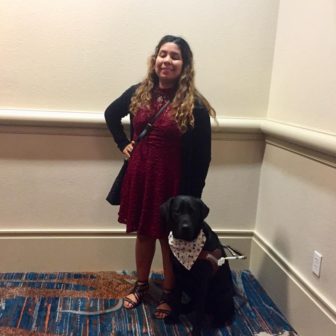
Daisy and her guide dog Miles

I’ve been lucky enough to be part of both this year’s virtual, and past years’ in-person YES Academies, which I believe affected my perception of the overall experience. I came into the Academy excited to work with, teach, and mentor a completely new group of students, but felt apprehensive about how easily those organic connections and mentoring moments would happen via a virtual platform. I found myself wondering both if students would still be able to form those meaningful friendships with one another, and curious as to whether we’d still be able to establish the same levels of comfortability with them as the weeks passed.
 
As part of our curriculum we included both group meetings as well as individual touch-base/lesson time, the latter of which I feel was quite beneficial in helping establish those student connections. It seemed that as the weeks went by and students connected with staff/mentor’s one-on-one, they found it easier to speak out and engage more during our group meetings. It was also wonderful to get that individual time to know students; I found that many of the students I worked with felt more comfortable initially opening up or asking for help during these times. The thing about a virtual YES Academy is that it did have to involve more constant scheduling and structure for every activity, which I didn’t necessarily dislike, but definitely found to be a different experience. Additionally, students establishing new friendships/networking with one another was something I felt inevitably lacked through a virtual platform. I personally prefer a hands-on, in-person way of working with students, but was surprised at how well both students and I adapted to the circumstances. I’m very grateful to have been part of this Academy and feel very proud of our students and all the ways in which they’ve improved, come out of their shells, and remained focused and committed.

To find out more about LightHouse Youth Programs, contact  youth@old.lighthouse-sf.org.

A personal take on Tech Together Online

A personal take on Tech Together Online

We live in a highly technical world, especially lately as many schools, programs, and companies have converted their services to an online platform. For people who are blind or have low vision, some of these new virtual experiences are less accessible, making certain day to day activities more difficult. It can feel overwhelming trying to keep up. Luckily, LightHouse offers an excellent weekly access tech discussion group to help blind and low vision individuals tackle some of these on-going accessibility struggles. Our phenomenal team of Access Tech specialists host Tech Together via Zoom. Tech Together is an interactive, informal conversation that gives participants a chance to ask questions, share their own knowledge or difficulties, and connect with others on a shared common experience—Access Technology.

In pre-COVID times, Tech Together was a monthly meet up at the LightHouse Headquarters in San Francisco. It is sponsored by the city of San Francisco’s program, SF Connected and is open to all technology enthusiasts, although the topics are generally based around accessibility and specifically that of blind and low vision accessibility. Due to the current shelter-in-place circumstances, Tech Together went from a monthly event with a modest following, to a weekly event with an expansive turn out of participants. Now that Tech Together, like so many other LightHouse programs, has gone virtual, people from all over are able to join from wherever they are. Each week about fifty eager “access techies” dial in to learn and share with one another on topics like accessing streaming apps, deliveries and rideshare services, touch screen keyboard and dictation do’s and don’ts, assistive smartphone applications like Be My Eyes, and much more.

I myself have low vision and am admittedly a terrible techie. I’m constantly struggling with tiny text fields on my phone or laptop. I am always clicking the wrong link instead of activating my zoom magnification, and am always, always, sending friends and family indecipherable text messages. I decided to join Tech Together and see what these Tuesday afternoon Zoom sessions were all about. I joined in on the “Inputting Information” sessions—an afternoon dedicated to sharing tips and tricks about using magnification apps, dedication software, and the struggles of touch screen keyboards when you can’t see the screen. It was the perfect class for me! I dialed just before 2:00 and was surprised to see there were already 26 participants, and the number kept on growing. I was delighted to hear people share the same embarrassing (however hilarious) dictation errors I’ve experienced. (Let’s just say, sometimes I’m convinced Siri has a hidden agenda to embarrass and shame me via text and email.) The hour and a half turned into two hours as the conversations, lessons, and laughter flowed amongst the group. I learned a few new keyboarding efficiency tricks, received some useful dictation advice (slower, clearer, highly annunciated speech is key!) and had several laughs along the way.

Tech Together has not only served as a fantastic resource for people seeking help and information about access technology, but it has also offered a chance for people to connect with others during these difficult times of social distancing and shelter-in-place regulations. “It’s satisfying to help build a community that shares knowledge and resources the way Tech Together does,” says LightHouse Access Technology Trainer, Jeff Buckwalter. “It not only helps cut through the social isolation of feeling you are the only one with frustrating technical issues, but also allows broader sharing to what people have learned, often through hard-won experience.”

Whether you are in need of technological assistance, or if you are just looking for a group of kind, resourceful, AT enthusiasts, I highly recommend checking out Tech Together every Tuesday afternoon from 2:00 p.m. to 3:30 p.m. RSVP to AT@old.lighthouse-sf.org or via voicemail at: 415-694-7343.

September 2020 Tech Together topics: 

September 1: 100 things to say to Alexa
Are you making the most of your Amazon smart speaker? We’ll cover a wide variety of things you can ask Alexa without having to enable third party skills.

September 8: What About Google?
If you have a Google smart speaker, we’ll cover a range of tips and tricks for how to make the most of everything it can do.

September 15: Apps for Exploring Your World
We’ll share apps that can provide information on streets, route planning, and transit schedules.

September 22: Understanding Web Elements
If you are a screen reader user, you likely hear about headings, links, landmarks, tables and more, every time you venture on to the world wide web. We’ll share an overview of what these elements do, and how they can make your web browsing experience more efficient.

Listen to our Panel on the future of the Americans with Disabilities Act

Listen to our Panel on the future of the Americans with Disabilities Act

If you missed it, do not fear. The panel we hosted on the Future of the Americans with Disabilities Act is up on our YouTube channel.

Justice Shorter

Disaster Protection Advisor National Disability Rights Network – Protection and Advocacy for People with Disabilities While earning her MA in Sustainable Development: International Policy & Management, Justice authored three separate inclusion guides for the U.S. State Department and produced multiple people-centered projects via internships with The Hunger Project, World Learning and Women Enabled International. Justice also interned within the White House Office of Public Engagement & Intergovernmental Affairs where she focused on disability outreach efforts, social inclusion policies and federal agency engagement.

Chancey Fleet

Chancey is one of our own: becoming the newest member of the LightHouse board in 2019. In her day job, Chancey is an Assistive Technology Coordinator, Andrew Heiskell Braille and Talking Book Library, New York Public Library . One of her initiatives in this position is to work with institutions like Smith-Kettlewell Eye Research Institute to teach people who are blind or have low vision to learn programming code. She also does a lot of work in the arena of translating spatial concepts into a tactile form.

Jim Barbour

Jim Barbour has put his computer programming skills to great use over the years, taking jobs with Qualcomm, Google and Yahoo, recently completing an overseas assignment in Ireland. Jim says that the ADA needs to be applied more to education and believes more could be done with it to nudge up the 30% unemployment of working-age people who are blind or have low vision.

We plan to host more discussions like this one, so if you have any suggestions, let us know by emailing: info@old.lighthouse-sf.org.

A look back at the EHC “Give Back” Concert Series

A look back at the EHC “Give Back” Concert Series

Tony Fletcher – Director of Enchanted Hills Camp

“My thoughts? I am genuinely satisfied with the results of the “Give Back” Concert Series. It felt authentic on so many levels. We captured the spirit of camp in terms of variety, fun and adventure. You just never really knew what would transpire with the live broadcasts. To me it was a combination of enthusiasm and anxiety, which is no different than what we expect from our campers and staff during a regular summer program at EHC. As Hoby Wedler [Sensory Innovation Director at Senspoint Design]. so eloquently stated years ago: ‘EHC is a safe place to be uncomfortable.’ “

Masceo Williams – Enchanted Hills Camp Enrichment Area Leader, who is blind

“For me, being part of a production team and being a performer was, like all things with EHC, giving and taking. It was 50% of giving my knowledge and trying to help and, in turn, 50% getting back information to help me as a performer in the virtual world. Experimenting with the production aspect and learning how to use Zoom and Facebook Live was all new for me. Learning to connect virtually with people from the LightHouse and the musicians was educational. Getting familiar with the technology climaxed really well with both the alumni showcase, which was really wonderful, and then the Bruce Cockburn concert, which was very cool. I learned as much as I hope that I was able to give.”

Mariana Sandoval Lintz – Opera Singer

“Performing for the EHC Virtual Concerts was a pleasure. As a musician, getting a chance to perform even virtually during these times is incredible. EHC is a beautiful place and I was happy to be able to do something to help with the rebuild.”

Cristina Jones – Opera Singer, who is blind

“Taking part in the concert series was a lovely way to substitute the time I was supposed to be spending in August as an EHC Music Camp Director. It gave me the opportunity to share music once again during these strange times, and it gave me the opportunity to work with people I wouldn’t have had the chance to work with otherwise. It goes to show that music definitely brings people together, even if we’re forced to stay apart.”

A huge thank you also goes to all the musicians and to everyone who watched. It’s the first time Lighthouse has used Facebook Live and we had over 15,000 views on the concert series. Thanks to all those who’ve donated so far to help make EHC the place to be.

Award winning singer/songwriter Bruce Cockburn closes EHC “Give Back” Concert Series, 8/14

Award winning singer/songwriter Bruce Cockburn closes EHC “Give Back” Concert Series, 8/14

To celebrate Enchanted Hills Camp 70th anniversary, talented musicians, both blind and sighted, have been singing and playing their hearts out on Facebook Live in the “Give Back” concert series. This groundbreaking season of performances has been helping us raise money for Chimehenge, an interactive community musical instrument of epic proportions that will be played by future campers.

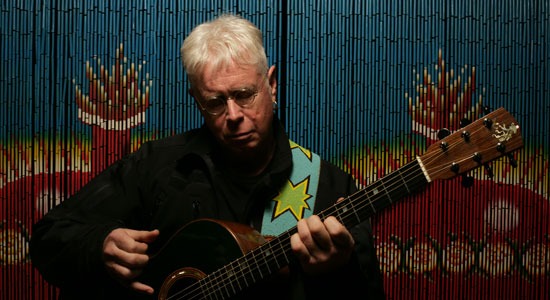
For our final concert, singer/songwriter Bruce Cockburn will take center stage. Bruce made his first album 1970 and has released 33 albums to date. His music styles range from folk, to jazz, rock and worldbeat. He lives in the San Francisco Bay area and is a human rights and environmental activist. EHC Director Tony Fletcher sat down with Bruce for an exclusive Q & A session.

Q. When did you first hear about Enchanted Hills Camp?

A. I first heard about EHC when I met Bill Simpson [longtime EHC nurse], at Peet’s Coffee. There was a gang of mostly older people who would sit around in front and drink coffee. I joined that group and he came by and said hello to quite a few of the patrons. A couple of days later, I was sitting out in front of Peet’s again and Bill was there drinking his coffee and I invited him over to join me at my table. We realized we had a lot in common and he talked to me about how he spent his summers at EHC.

Q. Have you attended residential camp yourself?

A. Yes. The one that had the biggest impact for me was the Taylor Statten Camps in Canada. Those camps date back to the 1920s. I spent several summers there and learned an appreciation of nature.  There were four-week wilderness camps, including two weeks on a canoe trip in Ottawa. It was wonderful for my life skills development.

Q. Why do you think it’s valuable for people to attend camp?

A. One of the greatest things is being out from under the roofs of your parents. You’re obliged to discover things about yourself and you learn how to be a good citizen in an unusual setting. Everyone learns to pull their weight. It’s part of learning to be (part of) a team. At camp, there are activities that are different from what you would learn from school. You learn skills: to sail, ride a horse, improve your swimming.

Q. How did your passion for music develop? 

A. I was Interested in music from an early age. I started taking music lessons in fifth or sixth grade and played clarinet and trumpet for three years. I liked those but fell for early rock and roll at the age of 14.  I found an old guitar in the attic at my grandmother’s and banged away at it without much success, but my parents saw the value in it and signed me up for guitar lessons.

Q. What practical tips do you have for young musicians pursuing music as a career?

A. That’s hard to answer in a meaningful way. Things have changed so much. The business has changed so much but recording a YouTube video and getting your music watched on social media is one way to get started. I suggest that you learn everything you can from everybody you can. The more you know, the more you can use.

You can watch the concert Friday, August 14 from 5:30 p.m. to 6:30 p.m. at: facebook.com/lighthousesf/live.

Learn more about Bruce at brucecockburn.com or on Facebook, Spotify or Apple Music.

Want to join Bruce in supporting EHC? Celebrate our 70th anniversary with your limited edition EHC hoodie or make a donation today.

EHC Virtual Alumni Showcase is August 8

EHC Virtual Alumni Showcase is August 8

This week’s Summer Concert Give Back Series, features many Enchanted Hills Camp Enrichment Area Leaders, currently and from the past four years. It will be a two hour concert featuring; Shane Dittmar, Derik Dittmar, Mariana Sandoval-Lintz, Joshua Lintz, Masceo Williams, Daniel Cavazos, Sky Mundell and Paul Day.

One of the featured performers, Shane Dittmar,  is a musician, educator, and composer. He served for two summers as the Enrichment Area Leader at EHC, which he also attended for 6 years as a camper; graduated from the University of North Carolina at Greensboro, and now teaches music at the Washington State School for the Blind in Vancouver, WA, where he lives with his wife, cat, and guide dog.

Chimehenge is an interactive community musical instrument of epic proportions. Created by the fanciful scientist/designers at the Exploratorium in San Francisco, It is composed of ten-foot tall chimes of various widths suspended on a frame that make musical tones when hit with mallets.
This interactive, audible sculpture will be installed in a glen in the woods on an offshoot of the main nature trail at Enchanted Hills Camp. Enchanting indeed!

Help us raise $25,000 for the surfacing, trail extension and installation  of Chimehenge for our blind campers.

Online through the LightHouse and Enchanted Hills Facebook pages.

EHC Give Back Summer Concert Series Full Schedule:
Aug 8  EHC Alumni Showcase Concert
Aug 14  Bruce Cockburn (Singer songwriter/ Folk)
Each event will be curated by an emcee Tony Fletcher from EHC.

Limited edition Enchanted Hills 70th Anniversary hoodies are for sale here.

For more information email Andrea Vecchione, avecchione@old.lighthouse-sf.org

Help us rebuild EHC.