Category Archive

LightHouse News

Join LightHouse for an Insider’s Look into the Comcast Innovation Lab

Join LightHouse for an Insider’s Look into the Comcast Innovation Lab

Please join us for a conversation with a true pioneer in the accessibility field, Tom Wlodkowski, Vice President of Accessibility for Comcast. Tom Wlodkowski and LightHouse for the Blind invite you to learn about new advances in accessibility for Comcast products.

The event will be hosted by LightHouse for the Blind Senior Director of Programs, Scott Blanks, and Erin Lauridsen, Director of Access Technology. Participants will hear about the numerous innovations Tom and his team have created. From the award winning Xfinity X1 Voice Guidance text-to-speech interface and the web-based Xfinity Adaptive Remote, to implementing a dedicated support center specifically tailored for customers with disabilities, Tom and his team define the strategy to ensure current and future Comcast products and services are accessible for everyone.

This is a unique opportunity to hear more about the Comcast Accessibility Lab, which provides an interactive atmosphere where accessibility features are at the forefront of everything the team does as they strive to find the next breakthrough for those with disabilities.

When: Tuesday, December 1 from noon to 1:00 pm

Register for this event, via the Eventbrite page. RSVP by November 23. The first 100 folks to RSVP will receive a code for $20 to enjoy a meal from Grubhub during the event.

For more information, contact events@old.lighthouse-sf.org.

LightHouse’s Ann Wai-Yee Kwong Believes in the Importance of Addressing Culture for Success in Blindness

LightHouse’s Ann Wai-Yee Kwong Believes in the Importance of Addressing Culture for Success in Blindness

The transition from childhood to young adulthood can be a difficult time in any young person’s life—but for those with limited resources, or a lack of information about what resources are available, the transition can become overwhelmingly difficult. For many students who are blind or have low vision, especially those facing cultural adversity, the information and resources regarding next steps towards a productive and successful future after high school simply are not provided. Most of the support given to students who are blind or have low vision and their families is offered through the public-school system. However, because there is a limited number of TVIs (teachers of the visually impaired) and other qualified VI educators in public schools, resources can be limited and are often stretched between school districts, making the actual time a blind or low vision student spends with these VI educators and mentors very minimal. Of these students, many are first generation American, introducing the additional difficulties of struggling with language barriers. These students are constantly having to balance learning to adapt to American culture in their schools where they are receiving an education, maintaining homelife culture within their families, and navigating this new world of blind culture and building their adaptive education and independence skillsets.

LightHouse Transition Program Specialist Ann Wai-Yee Kwong runs programs made up of trainings and informational workshops—some of which are offered in Spanish to support the blind and low vision Spanish speaking community—for young adults and their families to prepare for their futures and the transition from childhood into adulthood. Ann’s education and professional experience coupled with her own personal experiences as a blind woman who emigrated from Hong Kong as a child make her highly qualified in this area. Her unique brand of passion and empathy stemmed from her own transition experience makes her the ideal mentor to help pave a successful path towards furthering education and employment for our youth.

Growing up as a blind, first generation Chinese American in Los Angeles, Ann had little knowledge of what resources were available to her outside of what public school is legally obligated to provide.

“I had never heard of the landmark legislation, the Americans with Disabilities Act (ADA), nor learned about disability history,” Ann shares.

Historically, in many cultures across the globe, disabilities of any sort have been portrayed in limiting and negative terms. Blindness is often equated through language as a lack of knowledge. Phrases like “the blind leading the blind” create harmful societal expectations and stereotypes, many times leading to a lack of self-worth or self-confidence within the blindness community.

“It was not until I went to college that I discovered many of my peers with disabilities also shared, for the first time, the experience of feeling empowered as we cultivated disability community and found pride in our identities.  Subsequently, although the ADA has provided many educational rights and opportunities for persons with disabilities, there remains a great deal of work around shifting the negative societal perceptions of disabilities as well as in employment, where the employment rate of persons with disabilities, 19.3%, continues to lag far behind that of non-disabled persons, 66.3% in 2019, according to the U.S. Bureau of Labor Statistics.”

This motivated Ann to build a career educating youth who are blind or have low vision about what blindness resources are available and how to make the most of these opportunities. She knows that understanding your options and developing healthy, positive social and personal ideologies about what it means to be blind are essential in working towards a successful future.

Over the years Ann has partnered with various blindness advocacy groups, government agencies like the Department of Rehabilitation (DOR) as well as many VI educators. These partnerships have catalyzed her passion and informed her work with youth who are blind or have low vision, which then molded and inspired the programs she has started at LightHouse.

“The Youth Employment Services (YES) program and curriculum is based on research, best practices, and the nationally recognized Workforce Innovation and Opportunity Act (WIOA). I strive to provide meaningful work-based experiences for youth to fill the gap for employers, creating a talented pool of future professionals.”

While creating equal opportunities and building a dynamic skillset and experience for blind and low vision youth is the mission of the work Ann does, for her, it is the social and emotional growth that is the most rewarding accomplishment.

“The best part of my job is building trust with my students and watching them build that confidence, because that is transferable. Once you instill that confidence in someone, that can’t be taken away,” Ann believes.

“My most rewarding experience while working at LightHouse is the genuine sense of community and family, we are able to build, especially during the YES Summer Academy when staff and students spend four full weeks working, learning, and living under one roof. This heartfelt sentiment is also expressed by our students, and I had not previously felt this in other blindness programs in my prior work, making this unique to LightHouse.”

The work Ann and the Youth Programs department is doing is starting to change the misconceptions of the lives people who are blind or have low vision can live, for both the blind community and those who are sighted. Ideas for new groundbreaking programs and plans to grow and expand the reach of Youth Programs is constantly underway.

Ann is continuing to further educate herself in the field of education, leadership, and advocacy. She is currently working towards her PhD in Education at the University of California, Santa Barbara. Her growing knowledge and passion are packed into every LightHouse program she runs and is reflected in the future of every student she mentors. Because of incredible mentors like Ann Wai-Yee Kwong, the future of kids everywhere who are blind or have low vision is bolder than it’s ever been.

To learn more about our transition programs for youth, contact Ann at AKwong@old.lighthouse-sf.org or by phone or text at 415-484-8377.

You’re Invited: Virtual Grand Opening Celebration of Enchanted Hills Camp’s New Pool Bathhouse, November 14

You’re Invited: Virtual Grand Opening Celebration of Enchanted Hills Camp’s New Pool Bathhouse, November 14

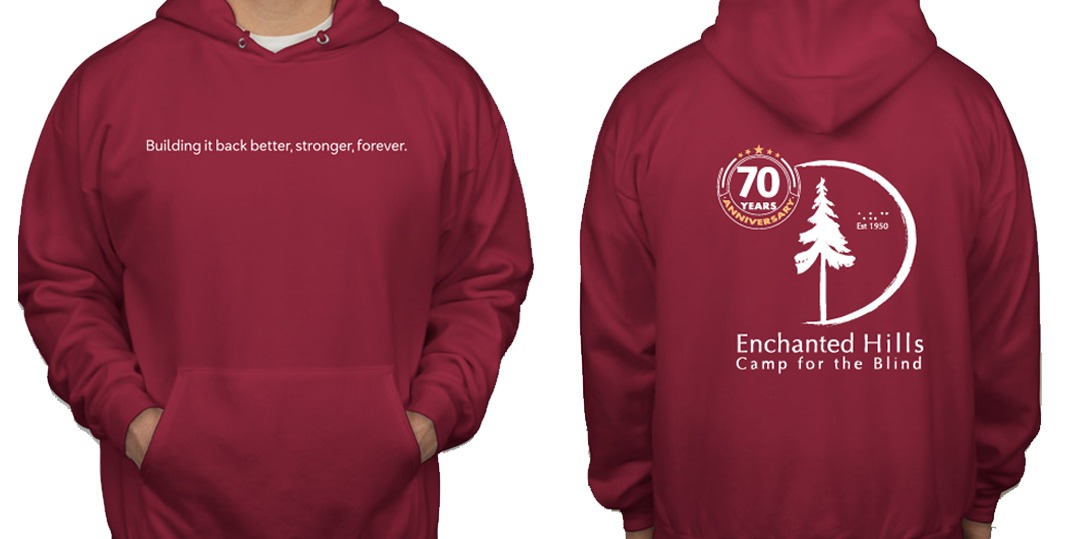
Join us on our Enchanted Hills Camp Facebook page, on Saturday, November 14 at 12:30 pm for an architect-guided tour of the new pool bathhouse. A Facebook account is not required. If you tune in to the event, you’ll have a chance to enter a free raffle to win an Enchanted Hills Camp 70th Anniversary sweatshirt during the live celebration.

This summer, campers attended camp sessions virtually from the safety of their homes and we took this opportunity to accelerate the rebuilding of EHC after the 2017 wildfires destroyed half of the structures at camp. The rebuilt pool bathhouse follows the rebuilding of the camp storage barn and pool shade structure.

The new bathhouse will provide spacious shower and bathroom facilities for 64 campers using our interim canvas bungalows. It became vital to replace the pool bathhouse, to provide 24-hour access to showers, restrooms, a guide dog shade area and drinking fountains for campers. As an added safety feature, the pool bathhouse is designed with a locking sliding door to prevent access to the pool when a lifeguard is not on duty.

The bathhouse was designed by the architects at Perkins & Will, and built by Eames Construction. The building is clad in redwood lumber salvaged from the trees lost in the wildfires. As new cabins and program spaces are built, they will also have this beautiful and fire-resistant redwood exterior.

Come and join us.

What: Opening of the Enchanted Hills Camp Pool Bathhouse on Facebook Live

Where: LightHouse’s Enchanted Hills Camp Facebook page

When: Saturday, November 14 from 12:30 pm to 1:00 pm

If you are moved to contribute to our ongoing fire rebuild efforts, contact Jennifer Sachs, Director of Development, at JSachs@old.lighthouse-sf.org or 415-694-7333.

New Perspectives, New Year, New LightHouse Support Group for Adults 55 and Over

New Perspectives, New Year, New LightHouse Support Group for Adults 55 and Over

It’s a challenging time for many, and if you’re 55 or over and new to blindness or having low vision, or your vision has changed significantly, you may be looking for a way to connect to other people going through the same thing.

This is the premise of New Perspectives, a six-week group offering education, support and resources for adults over 55 who are blind or have low vision.

The group will be facilitated by LightHouse Social Workers Janet Pomerantz and Jeff Carlson. Janet Pomerantz underscores what people will get out of the group.

“By participating in this group, people will begin to challenge some of the ideas that they may have about blindness and gain more confidence in their ability to remain independent. We will also practice advocacy, which is a lifelong skill for negotiating the world of being blind and having low vision. Consumers do not need any particular skill to participate, just a willingness to share and listen to others.”

What: New Perspectives

When: Tuesdays, January 5, 12, 19 & 26 and February 2 & 9 from 1:00 pm to 2:15 pm\

Who: Adults 55 and over who are new to blindness or having low vision, or whose vision has changed significantly.

Cost: This group is provided at no cost to those living in Alameda, Contra Costa, San Francisco, San Mateo, Marin, Humboldt, Del Norte, and Trinity counties. If you are outside of these counties, please call for resources in your area.

Contact: To find out more about the New Perspectives group, contact Janet Pomerantz at JPomerantz@old.lighthouse-sf.org or 707-268-5646.

P.S. Just like in our San Francisco and East Bay  offices, LightHouse North Coast is on-hand and ready to provide training virtually, via Zoom or by phone, as Janet says, “Although we are closed for in person services, we are open to provide resources and to connect folks with all the training that we usually do, whether it be Independent living skills, mobility, health and wellness, support or education.” Contact northcoast@old.lighthouse-sf.org or 707-268-5646.

LightHouse Staffer Marc Grossman on Moving Forward in his career with Blindness

LightHouse Staffer Marc Grossman on Moving Forward in his career with Blindness

I grew up in Southern California and had a pretty typical childhood filled with adventure and mischief. I was a Boy Scout, participated in sports, and loved learning new things in school. As a teenager, I liked to toss the baseball with the neighborhood boys in front of our houses. Even though nobody recognized it at the time, this was the first clue that something was amiss. If I had dropped the ball and gazed down to look for it, I could only find it if it were in my field of vision. Of course, everybody had the same experience, but we did not know that my field of vision was significantly smaller than the rest of the boys. While the nickname did not stick, I recall some of the kids calling me “eagle eyes” but in retrospect it was not much of a compliment. Since we had no family history of vision problems, we did not think much of it and I continued through the years, especially since I had no trouble seeing printed words in my high school textbooks or the blackboard in the classroom.

During the summer after my freshmen year at college, I came home to spend time with family and friends. While on a road trip with my two best friends, they pointed out that I was consistently not seeing things in my peripheral vision. At first, I just laughed it off but a subsequent visit to a local optometrist confirmed that in fact, I needed to see a specialist. By the end of the summer, I would have endured a full day of testing at a prestigious university medical center and gone home with a diagnosis of Retinitis Pigmentosa. Armed with that knowledge, I merely buried my head in the sand and chose to ignore the doctor’s advice. I was determined to be in the minority of people that don’t go on to lose all of their eyesight. I attribute that stubbornness to being a Taurus and, of course, college kids knowing better than everybody else. I went on to complete my bachelor’s degree, but my university experience was not what I had envisioned. I struggled with my diagnosis and was ill-equipped to handle the emotional aspects. When sharing this new information with my friends and classmates, I encountered disbelief. “You don’t look blind” and other expressions made their way into the conversation and from that time I decided to keep it to myself.

Upon my return to Southern California, I tried to continue hiding my diagnosis. By this point, driving was getting to be a challenge and I found myself crashing into walls and other immovable objects. Fortunately, they were all at low speeds and nobody got hurt. This was in the 1990s before there was a robust transit network in Los Angeles. So, I moved to New York City where the streets were filled with bright yellow taxis, buses to every corner of the five boroughs, and an expansive subway system snaking its way under the city.

As my vision continued to diminish, I decided that I wanted one more adventure before I lost my remaining eyesight. I hopped on a plane and landed in Santiago de Chile. The city was compact and had great transit. I taught English to business executives and made friends from all over the world. It was during this time overseas that I realized that I was not going to avoid blindness and that upon my return it would be in my best interest to seek out services.

I found myself in the office of the New York Commission for the Blind and Visually Handicapped when a wonderful man named Carlos asked me if I wanted to learn JAWS or ZoomText. I must have looked at him like he was an alien because he burst out laughing. I had no idea what he was talking about, so he started fiddling with the keyboard that sat in front of me. ZoomText was enabled but I was slow at picking it up and not able to follow the focus. Carlos asked to take the keyboard and he made some additional changes. He asked me to put my hands on the keys and before I knew what was going on, I heard a voice talking to me. I had no idea what was going on but minutes later, we were diving into the nuances of the powerful magnifier/screen reader. This began my relationship with accessible technology and catapulted me into my current area of expertise.

After a successful career in sales, I began working for the American Foundation for the Blind. I learned the ins and outs of digital accessibility and started to build relationships with key players in the area of technology. When I moved back to California, I discovered the wonderful people at LightHouse for the Blind and Visually Impaired. In addition to learning braille and orientation to a new city, I had the great pleasure of going through the Employment Immersion program where I met [Director of Employment Services] Kate Williams, who would later become a mentor and supervisor. For four years, I crisscrossed northern California working with other people who are blind or have low vision to help them discover the doors that can be opened when they learn how to use assistive technology. Finally, in May 2018, I joined LightHouse as an Employment Specialist where I support jobseekers in their quest to find a career. Together, we work on resumes, cover letters, interviewing, and networking. My favorite area is helping jobseekers address the challenge of disclosing their disability to a potential employer.

As it turns out, going blind was not the end of my adventures. When not at work, I enjoy running and swimming with Achilles International or river rafting and Nordic skiing with Environmental Traveling Companions. I’ve participated in a swim relay across Lake Tahoe with four other blind swimmers and completed the Escape from Alcatraz swim four times without being eaten by a great white shark.

Every month a new cohort of blind jobseekers enters our Employment Immersion Program. To see if the program is right for you, or to sign up lease reach out to the Employment Services department at EiTeam@old.lighthouse-sf.org or 415-694-7359.

Changing Vision Changing Life, Celebrating 25 Years of Connection and Program Evolution, Goes Virtual This December

Changing Vision Changing Life, Celebrating 25 Years of Connection and Program Evolution, Goes Virtual This December

By Kathy Abrahamson, Director of Rehabilitation Services

Twenty-five years ago, a program then called “Living With Vision Loss” was launched by the LightHouse Rehabilitation teaching staff.  At that time, adults of all ages would come to our previous headquarters, two or three days a week, for four weeks of learning. Students learned foundational blindness skills in the areas of independent living, access technology, orientation & mobility, self-advocacy and community resources.  The course was launched during the AIDS epidemic.  During this time, students and teachers supported each other through connection and compassion, through adjusting to blindness or having low vision and the desire to learn skills of independence.

After ten years, the course and the name needed refreshing, thus “Living With Vision Loss” became “Changing Vision Changing Life” (CVCL).  In June 2013, the course became even more immersive: morphing into a one-week intensive course at Enchanted Hills Camp. This meant people from all over the Bay Area and beyond could attend.

Over 400 students have participated in this evolving program, with over half of them having the opportunity to connect at Enchanted Hills Camp.

Now we morph again. While we miss our time at Enchanted Hills Camp, Changing Vision Changing Life is going virtual. Yes, it is a different experience and way of learning, but our same dynamic teaching staff will bring together a two-week training course on Zoom.

What: Changing Vision, Changing Life Goes Virtual

Who: Students 55 and over who are new to blindness or have low vision and desire a deep introduction to independent living through orientation & mobility, access technology, and independent living skills.

When: Weekdays, December 7 through December 18 with the following daily schedule:

  • Mondays: 9:30 am to 11:30 am & 1:00 pm to 3:00 pm
  • Tuesdays: 9:30 am to 11:30 am, 1:00 pm to 3:00 pm & 6:00 pm to 7:30 pm
  • Wednesdays: 9:30 am to 11:30 am, 1:00 pm to 3:00 pm & 6:00 pm to 7:30 pm
  • Thursdays: 9:30 am to 11:30 am 1:00 pm to 3:00 pm & 6:00 pm to 7:30 pm
  • Fridays: 9:30 am to 11:30 am & 1:00 pm to 3:00 pm

Cost: There is no instructional fee for this two-week course for those living in the counties of: San Francisco, San Mateo, Alameda, Contra Costa, Marin, Humboldt, Del Norte and Trinity.  There is a material cost of $40 per person as each student will receive a box of equipment to learn with throughout the two weeks which they will then keep.

The evening sessions will be a time for discussion and deeper connection with peers.

This course is for you if you wish to make a commitment to learn more about developing skills and choices to move forward as you leap into 2021. Please note, that all students must be able to make a commitment to all sessions throughout the two weeks.  You do not have to have a computer to participate via Zoom, but you will need to have a reliable speaker phone (smart phone or landline) to participate and call in.

Registration is required by Monday, November 16 and limited to 12 students.

To register:

Join us for a Department of Rehabilitation Info Session for Middle and High School Youth

Join us for a Department of Rehabilitation Info Session for Middle and High School Youth

Leap into Success Now: Opening the Door to Adult Life

Calling all middle and high school youth who are blind or have low vision and their families. Have you wondered what comes next after high school? Where can you get accessible training and equipment for work, college, or essential living skills? Well wonder no more and attend a presentation from Disability Rights California (DRC) and the California Department of Rehabilitation (DOR) on how to get a head start on your future and build on your strengths. You can also learn about programs that may be available in collaboration with the Department of Rehabilitation for your journey to adult life. There will be time after the presentation to speak with knowledgeable LightHouse staff and mentors who are blind or have a low vision regarding your individual situation.

What: Youth Employment Services (YES) Leap into Success Now! Opening the Door to Adult Life

When: Wednesday, November 4 from 6:00 p.m. to 7:30 p.m.

This is a unique opportunity to get all your questions from DOR and DRC answered including:

1. What services does DOR provide to students?
2. What is the DOR, WorkAbility, and College2Career?
3. Am I eligible to sign up with the DOR?
4. What types of supports, equipment, and training can the DOR provide for me?
5. What are my rights and responsibilities when working with different agencies such as the DOR, my school, or college?
6. If I am interested in signing up, how can I get started?

If you have any questions or would like to join us for the presentation, please contact Ann Wai-Yee Kwong, Transition Program Specialist at AKwong@old.lighthouse-sf.org or by phone or text at 415-484-8377. RSVP by Monday, November 2.

Your Cane Can Dress Up for Halloween, Too

Your Cane Can Dress Up for Halloween, Too

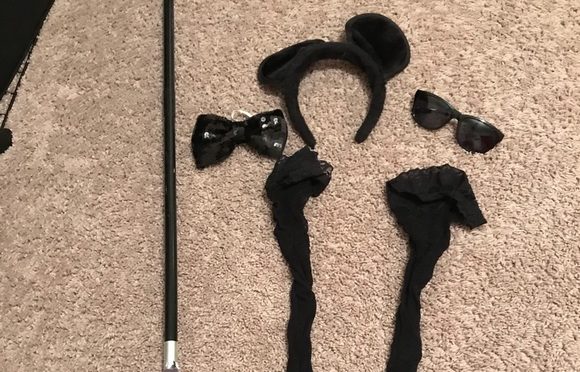
As many may know, October is a month of many things. It is World Blindness Awareness Month, we celebrate the honorable White Cane Day on October 15, and of course, it is the start of “Spooky Season,” leading up to Halloween on the 31st. With the holiday just around the corner, it’s time to put the finishing touches on your costumes and get ready to strut your stuff across the screen of all this year’s virtual festivities! The tradition of dressing up in creative costumes—whether you prefer cute, crazy, or creepy—is a Halloween favorite. And the creativity doesn’t have to stop at your outfit! As blind and low vision cane users, there are dozens of fun ways to incorporate your cane into your overall look for the night.

Going for a witchy look this year? Nothing goes better with the striped stockings and pointy hat than a spell-casted broomstick! You can use many different materials to create broom bristles, construction paper, straw, or even dried corn husks. Bunch your preferred material around the last joint of your cane and fasten it together with a rubber band and there you have it—the perfect broomstick for the spookiest of witches!

Perhaps you are going for a more enchanting look? Take a spool of ribbon in your favorite color, glitter and sparkles always add a dash of dazzle, and carefully wrap the ribbon around your cane, winding it up from the bottom to the top. Fasten each end with sturdy tape and you’ve just transformed a plain white cane into a magical wand, charming and elegant for any fairy princess. Attaching flowers, feathers, or jewels can add an extra polished finish to your wand.

Perhaps you’re disguising yourself as your favorite character. Whether you’re dressing as Batman or Bart Simpson, every character has a memorable catchphrase! Take a large piece of cardboard and carefully cut out the shape of a “speech balloon” (the little word bubbles seen in comic strips and cartoons). Write your character’s most memorable phrase or a silly saying on the cardboard and use tape to attach the speech balloon to your cane. Pose with the speech balloon pointed towards you and you will capture the spirit of your character perfectly! If you have a Braille writing or embossing device in your possession, add Braille to the speech balloon and make your catchphrase accessible!

There are so many ways to make your cane a fantastic addition to your costume. Whether the character you’re portraying has a handheld accessory or not, your cane can be the shining star of any look. With paper, tape, glitter, ribbons, or other simple household materials, you can transform your white cane into a fancy or scary costume accent. And the best part of it all? You never have to sacrifice independent travel for Halloween fashion. Let the Halloween holiday inspire you to get crafty. Tag LightHouse in your social media posts and show us your cane costumes. We can’t wait to see your creations! Happy Halloween, everyone!

And don’t forget, you’ll get until October 31 to get 10% off white canes and accessories online at our Adaptations Store, or by calling 1-888-400-8933, or by accessing LightHouse for the Blind and Visually Impaired under specialized help on the Be My Eyes ap

Making Your Vote Count: Dropping off Your Ballot or Voting in Person

Making Your Vote Count: Dropping off Your Ballot or Voting in Person

Election day is one week away. Find early voting and official ballot dropbox locations or look up your election day polling place on the California Secretary of State website. You can also find out more specific information about voting in your county online or call 916-657-2166. There are also voter hotlines which provide info in other languages.

On Election Day, November 3, both Lyft and Uber are offering discounts.

Lyft is offering 50% off one ride up to $10 to any polling location or dropbox using the code 2020VOTE.

Uber, meanwhile, is offering 50% off roundtrip rides to and from the polls, up to $7 each way.

If you missed the voter registration deadline, you may still be eligible to vote with a provisional ballot via California’s Same-Day Voter Registration process.

Don’t forget, if you live in the Bay Area and would like a LightHouse volunteer to support you with voting, you’ve got until tomorrow, Wednesday, October 28. Please email volunteer@old.lighthouse-sf.org or leave a voicemail at 415-694–7320.

Time to Celebrate: Missed Our Panel on Accessible Voting? Now’s Your Chance to Watch

Time to Celebrate: Missed Our Panel on Accessible Voting? Now’s Your Chance to Watch

Voting during a pandemic is on everyone’s mind as some are registering to vote while others have begun receiving their ballots. Blind people have the added concern of getting information and being able to vote in an accessible format.

To that end, on October 2, we held a panel all about accessible voting to address these national concerns with four speakers, all experienced in advocating for voting rights for people who are blind or have low vision.

Our panelists were:

Eve Hill, Disability Rights attorney acting on behalf of the National Federation of the Blind
Michelle Bishop, Voter Access & Engagement Manager, National Disability Rights Network
Ardis Bazyn, California Council of the Blind
Claire Stanley, American Council of the Blind

Here are some voting resources:

Disability Rights California Voters with Disabilities Page
National Federation of the Blind’s Voting, Accessibility, and the Law
National Federation of the Blind’s Voting Resources
Voter Bill of Rights