Category Archive

LightHouse News

This Year, Roll Your Own Cycle for Sight

This Year, Roll Your Own Cycle for Sight

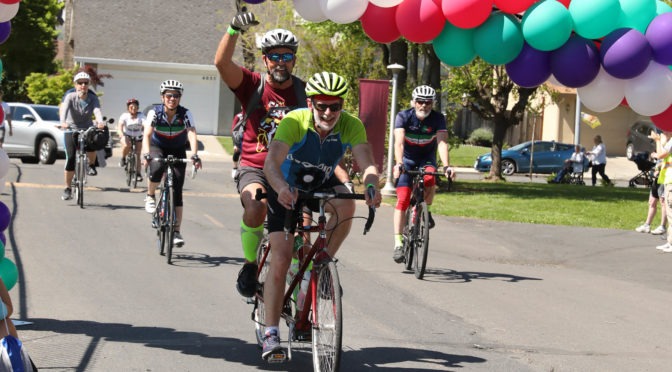
We’re thrilled to announce the return of Cycle for Sight, an annual fundraiser for Enchanted Hills Camp (EHC) that we’ve held for nearly 20 years. Cycle for Sight is run in partnership with the Rotary Club of Napa. Through Cycle for Sight, we raise funds for camperships.

Last year, in the beginning months of the pandemic, Cycle for Sight, like many other events, was cancelled. A year later, after we’ve all learned how to hold events online, Cycle for Sight returns, in virtual form.

Traditionally, Cycle for Sight involves people riding bike routes of 15, 25, or 50 miles through the landscapes of Napa Valley to raise funds for EHC. Many blind and sighted bike riders team up to share the experience together on a tandem bicycle. This year’s virtual format provides new opportunities, which Camp Director Tony Fletcher is excited about.

“I encourage people to use the day to do some form of creative exercise. You can still ride a bike for 15, 25 or 50 miles, or you can do something else that involves 90 minutes of exercise, like hiking, swimming, running, or walking. It’s great that people who haven’t been able to participate in Cycle for Sight before will have many ways to do so this year.”

On April 17, the day will start with a virtual opening ceremony. Then everyone will go out and exercise for EHC and reconvene online in the afternoon for an after party.

We encourage you to post photos of yourself exercising on the day with the hashtag #C4S2021 on social media.

You have two registration options this year. General registration is $45 and comes with a goody bag. VIP registration is $85, and you will get an enhanced goody bag.

Exercising with a physically distanced group? You can create a team. Want to supercharge your fundraising? Why not create a fundraising team?

You can also buy a Cycle for Sight registration as a giftfor someone else or donate to Cycle for Sight.

We can’t wait to hear how you’re going to participate.

RSVP for Cycle For Sight by April 15

Help Your Favorite Holman Prize Candidate Advance to the Semifinals

Help Your Favorite Holman Prize Candidate Advance to the Semifinals

Submissions for the 2021 Holman Prize for Blind Ambition have now closed and now you can help your favorite advance to the semifinals as the People’s Choice Semifinalist. The person with the most likes on their YouTube video will automatically advance to the semifinals and have a chance to compete to become a finalist.

Watch the 2021 Holman Prize Candidate Playlist and Vote Today!

Baking Bread with Holman Prizewinner Penny Melville-Brown

Baking Bread with Holman Prizewinner Penny Melville-Brown

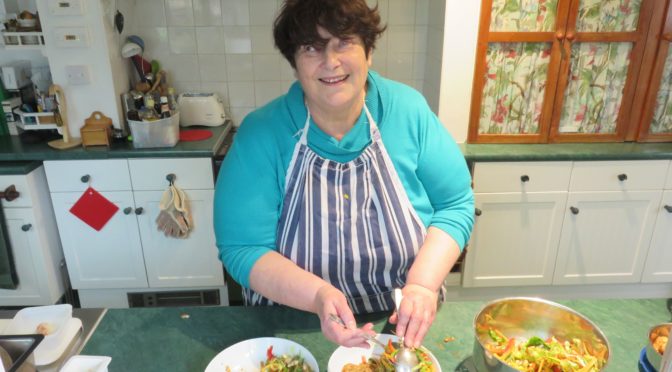
On Monday, March 8, people from all over the world in different time zones came together virtually to share one delicious experience—baking soda bread with blind chef and 2017 Holman Prize winner Penny Melville-Brown.

Being a woman of Irish heritage, I love soda bread and have baked it on numerous occasions, trying several different recipes throughout the years. Penny’s recipe stood out to me as it called for an ingredient I had never before seen in a soda bread recipe— yogurt. I was immediately intrigued and knew I had to take this opportunity to learn from the famed Blind Baker herself.  So, I set my alarm clock for 2:30 am Monday morning and joined in on the fun.

With very sleepy eyes and visions of warm, freshly baked bread dancing in my mind, I clicked on the Zoom link and was connected with fellow blind and low vision bakers (both by hobby and by trade) as Penny guided us through the process of measuring out ingredients, mixing and kneading the dough until it was at the right texture and consistency, and popping it into the oven. While our loaves baked, participants from the United Kingdom, Australia, Zimbabwe, and the United States listened as Penny shared her experiences as a blind chef, winning the Holman Prize and the world of opportunities that opened up for her, and of course, her own personal history with soda bread and how she came up with this recipe.

Many traditional Irish soda bread recipes call for buttermilk, an ingredient that is hard to come by in the United Kingdom. You can make your own buttermilk by adding vinegar or lemon juice to whole milk, but that results in a very fatty product. Since Penny makes her own yogurt, she had the brilliant idea of taking the liquid from the top of the settled yogurt and using that as a buttermilk substitute.

The recipe was a success! However, most people don’t have access to homemade yogurt, so she decided to tweak the recipe once more, this time using the yogurt itself. The thick, creaminess of plain yogurt has all the flavor of buttermilk but provides a richness and moisture to the bread that I had never tasted before. As a sort of soda bread connoisseur, this recipe has instantly become my favorite. (And not just because it came from a fellow blind baker!)

Joining Penny and baking alongside people who are blind or have low vision in kitchens all over the world was a fantastic experience. The past year has been a doozy, and the entire globe has been affected. It isn’t often that people on every continent share the same experience and life circumstances. No matter where you are from, two things are true for all—we are all capable of doing great things, and the love for food is universal.

If after reading this you’re thinking, “Gee, I wish I’d participated in Baking with Penny,” you’re in luck! You can watch the recorded baking session with Penny here. For more information about Penny Melville-Brown and what new delicious recipes she is whipping up or for information on future virtual baking sessions, you can follow her YouTube channel, Baking Blind.

If you’d like to try Penny’s Irish Soda Bread recipe it’s below, with both U.S. and metric measurements.

Penny’s Irish Soda Bread

  • 1¾ cup or 250 grams of self-rising flour, or 1¾ cup (250 grams) of all-purpose flour and 2 teaspoons baking powder or baking soda
  • ½ cup or 200 grams plain natural yogurt
  • 1 level teaspoon salt
  1. Preheat the oven to 400° Fahrenheit, Gas 6, or 200° Celsius,
  2. Line a baking tray with parchment paper and spray with a little oil.
  3. Mix all the ingredients together to form a dough ball.
  4. Place the dough on the tray and cut a cross on the top.
  5. Bake for 25 minutes then turn the bread over and bake for a further 5 minutes.
  6. Enjoy!
Doubly Sweet: Meet the 2019 Holman Prizewinners and Attend a Chocolate Tasting, April 10

Doubly Sweet: Meet the 2019 Holman Prizewinners and Attend a Chocolate Tasting, April 10

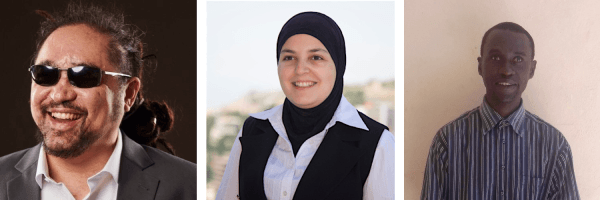
Despite the disruptions of COVID-19, the 2019 Holman Prizewinners Mona Minkara, Alieu Jaiteh and Yuma Decaux completed their Holman Prize year in 2020, so it’s time to celebrate their incredible achievements.

On April 10, we will host a chocolate tasting, with Dr. Hoby Wedler who will take you on a journey through the chocolate making process, the delicate nuance of the flavors and other interesting facts. The fine chocolates are provided byQuail Point Chocolates. We’ll also hear from Alieu, Mona and Yuma about their Holman Prize adventures.

If you’d like the chocolate to try along at home, it’s $50 with enough chocolates for two tasters and $75 for a family box.

You can come to this Holman Prize event without the chocolate tasting for free.

The event takes place on April 10 from 2:00 pm to 3:30 pm Pacific Time.

RSVP for Sweetening the Prize: Holman Prizewinner Celebration & Chocolate Tasting.

Get In-Touch with MAD Lab’s Tactile Intersection Crossings and Attend a Workshop, April 8

Get In-Touch with MAD Lab’s Tactile Intersection Crossings and Attend a Workshop, April 8

By Kathy Abrahamson, Director of Rehabilitation Services
 
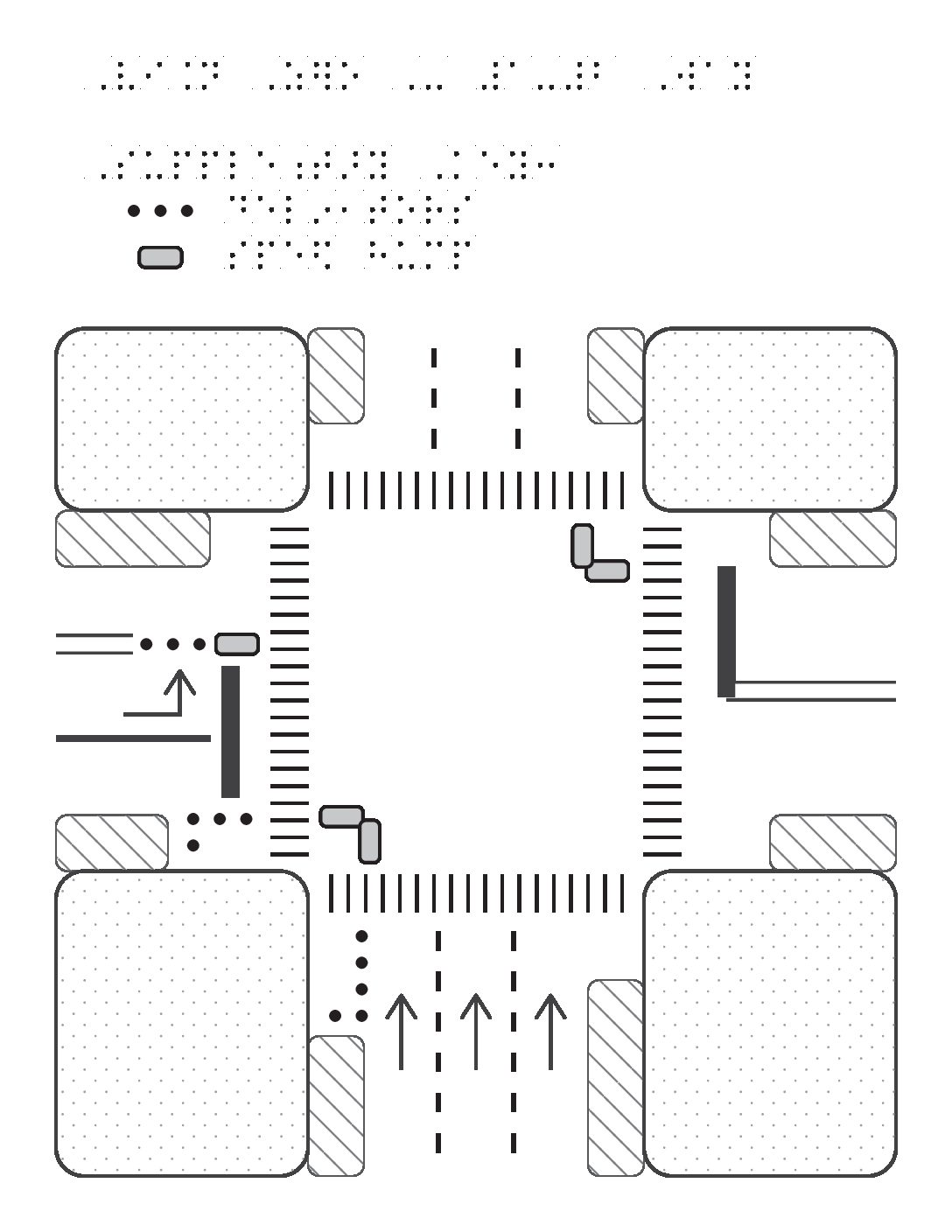
We’re pleased to announce that we received a Safety – It’s Your Turn community grant from the San Francisco Municipal Transportation Agency (SFMTA) to support safer left turn education and encourage walking and biking, especially for San Franciscans who are blind or have low vision. Part of the outreach for the Safety – It’s Your Turn education campaign is to raise awareness of the new “left turn calming” intersections designed to slow drivers as they make left turns on the streets of San Francisco. These newly designed intersections use small speed bumps and vertical barriers to encourage drivers to slow down, square their left turns, and watch for people in the crosswalk. Currently there are seven such intersections in San Francisco. 
 
For this project, LightHouse Orientation and Mobility Specialist, Sarah McIntyre and the talented designers of Lighthouse’s Media and Accessible Design Lab have developed a tactile diagram of this new “left turn traffic calming intersection as well as a book of 13 detailed tactile diagrams of intersection types that may be found around San Francisco’s streets. Both of these tactile references are being made available to blind and low vision San Franciscans at no charge to the first sixty who contact the LightHouse with interest of obtaining a copy, and, participating in an informational workshop about these resources. 
 
The Tactile Diagram Workshop will be held Thursday, April 8 from 3:00 – 4:30 pm via Zoom. Invitation is open to those San Franciscans who have received a book of diagrams. The workshop will provide an overview of the intersections and basic information in how to use and read the diagrams. Each book provides information in both braille and large print. An electronic version of the text information from the book can be provided upon request. San Francisco Unified Orientation and Mobility Specialists are encouraged to ensure a copy for their students for supplemental training and support.
 
The goal of the project is to provide overall knowledge of the availability of tactile maps so that travelers who are blind or have low vision have the best understanding of their city streets and we graciously thank the SFMTA for the ability to produce the books for our San Francisco blind and low vision community. If you are a San Franciscan who is blind or has low vision and would like one copy of the LightHouse Tactile Intersection Book, along with the supplemental traffic calming intersection diagram, please email Briana Kusuma, LightHouse Program Associate at BKusuma@old.lighthouse-sf.org. Briana will send one copy (per person/household) via Free Matter for the Blind and sign you up for participation in the April 8 Tactile Diagram Workshop. For those persons who would like to purchase a copy of this book, please visit Adaptations, the LightHouse Store online, email adaptations@old.lighthouse-sf.org or call 1-888-400-8933.
 
For more information about the Safety – It’s Your Turn campaign visit VisionZeroSF.org/leftturns.

Local running Club’s “White Dress Run” supports Enchanted Hills Camp

Local running Club’s “White Dress Run” supports Enchanted Hills Camp

On February 24, East Bay Hash House Harriers, a Bay Area Running Club, held an Enchanted Hills Camp Fundraiser in honor of Christie Ivanstrom, a member who is blind. The run was a farewell, as Christie and her husband Tim are moving out of the Bay Area. To mark the occasion, they held a “White Dress Run” that raised $1,290 for the remarkable programs of EHC. In accordance with local ordinance the event was held socially distanced, with staggered start times and masked, of course.

Would you like to hold a fundraiser to support the LightHouse or Enchanted Hills Camp? To start planning with us complete the “Host a LightHouse Fundraising Event” form to start the planning.

If you have questions about fundraising for LightHouse, please contact Jennifer Sachs, Director of Development at jsachs@old.lighthouse-sf.org or 415-694-7333.

Looking for a Summer Job? Spend the Summer at Enchanted Hills Camp

Looking for a Summer Job? Spend the Summer at Enchanted Hills Camp

Do you love the outdoors? Want to work with youth who are blind or have low vision? Would you like to boost your resume? Then why not come spend the summer at Enchanted Hills Camp (EHC)? We’re hiring for several seasonal positions.  With 311 acres, we’ve got plenty of outdoor space and will be following all CDC guidelines for summer camps.

We’re looking for camp counselors, an assistant director, a nurse and program area leaders. Program area leaders develop and oversee different categories of activities of campers. This year we’re looking for leaders for aquatics, nature, arts & crafts, recreation, enrichment and equestrian activities.

If you are creative, adaptable and can communicate a blindness-positive philosophy to others we encourage you to read through the EHC job descriptions on our careers page and apply. If you know someone who’d be a great fit for a summer job at EHC please, pass this info along.

If you have any questions about camp reach out to ehc@old.lighthouse-sf.org.

Speaking of camp, we just learned how one camp supporter raised some funds…in a hurry.

It’s Your Turn: LightHouse partners with SFTMA to make San Francisco a Safer City for All

It’s Your Turn: LightHouse partners with SFTMA to make San Francisco a Safer City for All

Making your way through busy city streets can be difficult for any pedestrian, but let’s face it, even more so for someone who is blind or has low vision. Between all the one-ways, left turns, U-turns, and unforeseen construction detours, at times it can feel as though your safety is being challenged by the ongoing street traffic. The city of San Francisco is working to keep all its residents and visitors safe, whether you are in the car, on public transportation, or on foot.

With that in mind, the San Francisco Municipal Transportation Agency (SFMTA) has launched its newest campaign entitled, “Safety—It’s Your Turn.” It is partnering with LightHouse to create a safer and more accessible city environment for all San Francisco travelers.

The shocking truth about traffic fatalities in the city is this: 40% of all fatal San Francisco traffic accidents in 2019 involved drivers making left turns. Drivers need a clearer indication of when pedestrians are crossing with enough time to stop. These tragedies are completely avoidable with a few seemingly minor changes to the way the city conducts traffic. SFMTA has centered the focus of their safety campaign specifically on left turns. For starters, the city has installed trial left turn guide bumps as a “calming” strategy. Similar to speed bumps, these left turn guide bumps are meant to incentivize drivers to slow down. This will allow the driver enough time to make complete left turns at the intersection, where the crosswalk and crossing pedestrians are in plain view. The goal of the campaign is not only to encourage better driving behaviors and increase the safety on the street for everyone, but hopefully to instill a sense of security and increase the number of cyclists, runners, and walkers in San Francisco.

Although we are always taught via general traffic rules that the “pedestrian has the right of way,” that unfortunately does not necessarily ensure their safety. It is our responsibility as pedestrians, both sighted and blind, to educate ourselves, be aware of our surroundings as much as possible, and to err on the side of caution when it comes to travel. As part of the Safety—It’s Your Turn campaign, SFMTA has partnered with LightHouse and a number of other community-based organizations throughout the city to provide more education and information regarding left turn safety and traffic protocol.

At LightHouse, our highly skilled Orientation & Mobility instructors have been reaching out to our community of blind and low vision city travelers to provide training and information to our mobility students. Along with tactile diagrams and accessible information designed and produced by our very own MAD Lab, LightHouse has been a viable resource in bringing awareness of the SFMTA safety campaign and building the confidence in independent travel skills of the local blind community.

To learn more about Safety—It’s Your Turn you can visit the SFMTA website. To inquire about orientation and mobility lessons with LightHouse call 415-431-1481 or email info@old.lighthouse-sf.org.

To get your hands on the accessible safety guides and tactile left turn diagrams, you may contact Briana Kusuma at BKusuma@old.lighthouse-sf.org or call 415-694-7335.

Mario Burton on Diversity, Black History and LightHouse’s People and Culture Team

Mario Burton on Diversity, Black History and LightHouse’s People and Culture Team

Late last year LightHouse hired its first Director of People and Culture. The position is the outgrowth of our 2017 Strategic Plan, which recognized the need for our growing organization to have a strong internal voice for diversity, equity and inclusion, and to serve as a voice for creating a remarkable work culture across our organization.

Meet Mario Burton, the man totally up to this task.

What is your background?

I grew up in Alabama in a family where I once counted 13 aunts and 22 uncles. Most of us grew up on the Northside of town that was predominantly working class and working poor Black folks. Friday nights were spent at The Big House (a 5-bedroom, canary-yellow tri-level with a downward sloping driveway) where singing, listening to the Blues, gambling, drinking and cussing was as normal as rain. Teachers, government workers, administrators, janitors, and construction workers created families, saw struggles and celebrated life alongside sex workers, drug users and con artists.  This was my Village growing up and I was privileged to be raised by them. I learned how to write poetry from ex-cons, to never lose my inquisitive mind from elders and to actively listen to church ladies who came over to spread the neighborhood news.

Where did your interest in working towards diversifying organizations come from?

I took a course as an undergrad on Employment Law and became fascinated with the human side of advocating for people. I was especially interested in how groups of like-minded people could gather together in the spirit of mutual purpose to change legislation. In practice, this interest grew as I found that when leadership lacks diversity, there is a lack of intentionality, financial backing, and consistent response to address institutional biases that manifest into discrimination. Lots of organizations talk the talk but fewer have active plans, cultures and strategic investment in change. I wanted to change that.

In your experience, what are the top three differences when you compare an organization that has a diverse workforce, to that where people are mainly from the same race, socioeconomic background and/or general age group?

Hmm. I think a main concern that I notice in organizations that lack diversity is the perpetuation of glass ceilings for women and people of color that are justified with language of “not being the best fit” or decisions to place their upward mobility on the backburner while simultaneously promoting people that look like or express similar views as the leadership that’s in place.

Secondly, there can be issues with how staff engage with clients. Some people step into service work with the mindset that they are good people doing good things and they shouldn’t have to be inconvenienced or made to feel unsafe, unwelcome, or generally unappreciated. I’m of the mindset that this type of person is more common than not and reflects a history of organizations providing platforms for members of privileged groups to show sympathy instead of existing alongside and in collaboration with the people we serve. A lack of diversity and education around equity and inclusion allows these dynamics to exist.

Finally, diversity allows members of majority groups to be challenged in their worldviews. Black men and women wearing their natural hair, adding some pizazz to their business casual attire, and speaking in AAVE (African American Vernacular English) shouldn’t be compared to Euro centric standards of professionalism that places hierarchy on cultural norms. We have to interrupt these biases and not just for Black folks but all marginalized and undeserved folks whose existence is criticized as being not enough or lacking in some way or another.

Why did you choose LightHouse?

Some people in my friend circles thought that I chose LightHouse due to its location in the Bay area. This is absolutely not true. While I like the city, I also value not being taxed at some of the highest rates known to humankind on top of extremely high rents. I can only imagine the trips I could take with that money. Brazil, South Africa and South Korea are still on my bucket list.

My interest in LightHouse is specifically on working to more fully become an advocate for persons with disabilities. While I’ve worked with persons with developmental disabilities and persons who are Deaf for a few years, I’ve found a major gap in my understanding of various abilities and in finding how I can best show up to ensure staff, clients and other stakeholders are able to fully participate in their work without having to ask permission to do.

What are your top three first priorities at LightHouse and how do you plan to achieve these goals?

Was I supposed to have priorities? I just came here for donuts.

First on my list is to create a strategic plan with the People and Culture team that maps out the steps we plan to take in relation to enhancing and being more accountable to the workers at LightHouse. We’ve already started a document to anchor our actions to more intentional strategy.

Secondly, I plan to collaborate in the forming of different employee groups who focus on specific areas where we can improve employee relations. This is already in the works.

Finally, and most importantly, the People and Culture team has had a discussion about our experiences with an ideal HR or People and Culture. We shared memories of company picnics for the whole family; retreats where individuals can meet senior leadership and hear about long-term goals for the organization; professional development opportunities that allowed staff to meet persons from different departments, and even recognition and rewards programs that include monthly drawings for things like airline tickets, restaurant gift cards, staycations and other goodies. We spoke of an HR team that truly embodied the people function within organizations. We are working collectively to create this kind of People and Culture team and we are eager to collaborate across the entire organization to bring a shared vision to life.

What does Black History Month mean to you?

Black History Month serves its purpose for those of us who are open and willing to listen. However, I want Black History all year, in classrooms, in Board rooms, in management, in neighborhoods and in relationships with non-Black people.

LightHouse said publicly that it supports and aligns itself with the Black Lives Matter movement. What key things is the organization doing to stamp out any white privilege or systemic racism that may, or may not, exist and develop the culture to a committed anti-racist one?

This is an interesting question. I want to speak specifically to efforts that our team within People and Culture are taking. This choice is strategic as I think we have to move beyond addressing organizations as persons and instead, really focus on the efforts of specific leadership persons and/or teams in making change. One of the main tools that we are co-developing is a BIDE (Belonging, Inclusion, Diversity and Equity) Task Force. This group will be critical in designing plans that call out, resolve and monitor concerns around systemic racism as well as other phobias and isms that interfere with our ability to honor one another’s dignity.

Additionally, I’m not aware of everything happening at LightHouse but I know the Racial Equity Book and Movie Club use their space to learn and dialogue about race-based concerns. Also, different departments offer their programming in Spanish, which increases access to participation for Spanish-Speaking persons. If nothing else, I hope that this Black History Month is a reflection of Black women, Black LGBTQ+ persons, Black persons with disabilities, Black persons of mixed race ancestry, Black seniors and the beauty of aging and how Blackness, like all other demographics, isn’t monolithic but as diverse and varied as a Crayola box of crayons. You know the one with the sharpener built into the box.

LightHouse Volunteers Can Help Schedule Vaccination Appointments

LightHouse Volunteers Can Help Schedule Vaccination Appointments

If you need support in completing any forms or navigating websites in order to schedule your COVID-19 vaccination appointment, please reach out to LightHouse and we’ll pair you with a volunteer to assist you in completing these documents. We have volunteers on hand who will be able to assist you in your appointment scheduling needs. Reach out to our Volunteer Services Team at 415-694-7320 or volunteer@old.lighthouse-sf.org.

Please note: LightHouse volunteers are not health experts and they cannot answer any questions about the vaccine itself or its health implications. If you have questions about the vaccine and your health, please contact your doctor.

In addition to helping students access vaccine appointment signups, LightHouse offers a variety of volunteer services. As Allyson Ferrari, Volunteer Manager puts it, “While we continue to shelter in place, we have volunteers volunteering in place! We do still have committed volunteers who can help you with whatever support you may need.”

And if you’re interested in becoming a volunteer yourself, check out the Volunteer at LightHouse webpage.