Bob Moseley1 Commenton To get to the other side: The Blind Captain makes his mark
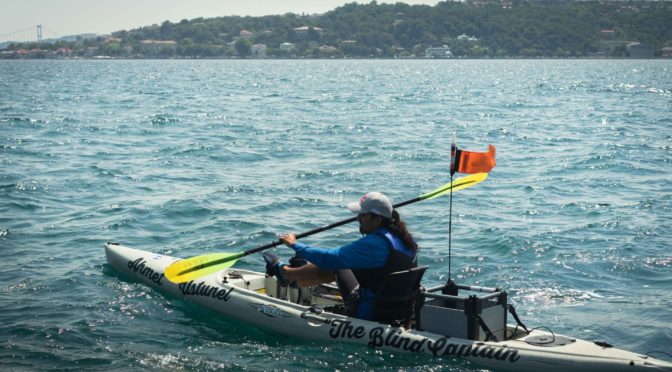
If you picked up a newspaper, turned on the TV or navigated any Istanbul-based news site last weekend, you probably came across the story of 2017 Holman Prizewinner Ahmet Ustunel. It took two technical failures, three last-minute schedule changes, and a whole lot of training and improvisation – but we are pleased to share that, at just before 11 a.m. on Saturday, July 21, Ahmet The Blind Captain successfully navigated a hardshell ocean kayak solo, across the Bosphorus Strait, crossing from Asia to Europe without any visual cues.
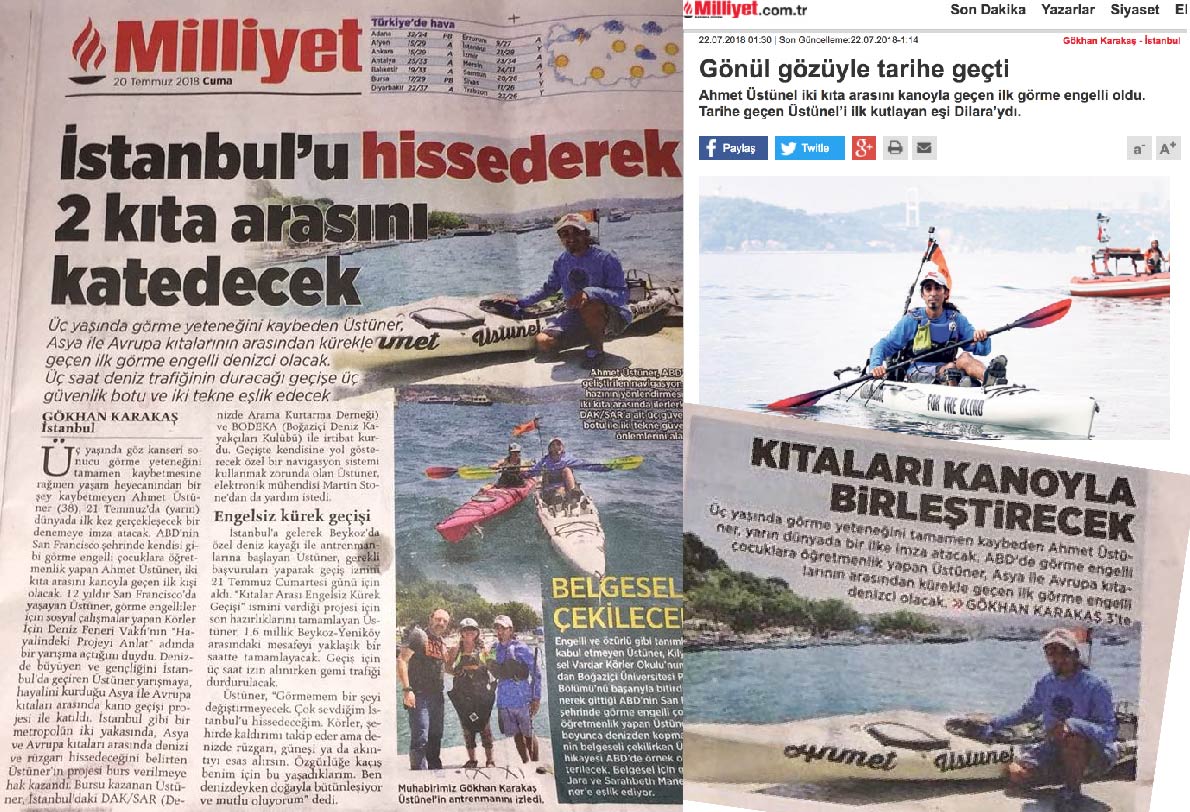
A clipping of a Turkish newspaper shows Ahmet paddling out on the water with a headline in the Turkish language.
For those who tried to view the historic event online: reality and ingenuity caused Ahmet to scrap the anticipated webcast in order to take advantage of an unanticipated time window.
Ahmet jumped into his kayak ahead of schedule, at 9:45 a.m. on Saturday, July 21. Ditching the original plan on the advice of the coast guard, Ahmet aimed to take advantage of a window when shipping traffic was calm. He was told that the window was only a half an hour; a bit of a shock considering that he was originally planning on taking 90 minutes to make the 3-mile crossing. Suddenly, he had one third of the time he expected to get across the 3-mile expanse.
In the lead-up to the crossing, things had become more and more hectic. Ahmet had a few crucial bits of tech bite the dust just fifteen minutes before getting in the boat – the result of water damage from a capsizing during one of Ahmet’s training sessions earlier in the week. So when the time came, Ahmet reached for old standby tools: namely the Ariadne GPS app, a Victor Stream Reader, and good ol’ Mister Beep, outfitted to give him vibrating compass feedback as he worked furiously to hit each waypoint across the daunting mid-Bosphorus shipping highway.
Ahmet embraces his wife, Dilara, after reaching the other side of the Bosphorus.
“The only thing I was thinking was about paddling,” he said last Sunday, still a little buzzed from the day. And it’s remarkable that he was able to focus. It was all he could do to keep coast guard, friends and journalists from crowding him on all sides, indicating for them to hang back as they eagerly trailed his progress at every turn. It wasn’t hard to know he had reached the other side, either:,100 meters from his destination, he heard the sounds of cheering: friends, family and TV news cameras, welcoming him back with an audible beacon that made it easy to find his final waypoint.
As he celebrated on the shore, overheated and overwhelmed, Ahmet rebelled, jumping back off the dock and into the water – to cool off – but maybe also to show one last display of independence and remind everyone that he was entirely at ease on his home shores.
The beautiful thing about Ahmet’s achievement is not so much one feat of strength or bravery: it’s the consistency, the team work, the flexible and improvisatory way that he adapted to the challenges that inevitably presented themselves, his insistence on staying the course and doing things on his own steam when everyone else would gladly step in to help.
This isn’t the end for Ahmet. His newfound confidence as a blind sailor and the support of the Holman Prize now make him feel able to take on yet more adventures. He assures us that he plans to cross the strait again next year – this time, when no one is paying attention. “If in 20 years, it’s still amazing for a blind person to navigate a kayak solo,” he always reminds us, “then we haven’t done our job.”
The Access Technology department at LightHouse is here to facilitate the use of accessible technology among people of all ages and levels of expertise, as well as groups and companies seeking education or consulting.
We welcome those with changing vision or visual impairment to come explore ways to make their phone, computer or other devices easier and more comfortable to use. We’re here to help you find new technology tools to stay productive at work, or keep in touch with friends and family.
Training
Whether you’re just getting started with access technology, or you need to update your skills to keep pace with the latest and greatest tools and apps, LightHouse is here to help.
We have a variety of resources to educate and introduce you to different technology, and the ways you can use them. Our staff will take the time to learn about you, your needs and interests and the technologies you may have used in the past.
With an instructor, you can explore whether magnification, speech, Braille or a combination of these tools will best suit your needs.
You can meet one-on-one with an access technology instructor, and work on skills that will help you achieve your personal and professional goals. We also have group workshops to build skills and connect with the LightHouse community.
Corporate Accessibility Consulting
We invite companies updating their technology, or seeking an accessibility evaluation to make an appointment with the Access Tech department. Contact us about your company’s specific needs, and we can discuss how to help.
Here are a few of the services we offer:
Design consulting —We can help you plan and design a product that is accessible from the ground up.
Functional accessibility review — We utilize our expert access technologists to assess your website or app from an accessibility perspective.
User testing sessions — We organize our blind and visually impaired user testers of all backgrounds and levels of vision to provide feedback on your product or service.
Press for our consulting services:
TechCrunch: LightHouse Access Tech Director Erin Lauridsen interview on ‘Bullish’
The Verge: Soundscape, our new design consulting project with Microsoft
On Saturday, July 21, students gathered to celebrate their graduation from the Youth Employment Series (YES) Academy, LightHouse’s employment readiness program. Students ages 16 to 24 attended the month-long immersive program, which aims to build confidence through learning first-hand knowledge, collaborating, identifying strengths and interests and gaining a sense of direction through interactive work-based experiences.
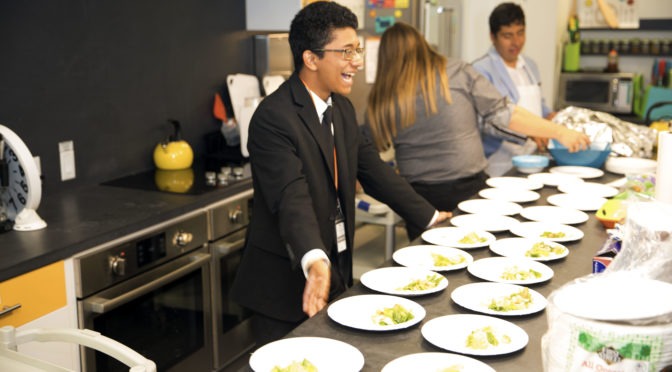
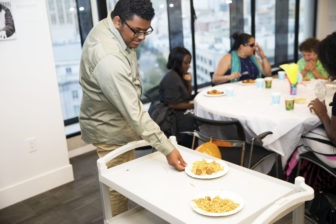
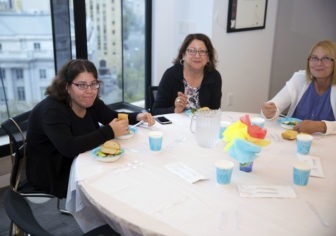
Students organized, prepared and served a three-course dinner for the occasion. The graduates looked sharp in semi-formal attire that they selected and styled in conjunction with a professional attire seminar and a group outing to Macy’s.
Jose serves freshly cooked pasta with meatballs to a table of guestsKayla, her mother and a friend enjoy salad and appetizers
Meet YES Academy 2018
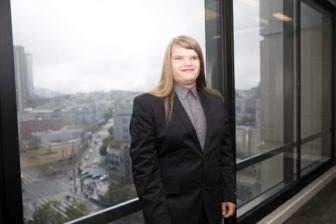
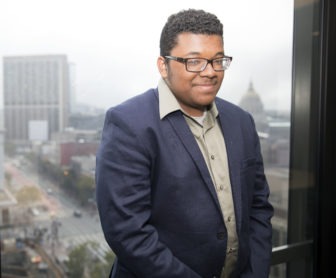
This year’s YES Academy students each had their own immersive job experience in the community, commuting to and from work while staying in the residential facilities at the LightHouse’s downtown San Francisco headquarters. We caught up with them at the YES family banquet this weekend. Their names are listed alongside the company that they worked at this summer, along with quotes from each student about their experience.
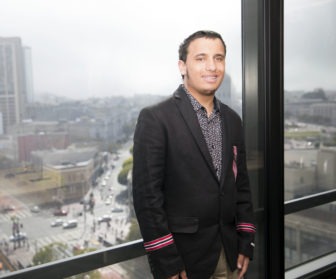
Portrait of Kyle
Kyle – Center for Independent Living
“I did some inventorying of random assistive technology tools that they had. I also helped administer a presentation at senior retirement housing, where we showed off some assistive technology tools that might be able to help them.”
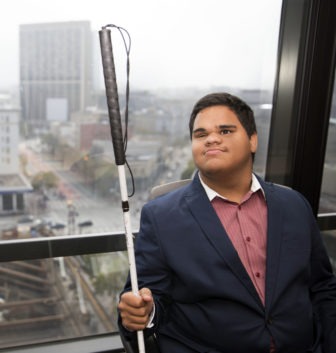
Portrait of Jose
Jose – LightHouse Sirkin Center
“You need to manage your time, [otherwise] stuff starts to pile up.”
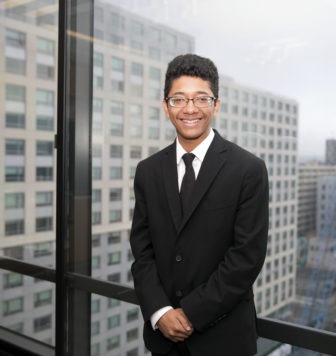
Portrait of Andy
Andy – LightHouse Sirkin Center
“I packaged toilet paper to send off to war-torn countries. That was a very good experience.”
Portrait of Erick
Erick – LightHouse Sirkin Center
“I actually had to do different stuff including reworking, sorting items, and then I had to do some machinery work.”
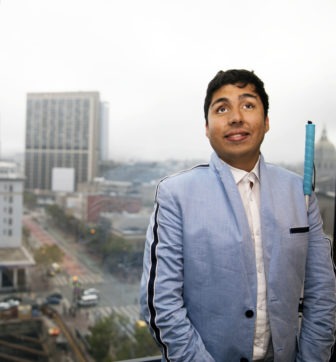
Portrait of Santiago
Santiago – Call of the Sea
“I went through the entire website catalog, all of the pages, and I looked at what was accessible, what was not accessible, what was somewhat accessible and needed to be improved. I wrote a business report with the details as to what needed to be improved and what the best way would be to improve it.”
Portrait of Steven
Steven – Call of the Sea
“Me and my partner Santiago just worked on business reports, analyzing the company’s website and seeing how we can make it more accessible and what next steps the company needs to do to make it possible for blind or visually impaired people to access their website easier.”
Portrait of Kayla
Kayla – Roxie Theater
“It’s motivated me to send my resume and apply for other jobs.”
Portrait of Richard
Richard – Roxie Theater
“I worked at the cash register. I wasn’t good at it but I kept at it, and I got better, and now it’s not a weakness anymore.”
Looking for more information or to get involved in LightHouse Youth programs? Email youth@old.lighthouse-sf.org
Ahmet Ustunel won the Holman Prize for Blind Ambition in 2017, becoming one of the prize’s first three recipients. On July 21, he will complete his project in one great flourish: with a solo trip across one of the world’s busiest shipping channels, alone in a kayak. LightHouse for the Blind and Visually Impaired in San Franciscoannounced the 2018 Holman Prizewinners this month, and we will continue to provide updates on the projects of our other two prizewinners from 2017, Penny Melville-Brown and Ojok Simon, as the summer continues.
In the hills of Istanbul, there aren’t always sidewalks. To get to where you’re going, you have to hug the sides of the busy streets, sharing the roads with the cars, bicycles and lifeforms of this city of 15 million. This is Ahmet Ustunel’s summer commute, a 90-minute trip that he takes each morning to the very Southeastern tip of Europe to the shores of the mid-city shipping channel known as the Bosphorus Strait, where he practices for his solo journey across the waterway at the end of the month.
Ahmet is starting to get a bit nervous. It’s early July, hot every day and this blind San Francisco schoolteacher has returned to his native ground to begin, quietly, the greatest adventure of his life. For the last seven months, he has lived on the water – venturing from his home back in San Francisco to seek out the Bay Area’s aquatic offerings nearly every week, sometimes with friends and sometimes, alone. He’s not nervous on the water. But he also knows that technology is a fickle friend. And with the devices he relies on to navigate, technical failure is a likelihood.
“I feel like I’m working full-time,” says Ahmet. “I’m pretty much working 16 hour days. Including the commute, my training takes eight to 10 hours. Then I take care of paperwork, permits so that we can film, logistics, finding a support boat.” Ahmet’s journey, it turns out, is more a test of planning and anticipating challenges than strength or skill.
Sound travels differently on the water. It slows down and dances lazily in the cool pocket of air just above the water’s surface. This can have an amplifying effect, making sound appear closer from great distances, but it comes with a price: sounds also stretch and bend, ricocheting off choppy breaks and skipping along with deceptive ease when the water is calm.
For a lone blind boater, this is a real consideration. “You can’t really pinpoint if something is going to hit you or pass by,” Ahmet tells me from Turkey earlier this week. It’s 10 p.m. there, but I can hear the sounds of the city behind him over the phone, like he’s out taking a stroll. “The sounds stretch out on the water. That’s the problem,” he says. “It’s not like listening to a car and realizing if you are in its way or not. And if it’s a big boat, most of them have their engines on the back so you hear the sound farther, but the boat is actually closer. You can have a 70 meter boat, like the size of a football field, but because the engine is on the back the boat is actually 70 meters closer than it sounds.”
Ahmet Ustunel pulls his kayak to shore while training for his solo journey across the Bosphorus Strait. Photo courtesy of the Blind Captain.
One of the busiest waterways in the world, the Bosphorus is a highway for ships threading the needle between Europe and Asia. Ahmet was raised in this industrial landscape. Totally blind since age 3, Ahmet grew up on these shores, swam on these beaches, and most of all, dreamed of a day when he could captain a boat. Decades later and fully assimilated to life in America, wending his way through the bustling and at times chaotic infrastructure of Istanbul makes him feel a bit rusty.
When it comes to heavy traffic, the strait carries more than 40,000 boats and ships a year (approximately 110 a day). “I’m not afraid of capsizing or ending up in the water,” he says. “It’s fine. But the boats – they don’t pay attention. Most of the time they don’t look around. They assume that you are going to get out of their way, and that’s the only thing that scares me on the water.”
In an uncharacteristically theatrical move, Ahmet attaches his white cane to his kayak, sticking up right out of the stern. But the cane, which serves as a valuable navigation tool on the streets, is useless in water.
At 10 a.m. on Saturday, July 21 (12 a.m. on Friday night in Pacific Time), Ahmet will attempt the journey he’s been planning since applying to the Holman Prize in January 2017 – here’s how he’ll do it:
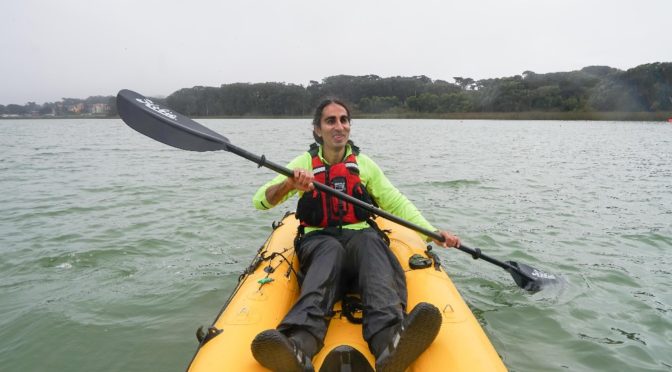
Ahmet’s vehicle of choice is a Hobie hard-shell kayak, with a foot-paddle system that allows him to power the craft by pedaling, like a bicycle. In his left hand, he’ll hold a lever that runs down to the kayak’s rudder and allows him to steer and keeping his right hand free to manage his navigational devices.
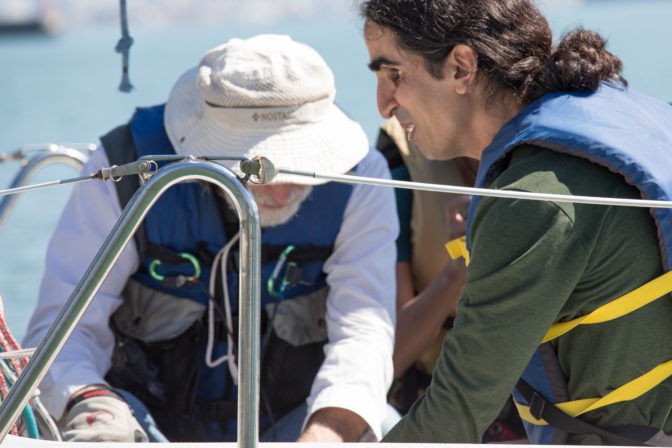
Ahmet shows his sonar navigation system to a fellow blind sailor named Ben.
The tech, which Ahmet developed with a team of volunteer engineers (many of whom also work at AT&T, in Atlanta) is fairly simple, but comprised of a delicate orchestra of devices that weren’t necessarily made to work together. There’s a talking depth sensor that Ahmet has repurposed to identify objects at a horizontal rather than vertical distance; a non-visual compass of sorts called Mr. Beep (originally an aid for blind rowers), which Ahmet has hacked to send vibrating feedback to his left or right hands to show direction while keeping his ears free to listen to traffic; and of course his phone, which will mostly function to livestream his progress to the world.
Ahmet’s friends on land will help him scope out the strait the morning of the launch, settling on a time when there’s the least likelihood of him paddling straight into a nautical traffic jam. But once Ahmet sets his boat in the water, he’s on his own, first paddling out 20 or 30 meters by hand, then pedaling by foot. The current is strong on the straight, stronger than northern California’s Tomales Bay, where Ahmet has practiced on his own in the past.
When he reaches the shipping highway in the middle, he’ll have to decide if it’s safe to cross. That’s when things become a bit risky. In case of emergency, Ahmet has developed a three-tiered code system with his support team, who could radio him at danger level 3 to let him know he’s on a collision course with a ship. At that point it’s still his job to get out of the way, and the team won’t interfere with any navigational needs or warn him about stationary objects.
When I asked him what he’ll do when he reaches the other side, Ahmet is characteristically humble: “I don’t know, have a tea.” Then, assuming all is well, he’ll hop back in the kayak and return to the other side (an unassuming and unpublicized second crossing).
The support team trailing Ahmet in the distance (he’s told them to stay far enough away that he can’t hear their engine) will include Sarahbeth Maney, a Bay Area photojournalist who has followed Ahmet through his whole journey and is working on a documentary about Ahmet called “The Blind Captain”, and Dilara Yarbrough, Ahmet’s wife and a Criminal Justice professor at San Francisco State. On the shore, Ahmet will be greeted by a contingent of enthusiastic friends and Turkish journalists, including publications such as TRT World, who have taken interest in his endeavor.
The team won’t be the only ones following him, though. Ahmet’s crossing will be live streamed through his Blind Captain Facebook page, and sighted map enthusiasts should be able to track his GPS location at his engineering team’s tracker page. The map will give those who are following along visually a sense of how efficiently he moved across the water, and the Holman team at LightHouse will recap his progress on the LightHouse Facebook Page as well.
Finishing the journey won’t change the course of history or go straight into a Guinness book, but Ahmet knows that the symbolism of his solo trek is powerful for the general public and other blind would-be adventurers alike. He has visions of the modified Mr. Beep becoming a mainstay for blind navigation of all sorts. Late last year, in an interview with Red Bull, Ahmet suggested that the hacked tech he developed could also work for blind runners, surfers, cyclists and others who need intuitive non- visual guidance.
Returning to Turkey has become a tradition for Ahmet and his family, and he has a group of blind friends and colleagues there even bigger than the network he has in the states. Next summer, he hopes to return to do something “a bit more social,” such as passing on his kayaking skills and love for the outdoors to other blind children who are nursing the same dreams of piloting their own destiny.
About the Holman Prize
In 2017, San Francisco LightHouse for the Blind launched the Holman Prize to support the emerging adventurousness and can-do spirit of blind and low vision people worldwide. This endeavor celebrates people who want to shape their own future instead of having it laid out for them. In early July, we announced the 2018 Holman Prizewinners — congratulations to Stacy Cervenka, Conchita Hernández and Red Szell.
“We are thrilled to be able to continue the Holman Prize for a second year,” says LightHouse CEO Bryan Bashin. “These three new prizewinners represent a wide range of ambitions and life experience: from tackling social obstacles to to huge tests of physical and mental fortitude, they reflect the diversity and capability of blind people everywhere.”
Created specifically for legally blind individuals with a penchant for exploration of all types, the Holman Prize provides financial backing – up to $25,000 – for three individuals to explore the world and push their limits. Learn more at holmanprize.org.
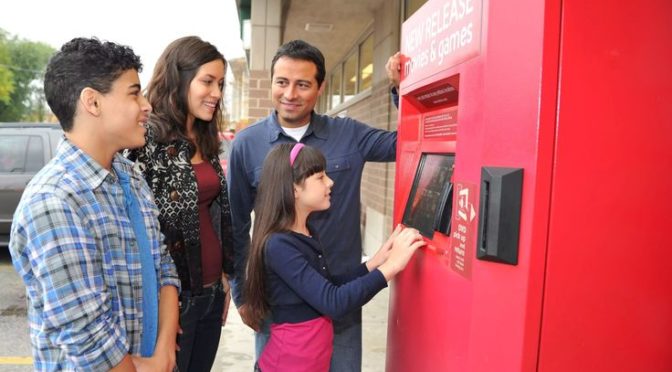
Help the LightHouse as we test to ensure accessibility of Redbox movie rental kiosks! Sign up to become a tester and try out Redbox’s new platform for accessibility. We have completed the first two rounds of tests and need additional participants for our final study.
We are seeking new participants only. No repeat participants please.
You’ll be asked to test the following functions to determine effectiveness for blind users:
Accessing information with the user interface touch pad
Browsing through options and locating your desired movie
Renting a movie
Returning a movie
Gratuity
Participants will receive a $150 Visa gift card or Amazon electronic gift card upon completion of the post study survey
What is required
Two visits to a Redbox kiosk convenient to your location. Redbox Kiosks are located outside and inside supermarkets and retail centers throughout CA and can be found via www.redbox.com
Headphones to hear the speech output prompts
Debit or credit card to pay for the movie rental
Provide your transportation to and from the kiosk location
Two visits are needed to complete the study, one visit to rent the movie and one visit to return the movie.
Allow approximately 20 minutes per visit to navigate the interface, to browse, rent and/or return the movie
Please be aware that other customers may wish to use the kiosk during the study
After each visit, you must complete a survey with your findings
Sign up to become a tester by emailing redbox@old.lighthouse-sf.org by July 26. The study period ends August 3. Please note that you are responsible for your transportation to and from Redbox kiosks and incur the normal risks associated with your travel.
LightHouse Staff1 Commenton Meet Conchita Hernández, teaching blindness across the border with the Holman Prize
Since 2017, LightHouse for the Blind and Visually Impaired has presented the Holman Prize, which funds the ambitions of three blind individuals each year. One of the 2018 prizewinners is Conchita Hernández, from Washington, D.C., USA. Conchita will convene the first-ever blind-led conference in Mexico devoted to bringing masses ofblind people, their families and mentors together in Guadalajara to understand there is an alternative to the traditional expectation of dependence and poverty.
Last year Conchita Hernández hosted a blindness workshop in the border town of McAllen, Texas. She wasn’t sure how many people would show up. McAllen sits on the US border with Mexico, a city surrounded on all sides by government checkpoints – a civic purgatory for undocumented immigrants who can’t move back or forward. It wasn’t clear how many blind students there were in McAllen, but, when a quality service is offered, word spreads. Sixteen families showed up, each united by the same pursuits: healthier options, better information, and a better life for their blind children.
Life is not perfect for blind children in South Texas, and many blind children still do not qualify for services in the American system because of their immigration status. The prospects in Mexico, however, are worse. Blindness alone is not a qualifier for asylum, and so many families with blind children attempt to cross the border on their own. One case, inNogales, AZ in April, saw a blind 6-year-old and her 4-year-old brother taken from their mother while she was held indefinitely.
Herself a child of immigrant parents who brought her to America at age 4, along with an older brother who is also legally blind, Conchita didn’t live the same struggle as if she had stayed in her birthplace, the Mexico City exurb of Jocotitlán. Instead, she was raised in California, learned English, made friends, went to college. By age 30, she had lived in the Bay Area, New Jersey, Nebraska, Louisiana, and ultimately settled in Washington, D.C. to pursue a doctorate and a career as an educator.
This might not have been possible had she stayed in Mexico, a country where blind people are vastly unemployed and rarely live independently. Here, blind people mostly sell government-apportioned lottery tickets and snacks on street corners and metro stations, and no education is promised. Schools for blind students are private, meaning they cost a lot of money. When they can’t afford tuition, Conchita says, families must beg public schools to accept their visually impaired children, and it doesn’t always work. “There is no ADA or IDA,” she said over the phone from DC last week. “So, a public school can just tell them, no, we don’t know how to serve you.” Despite the fact that Mexico has recently adopted some new rules and regulations regarding disability, they are little regarded or enforced.
This is why Conchita started Mentoring Engaging and Teaching All Students (METAS), a US-based nonprofit run by similarly passionate, blind, first-generation millenials who have made it their mission to empower Latin America with consistent, quality information about blindness. In multiple trips to the country, Conchita found that word spreads quickly – once families realize there are solutions they can afford. That’s the same reason that, last year when they started holding workshops on the Texas side of the border, people really showed up.
The Holman Prize will fund Conchita to take these workshops to the next level – this time, in Guadalajara, Jalisco State, a region with 8 million people and an estimated 40,000 blind residents, where she knows the people and the immense need. A center for blindness schools, Jalisco State has been called the Mexican Silicon Valley. With funding to provide staffing, lodging and scholarships, the “Changing Lives” conference (Cambiando Vidas) will be able to serve Mexican families from all over the country. “We’ll be bringing the people from Mexico together to have them access the resources and information that already exist but are unknown,” she says. “We’re going to have workshops on O&M, braille and daily living, so that they can come together in one place, learn and realize they’re not alone.”
“There really hasn’t been a blindness-focused conference run by blind people,” she says. “What’s different about this conference is that it won’t just be professionals talking at people. We’ll be having breakout sessions, as well as providing training. We’re also going to have an exhibitor hall, where people can find out about resources that are available to them in their areas.”
In a place where blind people are openly considered to be a burden, the idea behind Cambiando Vidas strikes at a deeper insight: you can have the best education in the world, but if your family doesn’t believe in your capability, you are at a great disadvantage. For this reason, it’s equally important to educate parents and relatives about what their blind children can achieve. “We can teach skills, we can teach you to use a cane,” she says, “but if we don’t teach them empowerment, it doesn’t mean much.”
For her Holman Prize project, Conchita plans to bring Cambiando Vidas to Guadalajara in July 2019. “The goal is that this will serve as the beginning of people coming together and advocating for themselves and advocating through the government as well,” she says. “We want better education for our children. In the short term, it’s just about them being able to find resources amongst each other so that what is possible for a blind person can shift, and so that the people who are begging can find something else.”
Cambiando Vidas is just a small piece of Conchita’s much greater ambition, but it’s a project where the Holman Prize will go a long way. On this, Conchita is clear: “I don’t think people should have to cross the border to access these services, but more importantly I don’t think that they should have to cross the border to lead a dignified life. Wherever you’re born you should have the same opportunities as everyone else.”
“The LightHouse believes that all blind people, whatever their nation of origin, should have access to modern thinking and tools to enable them to live in an accomplished manner,” says Bryan Bashin, CEO of the San Francisco-based organization. “Our struggles and accomplishments are the same in whatever country we live, and it gives the LightHouse great pleasure to help bring these options to blind people around the world.”
The LightHouse for the Blind and Visually Impaired, which is a 501(c)(3) nonprofit organization based in San Francisco, is actively seeking sponsorships and support for the 2019 Holman Prize, including donations of equipment for the winner’s projects. To offer your support, contact holman@old.lighthouse-sf.org. Individuals may donate any amount using LightHouse’s secure form. For sponsorship inquiries, email us or call (415) 694-7333.
LightHouse Staff1 Commenton Meet Red Szell, braving Scotland’s most extreme triathlon with the Holman Prize
Since 2017, LightHouse for the Blind and Visually Impaired has presented the Holman Prize, which funds the ambitions of three blind individuals. One of the 2018 prizewinners is Red Szell, from London, United Kingdom. With the Holman Prize, Red will train for an extreme triathlon to include a 10-mile off-road tandem ride, an ocean swim and a 200-foot climb up one of Scotland’s most dramatic oceanic rock formations, Am Buachaille.
It was 2013, and at 46 years old, Red Szell was on top of the world. Or it must have felt that way – pulling himself up the last craggy expanses of rock to become the first blind person to climb the Old Man of Hoy, a narrow, jutting 449-foot sea stack off the north coast of Scotland. About 10 meters from the top, he reached a plateau – a quiet place just below the summit where the layers of red sandstone part just enough to expose a wide swath of the North Sea. As the sun shone in and the wind whipped his face, that’s when Red had an epiphany: “I realized I never would have done this if I wasn’t blind.”
Red wasn’t always blind, but he was always a climber. Raised in rural Southeast England, Red led the childhood one would imagine in the idyllic British countryside – climbing trees, riding bikes, hoofing it to the nearest village a mile away and always looking out for his siblings, six and seven years younger than him. At the age of 12, Red saw a TV interview with Chris Bonington, the beloved mountaineer, telling the tale of his climb to the top of the Old Man of Hoy. “It just clicked,” says Red. “I’d always loved climbing; but I knew right there that my life just wouldn’t be complete until I had climbed one of these sea stacks.”
Soon, Red was spending his teenage summers climbing in the Welsh mountains with the army cadets, learning from some of the best climbing instructors on offer. He was accepted into Cambridge University and his dreams danced before him. Then, at age 20, something odd happened. Strolling down the street with his parents one afternoon, Red ran smack dab into a pole. “Once I’d convinced my parents I wasn’t on drugs,” he jokes, “I went to the doctor.” The doctor looked at his eyes and said he had a progressive condition with no cure. He would become blind and there was no way to stop it.
At first, Red tried denial. He kept climbing. On the weekends, he and his college buddies would continue what Red calls the “rich tradition” of climbing the old college buildings on the historic, flat old Cambridge campus, celebrating in the way that college students do when they reached the top. One night shortly after his diagnosis, descending after one such illicit climb (and likely relying on his undependable vision for guidance), he made an error. Red lost his footing and plummeted 20 meters down the Fitzwilliam Museum’s concrete facade. That likely would be the end of the story, had he not landed in a fortuitously-situated Rhododendron bush.
“At that point I thought, this is just stupid. I’m either gonna kill myself or just stop.” So he hung up his harness and gave up hopes of being a climber. He had no idea that blind people had developed non-visual ways of scaling some of the world’s most challenging peaks.
Toppling his fear of blindness, though, took many more years. “I calmed down a bit,” he says, “but I didn’t come to terms with it. I was angry. I worked a bit harder, focused on my English degree, but really, I went into a sulk for about 20 years.”
More than two decades later, Red had trained to use a cane, read non-visually, cook, clean, and, for the most part, life life as a well-adjusted blind person. An accomplished journalist, author and eventually a father of two, Red raised two children simultaneously while he learned to work with his ever-changing vision – an accomplishment some might consider greater than climbing a mountain. He was still nagged, though, by his continuing passion for stretching his body, summiting real peaks and thus showing respect and care for his physicality.
In 2009, for his daughter’s ninth birthday party, he found himself at an indoor climbing gym. With just enough vision to ogle the courses set out on the multi-tiered, multi-colored walls, Red was transfixed. An instructor, noticing his interest, offered to belay him, if he wanted to try. And like that, Red was back in the harness. To his surprise, he found, like other elements of life – blindness was not the obstacle he imagined it to be. With his return to climbing, so returned the spirit of that 12-year-old mountaineer.
Four years of rigorous training later, Red became the first blind man to summit the Old Man of Hoy. Realizing that it was his blindness that led him there, he said, allowed him to embrace a new identity. “Whilst I’d kind of come to terms with losing my sight, and come to terms with using a white cane to get around and be identified as a blind person, I’d never embraced it. I’d never let it be part of me, it always felt like some kind of alien in me.” But by maintaining healthy exercise routines, Red finds it much easier to see blindness as part of his core identity. “As I’ve gotten more blind, you can start to feel less equal to the world around you,” he says, “and by maintaining my core fitness and my balance through pilates, yoga and swimming, that has helped me tremendously.”
In June 2019, for his Holman Prize project Red will return to sea stack climbing – but with slightly higher stakes. His “Extreme Triathlon” includes a 10-mile ride through a notably hazardous bog-land, a 200-foot abseil followed by a swim through open ocean, and a climb up the 213-foot ocean spire called Am Buachaille. But more than just a triathlon, Red has a plan to document the whole endeavor, working closely with action-sports adventure videographer Keith Partridge to turn the project into more than just a feat of strength, but a message to other blind people not to give up their passions because of a change in vision: “The Holman Prize gives me the platform to stand up in front of the world and say: ‘This is doable.’ Don’t think that because you can’t see you can’t push life to its extremes.”
When confronted with the potential risks, Red says he doesn’t tempt fate, but is confident in his ability to train and prepare for the utmost safety. “It’s a controlled risk. I always say I’m more likely to get run over crossing a busy road in London than I am on a rock face. The thing that scares the willies out of me is walking up a crowded pavement with smartphone zombies not looking where they’re going, pushing me into traffic. That scares the heck out of me. I’m much more in control when I’m swimming and when I’m climbing.”
Red makes a good point: for most of us, the insurmountable peaks are more like finding a good job, walking with confidence, staying fit and healthy or – in his case – making the commitment to fatherhood even when it’s scary. But whatever the goal, it’s better than a the decades-long slump. “I spent some really depressing times sitting on my sofa, drinking too much beer and saying ‘life is shit’ — and I look at that as kind of wasted time now. I wish I knew what was possible back then.”
“Accelerating the self-confidence and self-respect of blind people is key to what we do every day,” said Bryan Bashin, CEO of the LightHouse for the Blind in San Francisco, “Exposing newly-blind people to a world of accomplishment and skills early can save years or decades spent needlessly in self-doubt.”
The LightHouse for the Blind and Visually Impaired, which is a 501(c)(3) nonprofit organization based in San Francisco, is actively seeking sponsorships and support for the 2019 Holman Prize, including donations of equipment for the winner’s projects. To offer your support, contact holman@old.lighthouse-sf.org. Individuals may donate any amount using LightHouse’s secure form. For sponsorship inquiries, email us or call (415) 694-7333.
LightHouse Staff1 Commenton Meet Stacy Cervenka, creating an online community for blind travelers with the Holman Prize
Since 2017, LightHouse for the Blind and Visually Impaired has presented the Holman Prize, which funds the ambitions of three blind individuals. One of the 2018 prizewinners is Stacy Cervenka, from Lincoln, NE, USA. Stacy’s Holman Prize ambition is to research, develop and launch a “blind Yelp” of sorts, called the Blind Travelers Network. Similar to TripAdvisor or Cruise Critic, the site would give blind individuals crowdsourced knowledge about the accessible places and services that they can’t currently access anywhere else.
“If we go to a resort in Jamaica because they have scuba diving, we’re not protected by the ADA there, so what do we do if we get there and they don’t let us dive?”
These are the questions that keep Stacy Cervenka awake at night. And they’re not just anxiety dreams: they’re real questions that she confronts every time she travels.
“The ADA doesn’t cover Jamaica,” she offered, over the phone last week, “it doesn’t cover Europe or Canada. Canada is just developing it’s disability laws now. If you travel somewhere where you’re not protected, and someone tells you can’t get on the bus – you can’t get on the bus.”
Stacy, who lives with her family in Lincoln, Nebraska, is quite good at painting a mental picture: a blind family, eager to see the world, cut short by a society that doesn’t understand their needs, or worse, their capabilities. As a blind person, once you start imagining all the ways your trip could go wrong, it’s a bit of a downward spiral. But on the flip side – where does a blind person go to have the time of their life? Also a valid question.
This is why Stacy hatched a new idea to meet a need that, oddly, hasn’t been met yet: the Blind Travelers Network. Think Yelp, Trip Advisor, or Cruise Critic – but designed for the betterment of a population who wants one thing, more than anything else: information.
Stacy grew up in a place where community was everything. Raised on the suburban outskirts of Chicago, she was a blind girl, but she was also the oldest sibling in a family that trusted her implicitly.
“We were the ultimate latchkey kids,” she explains. With a father who was a harbormaster and a mother who worked nurse shifts until 11 p.m., it was common for Stacy and her little siblings to spend entire days taking care of themselves: cooking dinner, hanging out with friends, playing in the neighborhood, and only seeing their parents for a few minutes at bedtime.
These were neighborhoods with big block parties, neighbors that watched out for each other, and fire departments that would crack open hydrants on hot summer days. But despite the nostalgic memories, Stacy acknowledges that something major was missing.
“Looking back, I really wish that I had more exposure to blind kids and successful blind adults. My relationship with my family was mostly normal, we all competed in sports, did a lot of the same activities, and spent a lot of time together because our parents worked a lot – but I think I would have had a lot more confidence if I had had exposure to other blind kids and successful blind adults.”
Nonetheless, Stacy developed a passion for travel, and by the time she was a young adult, had traversed the country several times, getting to know its diverse climates, people and cultures. She found beauty and adventure in Wyoming, idyllic summer lodges in the Midwest and Florida.
One thing nagged at her all along, though, frustrating because she had no power over it. What if, on all her travels, she was missing something? Not the visual information that most sighted people would assume she desired, but rather, the accessibility that blind people so deeply deserved; the hospitality that all travelers deserve; the sheer immersive experience, regardless of the level of her sight. She wanted a way to optimize her adventures.
“When my husband and I were first dating in DC,” she remembers, “he wanted to set up a date at a horseback riding place. He set it up, paid for it, and when we go there they didn’t let us ride. We went there really excited to have a romantic date.”
There wasn’t much they could do. “They didn’t know about the law – so the law didn’t matter,” she says. “You can’t call the cops and they’ll show up and handcuff them. The only way to enforce it is to get legal advocacy, and that stinks.” Lawsuits, she says, are not the best end to a romantic first date, for anyone: “We didn’t want to have to fight the system.”
Stacy also knew a review on a mainstream website wouldn’t do her or blind travelers any good. In fact she knew: a blind person wanting to ride horses would only get shouted down: “I could have written something on Yelp or someplace, but you would just get people saying ‘they’re just worried about your safety!’”
Soon she and her husband were married, and planning a honeymoon. Again, Stacy found herself scouring travel sites, like a tortured detective, unable to find the exact clues she needed. “I learned a ton on Cruise Critic!” she insists, “but I still had a ton of blindness-specific questions. You just can’t get those answered on there.”
Two years ago, Stacy took her family to Disney World. This time, she took to Facebook, sourcing a wealth of great information from blind friends and others who knew about accessibility and also had a healthy appreciation for Disney theme parks. And yet, she knew the thread would be lost to the sands of time, couldn’t be easily archived and tagged. This was Information that other blind parents could use “about how to get around, how to manage transportation, how to navigate, how to keep track of our children at the pool,” and nit wasn’t available to those who might need it later. “I just wanted a place for us all to be able to share that.”
The Blind Travelers Network (BTN), she hopes, will provide an answer to this problem, and build a strong new community at the same time. “The goal is that blind people will come to the site and share information about places they’ve been, and ask questions about places they want to go. It’s that simple. It’s not so much about being positive or negative, it’s about being accurate.”
Much like other online communities, though, Stacy knows that she can seed some contributions here and there, but much of the work is in mobilizing the blind internet through social media, word of mouth and other savvy marketing strategies. “It’s only going to be a useful resource if lots of us write reviews. You can still get information about the goulash or the bread pudding on Yelp – BTN is meant to be a site where people can go to get information that they can’t get anywhere else.”
As a founder of the site, Stacy is creating a platform based on her own lived experience, drawing from her travels, struggles and successes to know what works and what doesn’t. “My goal is to create something that I would use myself,” she says. “The Holman Prize will allow me to create something that I’ve always wished existed.”
“In increasing number, blind people understand that fully living in the world also mean fully participating in the richness of travel and recreation,” said Bryan Bashin, CEO of the Lighthouse in San Francisco. “Right now blind people had no effective online way to benefit from each others’ experience when it comes to finding unusual accessible opportunities or preparing for accessibility challenges. Thanks to Stacy’s work soon we will be able to better prepare for our next adventures.”
The LightHouse for the Blind and Visually Impaired, which is a 501(c)(3) nonprofit organization based in San Francisco, is actively seeking sponsorships and support for the 2019 Holman Prize, including donations of equipment for the winner’s projects. To offer your support, contact holman@old.lighthouse-sf.org. Individuals may donate any amount using LightHouse’s secure form. For sponsorship inquiries, email us or call (415) 694-7333.
Photo trio of the 2018 Holman Prizewinners, from left to right: Red Szell, Stacy Cervenka, and Conchita Hernández.
LightHouse for the Blind and Visually Impaired’s three Holman Prize recipients will use their $25,000 awards to promote blind empowerment in Mexico, complete a dramatic oceanic triathlon, and develop the first online community for blind travel.
This fall, three exceptional blind individuals will set off around the world on adventures they never imagined possible as the 2018 winners of the Holman Prize for Blind Ambition.
The three winners, Stacy Cervenka, Conchita Hernández and Red Szell, were announced Tuesday, July 10, after a rigorous judging process. Each winning project embodies its own sense of adventure and ambition – whether it takes the winners on a mentally and physically daunting journey or allows them to build and foster something positive in their community.
Created to change perceptions and reclaim the concept of “blind ambition”, the annual $25,000 Holman Prize awards presented by LightHouse for the Blind and Visually Impaired in San Francisco will springboard future generations of blind entrepreneurs, adventurers and ambassadors.
Now in its second year, the Holman Prize is named after the 19th century explorer James Holman (known around the world as “the blind traveler”) the Holman Prize aims to launch worthy projects that will change the public perception of blindness for years to come.
“We are thrilled to be able to continue the Holman Prize for a second year,” said LightHouse CEO Bryan Bashin. “These three new prizewinners represent a wide range of ambitions and life experience: from tackling social obstacles toto huge tests of physical and mental fortitude, they reflect the diversity and capability of blind people everywhere.”
Last year’s prizewinners, are each in the final stages of their 2017 Holman Prize projects. One of the three, Ahmet Ustunel, will finish his project on July 22 when he navigates his kayak independently across the Bosphorus Strait in Turkey without any human guidance.Read more about the blind kayaker [Red Bull], the blind baker [Virginian-Pilot], and the blind beekeeper [BBC].
Meet the 2018 Winners
Stacy Cervenka
Stacy Cervenka’s project focuses on creating a modern-day tool that James Holman might have put to good use: it’s an accessible travel forum called the Blind Travelers Network geared specifically towards blind users, and shockingly, nothing like it exists. Think Yelp, Trip Advisor, or Cruise Critic – but designed for the empowerment of a population who wants one thing, more than anything else: information. As a “founder” of sorts, Stacy is creating a website from her own lived experience, drawing from her own adventures to know what works and what doesn’t for blind travelers.
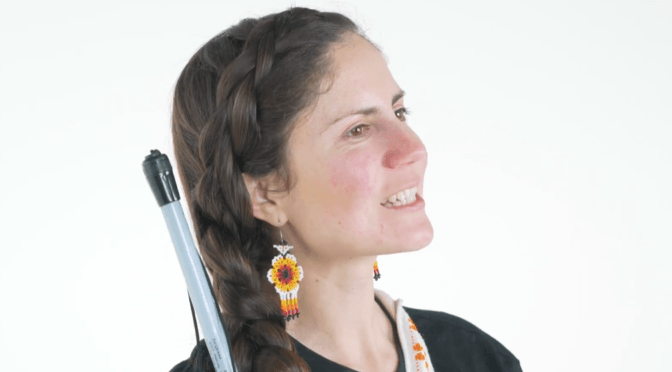
Conchita Hernández’s focus comes from her own experience of immigrating to America from Mexico as a 4-year-old, a decision her parents made in hopes of affording better opportunities for their two blind children. She will use the Holman Prize to provide staffing, lodging and scholarships for her unprecedented “Changing Lives”(Cambiando Vidas) Conference in Guadalajara, Mexico in July 2019. Geared toward families, the conference will offer workshops on white cane travel, braille and daily living. In a place where blind people are openly considered to be a burden, Cambiando Vidas strikes at a deeper insight: you can have the best education in the world, but if your family doesn’t believe in you, you are at a great disadvantage.
Red Szell’s project is an unprecedented physical feat. He plans to attempt an “Extreme Triathlon” comprised of a 200-foot abseil followed by a swim through open ocean, a 10-mile ride through a notably hazardous bog-land, and a climb up a 213-foot ocean spire called Am Buachaille off the north coast of Scotland. But more than just a triathlon, Red has a plan to document the whole endeavor, working closely with action-sports adventure videographer Keith Partridge to turn the project into more than just a feat of strength, but a message to other blind people not to give up their passions because of a change in vision.
Stacy, Conchita and Red were part of a competitive pool of applicants from every continent (except Antarctica). Applicants are required to upload 90-second YouTube videos to pitch their idea for a dream project with a $25,000 budget, before submitting formal proposals. View all 14 Holman finalists’ video pitches. Applications for the 2019 Holman Prize will open in January 2019.
The three Holman Prizewinners will fly to San Francisco in September 2018 for a week-long orientation before starting their project year on October 1. Once they land in San Francisco, the winners will not only meet and learn from each other, but they will engage with other blind teachers, technologists and leaders from LightHouse’s extended network. The winners will also create comprehensive plans to document and share their experiences along the way through video, audio, writing and other storytelling mediums.
The Holman Prize is determined by a prestigious group of judges, almost all of whom are blind. The prize is a flagship program of the LightHouse for the Blind in San Francisco, who will salute each winner in an annual gala now set for November 29 in San Francisco.
In 2017, San Francisco LightHouse for the Blind launched the Holman Prize to support the emerging adventurousness and can-do spirit of blind and low vision people worldwide. This endeavor celebrates people who want to shape their own future instead of having it laid out for them.
Created specifically for legally blind individuals with a penchant for exploration of all types, the Prize provides financial backing – up to $25,000 – for three individuals to explore the world and push their limits. Learn more at holmanprize.org.
About the LightHouse for the Blind and Visually Impaired in San Francisco
The LightHouse for the Blind and Visually Impaired, which is a 501(c)(3) nonprofit organization based in San Francisco, is actively seeking sponsorships and support for the Holman Prize, including donations of equipment for the winner’s projects. To offer your support, contact holman@old.lighthouse-sf.org. Individuals may donate any amount using LightHouse’s secure form. For sponsorship inquiries, email us or call +1 (415) 694-7333.
“Blind people profit from access to maps as much if not more than their sighted friends and family,” said LightHouse CEO Bryan Bashin, himself blind and an avid map user. “That’s the reason the LightHouse is commercializing accessible, automated map production.”
TMAP was developed by LightHouse in partnership with the Smith Kettlewell Eye Research Institute over the past year and is the culmination of many years of iterating and testing. The system allows a blind user to type in a point of interest, auto-generate a specially formatted map file, and print a tactile (raised line, braille) map on an embosser in one simple workflow.
“The internet gave sighted people the ability to generate a street map of anyplace they wanted,” said Dr. Joshua Miele, the blind scientist at the Smith Kettlewell Eye Research Institute who conceived TMAP. “I wanted blind people to have that, too.” Lighthouse’s T-Map project stems from original work conducted by Dr. Miele in 2011 and has been transformed into a consumer-facing service by the LightHouse’s Media and Accessible Design Lab.
Those interested in obtaining tactile maps for their locality can e-mail adaptations@old.lighthouse-sf.org and will soon be able to purchase the maps through an online store.
The Bolotin award was presented during the annual convention of the National Federation of the Blind, the largest gathering of blind people held anywhere worldwide. LightHouse’s Senior Director of Programs Scott Blanks accepted the $5,000 honor.
“At the LightHouse, we are passionate about connectivity, community, and the power of autonomy through access to information,” says Blanks. “Tactile street maps embody these tenets, giving each blind person the agency to decide how they wish to interact with the world around them. When a person can touch, or look at, a top-down streetscape, so much can be unlocked: the orientation of an intersection, directionality of streets, and a better overall understanding of how a neighborhood fits together. With TMAP, we are just getting started.”
About the National Federation of the Blind’s Dr. Jacob Bolotin Award
The Dr. Jacob Bolotin Awards are presented annually by the National Federation of the Blind with support from the Santa Barbara Foundation to recognize outstanding individual and organizational achievements in the blindness field. For more information, go to nfb.org.










 The
The 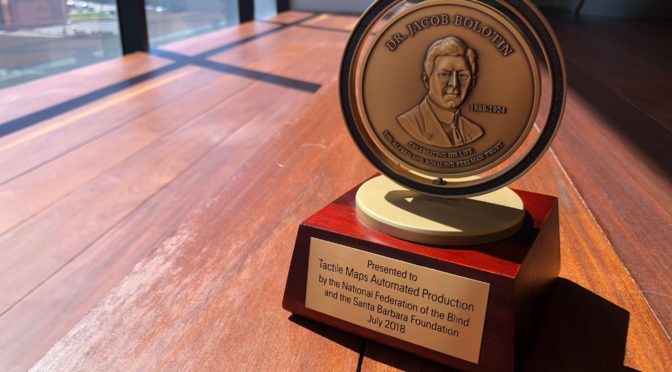
 On Sunday we accepted a national award for a new technology that’s got the blindness community talking – and walking.