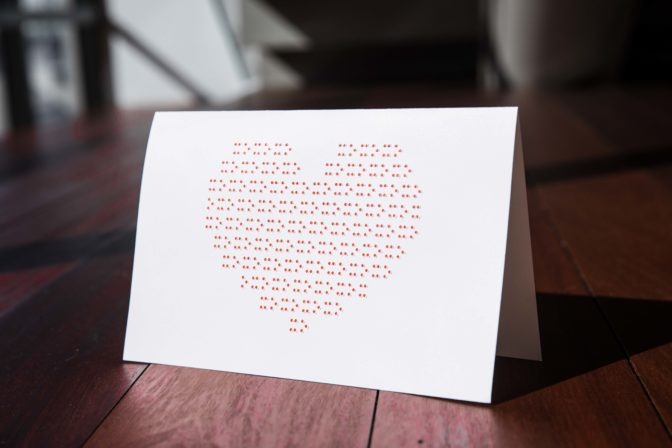
This Valentine’s Day, give your loved one real feels with our new line of fun, touchable greeting cards. Our Adaptations Store is offering three designs, each with ink-print, tactile and braille designs on a white background.
Individual cards are $6, or you can purchase four for $20.
All cards come with an envelope.
All front covers of the greeting cards feature a combination of ink print and tactile graphic design.
The Adaptations Store and the MAD Lab will continue working together to design fun and creative accessible greeting cards that appeal to a wide audience, for all occasions.
We will roll out cards all-year-round. Keep posted for birthday, thank you, Mother’s Day, and Father’s Day!
A white greeting card features a 4 X 3 grid of ink-print and braille patterned and multicolored hearts. The inside of the card reads “Happy Valentine’s Day!” in red large-print and braille.An ink-print and tactile graphic of a tic-tac-toe board with a heart in the center, on a white greeting card. The inside of the card reads “Happy Valentine’s Day!” in red large-print and braille.Red ink-print and braille X’s and O’s form the shape of one large heart on a white greeting card. The inside of the card is blank.The inside of the card reads “Happy Valentine’s Day!” in red large-print and braille.
Adaptations is the only place in Northern California with a comprehensive offering of tools, technology, and other solutions for blind and visually impaired people. The store is located at our San Francisco headquarters at 1155 Market Street, on the 10th floor. Store hours are Monday through Friday, from 10:00 a.m. to 5:00 p.m. We are also open on the second Saturday of each month from 10 a.m. – 2 p.m. Although we do not take online orders at the current time, we encourage you to call our staff at 1-888-400-8933 to inquire about item pick up or mail orders or email our store staff at adaptations@old.lighthouse-sf.org.
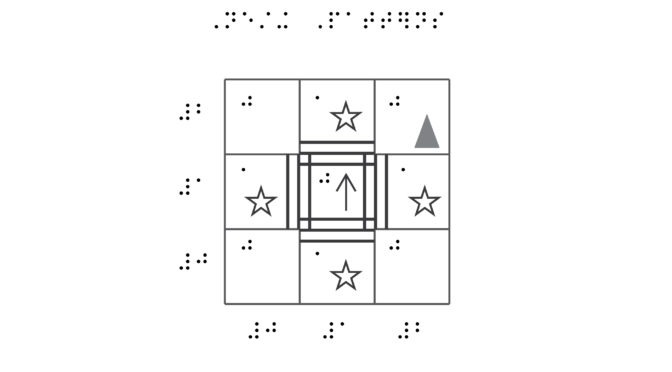
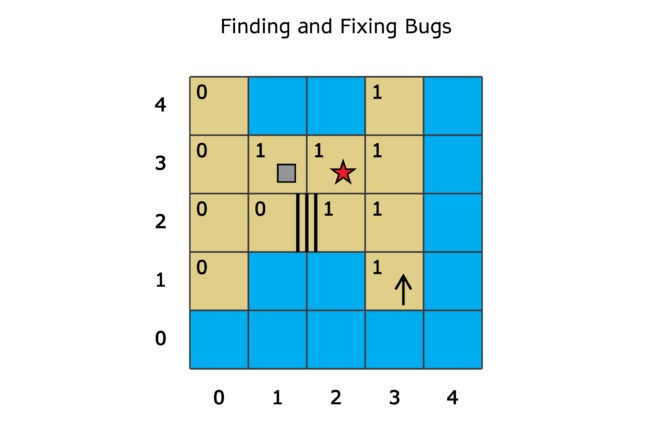
Today San Francisco’s LightHouse for the Blind announced a collaboration with Apple to make learning to code more accessible to students who are blind or have low vision. LightHouse’s Media and Accessible Design Lab (MAD Lab) has created Swift Playgrounds Tactile Puzzle Worlds compatible with Swift Playgrounds, a free, fun and accessible iPad app aimed at teaching students to code. The MAD Lab has designed 47 tactile layouts corresponding with the 3D puzzle worlds found in Learn to Code 1.
These tactile graphics enable students to better orient and navigate their way through Swift Playgrounds by touch. The materials supplement the accessible in-app coding experience, and include Unified English Braille (UEB) and large print text, with high-contrast and embossed tactile graphics in order to be universally accessible. The collaboration is all part of Apple’s Everyone Can Code program, an accessible curricula aimed at bringing coding into more classrooms.
“I’m not going to be one of those people who’s being told ‘No, you can’t do this because you’re blind,’” says Darren, who was an early blind user of Swift Playgrounds.
Darren, a senior at Texas School for the Blind in Austin, learned about Swift Playgrounds at Coding Club, an evening program facilitated by his school. TSBVI was one of the first schools to begin offering the Apple coding program to students. It was a fortunate discovery for him — especially in a world that often assumes a blind person can’t learn to code.
Darren first pursued his dream of learning to code at a public high school, but the online coding module used in his intro-level class was not accessible. As a result, the school offered him a cumbersome accommodation: the teacher assigned a fellow student to read Darren the lines of code and type his responses. For Darren this was a considerable barrier: not only did he not get hands-on experience, but he had to work at someone else’s pace.
“I think the teacher knew it was frustrating,” Darren says, “but he wasn’t entirely sure how else to make it accessible.”
When Darren first heard that the Swift Playgrounds app was accessible, he downloaded it onto a rented TSB iPad, eager to dig into a new world of coding. But as his new coding class started and he began to work his way through the “puzzle worlds” that make up the game’s levels, he felt he would benefit from also having tactile feedback.
iPad showing Swift Playgrounds app and accessible features.
“At first it was confusing because I didn’t know how the world looked,” he says, without a hint of irony. Thanks to Apple’s commitment to accessibility, Darren could use Swift Playgrounds with VoiceOver, Apple’s built-in screen reader, but he needed a way to explore and experiment in the 3D puzzle world – collecting gems, toggling switches – and in order to do that, he needed a mental map of the physical layout.
Enter the MAD Lab
Meanwhile Apple was working on a solution – with help from the LightHouse’s Media and Accessible Design Lab.
Building off years of experience creating tactile maps of cities, universities and cultural landmarks for blind and low vision explorers, the MAD Lab is proud to present a new accessible media experience by designing a tactile experience that corresponds to a dynamic 3D puzzle world. Mapping the visual layouts of each puzzle world and enhancing them with cartographical elements to optimize for comprehension, the LightHouse is proud to partner with Apple to further the blindness community’s tech literacy, around the world.
Putting the tactile worlds to good use
Once the Texas School staff got their hands on the guides, everything changed for Darren. “We were creating graphics,” his teacher, Susan O’Brien says. “We had 3D printed some of the switches, the toggles, the portals, but then when we saw your maps, we were like ‘oh my gosh, this is so much better than what we’ve been doing.’”
Today, Darren uses the tactile layouts map to orient himself to the world, then he’ll talk through the commands, then go back onto the iPad and really start to do the coding. “We saw him develop a workflow,’ says O’Brien. “Finding that workflow that’s best just for you – that’s so crucial for everyone, blind or sighted.”
For Darren’s part, he’s now working his way through the game, twice as fast as before. “I’m extremely happy that I don’t have to rely on someone else to get the job done now.”
Downloads for students and educators
Teachers or organizations who have access to braille embossers can download the tactile graphics files to print themselves, or if an embosser is not available, can order beautifully printed, embossed and bound hard copies through the LightHouse’s Adaptations Store.
Swift Playgrounds is a revolutionary iPad app that makes learning programming language Swift interactive and fun. It requires no coding knowledge, so it’s perfect for students just starting out.
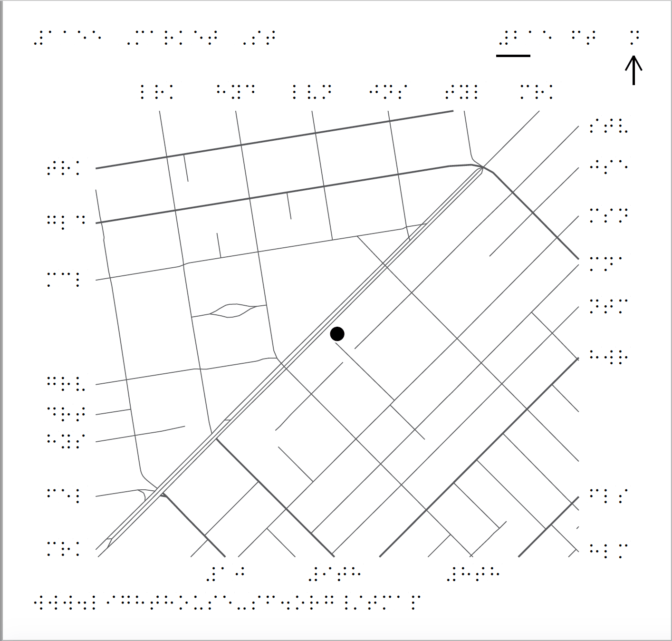
In January, LightHouse started offering TMAP — on-demand tactile street maps — for order at our Adaptations Store (1-888-400-8933). We have been hearing some amazing stories about how our maps are being used, so we wanted to share them with our mapping community. Order yours today by calling 1-888-400-8933.
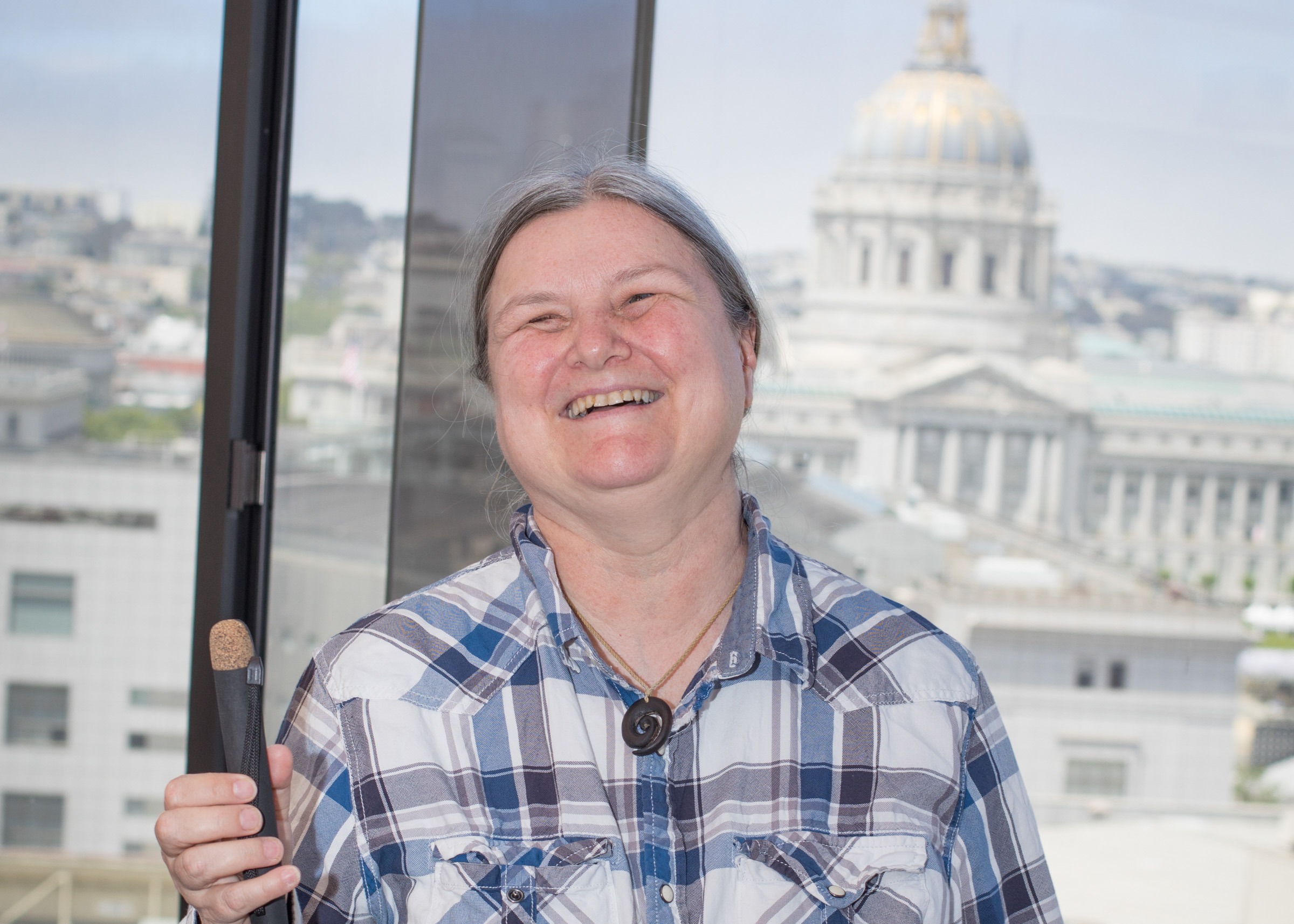
When Sheri Wells-Jensen was a child, she got one book per week. That was how it worked, for a blind kid – a braille reader – who relied on braille lending libraries. Each week, Sheri would bound out of her front door, crashing through her front yard and into the mailman’s truck, to get her hands on one new book. Now a linguistics professor at Bowling Green State University, access to language and information has become a passion of Sheri’s, as well as other cool things like aliens and ukuleles.
She also loves exploring cities. Depending on how you see it, Market Street in San Francisco can feel like a boulevard of first-world efficiency or a medieval circus. At times, it feels like both at once. This wild, eclectic fusion can be intimidating for some, but this crazy hubbub is what Sheri loves most about visiting the city by the bay. On a recent trip, we had the pleasure of printing out her first-ever TMAP.
It was right before she was taking off to catch the bus back to her hotel. The bus stop was a few blocks away and Sheri, her own most cheerful but fierce advocate, exclaimed when we told her we had a tool to help her learn the neighborhood in just a few minutes – and that it was something she could bring with her, should she get lost or just want to explore.
“Having an accurate,accessible,hard copy map to explore saves endless frustration,” Sheri says. “It changes the rules of the game: without the map, I get directions and learn a route, hoping to fill in details later on. With the map, I learn the neighborhood and then decide how I want to get to my destination.”
Holding her TMAP in front of her, pressed against her torso as she inspected the braille labels and learned the many swerving diagonals of the area, it was impossible not to feel the infectious sense of satisfaction that comes from unlocking so much knowledge with such ease – especially for a kid who grew up on only one book at a time.
As Sheri sees it, maps and tactile aids are a crucial tool for anyone who needs access to information. And when she wants to learn an area, she thinks it’s better than talking. “I basically have two choices,” she explains. “I can sit some poor unsuspecting fellow down and grill him relentlessly about every intersection and every street name (most of which he won’t remember) – or – with a map in my hands, I can transfer the whole picture of the area straight into my head, thereby saving time and preserving my friendships.”
You can listen to Sheri talk about braille love letters and why braille is worth fighting for in a recent episode of The World in Words on PRI, entitled “Will blind people use Braille in the future?”.
Get your TMAP today
To order a map, call our product specialists at 1-888-400-8933 and specify the street address of the map you’re interested in receiving. Within two business days we’ll ship you your map, or make it available for pick up at the Adaptations Store (1155 Market St., 10th Floor, San Francisco, CA). Each TMAP package is $19.99 per address.
What’s in the package?
You will receive 3 map versions printed at simple, moderate and dense map scale ratios
A tactile map key
An introductory page
All materials are printed on 11” X 11.5” sheets of embossed paper and include ink / large print labels in addition to braille