Category Archive

LightHouse News

Equipment and Training Free to Deaf-Blind People

LightHouse student Angela Palmer (left) and LightHouse Deaf-Blind Specialist Sook Hee Choi talk technology using Tactile Sign LanguageThe LightHouse continues to provide telecommunication equipment and training to eligible deaf-blind Californians. We are nearing the end of our third year, and over 300 Californians who are deaf-blind or legally blind and hard of hearing have received accessible equipment to use for communication (email or phone use) with friends and family.

While everyone’s needs and technology abilities are different, we have been able to provide a range of equipment depending on need and skills, for example: iPhones with Braille displays; computers with screen readers and noise canceling headsets to hear JAWs; assistance with upgrading software such as ZoomText or JAWS; or providing braille displays to folks who can no longer hear the speech on the screen reader, but can read email using a braille display.

To find out more about this program, contact Sook Hee Choi, Deaf-Blind Specialist at schoi@old.lighthouse-sf.org. Sook Hee will send to you program information and an application.


Google is Coming Back to the LightHouse, and You’re Invited

google chromebook

A couple weeks ago, we wrote about how Google came to the LightHouse in May to run a series of usability studies. Today, we’re happy to announce that they’re returning again in July for an even more in-depth workshop.

On Tuesday, July 21st the LightHouse for the Blind is hosting an all-day training facilitated by professionals from Google. The day will focus on how to use Chrome OS, as well as Google Docs and Drive Product suite using assistive technology. The event begins at 9 am. Lunch will be provided, and we will wrap up the day with a happy hour from 5 to 6 pm.

When: Tuesday, July 21, 9:00 a.m. to 5:00 p.m. Happy hour from 5:00 to 6:00 p.m.
Where: LightHouse San Francisco Headquarters
Lunch will be provided

Chromebooks are highly secure, speedy, and affordable internet-based laptops. Google Drive, Docs, Sheets and Slides are powerful productivity tools for creating content, sharing content and collaborating with others. These products are increasingly adopted by educational and business organizations, and it’s important for blind and visually impaired users and instructors to be familiar with the accessibility features and functionality.

This workshop will include demonstrations by Google staff, hands-on exercises on the Chrome OS and Windows platforms, time allocated to giving product feedback, and more. Lunch will be provided, and we will wrap up the day with a happy hour.

Space is limited so register early to ensure a spot! To RSVP, contact LightHouse Deputy Director Scott Blanks: sblanks@old.lighthouse-sf.org, or 415-694-7371.

Calling All Blind Writers

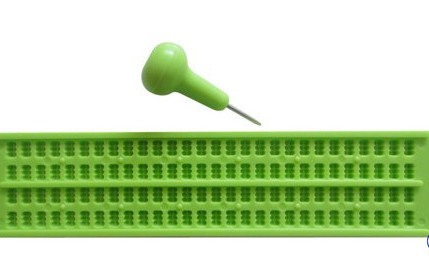
slate and stylus

Blind writers: LightHouse wants to publish you!

The LightHouse for the Blind and Visually Impaired in San Francisco is putting out an official call for submissions. We are in search of the best and brightest writers who are blind or have low vision, to contribute stories for publication on a paid, freelance basis.

We want to hear first-person stories not merely about blindness, but about what it takes to survive and strive as a human. We want to establish a new venue for exploring direct experiences surrounding the often misunderstood and under-appreciated aspects of blindness. Ultimately, we aim to be the most contemporary, honest and passionate source for people to learn about blindness from those who walk our walk.

We will consider submissions from both novice and professional authors. Whether you have a page ripped from your personal journal or a rejection from a literary journal, we’re open to all styles and subject matter. The most important thing is that it’s honest, unafraid, and rooted in an experience of visual impairment.

What We’re Looking For

We seek to publish dynamic personal essays, memoirist reflections, travel writing, incisive commentary, specific advice, funny or useful lists, arts writing, general humor, insightful analysis, new ideas and anything else with verve and honesty.

Story ideas can be just that — an idea. You don’t need to send us a finished product or a fully-formed narrative; we’re happy to work with you to get you there, in fact we’d prefer the process to be a collaboration from start to finish. That said, submissions can come in the form of a completed document, a brief pitch, or just a friendly introduction and statement of interest. Once we feel confident that you have something to say, we’ll work closely with you to shape it into a great piece of writing.

What We’re Not Looking For

We don’t have much interest in political rants, takedown pieces, sob stories, brand promotion, medical diaries, or extraneous embitterment. The purpose of this new direction for the LightHouse Blog is to highlight talent and elevate voices. We seek to build a strong and lasting support structure, and in order to do that we must celebrate fresh viewpoints and positive representations as much as possible.

We also understand that sometimes writing about blindness — or anything personal, for that matter — can be very demanding. It can dredge up deep and painful memories or confusing emotions. We encourage writers not to run away from those emotions or conflicts. Rather, explore them with a clear head and conscience; write it down, and then show us what you’ve written.

Priorites and Policies

We seek first and foremost to publish writers who are blind or visually impaired, with an emphasis stories based in California and the west coast. That said, we are open to any and all writers who would like us to consider a submission.

Submissions will be edited by Will Butler, who has written about his own eyesight in essays such as “The Mark of Cane” (New York Times), “Blind at South by Southwest” (VICE), and “In Blind Judgment” (The Toast).

We pay $100 for essays published on our blog, with payment issued upon publication. To negotiate for particularly long or ambitious pieces, you’ll need to talk with our editors on a story-by-story basis.

We can’t wait to read your work.

Email all submissions to

wbutler@old.lighthouse-sf.org

with “Pitch” in the subject line

questions: (415) 694-7309

Other Examples of Short Works by Blind Writers

“At the Intersection of Death and Disability” | Serena Olsen, Blind Broad Abroad, 2015

“A Friday Night of Bartending, Without the Lights” | Nicole C. Kear, NY Times, 2014

“How to be Helpful: 3 Snapshots from a Day” | Erin Lauridsen, Life in Braille, 2013

“Beauty and the Blind” | Georgina Kleege, UNESCO Courrier, 2001

“Sensory Overload at the Biggest Rattlesnake Roundup in the World” | Ryan Knighton, VICE, 2013

“The Barrier of the Visible Difference” | Kenneth Jernigan, Gray Pancakes and Gold Horses, 1998

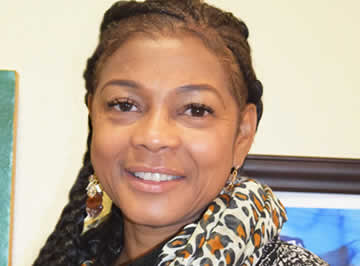
Wanda Pearson – our New Jobseeker Coordinator

Wanda Pearson – our New Jobseeker Coordinator

The LightHouse is proud to welcome Employment Immersion graduate Wanda Pearson to our staff in the new position of Jobseeker Coordinator. Born and raised in Oakland, Wanda, with two sons and two grandchildren, spent her working years following a career path in executive support and administration, working for businesses of various sizes, from small startups to large corporations.

Five years ago Wanda experienced a sudden change in her vision. She continued working for a while but both she and her employer were unaware at the time of the accessible technology that would have enabled her to do her job. She struggled to keep up and finally left.

“It was scary,” she told us. “I had been working, supporting my family as an executive secretary plus doing additional work as a graphic designer, and I thought my world was over.” Putting aside her fears about the future, she contacted Department of Rehabilitation (DOR) to receive technology, travel and daily living skills training and when she was ready to look for a job again, her DOR counselor, Allison Hartley, suggested she enroll in the LightHouse Employment Immersion Program or here to find esl Korean jobs.

At first she resisted this suggestion, wondering what a class could teach her that she didn’t already know from years of experience finding work. “I didn’t think I needed anyone to show me how to put together a resume or how to get a job interview.” But when she talked with Program Leader Kate Williams, who also has low vision, she found someone sympathetic who not only understood what it was like looking for work in a difficult job market but could also speak to issues such as when to disclose her disability, one of Wanda’s biggest concerns. Wanda said, “It’s very common in my profession to take various computer skill tests before getting an interview. I was really worried about being able to take those tests and when and how to tell a prospective employer about my disability. Kate understood and could teach me about this and so much more.

“When I started the class they honed-in on much more than just employment. One day [LightHouse CEO] Bryan Bashin spoke to our class and told us ‘you are not broken you are beautiful’. Boy, it really hit close to home – I felt like he was talking to me. At that moment I knew I wanted to be a part of it, so when I saw the opening for the position at the LightHouse I knew I had to apply.”

As LightHouse Jobseeker Coordinator, Wanda will be helping in the classroom and enrolling students. She’ll provide day-to-day administrative support to the employment team, track authorizations, billing and payments from DOR, and function as a Job Developer when time allows. Equally important, she’ll bring with her the perspective of a former student and act as a role model as someone who has faced the same challenges as our students. She said, “The program doesn’t just help you get a job; it really helps you find your direction again. I’m happy to be in a position to help people – to give to people.”

Kate Williams said, “During our class Wanda gained a sense of clarity around her job search. She discovered she was not simply looking for a job, but a job with purpose. We’re so glad this led her to her new job with the LightHouse. She brings a sense of serenity and calmness to the group, and her warmth and caring will be a gift to Employment Immersion participants. She’ll be the “glue” that keeps the team moving forward.”

Are you new to the working world and not sure how to get started? Or do you just want to kick your career up a notch? Our next Employment Immersion session will run every Tuesday, Wednesday and Thursday beginning July 7 through July 30, at the LightHouse at the Ed Roberts Campus in Berkeley. For more information, please contact Kate Williams at kwilliams@old.lighthouse-sf.org or 415-694-7324.

See the Latest Low Vision Devices at our Enhanced Vision Demonstration

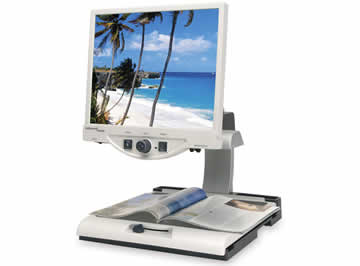
See the Latest Low Vision Devices at our Enhanced Vision Demonstration

Please join us for a hands-on demonstration of current technology available for people with low vision.

If you have macular degeneration, or other eye conditions that may limit your reading, A & E Low Vision features products by Enhanced Vision which may be a solution for you. These products provide a range of desktop and portable low vision electronic options, from viewing print on newspapers and labels, to seeing a demonstration or teacher in a classroom setting.

Where: LightHouse San Francisco Headquarters
When:
Friday, June 26, 10:00 a.m. to 1:00 p.m.
Cost:
Free

LightHouse staff will be available to answer questions regarding training and support services offered by our professional staff and on that day, Adaptations, the LightHouse Store will be offering 10% off on low vision products under $100!

For questions and RSVP, please contact Jeff Carlson at jcarlson@old.lighthouse-sf.org or 415-258-8496.

Why Google Comes to LightHouse for the Blind

braille_logo (3)

Here at the LightHouse, we visit a lot of tech companies to find out first hand what they’re up to, how their offices look and feel, and ultimately to foster an open, nuanced conversation about what they are working on.

Last week was a little different because, on the occasion of Global Accessibility Awareness Day, Google visited us instead. Ben Davison, a user experience researcher at Google, came to our office in San Francisco to chat with blind and low vision smartphone users about what works well for them and what could be improved when it comes to the Google product. This, we believe, underscores one of the most crucial take-home points of designing good, accessible tech — that is, just showing up and listening.

Ben’s work does not focus exclusively on accessibility but generally on improving the experience of technology for all users. On Thursday, he carried out what we hope will be the first of many usability studies with some of our current and former students, running them through everyday Google searches, then observing and recording to see where screen readers or magnifying software ran into trouble.

So what prompted this visit from our neighbor? The LightHouse has resources that Google wants to tap into: specifically a vast network of accessibility users, thinkers and innovators under one roof.

”Imagine you wanted to test your product with five people who use screen magnifiers,” says Ben. “In order to go about this, you would have to find your users in the area, build trust, collect five study agreements, work out transportation to the site, provide an accessible test site, and work out transportation back home. “

“The LightHouse has all of these on tap: a strong network, trust, a convenient location, and an accessible place. These kinds of partnerships are invaluable to a researcher like myself in understanding the needs of our users.”

Ben received his PhD from Georgia Tech with a focus on accessibility and spent time at the Center for the Visually Impaired in Atlanta. This experience has undoubtedly given him a special insight into the value of good accessibility for this community of avid technology users, and we’re glad to see that Google values this, too.

We look forward to the next time we can get together with Google, and more people like Ben from other tech companies, to share ideas and feedback on improving these valuable tools in a way that just works for everyone.

If you’re a technology developer, a visually impaired person, or just a conscientious user, please don’t hesitate to contact us about how you can benefit from our services.

Follow us on Twitter and read more at Google Accessibilitiy.

LightHouse Legacy Society: How do I Start?

You have the power to make a lasting impact for the students of LightHouse for the Blind through a planned gift. These types of charitable contributions let you support our programs for the blind far into the future while also providing tax and other benefits to you. An estate attorney can help you determine a strategy individualized to your needs and portfolio. If you don’t already have one, the LightHouse can suggest qualified estate attorneys for you to work with directly.

Planned Giving: Under 40
Your life feels newly supersized with career responsibilities surging and, perhaps, a young family in the nest. You’re focused on the present, but are you prepared in case of unexpected tragedy? Your first estate plan is usually focused on protecting the people and causes you love.

Planned Giving: Ages 55-69
You are deep in your professional career, but perhaps retirement is around the corner—or here. Take steps now to make sure you can thoroughly enjoy the extra time you’ll have to travel and perhaps spend time with loved ones. By planning your estate you can leave assets to your family, help LightHouse expand life-changing programs for the blind, and wisely reduce the tax burden on your family.

Planned Giving: Ages 70+
Put your mind at ease by learning how to make your retirement dollars last. Now is the time to be diligent about updating estate plans, talking to your loved ones about your choices and investing in the future of the organizations that are meaningful to you.

Do you have questions about how to leave a bequest to the LightHouse, want to notify us of your intentions, or learn the benefits of joining the LightHouse Legacy Society? Contact Jennifer Sachs at 415-694-7333 or jsachs@old.lighthouse-sf.org.

Generous Donation for LightHouse North Coast

Dr. Marcus Appy (left) stands next to items he donated with LightHouse of the North Coast Social Worker Janet PomerantzMany thanks go to Dr. Marcus Appy, owner of A to Z Eyecare in Arcata, who made a generous donation of low vision equipment, including a complete assortment of Eschenbach magnifiers, assorted lighting devices, reading stands and portable electronic magnifiers. Thanks also to Jessica, Drs. Azevedo and Dr. Cole. We are very grateful for this donation, as it will allow our North Coast staff the ability to offer a more complete magnification demonstration and training with our low vision students.
The LightHouse of the North Coast is located on the third floor at the Humboldt Senior Resource Center in Eureka, with staff hours Monday, Tuesday and Thursday. While our goal is to be a community resource for support and training for adults in Humboldt and Del Norte counties, our focus, thanks to funding from the Older Individuals who are Blind program through the State of California’s Blind Field Services, has been to reach out to adults aged 55 and over.

In addition to providing solutions and training for persons with low vision, our staff also makes available training in accessible technology, orientation and mobility, independent living skills and braille. The LightHouse week-long Changing Vision Changing Life immersion training in Napa is also an opportunity for North Coast folks who are new to blindness and low vision to get valuable skills in the fresh air and beauty of Enchanted Hills Retreat.

To get started in training and find out more about our services, contact Janet Pomerantz at 707-268-5646 or email her at jpomerantz@old.lighthouse-sf.org.

We’ll Proof and Approve your ADA signage

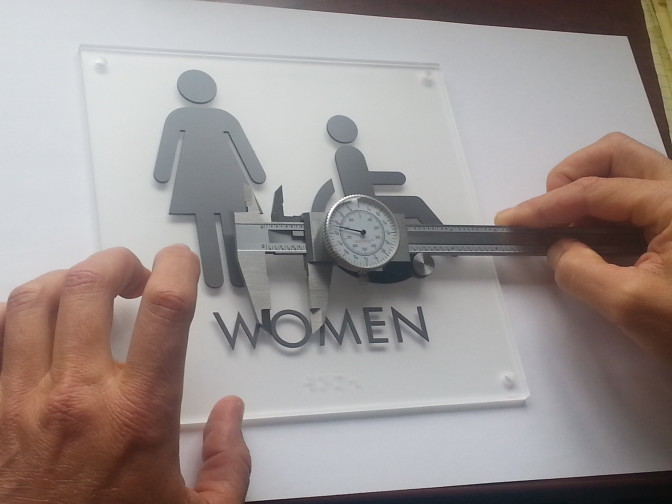
hands measure the braille on a restroom sign using calipersAttention sign studios, architects and contractors: Are you concerned about the Americans with Disabilities Act (ADA) compliant signage? For over 15 years the LightHouse has used our expertise to take care of architectural signage customers.
We regularly check signs against all applicable 2010 ADA and 2013 CBC (California Building Code) checkpoints. Our braille is proofed by people who know and use braille daily and who possess National Certification in Literary Braille. ADA and CBC signage is proofed by LightHouse staff with Master Degrees in architecture (M.Arch.).

“The LightHouse is our go-to source for expert braille translation and definitive interpretation of the ADA Standards. We rely on them to verify and authenticate the braille and tactile accuracy of our signs so they pass building inspection every time. Thanks for providing this much appreciated service.” Clifford Kane, Senior Project Manager, Garnett Sign Studio

As specialists in ADA compliant signage we work closely with you to ensure signs are completely compliant. A signed certification signals our approval of a sign package.

“I would stress that SF MOD relies on the LightHouse for their expertise on a range of issues affecting the visually disabled, especially signage review…” Jim Whipple, CASp Access Compliance Officer, Mayor’s Office on Disability

“LightHouse for the Blind is a valuable partner to us – we seek them out often to provide valuable guidance on braille related signage issues. Their technicians are thoughtful, thorough and well informed. We are always thankful to have the LightHouse as a resource.” Maria Santana, Project Manager, Priority Architectural Graphics

Let us apply our years of experience to your project. Contact us at madlab@old.lighthouse-sf.org, or 415-694-7349

Adaptations Products of the Month – Board Games, Redline Flashlights and NFB Folding Canes on sale

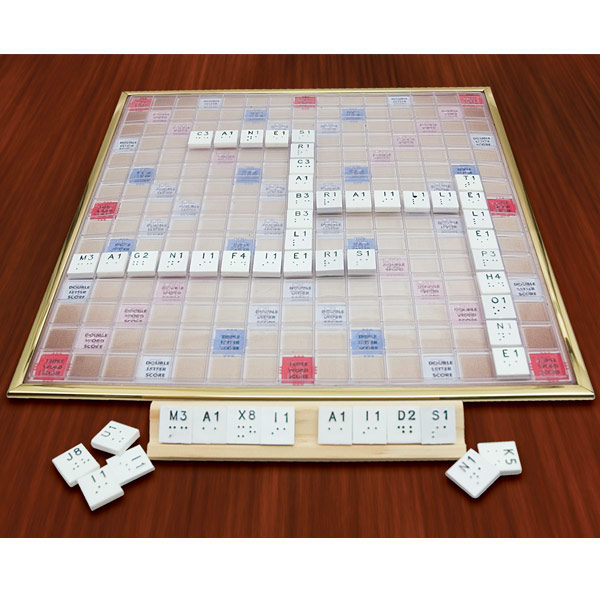
braille ScrabbleWe’re buzzing with excitement as we showcase three sets of products at the LightHouse Adaptations Store.
June 16 all board games on sale!

June 16 is National Board Game Day, and in honor of this holiday Adaptations is offering all card and board games at a 10% discount throughout the month of June. This includes Braille Monopoly, Braille Scrabble, Uno, Playing Cards (Braille and Large Print), Dominoes, Chess, Dice, Bingo and more. Be sure to stock up!

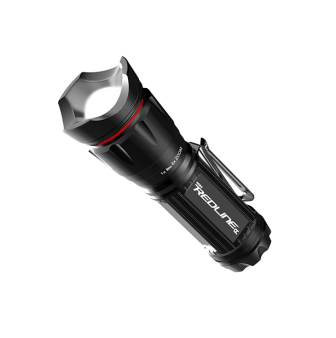
Now Available at Adaptations: Two New Redline OC Flashlights

Nebo’s ultra-bright Redline flashlights have been part of an Adaptations favorite for quite some time now. So we’re excited to carry an updated version of this excellent flashlight called the Classic Redline OC. This model is brighter than its predecessor – at 2,640 lux compared to original at 2,185 lux. Best of all – this new Classic Redline OC flashlight is available now for the same price as the standard Redline ($29.95). Also in stock, the Redline OC. At 600 lux, this model is also brighter than most standard flashlights and features a single brightness mode for those interested in a simple no-frills flashlight at a cheaper price ($19.95). Both Redline flashlights sport a belt clip for easy traveling.

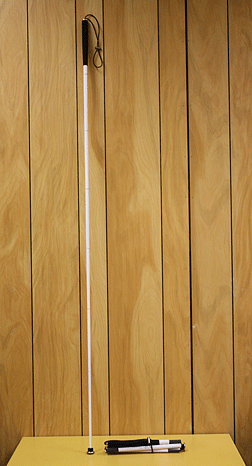
Also New at Adaptations: The 7-piece NFB Folding Cane

The National Federation of the Blind’s lightweight and folding cane is now available at our store. Complete with a wrist strap and a metal tip, these canes are popular and very easy to fold up. The 7-piece NFB folding cane is available at Adaptations for $50.00.

Come on down to the store at 214 Van Ness in San Francisco to try any (or all) of these products for yourself. We’re open between 10:00 a.m. and 5:00 p.m. Monday through Friday, or call us at (415) 694-7301.

NFB folding cane

Redline OC flashlight