Category Archive

LightHouse News

Watch Netflix’s ALL THE LIGHT WE CANNOT SEE Miniseries with LightHouse

Watch Netflix’s ALL THE LIGHT WE CANNOT SEE Miniseries with LightHouse

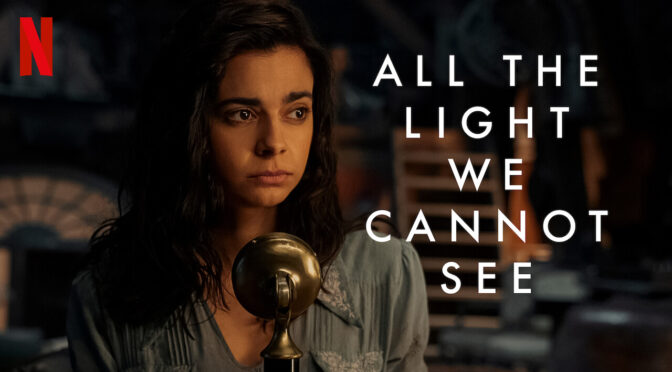
LightHouse invites our students and community members to join us virtually Tuesdays in November to watch the Netflix limited series ALL THE LIGHT WE CANNOT SEE.
 
Based on the Pulitzer Prize-winning novel, ALL THE LIGHT WE CANNOT SEE tells the story of two teenagers during World War II, one a blind girl in Nazi-occupied France, the other a German orphan boy pressed into service by the Nazi army. With this story not only being about a blind teenager, but also played by a blind actress, the LightHouse Community Services team would like to invite our friends and community to join us for our latest intergenerational series of our Reel Escape Audio Description Club.
 
The Reel Escape Audio Description Club is open for all ages.  
 
What:  ALL THE LIGHT WE CANNOT SEE audio-described four-part series
When:  November 7, 14, 28 & December 5 at 7:00 pm (There is no screening on November 21, which is during the week of Thanksgiving.)
Where: Online
RSVP: By 5:00 pm the day before each showing to Jamey Gump at JGump@old.lighthouse-sf.org or 415-694-7372
 
View the ALL THE LIGHT WE CANNOT SEE trailer.
 
For more information about ALL THE LIGHT WE CANNOT SEE’s TV-MA rating, please visit the parental guide.

Netflix’s ALL THE LIGHT WE CANNOT SEE Special Screening, 10/25

Netflix’s ALL THE LIGHT WE CANNOT SEE Special Screening, 10/25


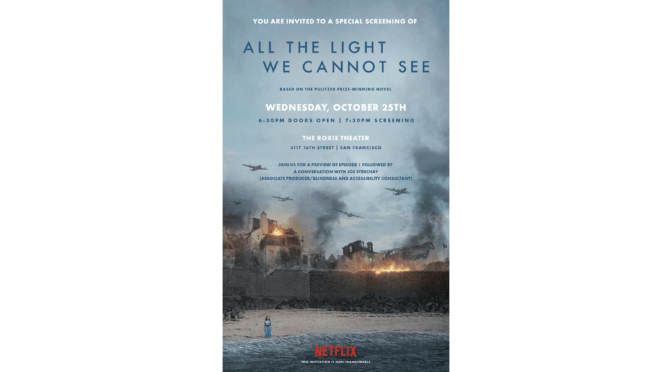
A promotional poster for Netflix’s ALL THE LIGHT WE CANNOT SEE screening at The Roxie. A girl, Marie-Laure, stands on a beach at the water’s edge in a blue, short-sleeved dress, with a white cane beside her. A city burns in the background, with planes overhead.

LightHouse cordially invites our community members to a free special screening of episode one of the Netflix limited series ALL THE LIGHT WE CANNOT SEE, which will be followed by a conversation with Associate Producer/Blindness and Accessibility Consultant, Joe Strechay.
 
SCREENING DETAILS 
Date: Wednesday, October 25
Time: 6:30 pm doors open | 7:30 pm screening begins
Location: The Roxie Theater, 3117 16th St., San Francisco
 
This screening will be played with open audio description and open captions.

The Roxie Theater is a short walk from the 16th St./Mission BART station. It’s also accessible from the 14, 22, 33, 49 and 55 MUNI bus lines. Get more info about transit options to The Roxie.

About ALL THE LIGHT WE CANNOT SEE
Based on the Pulitzer Prize-winning novel, ALL THE LIGHT WE CANNOT SEE tells the story of Marie-Laure Leblanc (played by actress Aria Mia Loberti who is legally blind) a blind French girl taking refuge with her father and reclusive uncle in St. Malo, France and Werner (Louis Hofmann), a brilliant teenager enlisted by Hitler’s regime with an expertise in radio repair. Together they share a secret connection that will become a beacon of light that leads them through the harrowing backdrop of WWII.

From Director Shawn Levy, ALL THE LIGHT WE CANNOT SEE stars Louis HofmannLars Eidinger, Marion Bailey, with Hugh Laurie and Mark Ruffalo. And introducing newcomer Aria Mia Loberti.
 
There is a limit of three tickets per person. Please note any accessibility needs for this screening (i.e. wheelchair/service animal friendly seating) on the RSVP form. Seating is limited: first come, first served.
 
RSVP online for the special screening of Netflix’s ALL THE LIGHT WE CANNOT SEE.
 
Additional details will be sent ahead of the event.
 
If you have questions, please contact Christina Daniels at CDaniels@old.lighthouse-sf.org or 415-694-7315.

See you there!

LightHouse Staff Share Their White Cane Stories

LightHouse Staff Share Their White Cane Stories

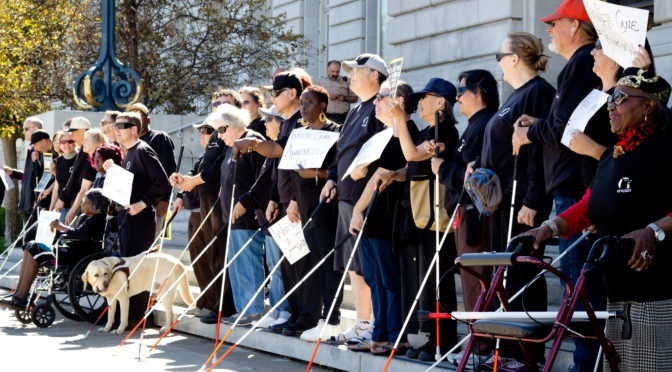
On October 15, 1964, President Lyndon B. Johnson declared the first-ever White Cane Safety Day in the United States. Later, in 2011, President Barack Obama declared October 15 as Blind Americans Equality Day. This year, on Sunday October 15, LightHouse is celebrating White Cane Day by walking across the Golden Gate Bridge with approximately 200 members of the blind community and our allies! But what really is White Cane Day? And what does it mean to be visually impaired and use a white cane?
 
Here is some White Cane insight from our LightHouse Staff:
 
“I have been a proud traveler with my white cane for about 50 years. I love to walk. My white cane is an amazingly simple tool that empowers me to independently explore and experience my environment. You might say that October 15, White Cane Day, is my personal independence day. My proudest use of my white cane was to walk independently along every segment of California’s El Camino Real, from the Millbrae BART station, to the California Street Caltrain station near Stanford University in Palo Alto, all during the 13 years that I resided in San Mateo County. Someday, I hope to traverse the entire San Francisco Bay Trail on foot with my cane or guide dog. That’s what independence looks like.” – Frank Welte, Senior Accessible Media and Braille Specialist
 
“My white cane is my right of way. If it is used correctly, the long white cane alerts drivers, it detects obstacles and it clears the crowd. I use various types of long, white canes in different environments. For example, I use a lightweight cane in familiar indoor settings such as my workplace; I use a heavy-duty cane with a roller tip for San Francisco streets, and I have a spare ID cane that is always packed in my backpack when I’m out and about. In addition to the many benefits the white cane provides, I do not have to explain myself when I request a pre-boarding on a plane. The white cane gives me the privilege of getting first in line for amusement park rides or at concerts I attend with family and friends, which they love me more for it. I call it the ‘VIP’ treatment, which I define ‘VIP’ as ‘Visually Impaired Person’ or for others, ‘Very Important Person.’ Either way, I’ll take both!!” – Divina Carlson, Braille Instructor
 
“When I was a boy in Pennsylvania, I used to carry a long aluminum tube with me when I went walking in the woods near our house. I would poke it into holes in the ground, reach up into trees, and blow bubbles in the creek. I had fun with it! When I was first introduced to the white cane at a Changing Vision Changing Life workshop at Enchanted Hills Camp, I felt a little surge of recognition, and said to myself, ‘I can make friends with this cane!’” – Jeff Buckwalter, Access Technology Specialist   
 
“I was diagnosed with Stargardts Retinal Disease when I was 14 and received my first white cane when I was 18. With my level of low vision, my cane is not a tool I use daily, but it has been there for me when I’ve needed it most. I love to travel, but reading street signs, informational screens, or directional signals is very difficult–especially when I’m navigating my way through a new city or crowded airport. This is when my trusty white cane comes into play. When I travel with my cane, I have the confidence to approach people to ask for help or directions. My cane indicates to others that I have low vision, so rather than point their finger into an abyss of blur and confusion, I am often given descriptive and helpful directions or assistance. My cane also acts as a reminder to the sighted world that blind people can be as independent as any other person.” – Caitlin O’Malior, Communications Specialist
 
Here’s some White Cane Tips (pun intended) from LightHouse Orientation & Mobility Specialists:
 
Dakota Disk Cane Tip
Going to the beach with your cane? Worried about sand getting stuck in your roller tip? Try out the Ambutech Dakota Disk Cane Tip, made of light, durable plastic that easily moves over uneven ground. It gets its name from the state in which it was designed, North Dakota, and also works well in snow, slush, mud, and grass. (It’s not designed for prolonged use on cement.)
 
Roller Ball Tip
The roller ball tip is made of nylon and has a bearing on the inside which allows it to rotate left to right and measures about two inches in diameter. Due to the size of this cane tip, it tends to roll over rocky and uneven terrains well. 
 
Jumbo Roller Tip
The jumbo roller cane tip is disc-shaped, resembling a semi-flattened marshmallow, with a build-in protected bearing and rounded outer edge designed to roll left to right. The tip is made from ultra-high molecular weight polyethylene material and is about 2.5 inches in diameter. This tip rolls over rough terrain and does a good job on grass as well. 
 
All white canes and white cane accessories are 10% off at our Adaptations Store through the end of October.

POSPONED: LightHouse + Vision Zero: Autonomous Vehicle Forum

POSPONED: LightHouse + Vision Zero: Autonomous Vehicle Forum

Please note: The event has been postponed.

LightHouse is proud to once again be partnering with Vision Zero SF to bring conversations and efforts to increase pedestrian safety in San Francisco in the limelight! Next month, on Thursday, November 2, join LightHouse CEO Sharon Giovinazzo and autonomous vehicle experts as we discuss pedestrian safety and the future of safer transit options for San Francisco visitors and residents. This will be a hybrid event; participants may attend in person at the LightHouse HQ or virtually. For those who would like to attend virtually, a link to access the forum will be emailed the day prior.
 
This forum is made possible by generous funding from the San Francisco Public Health Foundation and the City and County of San Francisco.
 
More About Vision Zero
The City and County of San Francisco adopted Vision Zero as a policy in 2014, committing to build better and safer streets, educate the public on traffic safety, enforce traffic laws, and adopt policy changes that save lives. The goal is to create a culture that prioritizes traffic safety and to ensure that mistakes on our roadways don’t result in severe injuries or death. The result of this collaborative, citywide effort will be safer, more livable streets as we work to eliminate traffic deaths.

LightHouse Honors Employee of the Year, Alex Flores, at NIB Conference and Expo in Washington DC

LightHouse Honors Employee of the Year, Alex Flores, at NIB Conference and Expo in Washington DC

Every year, National Industries for the Blind (NIB) holds their annual Training Conference and Expo just outside their headquarters city of Alexandria, Virginia, in Washington D.C. During this five-day event, NIB affiliated agencies, like LightHouse, come together to showcase the products and materials they produce and the services they provide, as well as build relationships, strengthen our community, and breakdown employment barriers—at an individual level through education and empowerment, and on a national level through public policies and advocacy.

At LightHouse’s Sirkin Center in Alameda, we manufacture the highest quality eco-friendly cleaning products and tissue packets. These products, which serve communities and companies around the world, provide the utmost utility to clients, and demonstrate the strength and caliber of our facility. In addition to producing industry leading and two time EPA Safer Choice award-winning cleaning products, Sirkin Center provides employment and fosters the opportunity for our employees to gain valuable experience to advance their careers in customer service, shipping and receiving, inventory management and light manufacturing. Today, over 70% of the direct labor is provided by staff members who are blind or have low vision.

LightHouse is proud to be in the presence of other NIB partners whose missions to promote independence, community, and equity created by and with blind and low vision people reflect our own.

But, of all the incredible workshops, training sessions, and fireside chats, the highlight of the NIB Conference and Expo is honoring the dedicated and impactful individuals who have been voted to represent their agency as an NIB Employee of the Year. For LightHouse, we spent the last several days honoring and celebrating LightHouse Sirkin Center employee, Alex Flores!

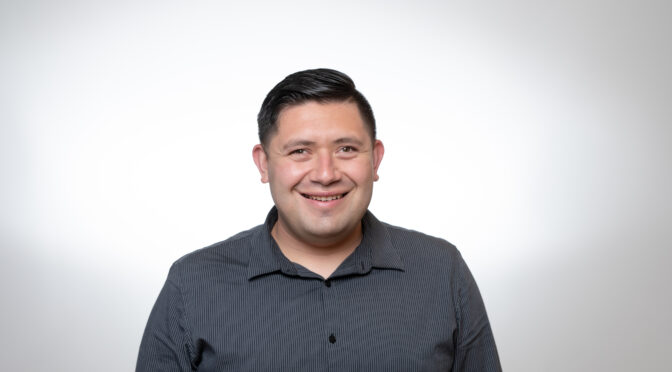
Alex was first introduced to LightHouse in 2014 as a young adult when he attended the Hatlen Center for the Blind in San Pablo. Originally from the San Diego area, Alex traveled to the Bay Area to further his education and Independent Living Skills. It was at this time that friends and fellow Hatlen Center students told Alex about LightHouse. In the summers of 2018 and 2019 Alex found himself working at Enchanted Hills Camp, first as a counselor then a Recreation Area Leader the following summer. With the encouragement from EHC Camp Director, Tony Fletcher, Alex eventually found himself applying for a position at LightHouse. In June of 2020, when the world was faced with a global pandemic and so many businesses closed and people stayed home, Alex went to work as a Warehouse Assistant at LightHouse.

We sat down and chatted with the Employee of the Year to learn more about his time at the Sirkin Center, his current role, and what’s in store for the future.

What has it been like working for the Sirkin Center since your start in 2020?

I would say it has been a consistent path of growth. I went from being a quiet person, doing my own thing in the corner of the warehouse, and progressed overtime— especially as we began shifting to production in the new Alameda location. As part of the move, I began taking initiative and learning as much as I could about the machinery, and learning from my co-workers, Tino and Chris, who I also knew from our days working together at EHC. Once the move to the Sirkin Center in Alameda from the warehouse in San Leandro was complete, I began working more closely with the machinery and began learning under Chris Peterson. Overtime, I was able to operate the machinery independently. That shift happened between 2021 and 2022, which led me to transition into a leadership position. In 2023, at the beginning of the year, the position for Chemical Production Line Leader opened up. I applied for the position and got the job.

Walk us through a day as Chemical Production Line Leader at Sirkin Center…

My day starts at 6:30 AM. I like to come in early and set up the machinery, because that does take some time, and depends on what product line we are working on and what product we are filling that day. Set up usually takes 30 minutes to an hour. In that time, I verify that the machines I cleaned the day prior are still ready to go, I organize all the materials needed for that day—labels, caps, bottles, sprayers, whatever we need— then I begin reassembling the machines that get taken apart after the last time they have been used. Then I hook up the machines to our chemical totes. The totes are between 250 gallons to 310 gallons, depending on the product. Then we start filling and testing for quality control and making sure the machine is running smoothly. That’s all within the first hour—it may sound like a lot but once you get the hang of it, it goes pretty smoothly. 

What do you enjoy most about your job at Sirkin Center?

The thing I feel most rewarded by, really, is being able to engage with my coworkers as I move up and down the line throughout the day. To me, being able to interact with my coworkers and help them out where they need it, or sometimes have them tell me what it is they need from me to help make their job easier or more efficient, that’s the most rewarding part.

When were you told you are named Employee of the Year, and what does that mean to you?

I think I was told around the end of August. It means a lot to me. It means that somebody somewhere has a lot of trust in me to do what it is I need to do. It means a lot to be recognized because I do work really hard. I really enjoy the work and I believe in the mission to provide opportunities to work and grow as part of LightHouse. And that’s my overall goal—to be there as a leader to support everyone who works along beside me. 

Where do you see yourself in the future?

In the short term, I hope to continue to grow with the team I work with. I want to help some of them reach their own personal goals as far as working with different departments or growing within the warehouse. So, I really just hope to grow my leadership skills. I still have a lot to learn and a lot to grow, and I’m glad I have the opportunity to do it with LightHouse.



LightHouse Board Meeting Open to the Public, November 2

LightHouse Board Meeting Open to the Public, November 2

Members of the public are invited to attend the Thursday, November 2 meeting of the Board of Directors of San Francisco’s LightHouse for the Blind and Visually Impaired. This meeting will be a hybrid meeting and runs from 5:30 pm to 9:00 pm Pacific.
 
30 minutes will be reserved for public comment, and members of the public will have up to three minutes to comment. If you would like to reserve a slot to speak, please complete the LightHouse Public Comment and RSVP Sign Up form. Please submit your comments as far in advance as possible. Comments must be received before noon Pacific on Wednesday, November 1 to be included in the agenda.
 
If you wish to attend this meeting in person, it will be held at LightHouse San Francisco headquarters at 1155 Market St. 10th Floor, San Francisco.

Get directions to LightHouse San Francisco.
 
If you are attending virtually, please fill out the LightHouse Public Comment and RSVP Sing Up formWhether you plan to have a public comment or not, you will need to fill out this form to get the Zoom info. Zoom information will be emailed to you closer to the date of the board meeting.

An Enchanted Evening Indeed – A LightHouse Gala Recap

An Enchanted Evening Indeed – A LightHouse Gala Recap

It was a star-studded evening at the LightHouse Gala on Saturday, August 19. Our gala attendees showed up dressed to the nines ready to raise funds (and paddles!) for the rebuild and re-imagination of Enchanted Hills Camp.

As guests arrived, they were greeted with champagne and our signature gala cocktail, an Enchantini, as they perused the Silent Auction and caught surprise glimpses of framed legacy Enchanted Hills Camp photos, some dating back to the Rose Resnick days of the 1950s, sprinkled throughout the cocktail reception area in delicate gold frames.

When the doors to the Grand Ballroom opened, our guests were dazzled with twinkling bistro lights, fresh pine garlands adorning the tables and entry ways, and the rejuvenating scent of lush trees and crisp air that instantly transports your senses back to Enchanted Hills Camp. That night, the Westin St. Francis Hotel was the place to be!

LightHouse Gala Committee Co-chairs Kathryn Webster and Laura Allen, and LightHouse CEO Sharon (and dapper guide dog Pilot, dressed in a doggy-tuxedo) began the evening with a warm welcome, thanking our guests and gala sponsors for their time and generosity as we kicked off the evening’s program.

When keynote speaker Rebecca Alexander took the stage, she joyfully led our gala guests in a camp song, bringing the whimsy and silliness of summer camp to 350 audience members as they echoed her back with, “I said a boom-chicka-boom!” Rebecca told her story growing up with Usher Syndrome, her love for summer camp and passion for inclusive and accessible experiences for the blind, low vision, and deafblind community.

EHC Camp Director Tony Fletcher speaks into the microphone on stage

“Summer camps are a place where anyone, regardless of ability, can experience the power of community in nature. But I’m especially delighted to support LightHouse’s efforts to create a world-class facility to serve campers who might otherwise not have access to the confidence-building activities and opportunities Enchanted Hills offers,” says Rebecca.

As Tony Fletcher, EHC Camp Director, took the stage, he told the story of camp—about our start with Rose Resnick in 1950, our strength, and of our deeply-rooted community, then he spoke of the destruction from the 2017 Napa wildfires. A video played on the screen above the stage, and as images of a burnt and devastated redwood forest were shown, Tony told a story of resilience, of courage, and of determination.

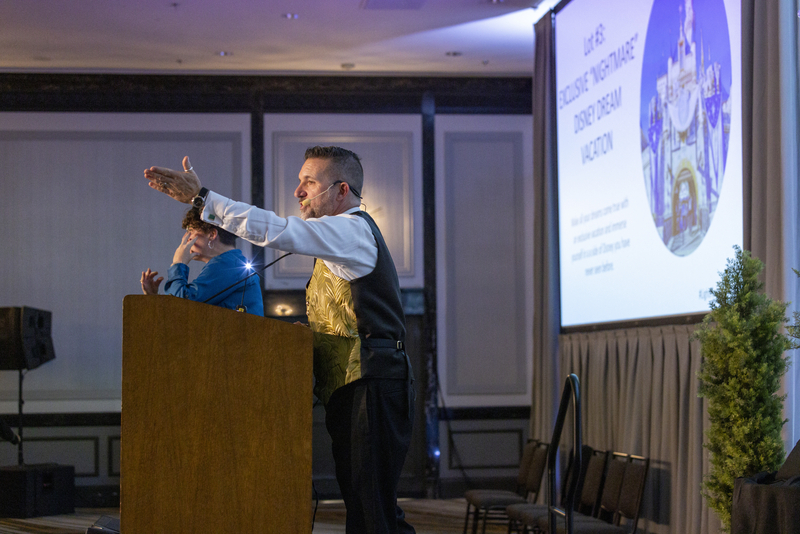
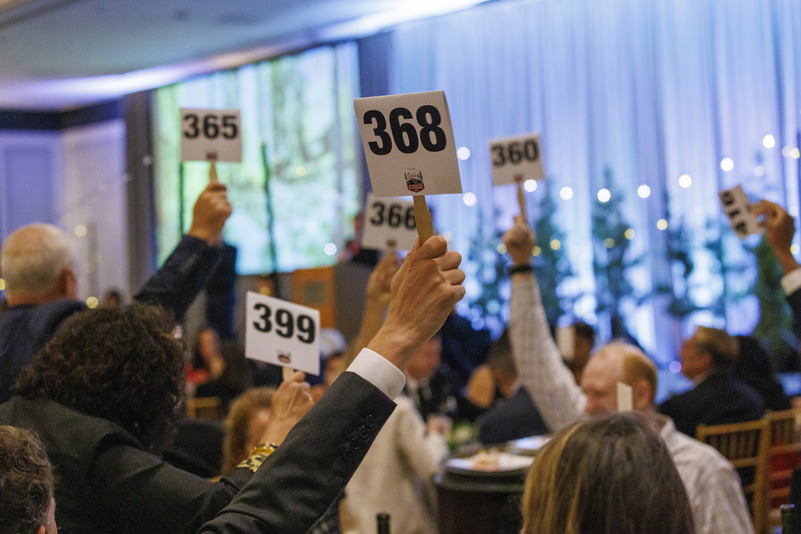
As the moving and heartfelt words from Tony Fletcher hung in the air, we kicked off the live auction, led by auctioneer extraordinaire Greg Quiroga. The air became electric as the friendly (although at times, perhaps a bit fierce!) competition brewed in the room and auction paddles shot to the sky! As paddles raised, so did the funds to rebuild a beautiful, accessible, inclusive dream retreat for the blind community!

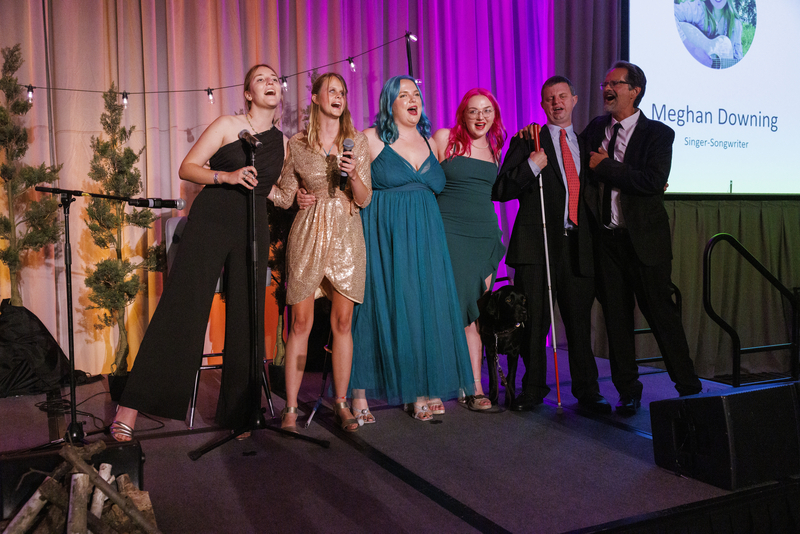
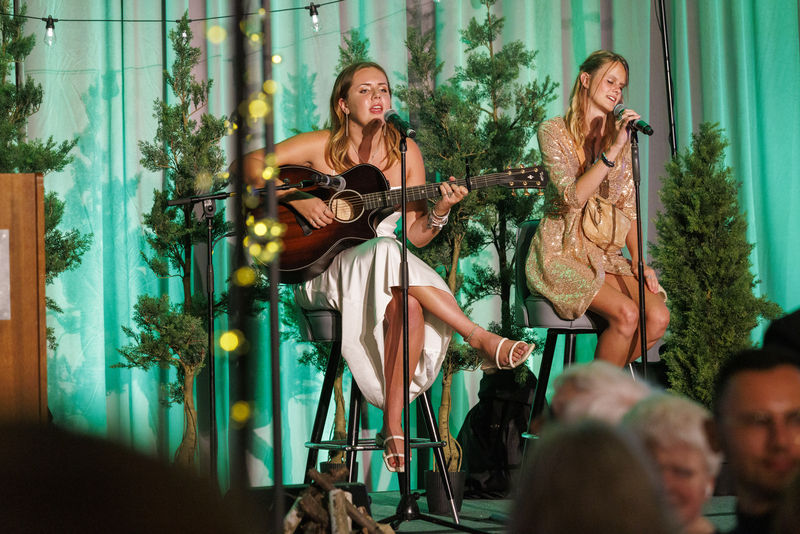
The evening ended with a beautiful musical performance by visually impaired singer-songwriter, Meghan Downing. As Meghan strummed her guitar, her angelic voice sang melodies reminiscent of the comfort and ease like the end of a perfect Enchanted Hills Camp day, warm and cozy around the campfire.

In total, the gala raised $680,000 for Enchanted Hills Camp! We are overwhelmed with gratitude for the incredible love and support that was shown to EHC and the blind community. We’d like to specially thank Ben Jai for his unbelievably generous donation of $100,000 and a second significant donor who  gave an additional $90,000 to the building of the Redwood Grove Theatre! Accompanied by other special Gold and Silver donors, over $300,000 was raised for the rebuild of the theatre.

The construction of Redwood Grove will begin in mid-fall of this year! As construction of the theatre and other dream projects are underway, we will keep all of our friends, supporters, and campers updated!

As Enchanted Hills Camp approaches our 75th anniversary in 2025, we invite you to imagine the beautiful new space we are creating for generations of blind, low vision and deafblind campers to come. And who knows? The next gala just might take place in the heart of EHC as we celebrate growth, resilience, aspiration, and three quarters of a century of excellence in Summer 2025!


Learning Access Technology Leads Fernando Macias to a Career at LightHouse

Learning Access Technology Leads Fernando Macias to a Career at LightHouse

At LightHouse, we always want our community members to know more about the dedicated staff who make up this organization. This time, we introduce you to Access Technology Specialist Fernando Macias.
 
Can you tell us your blindness story? When did you go blind and how did you end up getting training?
 
I was born in 1992 in Manzanillo, Colima, Mexico. No one knew I was blind at first, but then, as I started to crawl, my family started to figure out something was going on. My grandpa told me that he used to throw a marble towards me, and I would wait for it to stop bouncing off his concrete floor, crawl towards the location where it was, and fumble around for it. He noticed I was using my ears and turning them towards that last location I heard the marble instead of looking at where it went. At first my parents didn’t believe something was off, but things kept happening. As I started to walk, I would bump into tables and chairs, so that’s when my parents started to think something was up with my vision.
 
Going back a little bit, we lived in the country and did not have the best access to medical care. When my mom was pregnant with me, her water broke, but she did not go to the hospital right away. We got to the hospital hours after her water broke and the staff determined I had an infection, toxoplasmosis. This can cause vision loss if untreated. It’s a parasite that can be found in cat feces or soil, and we did have cats on the farm, so my mom could have caught it and passed it to me. I came down with a nasty fever that persisted for days. There was nothing the hospital could do, but I recovered and grew into a toddler. But after my grandpa had noticed something was wrong and then finally my parents, they made that connection to the fever and that’s when they took me to have my eyes checked.
 
The hospital staff couldn’t give my parents much information about my vision, but they were able to determine that I was very legally blind, but they didn’t have an acuity for me. They just knew that I couldn’t see as well as I should have.
 
We went home, but my parents never accepted the fact that I was blind. That happens, especially in rural Mexico, where the hope was that I was going to grow up and tend to the livestock. My parents had a lot of land, and so did my grandpa. They grew crops and had a lot of cattle, so the hope was that I was going to grow up and work that and continue the tradition, but now that was turned completely on its head.
 
Since my parents couldn’t accept that I couldn’t see, that manifested itself in, “He’s blind, we don’t care. We’re going to treat him like any other kid.” I did chores and my dad taught me how to ride a bicycle because we had open space. He would take me horseback riding and out to the field with him. In fact, I did not know that I was blind until I was told we were going to come to the United States.
 
We came to the United States so I could get an education. If you’re rich, you can get a private education in Mexico. If you’re not, you can get a public education, but public schools in Mexico are not set up to accommodate people with disabilities.
 
Now there was a school for the blind in Mexico in the city of Colima, which was about 90 minutes away by car from us. We’d drive there once a week, on a Saturday, and that was the best they could offer. I learned a little bit of braille, my vowels, but that was it.
 
My parents realized that wasn’t going to work out, so my dad decided that we would emigrate to the United States, because he had heard that there were better opportunities for me over here. One of my aunts was over here and she helped us settle in.
 
My parents took me to Stanford University to get my eyes checked and got a better idea of what I had. I was seven years old, and the staff figured out that my vision was around 20/4000 and were able to show my parents what the damage was. There are scars smack in the middle of my retinas that are pretty severe. They let in images to my optic nerves, but my central vision is very blurry and the most damaged. My peripheral vision is okay.
 
Then I was put in school, and I learned how to speak English and read Grade 1 braille by the age of 10. So that’s how I found out I was blind and ended up in the United States.
 
How did you get into technology and eventually become a tech trainer at LightHouse?
 
Technology’s been a part of who I am since I could use a computer. When I was 10, I learned how to use Windows XP with the screen reader JAWS. I also started using Google, which was a pretty new search engine at the time.
 
For middle school and part of high school, I went to the California School for the Blind (CSB). I was on the mainstream track and went to a public middle school for some classes before coming back to CSB in the evenings. I got a lot of technology training.
 
It was a liberating thing for me, being able to get on the Internet, being able to type, do email, and to do what other people were doing online. Jerry Kuns [former LightHouse board member and longtime LightHouse supporter] was a teacher at CSB at the time and one of my tech trainers. His late wife, Theresa Postello, was my VI trainer. They were my connection points to LightHouse.
 
I was new to the U.S., and I wasn’t connected to the blindness community at all. Outside of CSB, I didn’t know anyone else who was blind. Jerry and Theresa recommended Enchanted Hills Camp (EHC) to me. They said, “this could be beneficial to you. You’ll make friends. You’ll learn things, and you’ll be in a blind-friendly place.” I initially resisted the idea because I was shy, and I wasn’t very comfortable speaking English yet. But they insisted, and told my parents, and I was convinced, and so I went to EHC in 2003. During the rest of my time at CSB, there would be several student trips to LightHouse to get tours or go to the Adaptations Store.
 
After high school I went to college. After that, I got a volunteer gig at an immigration law firm. Eventually they hired me part time to be an interpreter and do some office work. I started going to immigration interviews with clients and using more of the technology skills I had acquired, like JAWS and using a braille display. In December 2019, I saw that there was an opening at LightHouse for an Access Technology Trainer, and I always wanted to do something with Access Technology training. I wanted to do what Jerry was doing.
 
I applied for the position but never heard back, so I continued with my work at the law firm. But it was part time work, and my parents were going back to Mexico, so I needed a fulltime job.
 
One day in March 2022, more than two years later, I got a call from a human resources person at LightHouse, but I didn’t recognize the number which had a 650 area code so I didn’t answer it. They left me a voicemail, and I then proceeded not to listen to my voicemail. I got another call a week later from this same number and I said, “You know what? I’ve got to answer this.” I don’t usually answer these types of calls, but I had a good feeling.
 
I answered and was shocked when I was told they were calling from LightHouse. They said, “I see that you submitted your resumé and applied for a position a while ago, and the Director of Access Technology, Jeffery Colon, is interested in interviewing you. I know it’s been a long time, but would you be interested?” So, I interviewed for the position and started the job in June 2022.  
 
I started off doing a lot of iPhone training and a lot of the bilingual tech training, because we had a pretty long waitlist of Spanish speaking students. I’ve also been doing user testing of apps and websites for accessibility. I believe that’s a way I can contribute to making things more accessible for everyone.
 
Can you talk about your teaching philosophy when you’re training students?
 
Don’t be afraid to use technology. It’s there for you. It’s a tool, and it’s the way to access the world. All of our mainstream devices have some sort of access technology built into them. It’s important to become fluent in that. I also teach my students to advocate for themselves. If an app is broken, send an email to the developers. Communication is important. Blind and low vision people have a right to access what everyone else can.
 
Interested in Access Technology training at LightHouse? Get started by emailing info@old.lighthouse-sf.org or calling 415-431-1481.

LightHouse Student Robin Thiele Takes the Plunge to Learn Access Technology

LightHouse Student Robin Thiele Takes the Plunge to Learn Access Technology

We like to bring you stories of our wonderful LightHouse students. In this issue, we present an interview with Robin Thiele, 72, who has been taking Access Technology training.
 
How has your blindness affected your life and how did you find your way to LightHouse?
 
My family had never heard about glaucoma. When I was 16 months old, my mother noticed that I was unable to look at bright lights in the house, and certainly not outside. I would always squint and turn my head away.
 
A doctor at the University of Chicago diagnosed me with glaucoma, and I had two surgeries. I received my first pair of glasses when I was five or six. They were thick coke bottle glasses with bifocals, but they allowed me to go to school and lead a reasonably active life.
 
But I continued to need eye care. I had a couple of retinal detachments in high school that had to be surgically treated. I always had this push/pull with treatment, because it meant I was going to be restricted in terms of my activity. As a young boy, this was very unacceptable to me. My mother tried to lay down rules for me, which I did not appreciate at all, I had resisted and rebelled. I just wanted to wash my hands of having glaucoma, but of course I couldn’t do that.
 
I went on to graduate college but was having more and more problems managing my glaucoma. I had surgeries with some success, but my vision kept declining slowly. It was like trying to read Ulysses; it’s a very long book, and it can take a long time to get to the end. That’s the metaphor for my vision loss. It started having a major impact on my life when I was about 61. I finally had to retire from my work as a registered nurse; I could no longer drive, and my wife was also having major cognition problems and I just really needed to be home. Unfortunately, my wife’s condition was also deteriorating about the same rate as my vision.
 
We decided that I would be her memory, and she would be my eyes, and that worked for a short while. But of course, that wasn’t viable long term. I threw myself into caring for my wife, but in some ways, I allowed that to keep me from thinking about my vision. But it finally deteriorated to the point where I really needed to deal with it, and I contacted a nonprofit in the East Bay.  
 
It was good to make contact, but the support group didn’t have the structure I was looking for, and I wished for more social contact with the people in it. I became discouraged about getting help and support.
 
18 months ago, my brother, Gus, and I had talked about LightHouse, but I had not made any contact. It was during wintertime, I was depressed, and unfortunately my wife had to be placed into fulltime care. There was a lot going on and I wasn’t doing anything to help improve my situation at all. So finally, when I had not contacted LightHouse myself, my brother got on the phone and connected with [LightHouse Social Worker] Jeff Carlson.
 
Jeff gave me a call and we set things up, and I got involved in a telephone support group and this time around, it was a very good experience. There was a structure; I knew what we were going to talk about each week and really liked the people in the group.
 
In that support group, I learned about [the screen reader] VoiceOver on iPhone. I had never been much of a technology person, so I dug in my heels. I did not want to have my life focused around my phone. I thought, “No, I’m not going to do that.” I had acquired just enough computer skills to do email, access the Internet and to do my job, but not much else.
 
But now my wife could no longer do what she used to do. She used to pay the bills and take care of our finances. It was incumbent for me to take over, and it became very clear that I was on the wrong side of the digital divide.
 
So, everything kind of came together with that initial contact with LightHouse. A referral was made for Access Technology, and that’s how I got started with training from [Access Technology Instructor] Fernando Macias.
 
Could you talk about your experience working with Fernando and what you’ve been learning?
 
Fernando started me out with the basic VoiceOver gestures for iPhone. I was quite impressed with Fernando’s youth, but at first, I wasn’t sure how this was going to work out. He’s 30 and I’m 72, but it’s worked out so well. Fernando is extremely educated, sensitive and naturally curious.
 
One of the things I value most about Fernando is that he’s picked up on my tendency to be self-critical. When I get frustrated and think I’m not doing something right, he slows me down and points out that I can’t break anything on that software, and that I can start a process from scratch if I mess up. He’s not only been my VoiceOver instructor, but also been a mentor about blindness. I never really had anyone to really talk with about blindness and I learned a lot from listening to him. He’s very focused, doesn’t get frustrated and stays attentive to solving a problem. I’ve tried to emulate that, to stay focused on solving a problem and being able to walk away when I’m frustrated and coming back in an improved state of mind. 
 
How has learning this technology improved your independence as a blind person?
 
I’m able to do email now in a way that I wasn’t able to before, and I’ve been able to master using the Uber and Lyft apps. Now I can get out and visit my wife without having to rely on an unreliable taxi. This has been a major improvement in my life.
 
Learning technology is like learning a new language. It’s not something to be avoided or to be afraid of. I’m slowly starting to find myself open to trying new things and not just immediately saying, “No.”
 
Do you have an interest in exploring other areas of blindness skills training?
 
I’m signed up for Changing Vision Changing Life. It’s a survey of the different types of training LightHouse offers like technology, cooking, independent living skills and orientation & mobility. When Fernando first told me about it, I could feel myself resisting, but then Fernando talked about the program a bit more and I said, “Absolutely. This is what I must do.” I’m really looking forward to that for the skills that will be presented, but also for the social contact with other people. I think, having contact with the common denominator around vision loss is a great way to get to know people and for people to open up.

Interested in Access Technology training at LightHouse? Get started by emailing info@old.lighthouse-sf.org or calling 415-431-1481.

LightHouse Launches First Performance Salon with a Night of Latin Jazz, 9/28

LightHouse Launches First Performance Salon with a Night of Latin Jazz, 9/28

Jorge Ellington Photo courtesy of Jorge EllingtonOn September 28, at 5:00 pm, come up to the tenth floor of LightHouse headquarters for community, refreshment and performance at the 1155 Performance Salon.
 
This is the first of six performance salons featuring talent from the blind and disability Bay Area community, that will celebrate our vibrant local arts culture. After warm-up acts enjoy our first headliner, Jorge Ellington and the Esencia Latin Jazz Ensemble.

About Our Headliner

Jorge Ellington is a local musician, singer and songwriter of the Esencia Latin Jazz Ensemble, which was started in 1978. The original band consisted of 14 members and was called Esentia, then Orq Esencia. The band has evolved through the years undergoing changes in composition and name.
 
Today, the band now called The Esencia Latin Jazz Ensemble, is a smaller version of the original orchestra. The band, led by Jorge Ellington, has shared the stage with many performers including Celia Cruz, El Gran Combo, Tito Puente, Willie Colon, Hector Lavoe, La Lupe, and many more. The group has performed at many venues locally and abroad.
 
Jorge Ellington and his band have recorded and released two albums, Esencia and Fuerza Positiva. They are currently working on a third.

Opening Acts

 For this first event, there will be short opening acts starring talented members of the LightHouse staff. 
 
LightHouse students, members of the disability community, plus the occasional ally, are invited to submit their interest in being an opening act at a future Performance Salon. Opening acts run five minutes or less. If interested, please send an email to MScott@old.lighthouse-sf.org with a description of what you would like to perform and a sample of your work or call 415-694-7608.

Plus, an Accessible Art Display

 Before and during the performance, and while you enjoy some refreshments and good company, check out the work of blind photographer, Ted Tahquechi whose work was displayed in the building lobby before and during the pandemic. This special showing allows for a much more up close and personal look at the work, complete with QR code access to audio descriptions in the artist’s own voice.
 
What: 1155 Performance Salon
When: September 28, from 5:00 pm to 6:45 pm
Where: LightHouse headquarters at 1155 Market St., 10th Floor
RSVP: To Maia Scott at MScott@old.lighthouse-sf.org or 415-694-7608.

The 1155 Performance Salon is made possible thanks to a City and County of San Francisco, Office of Economic and Workforce Development grant.