Category Archive

LightHouse News

California Council of the Blind (CCB) Convention Youth Trip

Join the LightHouse Youth Program as we take twelve select high school and college students to attend the annual CCB Convention, in Woodland Hills just outside of Los Angeles. Students who take part in this trip will have the chance to test their independence, learn new skills and ideas, network with people from around the state and meet incredible role models that can provide life-changing advice. The LightHouse will provide airfare and lodging for participants.

When: October 2 to October 4
Online applications are due Friday, September 11.

For more information contact Jamey Gump, Youth Services Coordinator at jgump@old.lighthouse-sf.org or 415-694-7372.

Photos: Blind Babies

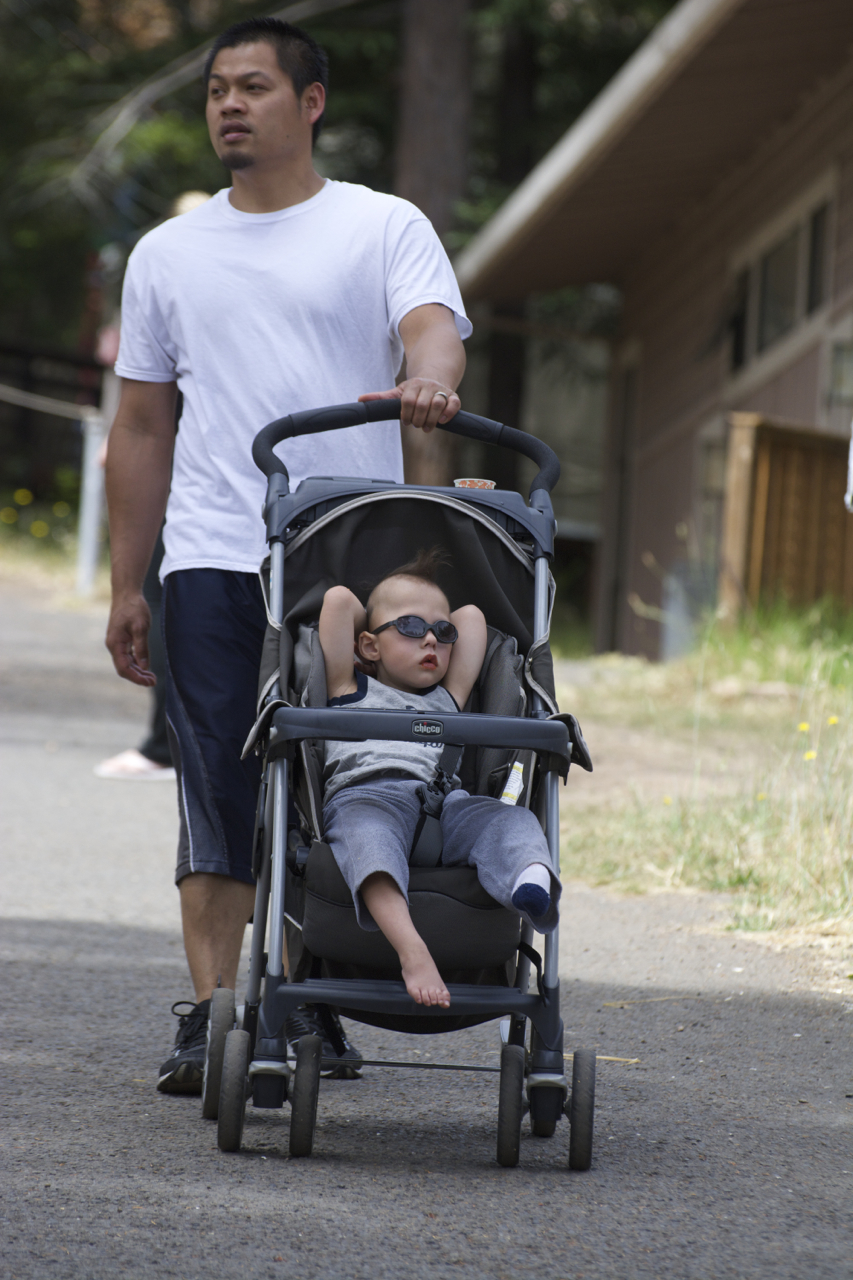
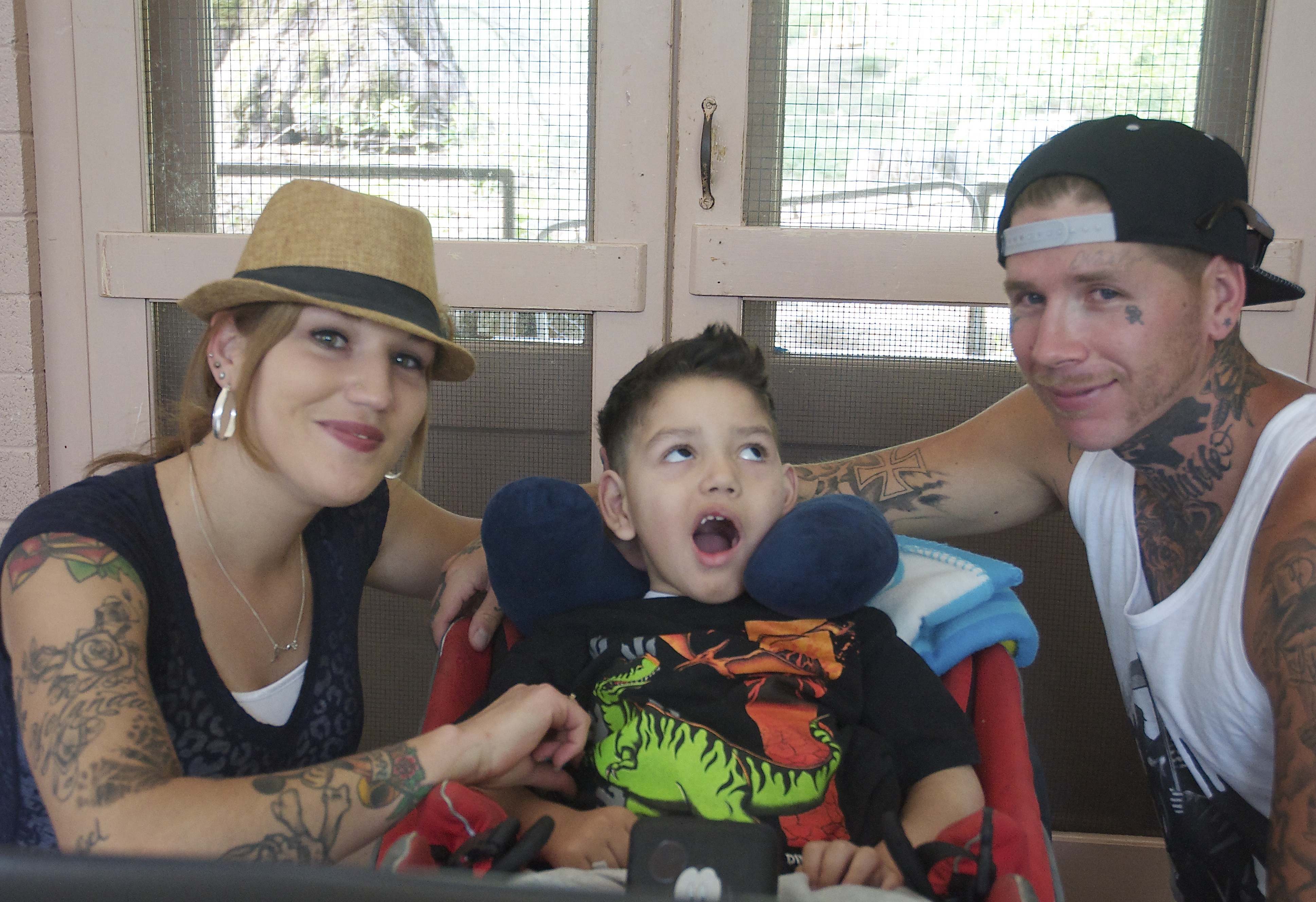
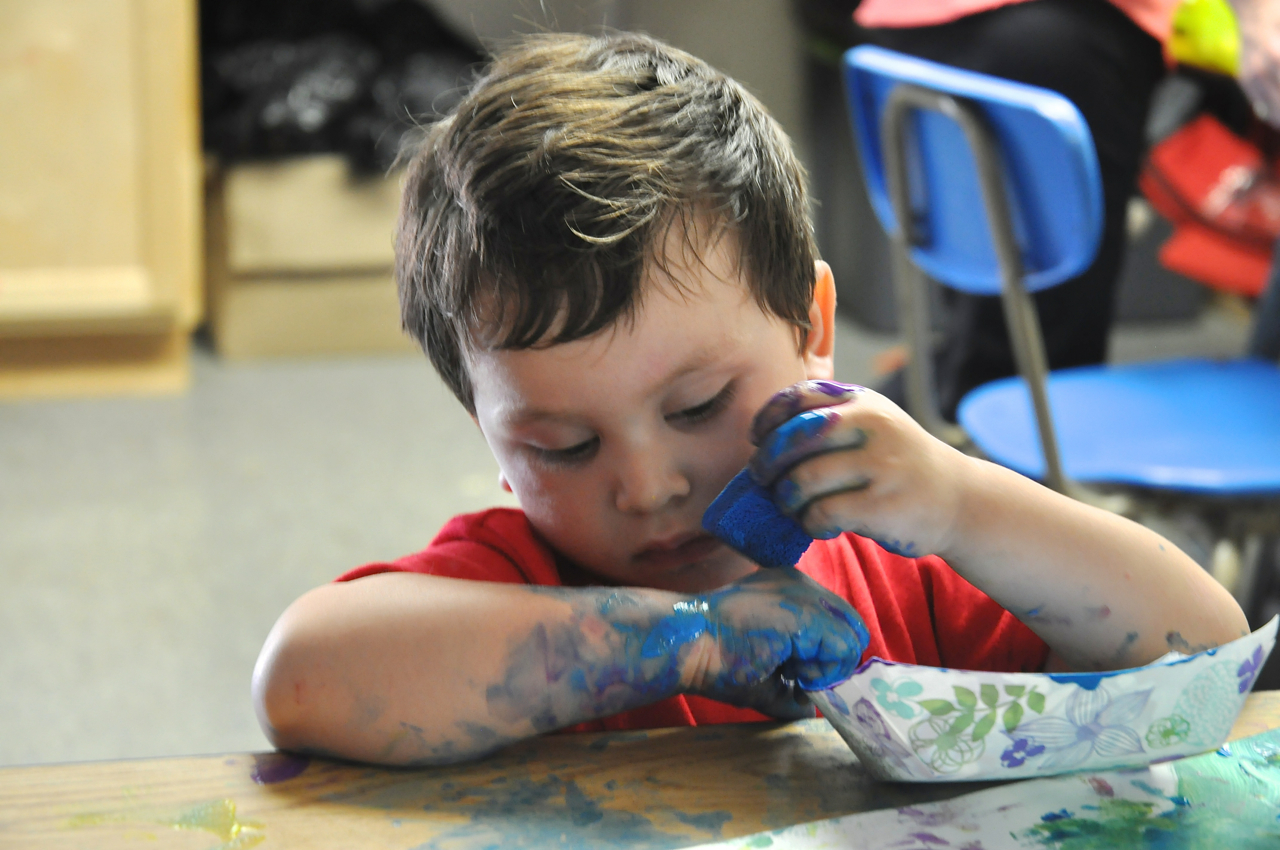
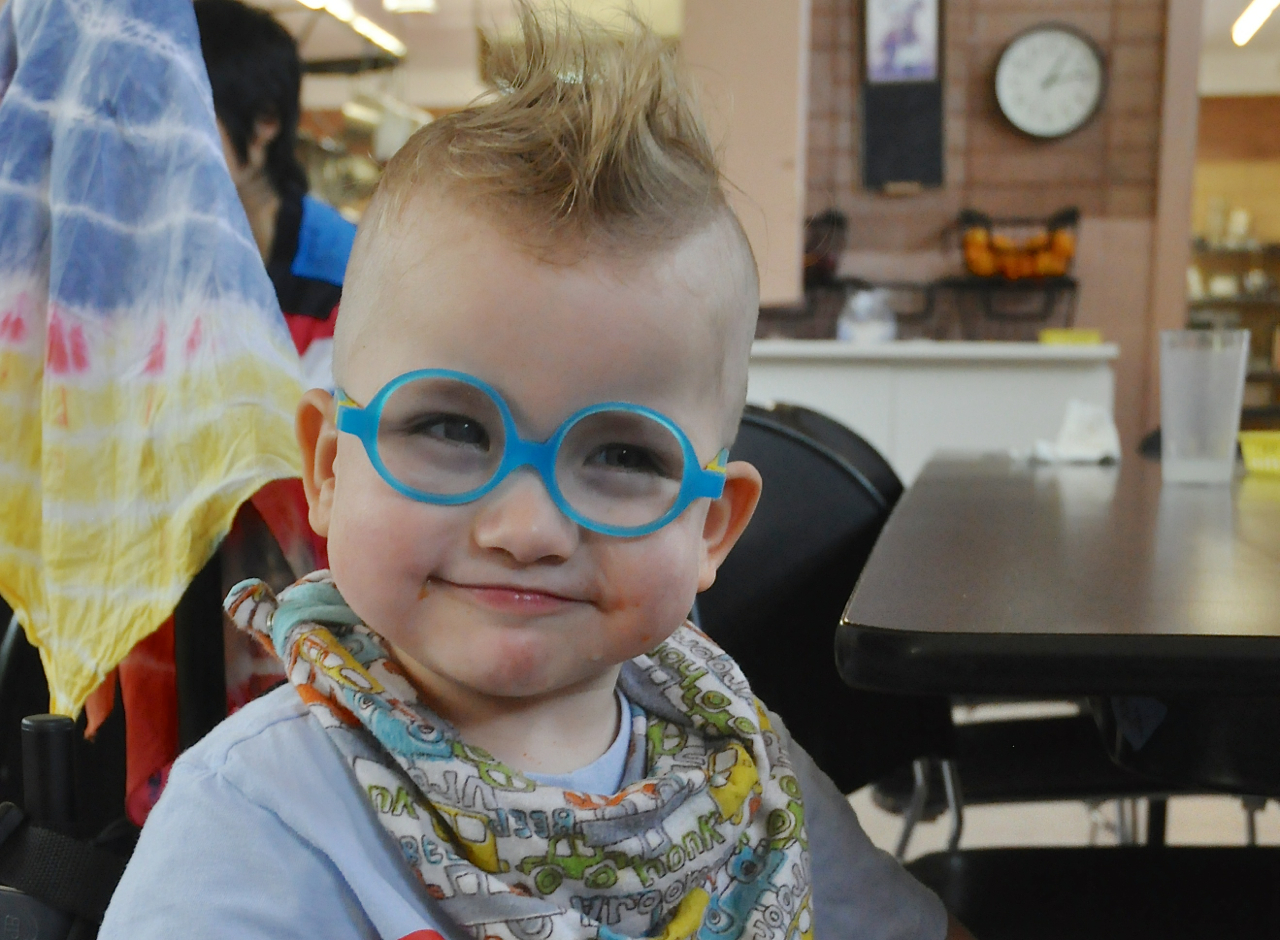
Check out these adorable photos from our recent Blind Babies and Families session at Enchanted Hills Camp in Napa! All photos courtesy Marilyn Bogerd. See more and share your own on the Enchanted Hills Camp Facebook page.

Baby, resembling a celebrity in shades and tank-top, reclines in strollerAbove: Casual baby, resembling a celebrity in shades and tank-top, reclines in stroller
young boy poses, mouth agape, parents stylish between father's tattoos and mother's fedoraAbove: young boy poses, mouth agape, stylish between his father’s tattoos and mother’s fedora
little boy is not afraid to get messy when it comes to fingerpaintingAbove: little boy is not afraid to get messy when it comes to fingerpainting
Coltrane looks classically charming in his baby-blue-rimmed spectaclesAbove: Coltrane looks classically charming in his baby-blue-rimmed spectacles
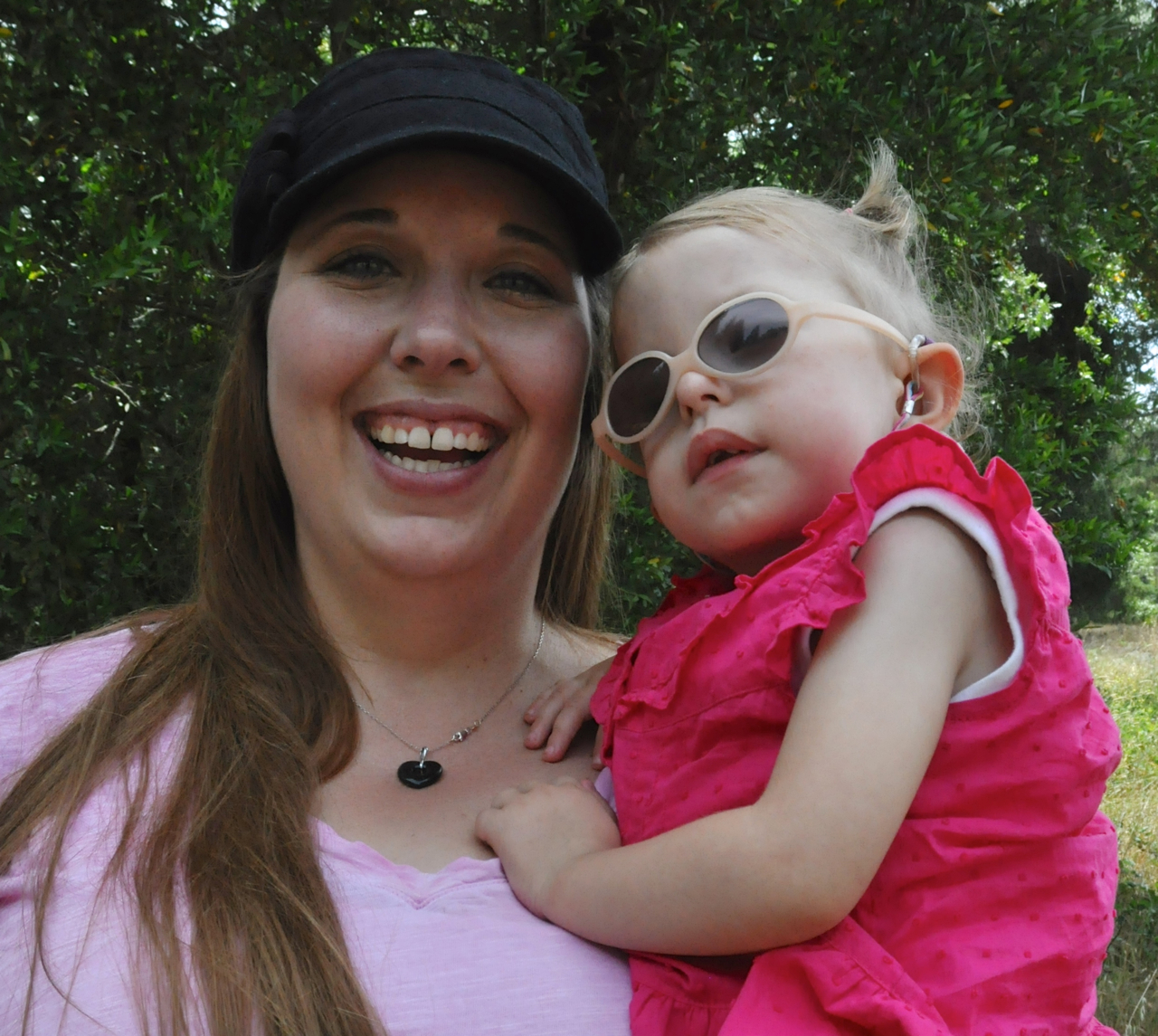
baby rests in mother's arms, sporting white-rimmed sunglassesAbove: baby rests in mother’s arms, sporting white-rimmed sunglasses


Cooking 101 Gets Blind and Low Vision Youth in the Kitchen

LightHouse staffer Molly Irish teaches sushi making to Cooking 101 studentsThe Cooking 101 series with the LightHouse Youth Program is back again with new classes for Fall 2015.
Due to popular demand, the Cooking 101 series with the LightHouse Youth Program is back with new classes for fall of 2015.

Whether you are interested in cooking tasty treats, simple side dishes and snacks, or festive full course meals, this class is intended for blind and low vision youth aspiring to be more competent and confident in the kitchen. In addition to skills training, participants will also learn the ABCs of kitchen safety and sanitation.

Upon completion of the course, students will have the necessary skills, knowledge and confidence to independently prepare and cook just about any meal their taste buds desire.

Who: Blind and Low Vision Youth
What: Learn to cook tasty treats for yourself, your friends and your family
When:  From 11:00 p.m. to 1:00 p.m. on the second Saturday of the month
Where:  LightHouse San Francisco Headquarters @ 214 Van Ness Avenue
Waiver: Each participant must submit a LightHouse Youth Program waiver form if they have not done so for a previous outing or event.
Cost: FREE for low vision and blind youth

If you would like more information about Cooking 101 or to RSVP, please contact Jamey Gump, Youth Services Coordinator, at (415) 694-7372, or by email at jgump@old.lighthouse-sf.org.

Classes will be limited to 8 participants and all participants must RSVP.

Note: It is essential to notify Youth Services Coordinator Jamey Gump of any food allergies prior to any class.

Class Schedule
September 12: Shepherd’s Pie
October 10: Everything Pumpkin
November 14: Chicken Stir-fry
December 12: Gingerbread House Making

Feel The Burn: We Made a Tactile Map of Black Rock City for Blind Burning Man Attendees

Black Rock City map - front cover

As Burning Man has ballooned from a desolate San Francisco gathering to a massive, world-famous yearly festival, it has also stood by its ambitious “10 Principles,” the first of which is “Radical Inclusion.” But for some, the annual, ever-evolving desert colony may still seem to be a daunting frontier for blind and low vision individuals.

But what is it, really, that might keep a blind person from taking on Burning Man? Maybe it’s simply the things that might deter anybody else — radical temperatures, alkali dust storms, swarms of hungry insects, or just the throng of 70,000 that descends on Black Rock City every year. And yet if you have even a slight taste for adventure that might sound perfectly enticing. Could it be that, short of courage, the real obstacle is simply finding the right tools for the journey?

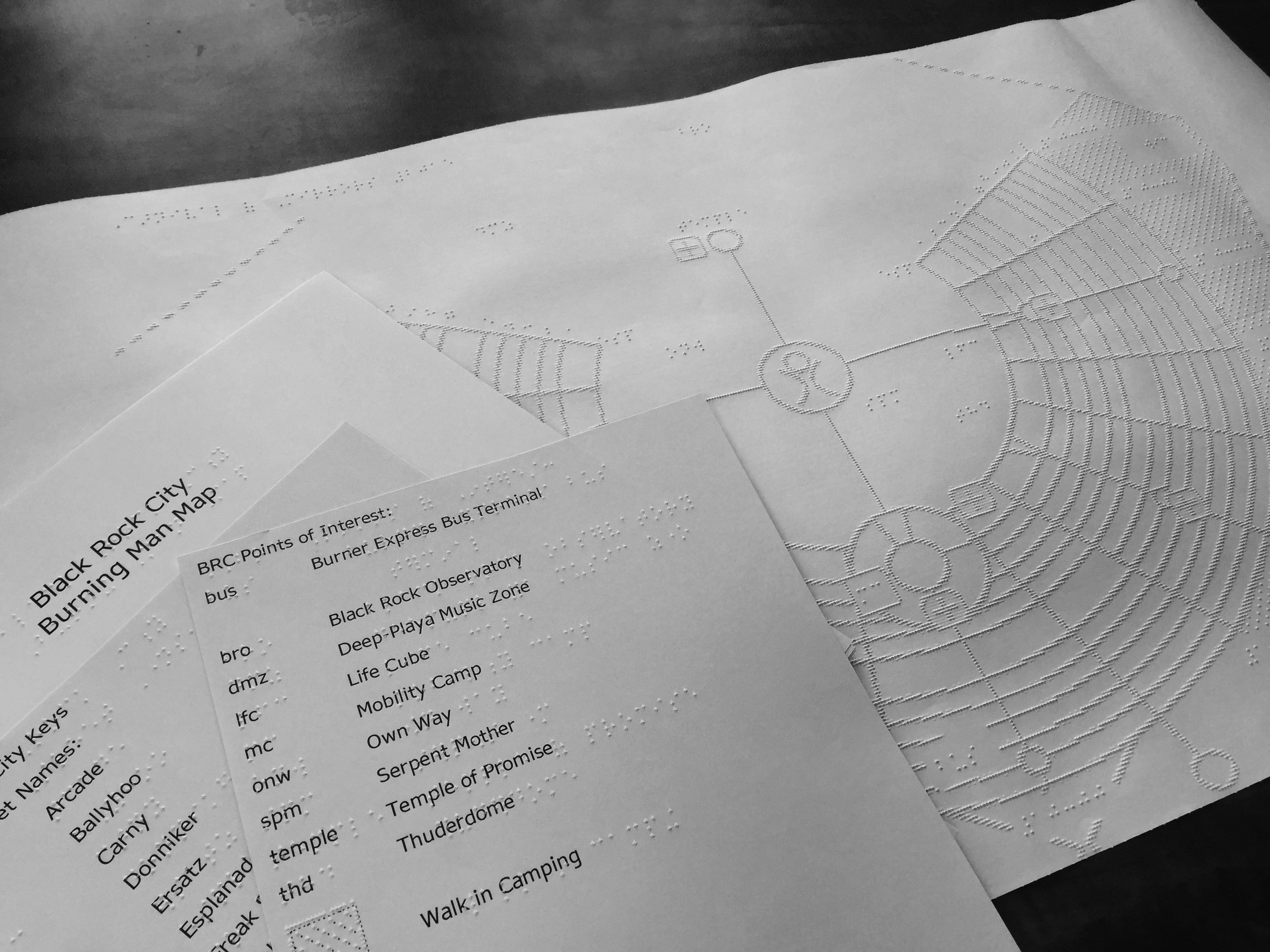
Here at LightHouse we pondered this question — and then we built the perfect new tool to answer it. It’s an elegant, straightforward rendering of Black Rock City, in its entirety, in a booklet that you can read without your eyes. A combination of raised lines, braille dots, and special embossed symbols, the map gives you the location of every street, camping area and official point of interest at this year’s Burning Man festival. That includes straightforward destinations such as restrooms or medical stations as well as more poetic points of interest such as “Life Cube,” “Serpent Mother,’ or the “Burner Express Bus Terminal.”

map showing street names and points of interest

With sparse cell reception and weak wi-fi across the massive, makeshift encampment, a physical map is the simple, dependable way to navigate the more than 50 miles of roads set up to accommodate Burning Man each year. Some intrepid blind travelers have done it without paper maps in the past, though using GPS meant needing a phone and/or Braille display ready, charged, and exposed to the elements — not exactly the liberating experience promised by the Nevada desert. The spirit of cooperation and generosity is high, of course, but for the rugged individualist, the enterprising, independent blind or low vision person who wants to truly have their own experience on their own terms, our map is a fantastic new tool.

Julie Sadlier, our one of our specialists on the Access to Information team, which makes tactile maps of anywhere from UC Berkeley to Disneyland, recently read about the Burn’s “Mobility Camp,” Burning Man’s center for those with mobility impairments (wheelchairs, crutches, walkers). She realized that blind and low vision burners needed mobility tools, too. So she set to work creating the Black Rock City Tactile Map, a hybrid of the official map and a crowdsourced Google Map. Knowing that the city is different every year, she was careful to only add destinations liable to be in the same location as previous years. The result is a map that delivers more useful features than many online maps, but remains clean and uncluttered. And like all of our maps, it’s the nimble type of solution that can be updated and printed by our accessible media team in just a few days.

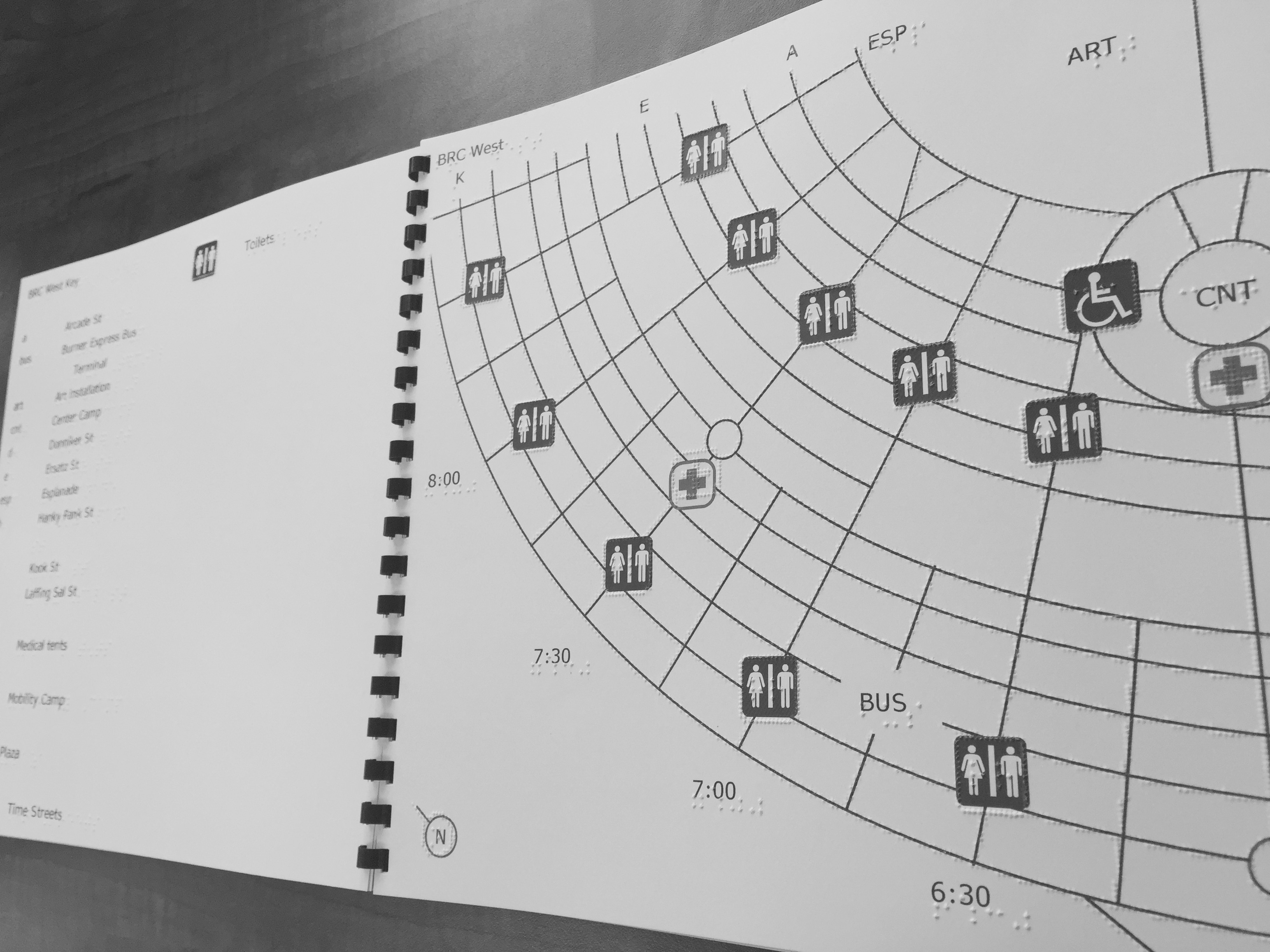
tactile map showing restrooms and medical tents

“Even if it’s just a very small minority of people that go to Burning Man with a visual disability,” she said this week, “I wanted to have something available to them, to have access to information, to make Burning Man Accessible.” Julie plans to drop off one map at Playa Information Services at Center Camp, and says she will have another one with her at camp Love Potion, located at 7:30 and G, for anyone who’d like to check it out. If you’d like to get your own, email madlab@old.lighthouse-sf.org as soon as possible.

Passing the map around the office, perhaps it shouldn’t surprise that the blind and partially sighted employees responded with particular enthusiasm. Those who couldn’t be bothered to think about the event before were suddenly brimming with curiosity. When asked to assess the map and proof for errors, our braille specialist Frank Welte suddenly found himself intrigued, running his hands over the book, becoming familiar with its stations and roads, and studying the various POI’s studded throughout the pleasingly symmetrical desert settlement. He’d never been to Burning Man, but the map was a small revelation. Julie watched with satisfaction as his interest piqued: “He had so many questions for me, He said ‘I never really wanted to go, but now I kind of do, I want to go see this art, experience this place’.”

We’re looking for blind burners! If you’re headed to the playa next week, please email communications@old.lighthouse-sf.org or madlab@old.lighthouse-sf.org so that we can get a map in your hands.

If you’d like to inquire about tactile maps for your festival, venue, or area of interest, please email madlab@old.lighthouse-sf.org or call 415-431-1481.

James Kirwin Starts Job at the Veterans Administration

James KirwinBy age 28, James Kirwin was holding down multiple jobs and going to school, studying hydrogeochemistry, the study of groundwater systems. But when he became blind “pretty much overnight,” all his skills no longer seemed relevant. “When I lost my eyesight, seven months later I lost my job, because I just couldn’t do it anymore.” It didn’t take James long to learn, though, that he’d need to seek out a new kind of education before he’d be back on the path toward employment. That’s around the time James’ Department of Rehabilitation Counsellor John Grote told him about the LightHouse Employment Immersion program.

“It kind of reminded me of college, to be quite honest with you,” James said recently of the program, which he enrolled in during October of 2013. With the help of Justine Harris-Richburgh, our current Volunteer Program Coordinator who led the class that session, James learned that finding a new purpose as a blind person was not solely about having the qualifications, but also convincing potential employers of that fact. “We learned different tactics in dealing with people, in order to make it so that the word ‘blind’ is not the first thing that comes to their heads in interviews; different ways to explain to people that we can do the job just as well as they can, we just might have to do it in a different way.”

This month, James started his new job at AbilityOne, working in procurement for the VA Hospital. He was alerted to the job opening by Kate Williams, Employment Immersion Program Leader; staying in touch with Williams after the program ends is something she encourages with each class. Eventually he may want to go back to school, too, but says that he’d rather get a teaching credential than go back to studying ground water systems. For now, he’s glad that all his hard work and skill-building has landed him a steady job, and he stays connected with almost all the students from his Employment Immersion class. “Most of the students in the class have gotten the job that they pretty much wanted, or they’ve taken the first step toward that.”

Harris-Richburgh attributes much of James’ success to his tenacity and consistently good attitude. For starters, he had no problem taking on interviews. “He was willing to go anywhere and consider any kind of job lead,” she says, “even if he wasn’t initially excited about it, he saw it as practice.” Staying in touch with the program leaders at LightHouse was also a big part of James’ success. “Any time there was an announcement or a job opening I would always throw James’ name in there,” Harris-Richburgh points out, “because I remembered his personality, that he was dedicated and really wanted to work.”

Ultimately, James learned that the key to finding employment was, in his words, “trying to take the stigma of blindness out of peoples’ eyes — make them realize that I can do what they can do, I just might have to do it in a different way.” In class, he learned this through interviews with professionals such as an HR director from Google, who conducted mock interviews with the EI students, after which providing them with a breakdown of where they were strong and where they needed improvement.

James has learned that employment, unlike blindness, won’t always come overnight, which is why his best recommendation is to not be afraid to take small steps in reaching your goals. One of those, for him, was signing up for Employment Immersion. “It’s a lot of hard work, but ultimately, it’s greatly rewarding.”

Are you new to the working world and not sure how to get started? Or do you just want to kick your career up a notch? The next Employment Immersion session will run every Tuesday and Thursday from September 1 through October 1, 2015 at the LightHouse office at the Ed Roberts Campus in Berkeley. For more information, please contact Kate Williams at kwilliams@old.lighthouse-sf.org or 415-694-7324.

Mind’s Eye Therapy Group Resuming in September

Rachel LonganLightHouse for the Blind’s Counseling and Psychological Services program is proud to announce the continuation of the Mind’s Eye therapy group. This group is intended for individuals who are moving forward in their lives with recent changes in their vision. Group facilitator Rachel Longan has thoughtfully designed Mind’s Eye for adults who are navigating this very personal journey.

Where: LightHouse at Ed Roberts Campus in Berkeley
When: Twelve Mondays beginning September 14, 7:00 to 8:30 p.m.

For specific dates, please contact Rachel Longan rlongan@old.lighthouse-sf.org.

Sudden or actively progressive vision changes can affect many aspects of a person’s life. Students participating in this group are able to process their experiences in a safe and understanding setting. Ms. Longan incorporates a variety of techniques and experiential exercises into each session. Some of the topics the group will cover include new challenges in relationships, social participation and emotional factors commonly associated with adjusting to vision changes.

The Mind’s Eye group will meet over 12 weeks on Monday evenings at the Ed Roberts Campus in Berkeley, starting September 14, 2015. There is a nominal fee for participating in this group. People who are interested in the group are urged to contact Ms. Longan at 415-694-7302 or email her at rlongan@old.lighthouse-sf.org.

About the therapist
Rachel Longan has over ten years of experience conducting support groups in a variety of settings. Rachel is herself visually impaired and has designed and facilitated the Mind’s Eye group specifically for individuals experiencing recent changes in vision. Ms. Longan has guest lectured at the International Conference on Costello Syndrome and at UC Berkeley. She is a Licensed Marriage and Family Therapist, conducts a parent group for the City of Berkeley and has a private psychotherapy practice also in Berkeley.

LightHouse’s Kathy Abrahamson Honored with Deaf-Blind Advocacy Award

LightHouse’s Kathy Abrahamson Honored with Deaf-Blind Advocacy Award

The Helen Keller National Center for Deaf-Blind Youths and Adults (HKNC) is the only national rehabilitation center of its kind, educating those with a combination of vision and hearing impairments in its residential program in Sands Point, New York. The HKNC has produced some of our nations most successful and noteworthy deaf-blind advocates, one of which was Robert Smithdas. In addition to being a long-time advocate at HKNC, Smithdas was also the first deaf-blind individual to receive a masters’ degree, with a legacy that stretched from the middle of the 20th century all the way to his retirement in 2009. With Smithdas’ passing in 2014, the HKNC established the Robert J. Smithdas award, given every year to a select few deaf-blind educators and advocates who have demonstrated a long track record of service to the community.

We’re proud to announce that this year one of the two award recipients is our Director of Rehabilitation, Kathy Abrahamson.

A representative from HKNC came to the LightHouse at the end of July to personally present Kathy with the award. Kathy shares this honor with Ingrid Halvorsen, a longtime deaf-blind educator in Illinois. “Dr. Robert J. Smithdas was reknowned for his tireless advocacy and leadership influencing the development of services for individuals who are deaf-blind,” said Sue Ruzenski, HKNC’s Executive Director, “Both Kathy and Ingrid embody Dr. Smithdas passion for empowering the deaf-blind community.”

Direct from the Helen Keller National Center:

Kathy Abrahamson is the Director of Rehabilitation at the LightHouse for the Blind and Visually Impaired in San Francisco, California.  The LightHouse has a long history of providing services to the deaf-blind community beginning in the 1950’s with the establishment of Enchanted Hills Camp, and the formation of a deaf-blind social and recreational club in the early 70’s. Kathy has continued this tradition, and has been a strong champion of deaf- blind services since she began at the LightHouse in 1986. She exemplifies the true spirit of the HKNC Affiliate Program by always maintaining a deaf-blind specialist at the LightHouse since 1992.  Her leadership with the California National Deaf-Blind Equipment Distribution Program has afforded a unique collaboration with HKNC, and has brought technology to over 300 deaf-blind Californians the past three years. “She’s not afraid to get her hands dirty in the kitchen every year, slinging turkey and dressing at the annual deaf-blind holiday party, and she may be our biggest ally in trying to establish additional deaf-blind services on this coast, from statewide Support Service Provider (SSP) services to residential training,” said Cathy Kirscher, HKNC’s regional representative for California.  “She is a very deserving individual whose presence and advocacy, along with her fantastic team at the Lighthouse, continues to benefit deaf-blind individuals on a daily basis.”

Without a doubt, Kathy is one of our most valuable assets here at the LightHouse, and it gives us great pleasure and pride to see her recognized on a national level. Congrats, Kathy!


LightHouse Rehabilitation Director Kathy Abrahamson Honored with Deaf-Blind Advocacy Award

(Left to Right) Bapin Bhattacharyya, Sook Hee Choi, Kathy Abrahamson (holding award), Bryan Bashin, Cathy Kirscher

We’re proud to announce that this year one of the two recipients of the Robert J. Smithdas award is our Director of Rehabilitation, Kathy Abrahamson.

The Helen Keller National Center for Deaf-Blind Youths and Adults (HKNC) is the only national rehabilitation center of its kind, educating those with a combination of vision and hearing impairments in its residential program in Sands Point, New York. The HKNC has produced some of our nation’s most successful and noteworthy deaf-blind advocates, one of whom was Robert Smithdas. In addition to being a long-time advocate at HKNC, Smithdas was also the first deaf-blind individual to receive a masters’ degree, with a legacy that stretched from the middle of the 20th century all the way to his retirement community in 2009. With Smithdas’ passing in 2014, the HKNC established the Robert J. Smithdas award, given every year to a select few deaf-blind educators and advocates who have demonstrated a long track record of service to the community.

The LightHouse Deaf-Blind Telecommunications Program has given away free of charge more than $1.5 million in needed telecommunications equipment to Deaf-Blind people throughout California. This program, the largest of its kind in the United States, is a model of collaboration between the LightHouse and HKNC.

A representative from HKNC came to the LightHouse at the end of July to personally present Kathy with the award. Kathy shares this honor with Ingrid Halvorsen, a longtime deaf-blind educator in Illinois. “Dr. Robert J. Smithdas was renowned for his tireless advocacy and leadership influencing the development of services for individuals who are deaf-blind,” said Sue Ruzenski, HKNC’s Executive Director, “Both Kathy and Ingrid embody Dr. Smithdas passion for empowering the deaf-blind community.”

Direct from the Helen Keller National Center:

Kathy Abrahamson is the Director of Rehabilitation at the LightHouse for the Blind and Visually Impaired in San Francisco, California.  The LightHouse has a long history of providing services to the deaf-blind community beginning in the 1950’s with the establishment of Enchanted Hills Camp, and the formation of a deaf-blind social and recreational club in the early 70’s. Kathy has continued this tradition, and has been a strong champion of deaf- blind services since she began at the LightHouse in 1986. She exemplifies the true spirit of the HKNC Affiliate Program by always maintaining a deaf-blind specialist at the LightHouse since 1992.  Her leadership with the California National Deaf-Blind Equipment Distribution Program has afforded a unique collaboration with HKNC, and has brought technology to over 300 deaf-blind Californians the past three years. “She’s not afraid to get her hands dirty in the kitchen every year, slinging turkey and dressing at the annual deaf-blind holiday party, and she may be our biggest ally in trying to establish additional deaf-blind services on this coast, from statewide Support Service Provider (SSP) services to residential training,” said Cathy Kirscher, HKNC’s regional representative for California.  “She is a very deserving individual whose presence and advocacy, along with her fantastic team at the Lighthouse, continues to benefit deaf-blind individuals on a daily basis.”
Without a doubt, Kathy is one of our most valuable assets here at the LightHouse, and it gives us great pleasure and pride to see her recognized on a national level. Congrats, Kathy! If you want to give a contribution to the LightHouse in honor of Kathy and her accomplishments, click here.

LightHouse Connect – Just in Time for School: Information, Resources and Rights for Parents and Students K-High School

Come hear a panel of experts talk about IEPs, literacy, transition to college and more.

Getting the most out of an education is critical for all students, including those who are blind or visually impaired. We welcome parents, students and teachers to an in-person education survival guide.

A panel of educators, blind students and parents who have firsthand experience will cover IEPs, literacy, transition to college and much more. The panel presentation will be followed by a connection period, allowing attendees to speak directly with panelists and get to know others in the room.

When: Saturday, August 29, 10:00 a.m. to 1:00 p.m.
Where: LightHouse San Francisco Headquarters
A complimentary lunch will be served at noon and our Adaptations store will be open to workshop attendees with a generous offer of 10% discount on back-to-school supplies.

Please RSVP to Kathy Abrahamson by Monday, August 24 at 415-694-7336 or kabrahamson@old.lighthouse-sf.org.

My First Convention: National Federation of the Blind’s Annual Convention

My First Convention: National Federation of the Blind’s Annual Convention

Of the nearly twenty of us assembled at SFO airport, some had been attending these types of conferences for decades, some only a few years, while others had never even stepped foot on an airplane. It was the 4th of July, and many questions surrounded the group of about a dozen visually impaired teenagers were mulling over as they got ready to take off for a week at their first-ever convention of blind individuals.

The LightHouse youth group, led by fearless leader Jamey Gump, represented a broad mix of backgrounds and experiences. They ranged from age 16 to 20, some attending public school while others were enrolled at the California School for the Blind in Fremont. Among them were aspiring lawyers, tech trainers, musicians and writers. They all hailed from California — everywhere from the foggy Sunset of San Francisco, the inner city of Sacramento, to the Southern Californian suburbs. Some had been preparing since early childhood for imminently changing vision; taking braille lessons and learning blindness skills in tandem with all the other studies of growing up. Others appeared to be less acclimated, perhaps a little less confident with their status as a blind person, though they all had some common qualities as well. They were the adventurous, the open-minded; the teens and young adults willing to fly all the way across the country to find out what it meant to be a part of a growing, global community of blind individuals.

Jamey Gump takes the LightHouse youth to conferences and events all year round, and so this summer he chose to bring the group to the National Federation of the Blind’s Annual Convention, The week-long affair is the largest of its kind, and carries with it a staunch political agenda, emphasizes fierce independence, and works to instill pride in its members. With almost 3,000 attendees, the convention — like so many conventions — can be experienced on multiple levels, whether it’s simply wandering from room to room, sailing through the sea of white canes and dogs, or engaging critically with the policy and membership activities the organization has to offer. Some people, it seems, are simply there to party, taking advantage of the affordable opportunity to kick back in an environment where, instead of being viewed as an outlier or an oddity, they blend in perfectly. That, to many, is an oasis to look forward to every year. Jamey’s group members, though, were there as students.

Disembarking at the massive Orlando airport, even at 1 a.m., the humidity is the first thing that gets your attention. There’s something heavy and urgent about it, pushing you towards the indoors, into the haven of air-conditioned environments built not just for shelter, but total habitation. It was immediately obvious that no one would be leaving the hotel. But for the ensuing week, there was almost no reason to step outside the doors of the Rosen Center anyway.

For starters, there were seminars, speeches, and official business that introduced our students to a whole new world of education, tools, attitudes, and advocacy that they never knew existed. In one room, the makers of the KNFB Reader demonstrated how to read any print book out loud with a simple app on your phone. In another room, musicians and performing arts professionals gathered to share their resources. These were everyone from old school piano tuners to production professionals preaching the merits of ProTools. In still other exhibit halls all along the gargantuan hotel, divisions of young lawyers, educators, and students each met to discuss the topics that motivated them and propelled them forward. Depending on their unique interests, our students were able to pick and choose the seminars which excited them most — to see what it would take to become a teacher, an artist, or an attorney.

Up the escalators and across the catwalk to another building was the Independence Market. A trade show for tools, tech, and even apparel revolving around adaptation and blindness, this is where you could find blind folks wandering like kids in a candy store throughout the week. Here you could browse all the various reading tools, special earbuds and headphones, hi-tech and low-tech alike. Jamey walked out with a t-shirt printed with the blithe public service announcement: “Keep Calm, It’s Just A Cane.”

Starting Wednesday and throughout the following three days, the entire convention met in the grand ballroom. Those talks had a much more unifying tone, seeking to deliver big messages and shore up any doubts that the blindness community is a powerful and influential one. Our youth diligently sat through hours of lecturing, three days in a row, taking in speeches by everyone from Google futurist Ray Kurzweil, new NFB President Mark Riccobono, Massachusetts Attorney General Maura Healy, and Target.com Vice President Alan Wizemann.

Then came Serena Olsen, who was closer in age to any of us than probably most people on the stage. Olsen was asked to speak to tell her story of not only living abroad and taking blindness international, but about doing it as a member of the Peace Corps. Olsen has spent the last year in Kyrgyzstan, the former Soviet nation in central Asia known mostly in the West for its place on the global “Least Developed Countries” list. Olsen has been living, working, and teaching in the Kyrgyz Republic, redefining her own sense of herself as a blind person as she faces each new obstacle (which you can read about in detail on her blog, Blind Broad Abroad). She also brought along Hayot, a young lady from Kyrgyzstan for whom she was able to fund a summer in America. Hayot is currently working as a counsellor at Enchanted Hills Camp; more on that later.

These speeches were the types of powerful experiences you’d never get in everyday life. In addition to these “big room” experiences, the LightHouse also made sure to arrange some special “small room” experiences of our own. That meant a networking dinner with a select group of mentors: rockstars like Hoby Wiedler who’s earning his PhD in chemistry and leads wine tastings at Francis Ford Coppola Winery; or disability rights attorney Haben Girma, the first deaf-blind graduate of Harvard Law School, who recently introduced President Obama at the White House. Talking one-on-one to these peers and role models made a huge impact on the teenagers, and showed them not only that there are great blind people out in the world, but that they also are interested and engaged with the what young people have to say, ready to exchange advice on a peer level.

As one of our students in the youth group put it after the convention, “It made me feel like a part of something, much bigger than just a blind kid: a blind kid that was part of a blind family that is spread throughout the country. Being in an environment where there are over 2,000 blind people was a new experience for me; that felt very different from a normal day in San Francisco.”

To reach youth leader Jamey Gump, or to sign up for our Youth Events List, email jgump@old.lighthouse-sf.org.

Email the author at communications@old.lighthouse-sf.org.