




|
|
|

|
|
|

FOR IMMEDIATE RELEASE
April 1, 2024
CONTACT: Summer Sanzo Dittmer
415-694-7661 | press@old.lighthouse-sf.org
LightHouse ECO and PRIDE Industries Announce Groundbreaking Collaboration, Set Precedent for Inclusive Employment
SAN FRANCISCO, CA and ROSEVILLE, CA – In a groundbreaking collaboration, LightHouse for the Blind and Visually Impaired and PRIDE Industries announce SKILCRAFT® cleaning concentrates, developed and manufactured by blind and low vision workers, are now available on the AbilityOne procurement list. Federal government and military facilities can now easily purchase through the AbilityOne program, online or through your preferred distributor.
This partnership marks a historic alliance between a National Industries for the Blind agency and a SourceAmerica agency, setting a precedent for inclusive employment and economic empowerment in the industry.
“This is an important step for our social enterprise, LightHouse ECO, which produces the SKILCRAFT® cleaning concentrates and other products,” said Sharon Giovinnazzo, LightHouse CEO. “These products are formulated, tested, blended, and bottled by a workforce that is 75 percent blind or low vision individuals. By purchasing our products, you are supporting economic empowerment and independence for the blind and low vision community.”
PRIDE Industries, the nation’s leading employer of people with disabilities, provides an array of fully integrated, price-competitive facilities management services. With 13,000 commercial and government buildings under management, PRIDE Industries provides CIMS-GB-certified janitorial services for 26 million square feet of facilities using SKILCRAFT® products white-labeled as PRIDEClean®.
“Our partnership with LightHouse ECO is not just a business venture; it’s a movement towards a more inclusive world,” said Jeff Dern, CEO at PRIDE Industries. “By integrating SKILCRAFT® products into our services, we’re proving that social responsibility and business success go hand in hand, creating a ripple effect of empowerment for people with disabilities across the nation.”
The SKILCRAFT® concentrates carry the EPA’s Safer Choice Certification, and most also carry the USDA Bio Preferred certification as well. SKILCRAFT®’s cleaning solution, used in conjunction with PURE Hard Surface Disinfectant, is an effective tool in the battle against harmful viruses, germs, and bacteria, while remaining safer for your workforce.
To learn how to purchase AbilityOne-qualified SKILCRAFT® products from LightHouse ECO or partner with PRIDE Industries for SourceAmerica-qualified janitorial services, visit https://lighthouse-eco.org/partnership/.
About LightHouse for the Blind and Visually Impaired
Founded in 1902, LightHouse for the Blind and Visually Impaired is one of California’s oldest nonprofit organizations and is among the largest organizations dedicated to blindness in North America. LightHouse works with people who are blind, deafblind, and low vision of all ages, from infants to older adults, and provides them with the training and skills they need to live independent, prosperous, and joyful lives. Under its LightHouse ECO brand, the organization develops and manufactures high quality, eco-conscious solutions for all commercial cleaning needs.
About PRIDE Industries
PRIDE Industries delivers business excellence with a positive social impact. A social enterprise, PRIDE Industries provides facilities operations and maintenance services, custodial services, contract manufacturing, supply chain management, packaging and fulfillment services, and placement services to private and public organizations nationwide. Founded in 1966, PRIDE Industries’ mission is to create employment for people with disabilities. Its personalized employment services help individuals realize their true potential and lead more independent lives. PRIDE Industries proves the value of its inclusive workforce model through operational success across multiple industries every day.
PRESS RELEASE: FOR IMMEDIATE RELEASE
March 28, 2024
CONTACT: Summer Sanzo Dittmer
415-694-7661 | press@old.lighthouse-sf.org
LightHouse for the Blind and Visually Impaired
Announces Launch of LightHouse ECO
SAN FRANCISCO, CA – Today, LightHouse for the Blind and Visually Impaired proudly launches LightHouse ECO, a rebrand of its manufacturing social enterprise housed at the Sirkin Center in Alameda, Calif. The new brand identity highlights a commitment to environmental sustainability and empowering the blind and low vision community through employment in manufacturing eco-friendly cleaning products.
“With LightHouse ECO, we are advancing our commitment to inclusivity and environmental sustainability,” said Brandon Cox, COO of LightHouse. “Our SKILCRAFT® products exemplify this by providing the U.S. government products that uphold top-notch environmental standards and empower our blind and low vision workforce, proving sustainability and social responsibility can go hand in hand.”
LightHouse ECO’s line of cleaning products includes several solutions certified by the Environmental Protection Agency’s Safer Choice Program. These highly effective products are safe for the environment, budget-friendly, and support an inclusive economy. These products are formulated, tested, blended, and bottled by a workforce that is 75 percent individuals blind or low vision individuals. By purchasing our products, you are supporting economic empowerment and independence for the blind and low vision community.
LightHouse ECO produces their SKILCRAFT® products in partnership with the National Industries for the Blind and the AbilityOne program. For more information about LightHouse ECO and its product offerings, visit lighthouse-eco.org.
About LightHouse for the Blind and Visually Impaired
Founded in 1902, LightHouse for the Blind and Visually Impaired is one of California’s oldest nonprofit organizations and is among the largest organizations dedicated to blindness in North America. LightHouse works with people who are blind, deafblind, and low vision of all ages, from infants to older adults, and provides them with the training and skills they need to live independent, prosperous, and joyful lives. Under its LightHouse ECO brand, the organization develops and manufactures high quality, eco-conscious solutions for all commercial cleaning needs.
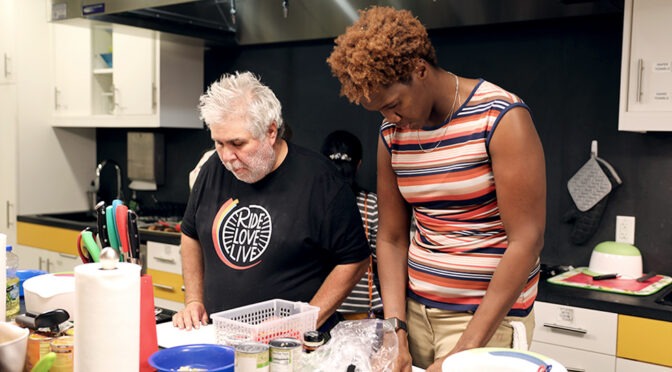
“Meet Me in the Kitchen,” is a five-week course designed to empower LightHouse students with the non-visual techniques needed to prepare and present delicious meals independently. This course is created and taught by Bobbi Pompey, an Independent Living Skills Specialist with a passion for cooking and teaching. Each week you will learn non-visual kitchen skills, general cooking tips and tricks, and prepare a snack or meal.
Spots in this fun and educational course are limited, so secure your participation by contacting Bobbi Pompey at BPompey@old.lighthouse-sf.org or 415-694-7613 by April 26.
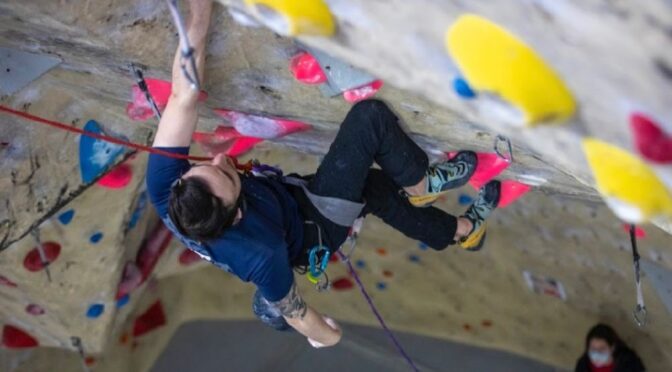

For over a year, LightHouse Community Services Coordinator, Andrew Martinez, has been organizing paraclimbing outings for the LightHouse community. Paraclimbing is adaptive rock-climbing for individuals with disabilities. Since LightHouse began joining ParaCliffHangers (a paraclimbing organization that helps set up accessible climbing routes at rock climbing gyms) a love for the sport has sparked within the blind and visually impaired Bay Area community.
“About a year and a half ago, I was playing goalball with BORP and someone mentioned there was an adaptive climbing event coming up,” explains Andrew Martinez. “I’ve always wanted to climb but didn’t know if it was an accessible sport that I could do. When they told me there was an adaptive group that meets up and climbs together, I thought it would be a great opportunity to finally try it out.”
Not long after his experience climbing with ParaCliffHangers at gyms in Oakland and Berkeley, Andrew began coordinating climbs once a month on Sundays for LightHouse students. Among the many students who have attended these outings, two students in particular have found a true admiration and dedication to the sport.
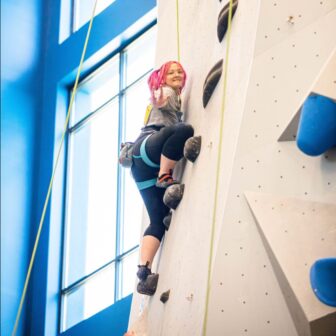
“I started climbing regularly a little over a year ago,” says longtime LightHouse student and Assistant Enchanted Hills Camp Director, Ellie Kneer. Taking quickly to the sport, Ellie followed her newfound passion and began a leadership role within the climbing community. “I became a Chapter Lead with Pacific Pipe Climbing—I co-lead with other disabled climbers and focus on the chapter’s administrative work and signing up new members,” Elie explains. “For me, it isn’t about how far or how high you can climb, it’s really about the community aspect of the sport.”
For blind and visually impaired climbers, the sport is split up into three categories—B1, B2, and B3. The different categories are based on the climbers’ visual acuity and functional vision, B1 being totally blind or very little functional vision, and B3 being the highest level of functional vision for a legally blind/low vision climber. Visually impaired climbers are paired with a caller, a sighted person who communicates with the climber from the ground, calling out possible pegs or holes within reach to assist the climber in safely navigating their way to the top.

“I think of climbing as a mental challenge as much as a physical one,” says LightHouse student and avid climber, Ahmad Rahimi. Ahmad first tried adaptive climbing as a child but has only started regularly climbing and training in July of 2023. “I enjoy pushing myself mentally and emotionally during a climb, testing my strength and determination. Every step is an achievement, no matter how high you get,” says Ahmad.
On Friday, March 8, Andrew, Ellie, and Ahmad headed to Maryland to attend the United States Climbing National Competition. The stakes were high, as the top two climbers in each paraclimbing category will make the United States Paralympic Team. After an exciting but gulling two days of competitive, challenging climbs, team LightHouse came out incredibly successful!
Andrew Martinez placed 2nd overall in his category (B3) and took home a silver metal! And, as the highest-ranking American climber in his category, Andrew has climbed his way onto the United States Paraclimbing Paralympic Team!
“I had an incredible time competing at Nationals,” says Andrew. “I had to work through some nerves climbing in front of so many people but overall enjoyed the whole experience. I can’t wait to compete on the world stage and represent the US!”
Taking home the gold for his category (B2) and also earning his spot of Team USA is 18-year-old LightHouse student Ahmad Rahimi!
“Making it on to Teem USA was a dream that I hoped would come true,” Ahmad says. “I knew that I would like to make it on to the team no matter how much work it took. Nonetheless, it still feels very surreal. I feel very happy and accomplished for the time being, but I hope to take climbing to higher levels.”
Placing 5th in her category (B2) Ellie Kneer is proud to be a Team USA alternate and excitedly awaits the next big competition.
“I was up against some beasts!” Ellie says fondly and admirably about her fellow climbers and competitors. “I love everyone who I competed against; they make me a better climber!”
So, what’s next for these LightHouse paraclimbers? The next competition will be in May in Salt Lake City then to France this summer for the International Federation of Sport Climbing (IFSC) World Cup. Good luck, Andrew, Ahmad, and Ellie! Keep climbing and reaching for the stars!
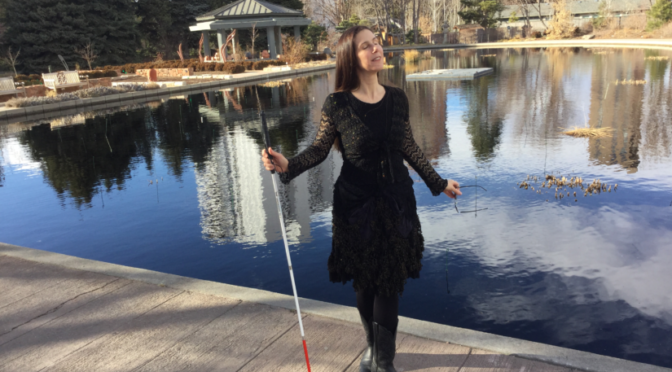
During the weekend of March 30 & 31, LightHouse welcomes Dr. M. Leona Godin, a writer and performer who is blind, to lead a two-day storytelling workshop and to host our next Performance Salon.
The workshop runs from March 30 to 31 and participants will stay overnight at the LightHouse Student Residences, on the 11th floor of our San Francisco headquarters. Workshop participants will also attend the Performance Salon.
The LightHouse Performance Salon on March 30 is a Story Slam. Come and listen to live storytelling from LightHouse students or put your name in the hat for the chance to be one of ten to tell or read your five-minute narrative. Please note: The Performance Salon is open to all; you do not need to attend the Storytelling Workshop to attend the Performance Salon.
We asked LightHouse Adult Program Specialist Sabrina Bolus who is coordinating the weekend, and Leona to answer questions about their passion for writing, the Storytelling Workshop and the Performance Salon.
You’ve done several activities focused around writing during your time at LightHouse. Can you tell us about your interest in writing, and how and why you developed these activities for LightHouse?
Sabrina: My passion for writing dates back to 2004 when I first encountered Morning Pages while reading Julia Cameron’s book, The Artist’s Way. Cameron describes these pages as a “stream of consciousness writing, done first thing in the morning.” Writing became a sanctuary for me, a place of refuge where I could explore and express my interests, thoughts, and feelings.
Writing holds a special place in my heart, and as my vision changes, I find new ways to continue reading and writing. Collaborating with our creative students and inspiring authors reassures me that where there is a will, there is a way. I firmly believe that every dream has its moment, and by staying involved, I feel closer to understanding and realizing my writing aspirations.
What drew you to Leona Godin?
Sabrina: I became acquainted with Leona when LightHouse participants expressed interest in her book, There Plant Eyes: A Personal and Cultural History of Blindness. Leona graciously agreed to give an author’s talk, and during that event, the seed of hosting a series of writer’s workshops at the LightHouse was planted. Before I knew it, Leona played a pivotal role in bringing together a five-month writer’s series with three other esteemed authors. I am impressed by and appreciate Leona’s talent, her collaborative nature, and her desire to teach, encourage, and promote other writers.
What do you think people will get out of attending the Writer’s Weekend and/or the performance salon?
Sabrina: Attendees will engage in guided exercises, honing their skills to craft compelling personal narratives for both the page and the stage. After tuning into the Moth Storytelling Podcast, a student remarked, “I now understand why you conduct these workshops. It provides us all with a chance to tell our stories.” Her insight is spot on. Our stories are empowering, yet too often we keep them to ourselves, unaware of the strength they offer to both ourselves and others. It’s often surprising how a shared story can assist another person in navigating through both challenging and celebratory situations.
What got you interested in writing?
Leona: Reading everything I could get my hands on when I was a kid made me want to write. Things got harder when I lost my central vision. When I was a teenager, there weren’t any easy answers for visually impaired kids; it was rare to get the kind of Braille training needed to become fluent. I finally got hooked up with books on tape and then my first accessible computer. When I first saw those green letters on the black DOS minimalist screen, I thought, “Wow, I can write again!” Now it’s text-to-speech and Braille, and my life and career revolve around writing.
Are there any unique challenges that blind writers face?
Leona: Absolutely. Although so many books, magazines and literary journals are available electronically these days, we still have a long way to go. Most new books appear as eBooks as soon as they’re published, but often they are not formatted in ways that make them particularly readable with Braille displays. There is still a lot of inaccessibility in the literary world and quite a bit of snobbery with regards to eBooks. We need to remind people that eBooks are accessible books! In the professional writing world, dealing with track changes [in a Word processor] and other editing tools can present problems for our assistive technology, which is not always fully compatible.
Probably the biggest challenges we face are cultural; so many depictions of blind people—in novels, movies, articles—are written by sighted people. And we all know how wrong sighted people usually are about blind stuff! I write in my book, There Plant Eyes: A Personal and Cultural History of Blindness, about how even professional authors struggle with publishers to tell authentic stories that contradict the stories that have been told of us for so long. Finally, as disabled people, we are not yet always mentioned in statements of diversity at literary magazines, grants and fellowships and other cultural institutions that are in place to lift up other traditionally marginalized writers.
What do you hope people attending the Storytelling Workshop will get from the weekend?
Leona: I hope participants will gain confidence in their writing, feel a sense of a writing community, and sketch out a path forward with respect to personal or professional writing goals. Plus, I hope they have fun!
What about the Performance Salon?
Leona: The Salon is a chance to practice performing in front of an audience. Much of writing is a solitary endeavor. Going to readings, storytelling slams, and other writerly events is a great way to test out new work and make new friends.
What advice would you give to aspiring writers?
Leona: Write a lot and read more!
What: Two-Day Storytelling Workshop with Author M. Leona Godin
When: Saturday, March 30 beginning at 10:00 am through Sunday, March 31 ending at 1:00 pm
Where: LightHouse San Francisco headquarters at 1115 Market St.
Cost: $100
Description: During this intensive weekend workshop, writer and performer Leona Godin will guide students through writing and performance exercises to craft personal narratives. We’ll consider creative non-fiction for the page and for the stage, for example the personal essay, Moth-style storytelling, and memoir. Students will also be encouraged to prepare a short piece for performance during the public story slam Saturday afternoon. Read a detailed schedule for the Storytelling Workshop.
RSVP: RSVP online for Two-Day Storytelling Workshop with Author M. Leona Godin or to Sabrina Bolus at SBolus@old.lighthouse-sf.org or 415-694-7607.
What: 1155 Performance Salon
When: Saturday March 30, from 4:00 pm to 6:00 pm
Where: LightHouse San Francisco headquarters at 1115 Market St., 10th floor
Description: Experience the thrill of live storytelling at our upcoming Story Slam hosted by Leona Godin and featuring … you! Just put your name in the hat for a chance to tell (or read) a five-minute story. Each storyteller will have five minutes to share their narrative, crafted around a theme specially chosen for the event. With ten coveted performance slots available, five will be drawn from our exclusive weekend storytelling workshop with Leona Godin.
Theme: “Food”: Everybody has to eat, right? Come share a five-minute story about breaking bread, cooking grandma’s recipes, or growing vegetables in your garden. Bring your tales about food from around the dinner table, the grocery store, or the world. Hilarious kitchen escapades and emotional family feasts are welcome, as are food issues, food phobias, and food revelations. The theme is provided to spark your imagination, but if you prefer to tell a story about something else, that’s ok, too!
RSVP: RSVP to Maia Scott at MScott@old.lighthouse-sf.org or 415-694-7608.
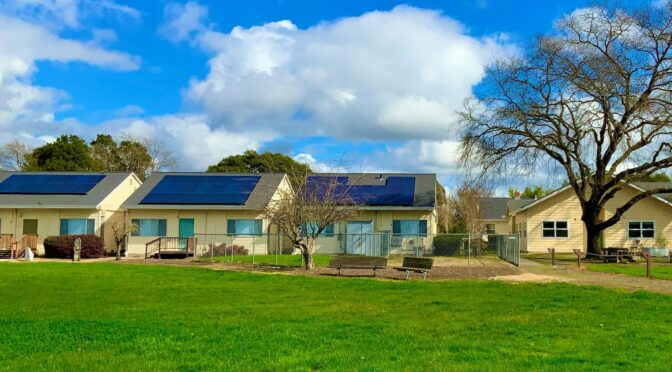
As many of our newsletter subscribers may remember, we excitedly announced our collaboration with fellow blindness agency, the Earle Baum Center (EBC) in Santa Rosa, who have joined the LightHouse community. As we move forward together with the shared mission of providing opportunity, education, employment and support for blind and low vision individuals by blind and low vision individuals, we’d like to properly introduce our friends at EBC to the LightHouse community!
The History of Earle Baum Center
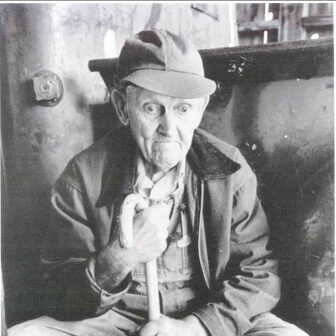 Earle Baum was born in 1896 on his family’s farm just west of Santa Rosa. This homesteaded property had been in the Baum family since 1856. By age 17, Baum had lost substantial sight, most likely from retinitis pigmentosa, the number one cause of congenital blindness. A star pupil at Santa Rosa High, Earle had dreamed of a writing career.
With his sight loss, his aspirations of being a journalist were dashed. Earle Baum remained determined, working the farm, tending the animals and planting, cultivating, pruning, and harvesting the farm’s seasonal bounty. Earle Baum was both remarkable and ordinary. His farm-based life was certainly ordinary for the times in which he lived, yet most remarkable was the vivacious way he went about living it. He remained on the farm until his death in 1986 at the age of 90.
Today, the Earle Baum Center provides the means and facilities by which people of all ages with visual impairment develop the skills and build the confidence needed to live productive and fulfilling lives. The uniqueness of the Earle Baum Center is the way blind and visually impaired people share within their community the knowledge and techniques that have proven to be successful, building upon that foundation with a variety of programs, activities and opportunities.
We encourage the LightHouse community to check out the service and recreational programs provided by EBC. Many of their programs are virtual and can be attended remotely. And, of course, if you know of anyone who would benefit from the opportunities Earle Baum provides, please spread the word! You can find EBC programs listed on the LightHouse web calendar or go to the Earle Baum Center website for more information about the services, staff, and beautiful campus of EBC in Santa Rosa.
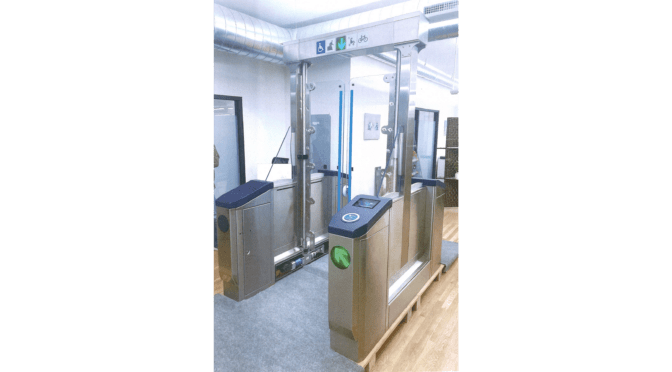
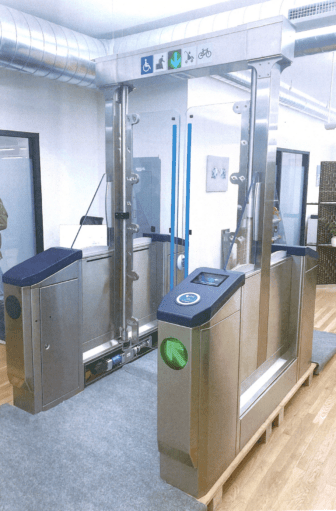 As part of their Safe and Clean plan to reimagine the rider experience, Bay Area Rapid Transit (BART) will be replacing its more than 700 fare gates systemwide. The new fare gates are taller and stronger to deter fare evasion while improving accessibility and reliability with modern equipment and advanced sensors. The plan is to have all the new fare gates installed systemwide by the end of 2025.
From March 22 through April 5, at Civic Center Station, the stop for the LightHouse San Francisco office, BART will replace the existing accessible fare gate near the elevator on the platform level [where you catch the train]. During these weeks, the elevator will still be open and there will be an accessible path for riders. Much of the work will happen when BART is closed to reduce rider inconvenience and provide a quick and efficient installation. Later this summer, BART will replace all fare gates on the concourse level [the level where you enter the station].
During construction, riders will not be able to tap their Clipper card at the faregate in front of the elevator on the platform. All riders using the elevator will need to tap in and out of the station at the concourse level.
To leave Civic Center Station:
To enter Civic Center Station:
During construction BART will provide an accessible pathway for riders through the construction area.
If you have questions, you may contact Bob Franklin, BART Director of Customer Access and Accessibility, at bfrankl@bart.gov or 510-464-6133.

We are thrilled to invite families with young children who are blind or have low vision to our Spring Celebration 2024 event featuring beeping egg hunts, fun family activities and more! This special event will occur on Saturday, April 6 from 12:30 pm to 4:00 pm at Guide Dogs for the Blind’s San Rafael campus. Bottled water, juice boxes and light snacks will be provided at the event.
Who: Families with young children who are blind or have low vision
Where: Guide Dogs for the Blind Campus located at 350 Los Ranchitos, San Rafael, 94903
Register to this Spring Celebration event.
Questions? Please contact Karen Thompson at KThompson@old.lighthouse-sf.org or call 415-694-7695.
This event is hosted by LightHouse for the Blind and Visually Impaired and Guide Dogs for the Blind.
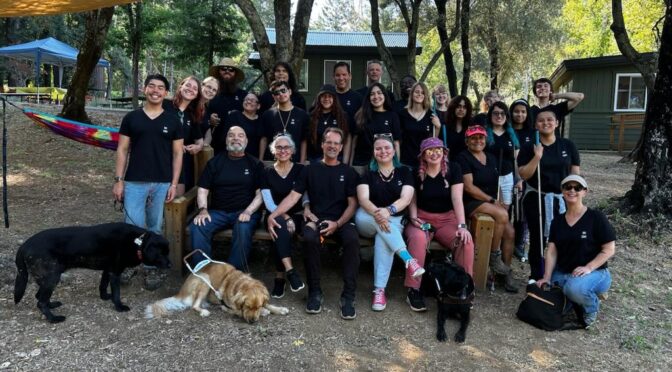
The Enchanted Hills Camp (EHC) Counselor-in-Training and Leadership Development Program is designed to nurture blind and low vision leaders through immersive soft-skills development and career exploration. Participants engage in discussions, role-playing, and hands-on practice under the guidance of LightHouse staff during the Summer Camp programs at EHC. By the program’s end, participants gain enhanced self-advocacy skills, social competence, and independence, better equipping them for future transitions and educational endeavors. Additionally, the program fosters essential soft skills, a strong work ethic, and leadership qualities crucial for future employment and peer interaction.
This year’s program comprises two parts. The first week focuses on Leadership Development and Staff Training, featuring job readiness exercises and activities emphasizing leadership, communication, problem-solving, teamwork, time management and conflict resolution skills. The subsequent weeks involve participants serving as Counselors-in-Training (CITs) during the Summer Camp sessions, with opportunities to apply newly acquired skills under the supervision of camp staff. Throughout the program, CITs engage in discussions with blind/low vision leaders and successful professionals, exploring career opportunities, blindness philosophy, and life skills pertinent to their transition to adulthood.
The 2024 Camp Counselor-in-Training and Leadership Development Program at EHC caters to teenagers aged 16-18 who are blind or have low vision and are committed to enhancing their leadership abilities in a camp environment. Prospective participants undergo an application process, including completing LightHouse’s student intake form, participating in an interview, and demonstrating full commitment to the program. Individuals with varying camping experiences or an interest in social and recreational work professions are encouraged to apply.
Prospective participants must email their interest to youth@old.lighthouse-sf.org, including responses to specific questions regarding their motivation, qualifications, and distinguishing qualities for the program. LightHouse staff will then coordinate interviews and evaluations, including Living Skills and/or Orientation and Mobility assessments, if necessary. New students to LightHouse services must complete the student intake form and registration process before consideration.
For further information about the 2024 EHC Camp Counselor-in-Training and Leadership Development Program, contact Jamey Gump via e