This is Part 2 in a series. Click here to read Part 1.
by Will Butler
Earlier this week I started writing about what it’s like to immerse yourself in our adult training retreat at Enchanted Hills Camp in Napa. Now that it’s over, you’d think it’d be easier for me to sum up in retrospect, but the truth of the matter is I’m still processing it all. The amount of information that was given to us was immense. The strength of personal connections made between all the students, aged 25-77, was unlike anything I’ve ever seen occur over the course of five days. The disparity between how we behaved when we arrived and how we behaved when we left was remarkable. The skills, tools, and adaptations we learned were all custom-made, personalized little gifts — in many ways, they won’t mean anything to our spouses or family or friends — and it’s hard to imagine ever describing it to someone who wasn’t there in a way that’s meaningful. But I guarantee that if you stumbled upon the twelve blind folks eating dinner at Gott’s Roadside on Thursday evening, you’d recognize immediately that they had been through something special together.
But enough vagueness; if you’ve read this far I’m sure you actually want to know: what did we spend all our time doing? The truth is, we learned how to live on all levels, from the most mundane to the most abstract and emotionally elusive.
Getting better at everyday tasks (which in these circles is called independent living skills or ILS) was, at least for me and a few others, a priority. For starters, we had an entire session dedicated to helping you find stuff. Boring as it may sound, these are the questions newly blind people find themselves agonizing over: If I drop a pill bottle, what’s the fastest way to find it? Can I wipe down a counter and be sure it’s clean? How do I put in the right batteries? How do I shave? With our training shades over our eyes for anyone who still relied on some eyesight, we were taken step by step through these everyday simplicities and reassured that, yes, there was an easy way to do all of them. Later on, we did this with cooking as well, cleaning, chopping, and preparing dozens of pounds of marinated vegetables for dinner, all the while learning blind-oriented knife skills, measurement and identification techniques. I was surprised to find that my cooking skills were better than I would have thought, and that discovery if nothing else was worth the class. Suddenly, when I get home, I wanted to cook again.
At another session, we went in-depth on labeling and organizing, talking strategies but also getting hands on with solutions. Many blind people eagerly embrace new technology, but simple, low-tech hardware and quick dollar store solutions are still mainstays of everyday adaptation. Stickers, high contrast cutting boards, talking calculators, magnets, velcro, buttons, bumps, signature guides, safety pins, sock locks, knife holders, innovative dishware, extra-thin silicon oven mitts and above all rubber bands (for tagging shampoo/conditioner bottles, etc.); there was a never-ending list of items to add to the efficient-living arsenal. These are things that blend in, seem obvious once suggested, but are also ideas I would never have come up with on my own. We also exchanged advice. How exactly do you deal with the grocery store? What do you do when your husband wants help dressing himself? How do you sort your clothes? We were all at different levels, and yet we could all relate. You’ve never seen a group so eager to talk about their dresser drawers.
This is not to make it sound like it was all low-tech either. Personally, as a Mac person I’d been putting off learning JAWS, the screenreader software which is PC-only and also happens to be the industry standard for word processing. To me it seemed daunting, unnecessary because I am low vision and not totally blind. And yet, put me in front of a PC and I’m admittedly useless. To my surprise, our tech instructor Julianna had me up and running (and surfing Facebook) without any visual cues within an hour. That’s the power of having a human teach you how to do these things. It was about getting advice and giving it. If you knew something someone else didn’t yet, it felt good to share your strategy with them. Though the solution may be simple you could feel that the other person really deeply appreciated it.
Tech solutions were different for different people. Some brought touchscreen devices, iPhones, iPads or laptops that they wanted to get better at using. Others learned how to load up their Victor reader (another portable, more tactile audio player) with documents, podcasts, books and news. For some, it was enough to learn about Wilson, the compact voice memo recorder that could help them keep notes and to-do lists, or the Pen Friend, a smart audio pen that allows to record your own labels. And with the absolute surge in the iPhone’s general popularity in recent years, the motto of the week seemed to be “there’s an app for that.” Nearly every month now an app comes along that can significantly change a blind person’s life. Apps such as KNFB Reader, Tap Tap See, Be My Eyes, and hundreds more have absolutely proliferated, and we couldn’t live in a better time for cool blind tech. This is what Sydney was responding to when she exclaimed with joy and relief in our very first solutions session.
It wasn’t simply about taking down a list of items to buy, either. This was one of the first opportunities some of us had to try stuff out and see if it worked. You could sit down with one technology, play with it for a while, then try an alternative. All of it was at our fingertips, in one room, all week long.
Because of the nature of my vision, mobility has not always been a problem for me, but even so I met with Katt Jones for a one-on-one assessment. We talked about everything to do with cane travel; some things I had picked up naturally but didn’t know the names for. She showed me a more elegant and efficient way to locate doorknobs. She corrected my technique approaching and scaling stairs. We talked about “how to train your human,” or in other words, how to help people help you. She took me to downtown Napa, where we walked back and forth across a massive intersection, analyzed the ins and outs of curb cuts, and then went to Trader Joe’s. Some things were new, and for the things that weren’t, it felt good to have a certified O&M instructor tell me confidently that I was doing things right. Even walking around the grocery store alone, I already felt more comfortable than usual, even if it was just in my head.
There were also the more interpersonal, emotional discussions. What to do when a loved one says something hurtful, how to hold your own in household duties, and how to be honest and expect honesty back were all topics we explored. Then came the embarrassing stories, the stories about humility and moving forward with grace, the stories which will not be published here.
The week really showed the wide range of experience within the blind community. There were those with degenerative conditions, people who had been in accidents, victims of violence, and some with less explicable or diagnosable visual impairments. There were those who had lived full, vibrant lives and those who were just beginning their journeys. There were kids from low-income backgrounds alongside retired college professors. And all of them went through some sort of metamorphosis. For some it was just social, and for others very physical. There were adult students too timid to take one step on their own when they arrived Sunday evening; and within days, even 24 hours for some, they were calmly navigating the hills and paths of Enchanted Hills entirely by themselves.
The big takeaway, for me, was that the best learning comes from peers and role models. Jamey Gump’s teenage counsellors in training were right there along side us most of the week, and it was pretty cool to see their training mirror our own. They looked to each other as everything from mentors to mere curiosities, and above all just people they could feel comfortable around. We all stood in a line on Wednesday night and did the “cookie challenge,” wherein contestants tilt their head back and race to get an Oreo from their forehead to their mouth with no hands. One of Sook Hee Choi’s deafblind students was the winner. Thursday night there was a talent show, which involved jokes, skits, a tap dance, and a no-holes-barred Billy Joel-esque piano ballad from Shane, EHC’s arts and enrichment counsellor for the summer. In the morning, all the kids and adults — each their on their own training program — mingled like happy campers. Kids who I had earlier assumed were completely blind approached and said cheery hellos to me of their own accord. And, kept busy every day from breakfast to sunset it wasn’t until about the time I left that I stopped and realized how much I’d been enjoying the whole week.





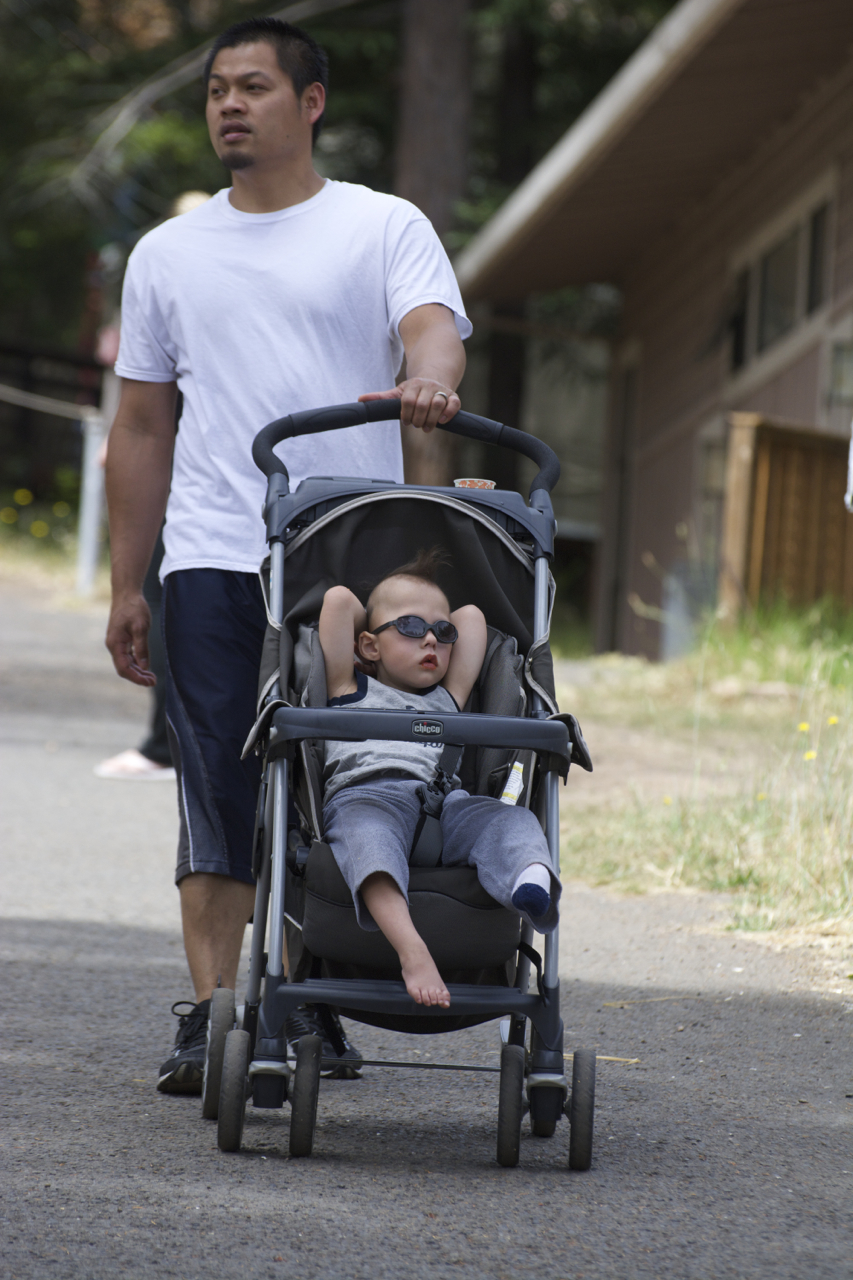 Above: Casual baby, resembling a celebrity in shades and tank-top, reclines in stroller
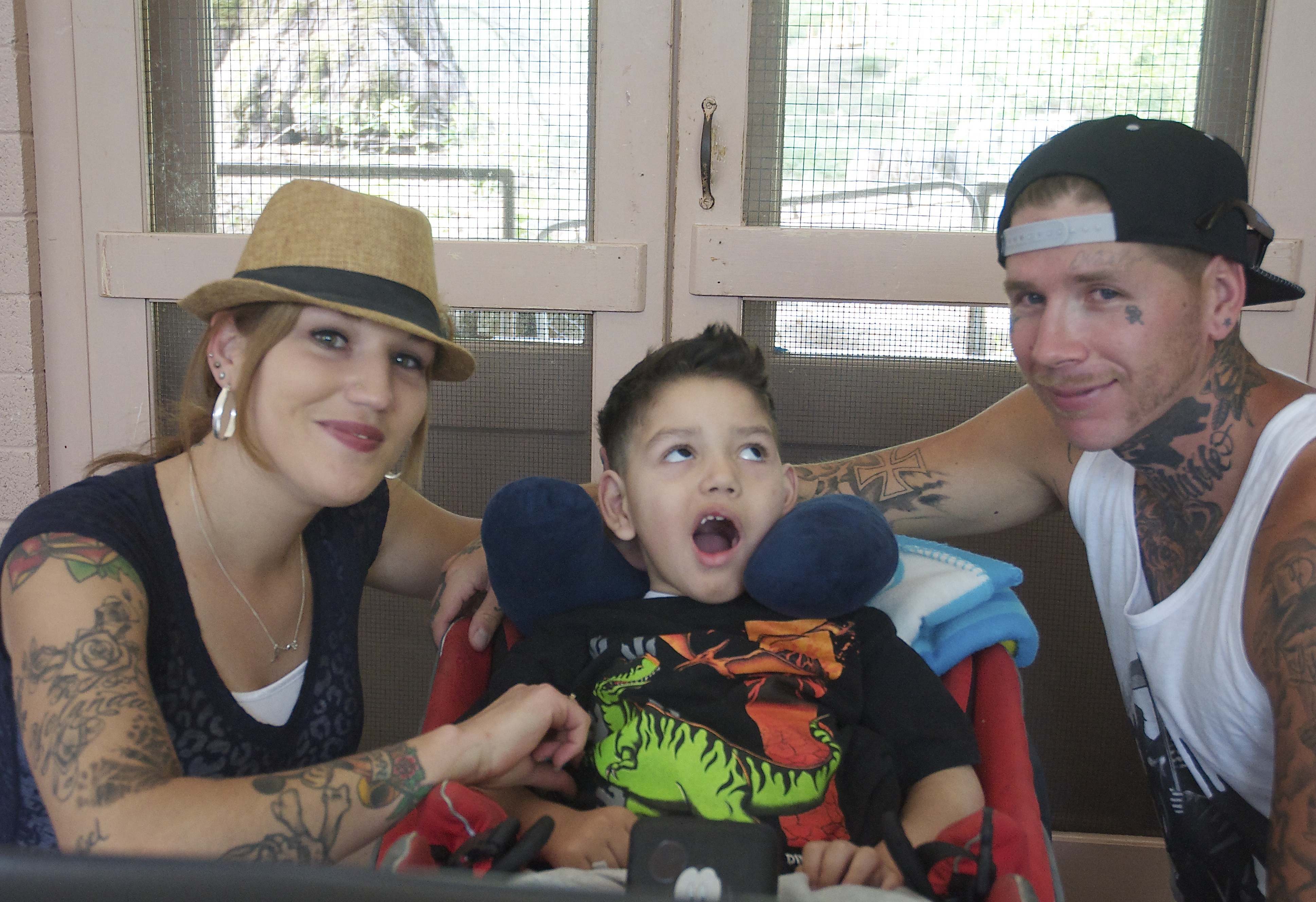 Above: young boy poses, mouth agape, stylish between his father’s tattoos and mother’s fedora
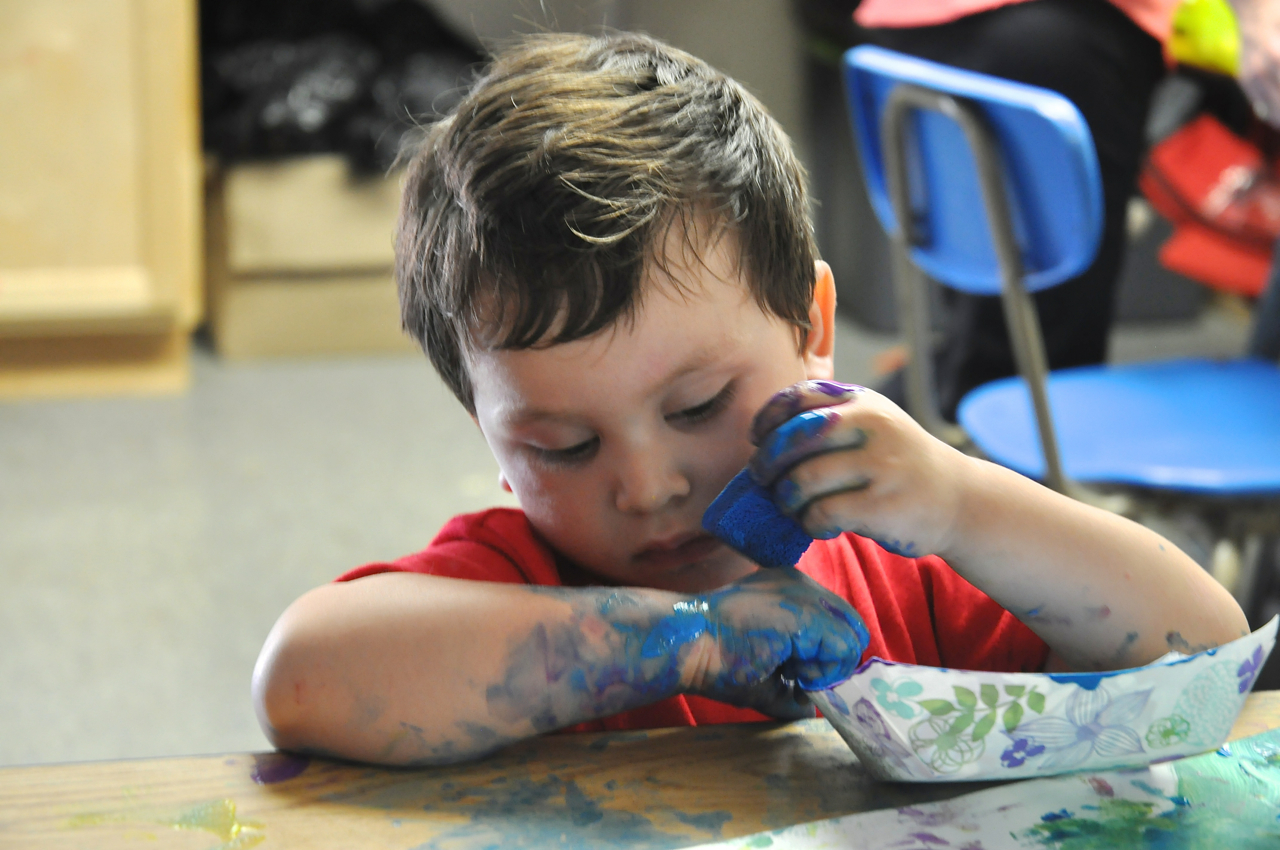 Above: little boy is not afraid to get messy when it comes to fingerpainting
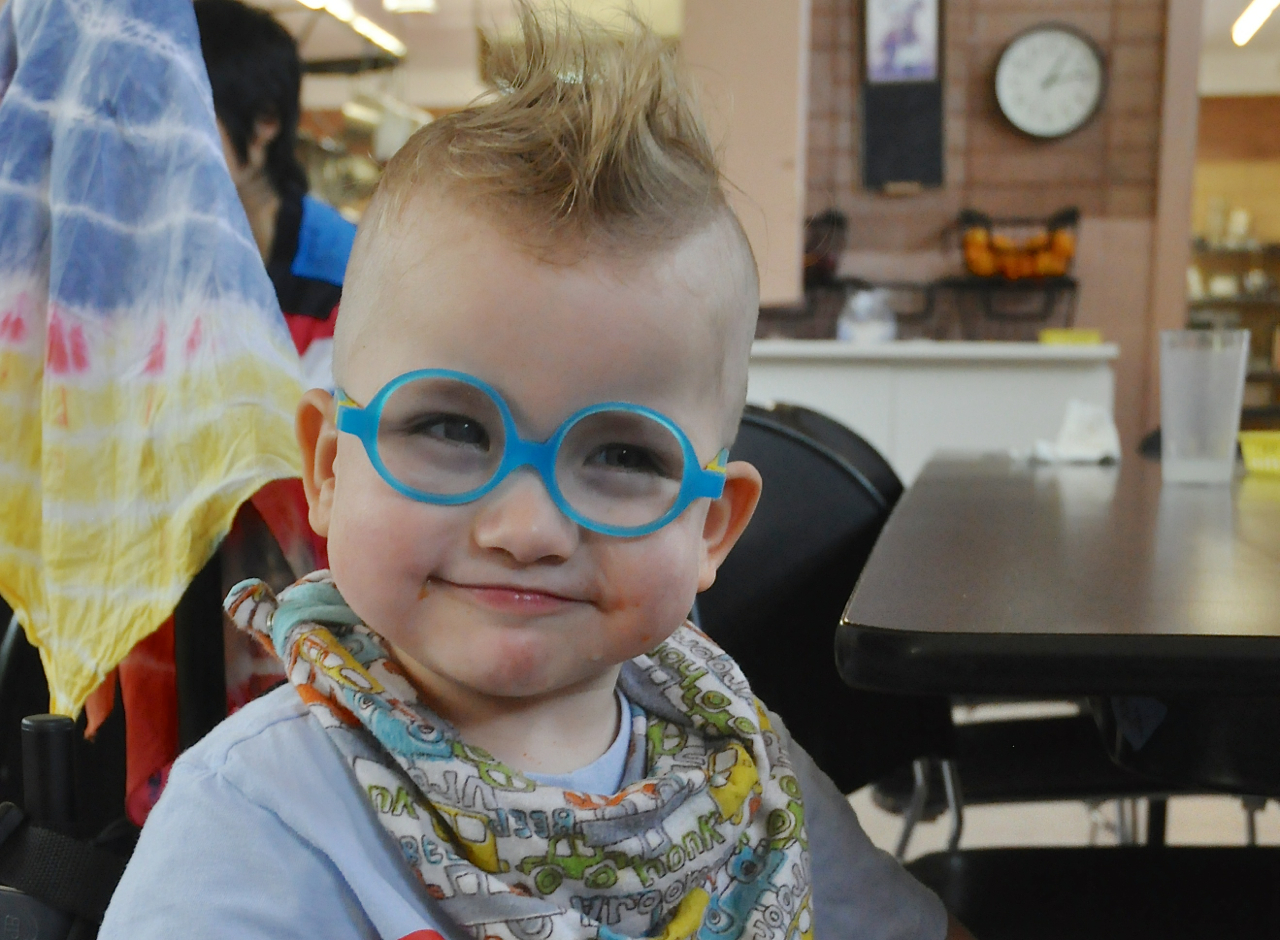 Above: Coltrane looks classically charming in his baby-blue-rimmed spectacles
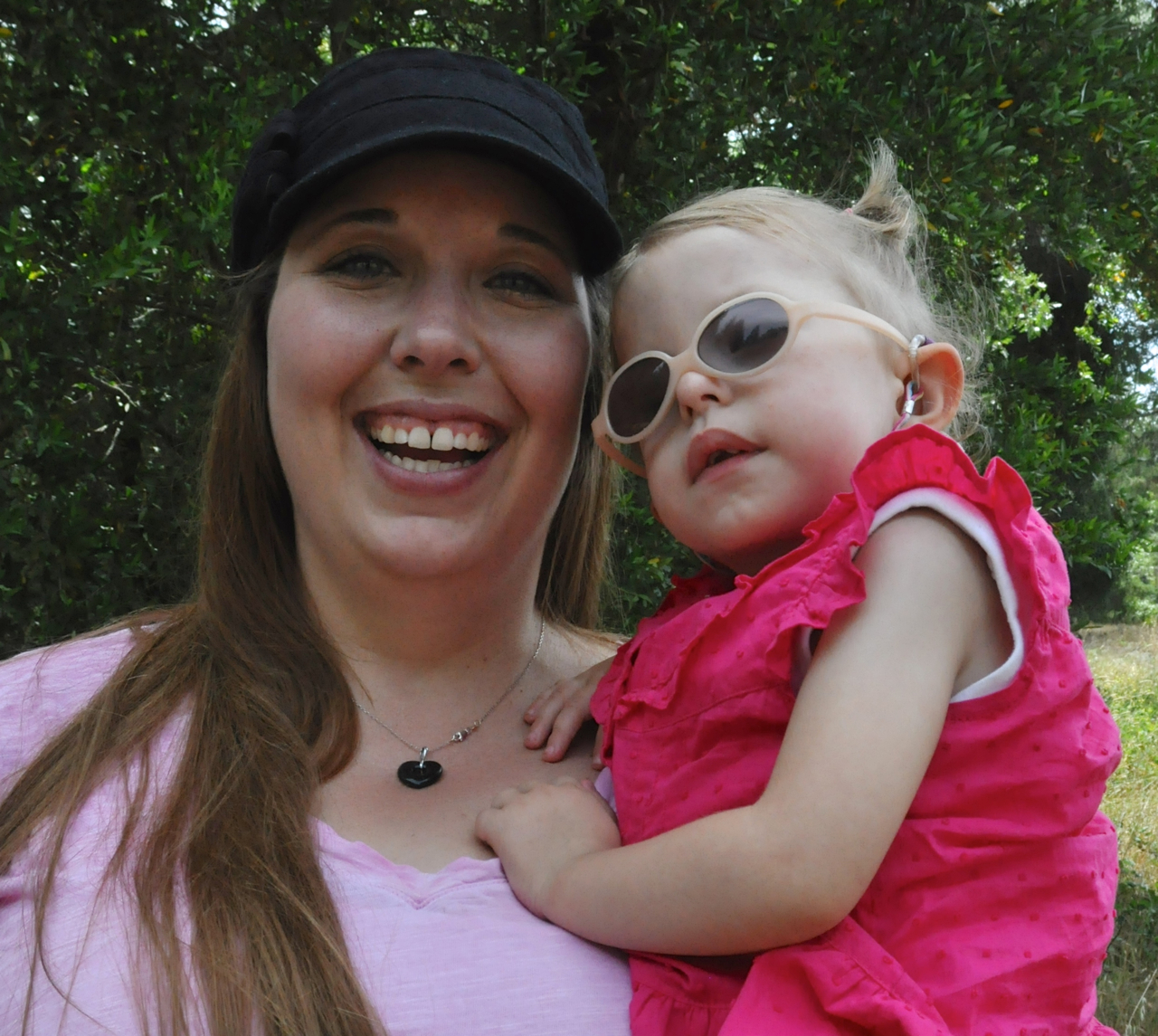 Above: baby rests in mother’s arms, sporting white-rimmed sunglasses
 This summer the staff at Enchanted Hills Retreat and Camp is hard at work, filling out to the far reaches of the property with enhancements. In addition to the preexisting sports field, picnic areas and various craft and recreation buildings, there are three new miles of hiking trails that circumnavigate Enchanted Hills’ less explored regions. In upper camp, construction manager George Wurtzel is rehabbing the old dilapidated barn, and it will soon become a fully functional workshop for woodworking, leatherworking, and other hands-on art projects.
 During the spring, AmeriCorps team Green 6 was hard at work making Enchanted Hills Camp even more beautiful and efficient than ever before. The volunteers blazed nearly three miles of horse paths, endured multiple bouts of poison oak, constructed walls, decks, and a beautiful white oak woodshop floor. Their contributions have been truly valuable and, now looking better than ever, Enchanted Hills is ready for the summer!
 We are thankful for the hard work of those who raised funds through the pledgereg.com website as well as our individual supporters who raised almost $5,000 in direct donations to support Camp: Tino Benelli, Margie Donovan, Tony Fletcher, Gena Harper, Sean McGee and Prindle Vaux.
 It’s not too late to enroll – we still have a few openings in our upcoming Deaf-Blind Session at Enchanted Hills Camp. The session is for adults 18 years and older with both some visual impairment and deafness. Most of the campers use American Sign Language as their primary mode of communication.
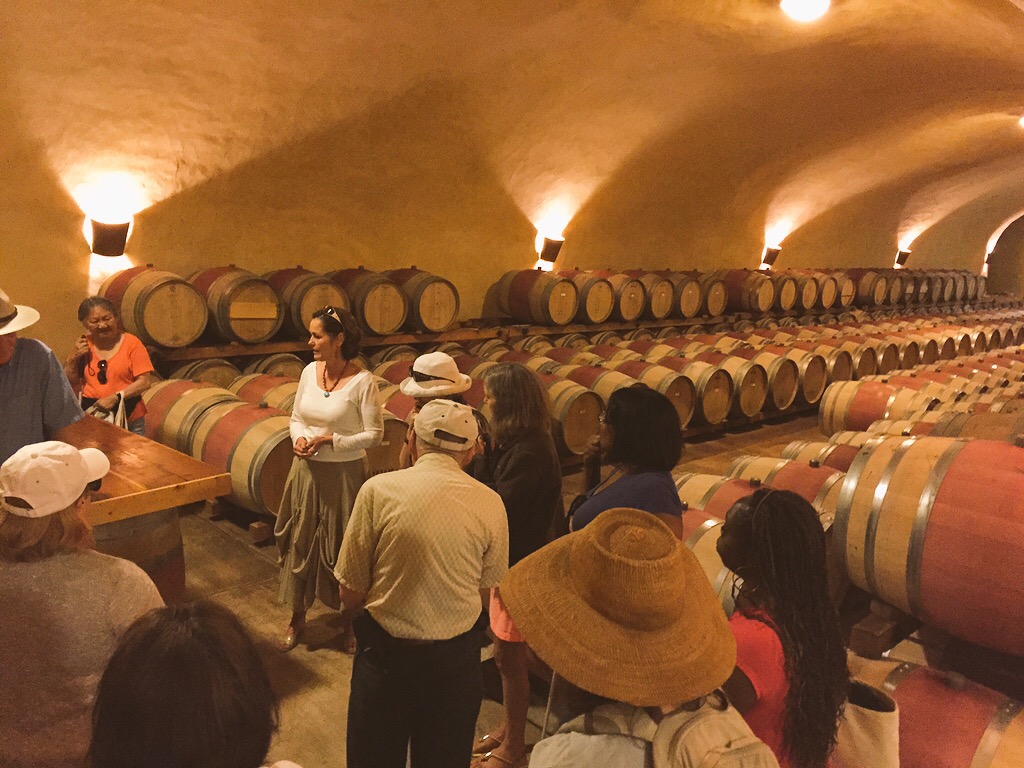
 “You feel like you’re really far away from everything, and yet, you’re still in the middle of the Napa and Sonoma valleys,” says Joanne Yates, president of Sonoma County nonprofit 4PAWS, “Everybody is so polite and kind and helpful, I can’t imagine a better place to be.” She’s talking about Enchanted Hills Retreat, where in addition to hosting a summer camp for the blind more than 60 years running, we also rent the property for private events, weddings and professional retreats year-round.
 Back by popular demand!
![Bill Cody [Brooklyn sweatshirt] of Eureka and George Montag from Elk have had initial mobility training but they both felt they needed extra work in a larger city setting. Bill wanted to gain the skills needed to be eligible for a dog guide while George wanted more experience in downtown settings and street crossings. Here they discuss crossing a busy street with Orientation & Mobility instructors Katt Jones and Terry Wedler.](https://old.lighthouse-sf.org/wp-content/uploads/OandMNapa-cvcl4132015.jpg) In the last three years, the LightHouse has connected folks who are blind or low vision with each other through our novel week-long Changing Vision Changing Life Immersion Training at Enchanted Hills Retreat in Napa. Participating students have goals that range from independent living skills and learning Braille, to getting back into the workforce.
In the last three years, the LightHouse has connected folks who are blind or low vision with each other through our novel week-long Changing Vision Changing Life Immersion Training at Enchanted Hills Retreat in Napa. Participating students have goals that range from independent living skills and learning Braille, to getting back into the workforce.


